


More news on this day
An American Airlines jet arriving at Chicago O’Hare International Airport experienced a tire failure on landing when two main landing gear tires blew out, prompting an airfield emergency response and briefly disrupting operations at one of the nation’s busiest hubs, according to early media and social media reports.
Get the latest news straight to your inbox!
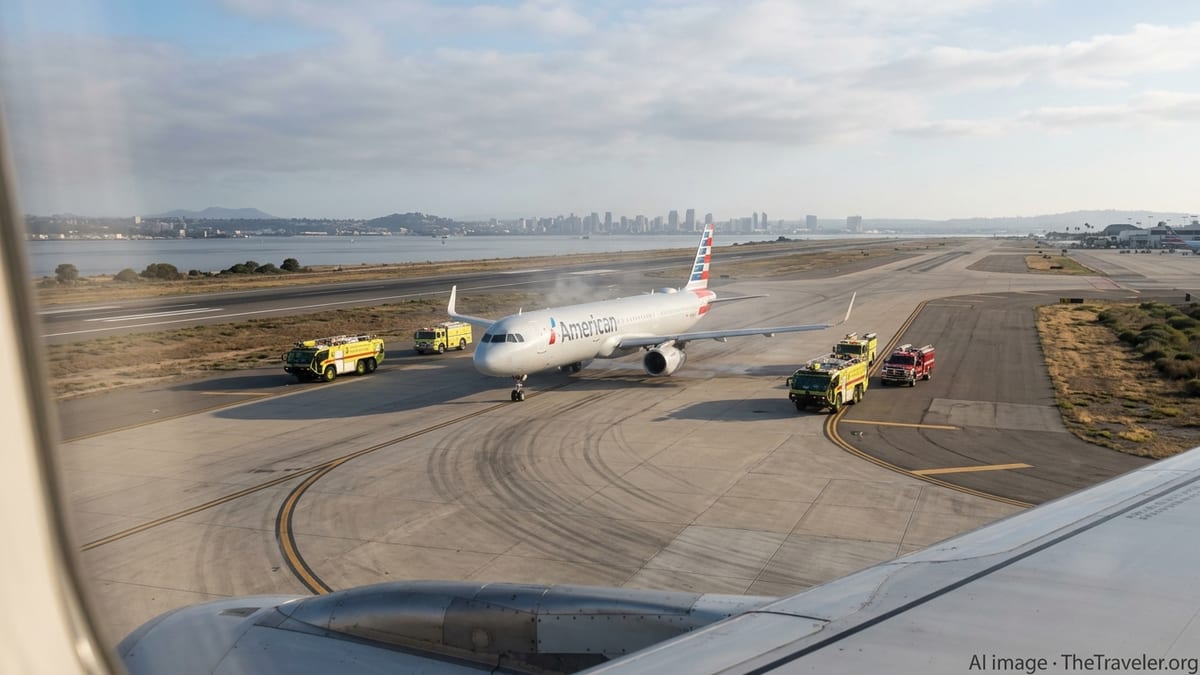
Incident on landing at busy Chicago hub
Initial reports indicate the American Airlines aircraft was touching down at O’Hare when two tires on the main landing gear failed, leaving the jet disabled on the runway. Fire crews and airport emergency teams responded, and passengers were taken off the aircraft on the airfield before being transported to the terminal.
Published coverage and images shared on social media suggest the aircraft remained upright and structurally intact after the tire failure. The jet appeared to come to a stop on the runway or a high-speed taxiway, surrounded by emergency vehicles, with passengers deplaning via mobile stairs rather than evacuation slides.
There were no immediate reports of serious injuries among passengers or crew. Information released so far describes the incident as a contained landing gear problem that did not escalate into a fire or structural damage event, but full details are expected to emerge as aviation authorities and the airline review the circumstances.
The flight involved was operating into O’Hare, one of American’s largest hubs, during a busy period for summer air travel. Even a single disabled aircraft on a runway can trigger delays and diversions as air traffic controllers reroute arrivals and departures around the affected area.
Runway closures and ripple effects for travelers
Publicly available flight-tracking data and airport status updates show that the tire failure led to temporary restrictions on runway use at O’Hare while emergency crews secured the scene and inspected the pavement for debris. When an airliner blows multiple tires, rubber fragments and metal components can scatter along the landing path, requiring a thorough cleanup before the runway can safely be reopened.
As a result, some arriving flights were placed in holding patterns or assigned to alternate runways, while select departures experienced delays as they waited for new takeoff slots. Passengers connecting through O’Hare on American and other carriers may have faced missed connections or rebookings as schedules were adjusted through the evening.
Reports indicate that airport operations gradually normalized after the aircraft was towed from the runway and inspections were completed. However, at a complex hub like O’Hare, an incident during peak periods can have lingering effects for several hours as airlines reposition aircraft and crews.
Travelers scheduled to fly through Chicago in the wake of the incident were advised by airlines and travel commentators to monitor their flight status closely and allow extra time for connections, given the possibility of rolling delays in the network.
Tire failures rare but recognized aviation risk
Although dramatic images of shredded tires and stranded aircraft can alarm travelers, aviation safety records and technical reports show that tire failures on landing, while uncommon, are a known and generally manageable risk. Airliner tires operate under extremely high pressure and bear heavy loads during touchdown and braking, especially on hot days or at high landing weights.
Independent safety investigations into past tire incidents have noted that failures can result from a combination of factors, including runway debris, overloading, underinflation, heat buildup during extended taxi or braking, or internal structural flaws. In many cases, the design of modern landing gear and tire systems allows aircraft to remain controllable even when one or more tires are compromised.
Aircraft manufacturers and airlines build significant redundancy into landing gear layouts, with multiple wheels sharing the load on each main strut. This design can allow a jet to remain on the runway centerline and come to a controlled stop, even after a sudden loss of one or more tires, provided pilots respond promptly and braking is managed carefully.
Publicly available data from past investigations also indicate that when tire failures are confined to the landing roll, and when the aircraft structure and braking systems remain intact, serious injuries are uncommon. Nonetheless, such events are treated as serious incidents and typically trigger detailed technical inspections before the aircraft returns to service.
Response and next steps for investigators
According to published coverage, the aircraft involved in the O’Hare incident remained on the ground for inspection as mechanics and engineers examined the damaged wheels, brakes, and landing gear assemblies. In similar events, maintenance teams document the condition of each tire and wheel, check for signs of overheating or mechanical damage, and review recent maintenance records to identify any contributing factors.
Authorities typically collect data from the aircraft’s onboard recorders, which capture parameters such as speed, brake pressure, and control inputs during landing. This information can help clarify whether the tire failure was triggered by an external factor like runway debris, by operating conditions such as heavier-than-usual braking, or by an internal defect in the tire itself.
Industry observers note that if inspection findings point to a manufacturing or maintenance issue, regulators and manufacturers may issue technical advisories or service bulletins to airlines operating the same aircraft type or tire model. These can include revised inspection intervals, replacement recommendations, or updated procedures for handling high-energy landings.
The review process can take weeks or months, but interim information is often shared in summary form to reassure travelers about ongoing safety. In the meantime, the specific aircraft is likely to remain out of service until repairs are completed and it passes all required checks.
Passengers face disruption but avoid worst-case scenario
While travelers on the affected American Airlines flight faced an unexpected and stressful end to their journey, early indications suggest they avoided the most serious potential outcomes associated with landing gear failures. The aircraft’s ability to remain upright, the absence of a post-landing fire, and the use of stairs rather than emergency slides all point to a controlled response on the runway.
Passengers were ultimately transported from the airfield to the terminal, where they awaited rebooking or onward travel arrangements. Some shared accounts of the experience on social media, describing a sudden jolt during landing followed by an extended wait on the tarmac as emergency vehicles encircled the aircraft.
For many travelers, incidents like this reinforce a complex reality of modern air travel. Although major accidents are exceedingly rare and commercial flying remains one of the safest forms of transportation, operational disruptions and technical irregularities still occur, particularly at large hub airports handling hundreds of daily movements.
Aviation analysts emphasize that each such event provides additional data for improving procedures, maintenance practices, and equipment design. The tire blowout at O’Hare is expected to be examined in that context, as part of the broader effort to refine safety margins on every phase of flight, from touchdown to taxi.