


More news on this day
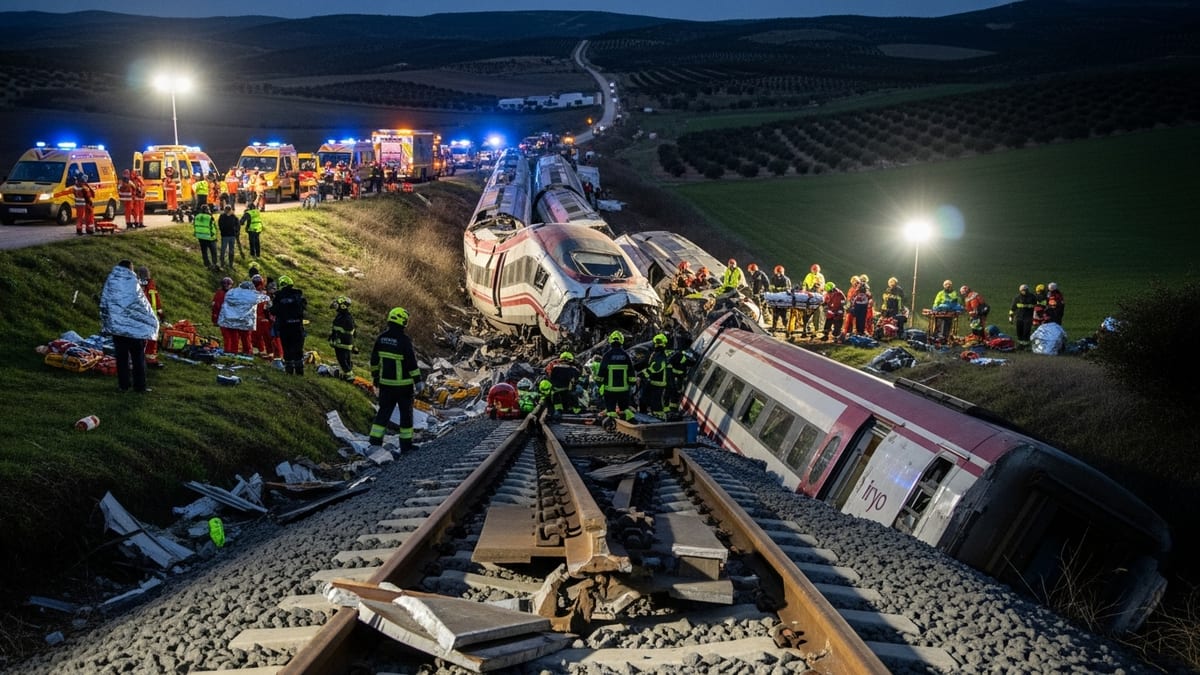
Train services between Bedford and Luton were suspended on Friday 19 June after reports of a collision involving two East Midlands Railway services near Bedford, prompting an emergency response and significant disruption along the Midland Main Line corridor.
Get the latest news straight to your inbox!
Services suspended between Bedford and Luton
Publicly available information from rail tracking data and social media reports indicates that all train movements were halted between Bedford and Luton on the afternoon of 19 June, following what has been described as an “incident” on the line south of Bedford. The suspension affected East Midlands Railway services linking the East Midlands with London St Pancras, as well as Thameslink stopping services that normally connect local stations through Luton and Bedford.
Passenger accounts shared online describe trains being brought to a standstill north of Luton, with announcements referring to a line closure due to an incident ahead. Some travellers reported being held on board for extended periods while the situation was assessed and the rail infrastructure made safe.
Journey planners and live departure boards showed widespread cancellations on northbound and southbound services, with trains terminating short of their scheduled destinations. London-bound services from Nottingham and Corby were among those most visibly affected, alongside local commuter trains that typically shuttle between Bedford, Luton and central London.
Rail industry channels signalled that disruption was likely to continue into the evening peak, with revised timetables and cancellations expected as trains and crew were repositioned after the stoppage.
Reports suggest collision near Bedford
Details emerging through rail-focused forums and social media suggest the incident involved a collision between two East Midlands Railway trains close to Bedford. Commenters referencing rail data and video clips from the scene describe one service running from Nottingham to London St Pancras and another from Corby to the capital being involved.
Posts shared within enthusiast communities indicate that a Class 360 electric unit is believed to have run into the rear of a new Aurora Class 810 bi-mode train on the approach to a junction south of Bedford. Video and still images discussed in those forums appear to show visible damage at one end of a unit and passengers standing beside the track during an evacuation.
Separate online discussions referencing media coverage note reports of at least one person seriously injured inside one of the cabs, although at the time of writing no comprehensive casualty figures have been confirmed through official public statements. Emergency service activity around the site, including road closures and helicopter movements, was also reported by local residents.
While full technical details of how the collision occurred were not yet available, experienced railway staff commenting in public forums highlighted the presence of modern signalling systems and train protection technology on this section of the Midland Main Line, suggesting that a detailed investigation is likely to examine a combination of operational, technical and infrastructure factors.
Impact on passengers and alternative travel
The cancellation of trains between Bedford and Luton created immediate challenges for commuters, airport travellers and long-distance passengers heading to or from London. This stretch of railway links East Midlands cities such as Nottingham and Leicester with the capital and also feeds important local flows to Luton and the nearby airport.
According to journey updates shared by passengers, some travellers were held on trains for an extended period before being escorted along the track to a safe location, while others were advised to remain on board until services could be reversed or diverted. Those waiting at stations including Bedford, Luton and Luton Airport Parkway reported crowded concourses and limited information as operators worked to respond.
Replacement road transport options appeared constrained in the first hours after the incident. While local bus routes connect Bedford and Luton, capacity is modest compared with the usual rail offering, and some of those buses have recently seen timetable changes on weekends. Road congestion on routes paralleling the railway further complicated onward travel for affected passengers.
Many long-distance travellers reported switching to alternative main lines into London, including routes via Peterborough or Birmingham, although these options lengthened journey times considerably. In some cases, travellers chose to postpone trips or cancel same-day plans altogether due to uncertainty over when a normal rail service would resume.
Response and early investigation focus
According to published coverage and eyewitness posts, a substantial emergency response was deployed to the scene, involving multiple services working trackside and from adjacent roads. Rail-focused communities discussing video from the area noted the presence of fire and ambulance resources alongside railway professionals tasked with securing the trains and assisting passengers.
Network management systems typically trigger an immediate suspension of movements on any line where a collision or serious near miss is reported. Public rail data viewed by enthusiasts suggested that signals protecting the affected section were set to danger as the incident unfolded, preventing following trains from entering the area and allowing responders to operate safely.
Commentary from railway workers participating in online discussions indicates that an incident of this nature on a busy intercity route will prompt a multi-layered investigation. Standard practice involves the collection of data from train event recorders, signalling logs and radio communications, as well as interviews with staff and a detailed inspection of the rolling stock and infrastructure.
Specialist teams are expected to focus on the sequence of signals encountered by the trains involved, the performance of onboard protection systems and any temporary speed restrictions or engineering activity in the vicinity. Investigators will also examine whether prior reports or maintenance records flagged issues relevant to the location or the specific train types.
Ongoing disruption and what travellers should expect
Experience from previous line closures on the Midland Main Line suggests that disruption can continue for many hours after the initial incident, even once the immediate emergency phase has passed. Damaged trains must be recovered, track and signalling equipment inspected, and in some cases repairs completed before the line can reopen at reduced speed.
Publicly available travel advice typically urges passengers to check live departure boards and operator channels before setting out, as services may be altered at short notice while the network gradually returns to normal. Trains that do run are often subject to delays and crowding as timetables are compressed and rolling stock is out of position.
For travellers heading to or from Luton Airport, recent discussions in travel forums underscore the importance of allowing extra time and having a back-up plan, particularly when connecting with flights. Options include coach services, local buses feeding into other mainline stations, or sharing taxis to avoid missing departures.
As formal investigations progress and the full circumstances of the Bedford-area collision emerge, attention across the UK rail and travel community is likely to focus on both the safety lessons and the operational resilience of a corridor that carries thousands of passengers between the Midlands, Luton and London each day.