


More news on this day
Japan Airlines is set to operate daily nonstop flights between San Diego and Tokyo Narita during the upcoming peak season, creating a new pressure valve for U.S. travelers seeking to avoid congested West Coast hubs and ongoing transpacific schedule disruptions.
Get the latest news straight to your inbox!
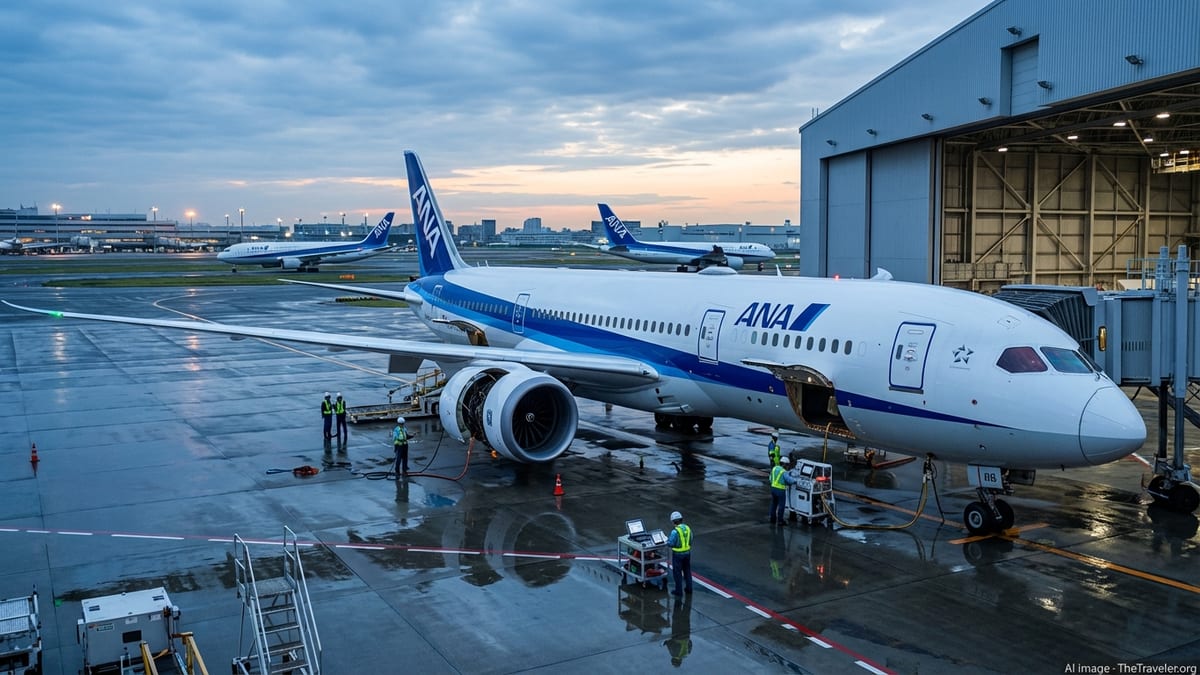
Daily San Diego Service Timed for Peak Transpacific Demand
According to Japan Airlines’ most recent network updates, the carrier plans to increase its Tokyo Narita – San Diego route to one round trip per day in the peak season, after previously offering only several flights per week. Publicly available timetable information shows that the flight typically departs San Diego late morning and arrives in Tokyo Narita in the afternoon, with a corresponding return from Japan operating overnight.
Industry route trackers and schedule filings indicate that the daily pattern is aligned with the broader fiscal 2025 summer season, when Japan Airlines is expanding frequencies on several long-haul routes to match strong demand between North America and Asia. Aviation trade coverage highlights that San Diego is one of the routes selected for daily operation, underlining the city’s growing role as a secondary U.S. gateway to Japan.
For Southern California travelers, the move brings San Diego back into line with pre-pandemic levels, when San Diego–Tokyo Narita was consistently operated daily before being reduced or suspended during the COVID-19 crisis. The restoration to daily service reflects a sustained rebound in leisure and business traffic between the U.S. West Coast and Japan, as well as onward connections to the rest of Asia.
While precise dates and aircraft assignments may still shift as airlines finalize seasonal schedules, the current plan positions Japan Airlines to offer San Diego-based passengers a stable, once-daily link to Tokyo during the busiest travel months, complementing its larger operations at Los Angeles and San Francisco.
Bypassing Congested Coastal Hubs and Travel Disruptions
The daily San Diego–Tokyo link arrives at a time when travelers across the United States are grappling with extended connection times, irregular operations and rolling schedule changes on transpacific routes. Large coastal hubs such as Los Angeles, San Francisco and Seattle have seen intense competition for runway slots and gate space, contributing to delays and missed connections during peak periods.
By flying nonstop from San Diego to Narita, passengers in Southern California and the U.S. Southwest can avoid an additional domestic leg through crowded megahubs. Travel analysts note that each eliminated connection reduces exposure to weather delays, crew timing issues and congested security lines that have plagued North American and transpacific operations in recent seasons.
Japan Airlines’ San Diego service is also positioned to appeal to travelers from neighboring regions such as Orange County, inland Southern California, Arizona and parts of northern Baja California. For some itineraries, driving or taking ground transport to San Diego International Airport and boarding a nonstop flight can be faster and more predictable than connecting through a larger hub several hundred miles away.
As airlines adjust their networks to accommodate shifting post-pandemic travel patterns, routes that offer point-to-point long-haul connectivity from smaller gateways have become an important tool for easing pressure on overburdened hubs. The San Diego–Narita daily operation fits this broader trend, giving U.S. travelers one more way to sidestep some of the most notorious chokepoints in transpacific travel.
Strategic Role of San Diego in JAL’s North America Network
San Diego has steadily evolved from an experimental long-haul station to a strategic spoke in Japan Airlines’ North American network. The carrier first launched the Tokyo Narita–San Diego route in 2012 with limited weekly frequencies, later upgrading it to daily service as demand grew and as the Boeing 787 made thinner long-haul routes more viable.
Airport data and airline statements over the past decade show that traffic between San Diego and Asia has expanded, driven by both tourism and business links in sectors such as technology, biotech and defense. Before the pandemic, the Narita service was credited with opening up new opportunities for local companies to reach partners in Japan and across Asia with a single connection.
The recovery in demand has now encouraged Japan Airlines to restore and reinforce the route. Aviation schedule disclosures outlining the airline’s fiscal 2025 plans explicitly list Narita–San Diego among the routes boosted to daily frequency during the summer period, alongside other high-demand services linking Japan with India, Australia and the United States.
Within the broader competitive landscape, San Diego remains one of the few U.S. airports of its size with a nonstop link to Tokyo, and Japan Airlines is currently the only carrier offering direct service on the San Diego–Narita sector. This exclusivity helps the airline capture a loyal customer base that values avoiding a domestic connection while still tapping into Tokyo’s extensive onward network.
Connections Across Japan and Asia via Tokyo Narita
The daily San Diego flight is designed to feed Japan Airlines’ and its partners’ networks at Tokyo Narita, acting as a bridge to numerous Japanese domestic and regional Asian destinations. Timetables published by the airline and alliance partners show coordinated connection windows to cities such as Osaka, Sapporo, Fukuoka and Okinawa, as well as onward links to Southeast and South Asia.
For U.S. travelers, this means that a single nonstop segment from San Diego can open up a wide web of itineraries, including multi-city trips that combine Japan with other Asian destinations. Travel advisors note that Narita remains an important transfer point, particularly for passengers who prefer traditional long-haul connections over ultra-low-cost alternatives or who value through-ticketing and baggage handling on a single itinerary.
The San Diego–Narita schedule is also likely to support cargo movement, as widebody passenger aircraft operating long-haul routes typically carry significant belly freight. This can be an advantage for regional exporters and importers who rely on reliable, time-sensitive air cargo links between Southern California and Asia.
As carriers continue to refine their hub strategies in Tokyo, the Narita gateway remains a key component in providing capacity for long-haul flights and connections that complement services at Tokyo Haneda. The restoration of daily San Diego service underscores Narita’s continuing role in Japan Airlines’ global network design.
What U.S. Travelers Should Know Before Booking
For travelers planning trips in 2025 and beyond, industry observers advise paying close attention to the specific travel dates when reviewing the San Diego–Tokyo service. Seasonal schedules mean that daily operations may apply primarily during designated summer or peak periods, with potential adjustments during shoulder and winter seasons.
Passengers are also encouraged to monitor aircraft type and cabin configuration on the route, as Japan Airlines has historically rotated different versions of the Boeing 787 on its North American network. These variations can affect the availability of premium economy, business-class seating and specific onboard amenities that are important for long-haul comfort.
Given the broader volatility still affecting international aviation, from staffing constraints to evolving slot allocations at major airports, experts recommend building in generous connection times when pairing the San Diego flight with separate domestic or international tickets. Travelers using the Narita flight as part of complex itineraries across Asia should also remain attentive to schedule changes and re-accommodation policies.
Even with these caveats, the return of daily San Diego–Tokyo service represents a tangible gain for U.S. passengers. By adding capacity on a point-to-point route that bypasses some of the busiest hubs, Japan Airlines is offering an additional way to reduce the stress and uncertainty that have characterized much of transpacific travel in recent years.