


More news on this day
Rail passengers on one of Britain’s busiest north–south corridors are being urged to expect days of disruption after a fatal train collision near Bedford forced the prolonged closure of part of the Midland Main Line.
Get the latest news straight to your inbox!
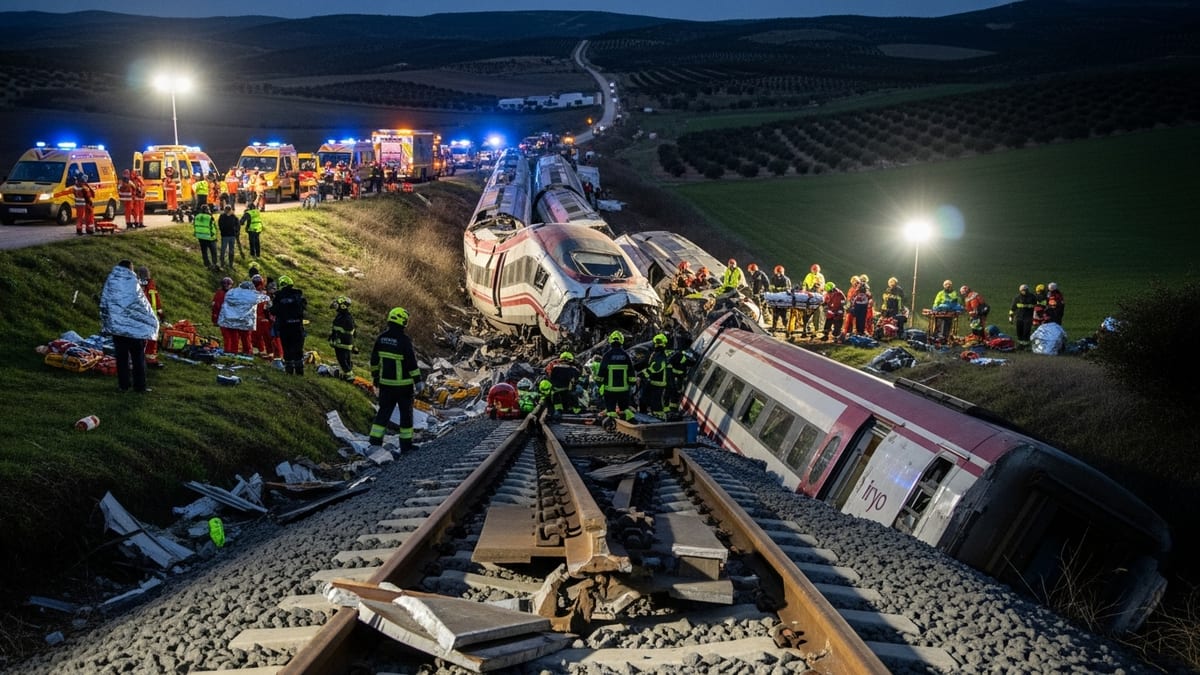
Serious crash on Midland Main Line near Bedford
Publicly available information indicates that two southbound East Midlands Railway services collided on the Midland Main Line just south of Bedford on the afternoon of Friday 19 June 2026. Reports from multiple outlets describe a rear-end impact involving a Corby to London St Pancras service and a Nottingham to London St Pancras service travelling on the same line toward the capital.
The crash resulted in the death of one train driver and injuries to a large number of passengers on board both services. Figures reported across several news organisations suggest that around 100 people were hurt, with roughly two to three dozen taken to hospital and a smaller group in critical condition.
Images from the scene published by national and international media show significant emergency activity around the stricken trains near open countryside between Bedford and Luton. The collision has been characterised in coverage as one of the most serious rail incidents in the United Kingdom in recent years, given the number of casualties and its location on a major intercity corridor.
Investigation under way as safety questions mount
Specialist rail investigators are now examining how two modern passenger services came to collide on a busy main line that is normally protected by multiple layers of signalling and train protection technology. The Rail Accident Investigation Branch is reported to be working alongside British Transport Police and infrastructure managers to reconstruct the sequence of events leading up to the incident.
Early technical commentary in industry-focused coverage points to a low to moderate impact speed, given the visible condition of the rolling stock, but stresses that even relatively slow collisions can cause serious injury to standing passengers or those moving through carriages. Attention is likely to focus on trackside signalling, train protection systems, operational procedures and possible human factors on the approach to the point where the Nottingham service is reported to have been stationary or slowing.
Investigators are expected to analyse data from on-board recorders, signalling logs and communications between drivers and control, as well as undertake detailed inspections of the infrastructure. While no preliminary cause has been formally set out, commentators suggest that any safety recommendations arising from the Bedford collision could have implications across Britain’s electrified main line network.
EMR services curtailed as damaged trains and infrastructure are cleared
East Midlands Railway has warned customers that services on the Midland Main Line will remain heavily disrupted while recovery work, inspections and repairs continue at the crash site. The collision has left damaged rolling stock, disturbed track and affected overhead line equipment in an area that carries frequent intercity and commuter services into London.
Published travel updates show that EMR intercity services between London St Pancras, the East Midlands and parts of South Yorkshire are being cancelled, turned short or diverted, particularly on the section between London, Luton and Bedford. Some trains are reported to be running via alternative routes where capacity allows, but journey times are extended and frequencies reduced.
Network Rail statements quoted in media coverage indicate that the southbound lines through the crash site will not reopen quickly, as teams must first remove the trains, thoroughly inspect the track and structures, and then restore the overhead electrical supply. Until that work is complete and safety checks are signed off, EMR and other operators using the corridor are being forced to operate an emergency timetable.
Prolonged disruption expected for commuters and long-distance passengers
According to rail industry briefings reported over the weekend, disruption between London and Bedford is expected to last for at least a week, affecting both weekday commuting flows and leisure travel. The route forms a critical link for passengers travelling from the East Midlands and northern Home Counties into the capital, as well as for those connecting with airport services and other main line operators.
EMR has advised customers holding advance or off-peak tickets to check revised timetables before travelling, and published information indicates that ticket acceptance is in place on some alternative operators and routes. However, capacity on diversionary lines is limited, and passengers are being encouraged to allow significantly more time for their journeys or to postpone non-essential trips.
Rail user groups note that the fallout from the collision highlights the vulnerability of key national corridors when a serious incident occurs on a constrained section of route. With buses and roads in the corridor already busy, the partial loss of the Midland Main Line is producing wider knock-on effects for the regional transport network.
Bedford collision renews focus on resilience of UK rail network
Commentators across the transport sector suggest that the Bedford collision is likely to renew debate about rail resilience, incident response and investment in modern protection systems. While Britain’s main line network is generally regarded in published statistics as having a strong safety record compared with many other modes, the scale of casualties in this event is prompting questions about whether further safeguards are needed on intensively used stretches of line.
Industry analysts point out that any future recommendations may range from technical upgrades at specific junctions to broader changes in operating rules, training or traffic management on congested approaches to London. There is also likely to be discussion about how quickly normal service levels can and should be restored after a major incident, balanced against the need for thorough investigation and infrastructure checks.
For now, East Midlands Railway and infrastructure managers are focused on supporting the ongoing investigation and restoring enough capacity to move essential passenger flows while detailed work continues at the crash site. Travellers using the corridor in the coming days are being repeatedly urged, through public travel information channels, to check before they set out and to be prepared for short-notice changes as repairs and safety clearances progress.