


More news on this day
Rail passengers across England are facing days of severe disruption after a fatal collision between two passenger trains near Bedford left one driver dead and around 100 people injured, with services on the busy Midland Main Line expected to remain heavily curtailed for at least a week.
Get the latest news straight to your inbox!
Collision Near Bedford Triggers Major Rail Emergency
The crash occurred on the afternoon of 19 June near Elstow, just south of Bedford, on the Midland Main Line linking the East Midlands with central London. Publicly available information indicates that two London bound East Midlands Railway services were involved, one from Nottingham and another from Corby, both heading toward London St Pancras when the rear end collision took place.
Reports indicate that the driver of the moving train was killed in the impact, while around 100 passengers sustained injuries ranging from minor to critical. Figures published over the weekend suggest that at least nine people remain in critical condition, with dozens more still being treated in hospitals across the region.
The crash has been described in media coverage as a rare but serious incident on one of the country’s busiest intercity routes. Early accounts from passengers describe a sudden impact without warning, with several carriages reportedly derailed and emergency services mounting a large scale response along the railway south of Bedford.
Week-long Disruption on Thameslink and East Midlands Routes
Following the collision, rail operators have warned that disruption between London and Bedford is expected to last for at least a week as investigations continue and extensive infrastructure checks are carried out. Network Rail statements cited in news reports suggest that both tracks in the affected area remain blocked, severely limiting the ability to run trains on the Midland Main Line.
East Midlands Railway has suspended or heavily reduced fast intercity services into London St Pancras, with many trains from Nottingham, Sheffield, Derby and Corby terminating short of the crash site or being cancelled outright. Public information from the operator indicates that tickets are being accepted on alternative routes, but capacity on parallel main lines is limited and journey times are significantly extended.
Thameslink, which normally operates frequent stopping services between Bedford, Luton Airport and central London, is also reporting major disruption. Information posted through its passenger channels warns that journeys between London and Bedford cannot be guaranteed, with some trains turning back at Luton or running on altered routes to avoid the affected section of track.
The combination of long distance intercity and high frequency commuter services on the same corridor means that the impact is being felt far beyond Bedfordshire. Travellers heading to and from London Luton Airport, as well as regional hubs such as Leicester and Lincoln, are being advised to check for last minute changes and expect extended journey times over the coming days.
Hundreds of Passengers Affected at the Start of Summer Travel
The incident has struck at the start of the busy summer getaway period, compounding the effect on both domestic and international travellers. Many passengers caught up in the disruption had been using the Midland Main Line as a key link between the Midlands, northern England and London for holidays and business trips.
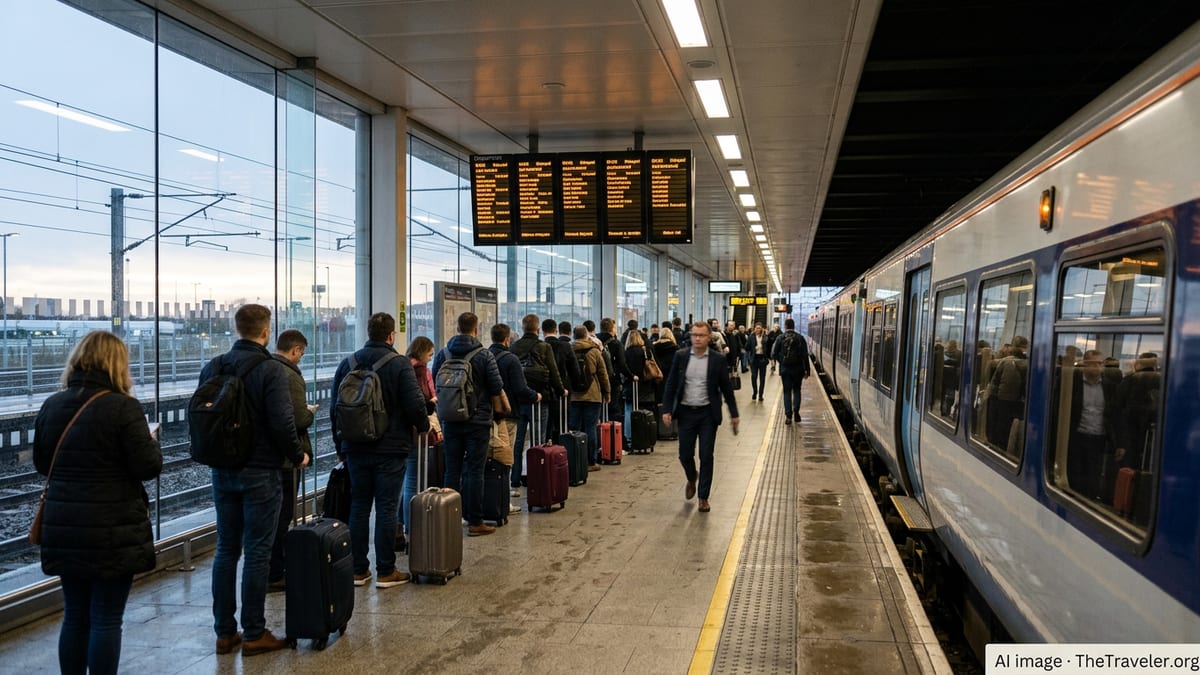
According to published coverage and eyewitness accounts, several trains became stranded on the route following the collision, with passengers held on board while the line was secured and alternative arrangements were organised. Others reported overcrowding and long queues at stations such as St Pancras, Luton and Bedford as services were progressively cancelled through Friday evening and into the weekend.
Tourism businesses are also expected to feel the knock on effects. The Midland Main Line is an important artery for visitors heading to historic cities such as Nottingham, Leicester and Lincoln, as well as for international arrivals landing at Luton and transferring by rail into central London and beyond. With journey times now uncertain and replacement transport limited, industry observers anticipate a rise in missed connections and last minute itinerary changes.
For commuters, particularly those living in Bedfordshire and Northamptonshire and working in London, the coming week is likely to involve early starts, longer routes via other main lines and a greater reliance on road based alternatives. Motorway and trunk road networks into the capital may see additional congestion as rail users switch to cars, coaches and airport buses while the line remains partially closed.
Safety Investigation Underway on Midland Main Line
The Rail Accident Investigation Branch has confirmed through public statements that a team of inspectors is on site near Elstow to gather evidence and determine how two trains came to collide on a heavily protected main line. Early technical discussion in industry focused forums points to the role of train protection and warning systems, but investigators are expected to take months to reach firm conclusions.
Initial summaries from rail specialists suggest that one of the East Midlands Railway services may have been stationary or moving slowly when it was struck from behind by the second London bound train. There is ongoing scrutiny of how lineside signalling, onboard safety systems and operational decision making interacted in the minutes leading up to the crash.
While serious passenger train collisions in the United Kingdom have become relatively rare in recent decades, the Bedford incident is being treated as a significant test of modern rail safety regimes. Comparisons are already being drawn in transport commentary to previous high profile crashes that prompted system wide changes, with analysts watching closely to see whether recommendations emerge on signal spacing, braking distances or the wider roll out of advanced train protection technology.
For now, officials involved in the rail industry are emphasising that the collision appears to be an isolated incident on an otherwise busy but generally safe corridor. However, the scale of injuries and the death of a driver mean that the outcome of the investigation is likely to be closely followed by passengers, railway workers and regulators alike.
What Passengers Need to Know in the Days Ahead
Travellers planning to use Thameslink or East Midlands Railway services in the coming week are being urged, through widely shared public information, to plan ahead and allow significantly more time for their journeys. With the line south of Bedford constrained, timetables are subject to short notice changes and some trains may be cancelled even after appearing in journey planners.
Passengers holding advance tickets for London St Pancras are being advised in operator updates to check whether their services have been rerouted to alternative London terminals or are being honoured on other train companies. In many cases, flexible ticket acceptance arrangements are in place, but seat reservations may not be valid and trains on substitute routes can be busier than usual.
For those arriving into or departing from London Luton Airport, the usual quick rail connection via Luton Airport Parkway may be slower or replaced in part by buses. Travellers with tight onward connections, including long haul flights, are being encouraged by travel industry guidance to build in additional contingency time and to monitor real time updates from train companies before setting out.
As repairs progress and investigators gradually release sections of track back to traffic, operators are expected to restore a limited number of through services between London and the East Midlands. However, rail planners caution that it may take several days before a stable temporary timetable is introduced, and even then, journey patterns are likely to differ markedly from normal schedules.