


More news on this day
A security breach at Stuttgart Airport on Sunday prompted the temporary disruption of passenger screening and departures, leading to significant queues, missed connections and cascading delays on flights across Europe.
Get the latest news straight to your inbox!
Passenger Enters Secure Area Without Screening
According to early local coverage and traveler accounts shared on social media, the disruption began when a passenger appears to have entered the secure area of Stuttgart Airport without completing the required security screening. The incident reportedly affected at least one terminal section used for short-haul European flights.
Publicly available information indicates that police and airport security initiated a controlled response that required halting normal passenger flow through the affected security lane. In line with standard aviation security procedures elsewhere in Germany, operations in part of the terminal were temporarily paused while the breach was assessed.
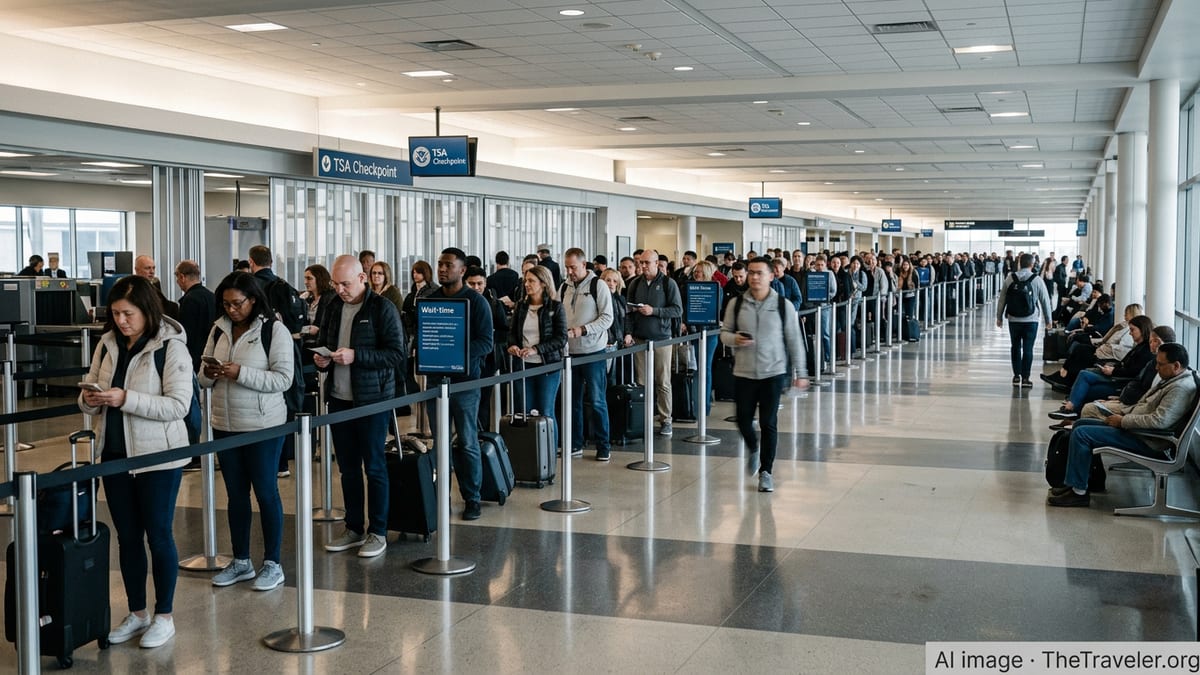
There were no immediate reports of injuries. However, images and descriptions posted by travelers described dense queues building within the departures hall as screening checkpoints slowed or stopped and staff worked to re-establish a secure perimeter.
German aviation hubs have experienced similar incidents in recent years, in which a single unscreened passenger or an opened emergency door has required partial evacuations and re-screening of travelers, resulting in major delays even when no direct threat was ultimately identified.
Evacuations, Re-screening and Missed Connections
Reports indicate that parts of the departures area at Stuttgart were cleared while security teams verified that no prohibited items had entered the secure zone. Some passengers already inside the gate area were asked to return toward the public side to undergo renewed checks, a step that can add several hours to processing times during busy travel periods.
Travelers posting live updates described departure boards showing a growing number of delayed flights as airlines held aircraft at gates, awaited missing passengers caught in queues, or waited for clearance to resume boarding. At least some outbound flights departed late enough that onward connections in larger hubs such as Frankfurt, Munich and Amsterdam were placed at risk.
For passengers on tight itineraries, the disruption translated into missed long-haul connections and the need for rebooking. Travel insurance policies and European passenger-rights regulations typically address compensation when security incidents are outside an airline’s direct control, but the practical outcome for many travelers was an unplanned additional night in transit hotels or a complete reshuffling of their onward journeys.
Ground transport links around the airport also experienced knock-on effects, as passengers leaving the terminal sought last-minute rail or bus alternatives and arriving travelers encountered congestion near the departures forecourt.
Operational Recovery Through the Afternoon
By later in the day, publicly accessible flight-tracking data showed more departures leaving Stuttgart, suggesting that the acute security response phase had ended and that screening operations were gradually stabilizing. Even so, residual disruptions persisted across the schedule as delayed aircraft and displaced crews attempted to return to planned rotations.
Short-haul point-to-point routes generally recovered first, while complex itineraries involving multiple stops remained vulnerable to rolling delays. Once an aircraft and crew schedule is pushed back by several hours at the start of the day, it often remains out of sync, affecting subsequent departures and arrivals.
Some passengers reported being rebooked via other German or European hubs when their original flights from Stuttgart were significantly delayed. Others were offered rail connections as an alternative for domestic segments, reflecting Germany’s growing emphasis on air-rail integration as a resilience tool during airport disruptions.
Travel forums and aviation community discussions noted that airport staff appeared to prioritize restoring security compliance before increasing processing speed, an approach that aligns with wider European practice after any breach of the secure area.
Context of Heightened Airport Security Sensitivity
The Stuttgart disruption comes at a time of heightened sensitivity around airport security across Europe. Recent weeks have seen a series of incidents at other airports involving suspicious bags, unauthorized entries through emergency doors and airspace-related threats, each triggering evacuations or large-scale secondary screening and placing pressure on terminal operations.
Published commentary in European media has highlighted the delicate balance between stringent security controls and the need to keep passenger flows manageable, especially during peak holiday periods. Even relatively minor security events can force airports to apply precautionary protocols that are time-consuming and highly disruptive.
Analysts note that the concentration of traffic into a limited number of checkpoints, combined with labor constraints and infrastructure limits at some regional airports, can magnify the impact of a single procedural breach. Stuttgart, which serves as the primary airport for the Baden-Württemberg capital region, operates a compact terminal layout that can quickly become congested when any section is taken offline.
The incident is likely to add to ongoing debates within the European aviation industry about investments in more advanced screening technology, better passenger information tools and clearer contingency plans to handle sudden security-related shutdowns.
Advice for Travelers Using Stuttgart and Other European Hubs
Travel industry observers emphasize that events like the Stuttgart security breach remain relatively rare but can be highly disruptive when they occur. For travelers planning itineraries through Stuttgart and similar European hubs, allowing generous connection times and checking live airport and airline updates on the day of travel can reduce the risk of missed flights.
Passenger advocates often recommend that those with time-sensitive long-haul connections build in at least a two to three-hour buffer when connecting through regional airports, and potentially longer during peak holiday weekends. Flexible tickets, comprehensive travel insurance and familiarity with passenger rights can further mitigate the practical and financial impact of unanticipated disruptions.
In the wake of Sunday’s incident, publicly available information from airlines and Stuttgart Airport indicated that operations were moving back toward normal patterns, although some evening departures remained subject to delay. Travelers scheduled to fly from or to Stuttgart in the near term are advised by consumer travel organizations to monitor their flight status closely and to arrive at the airport earlier than usual while security flows normalize.
For now, the security breach serves as another reminder of how tightly coupled airport safety procedures and schedule reliability have become, and how quickly a single lapse within the screening process can ripple across Europe’s interconnected air travel network.