


More news on this day
Rail passengers travelling between London and the Midlands face at least a week of disruption after a fatal collision between two East Midlands Railway services near Bedford killed a train driver and left scores of people injured.
Get the latest news straight to your inbox!
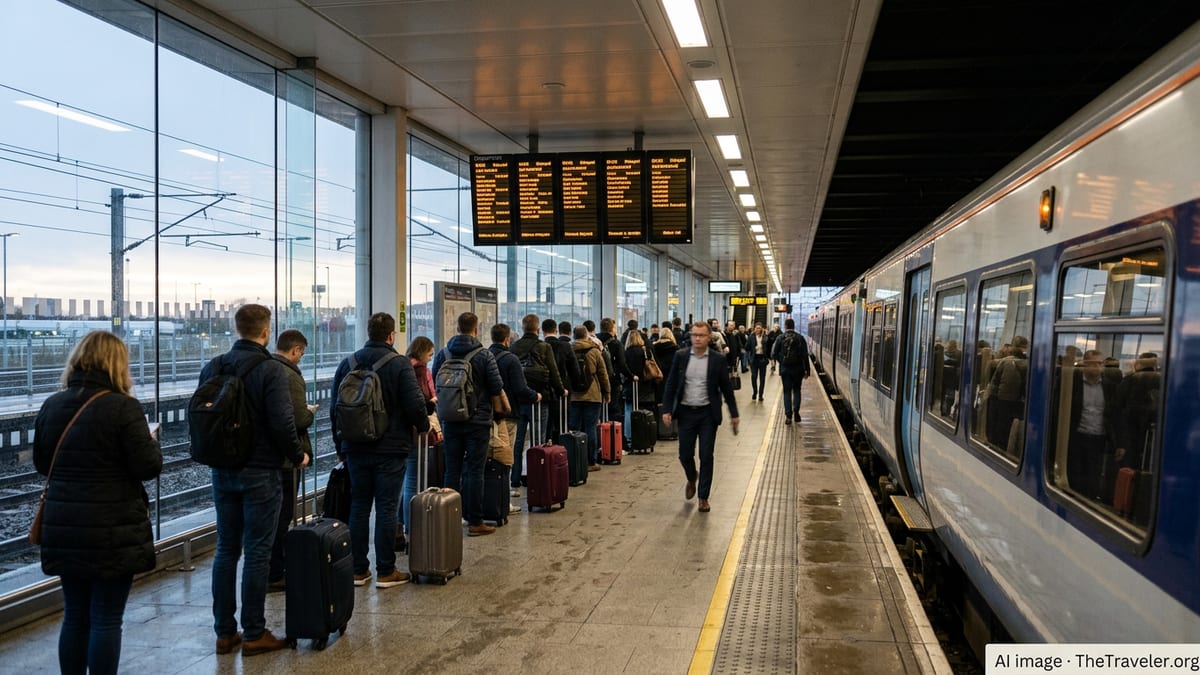
Serious collision on Midland Main Line near Bedford
The collision occurred on the afternoon of Friday 19 June near Elstow, just south of Bedford, on the Midland Main Line, one of the primary routes linking London St Pancras with towns and cities in the East Midlands. Publicly available information indicates that two southbound East Midlands Railway services bound for London were involved in a rear-end collision on the same track.
Reports describe one train running from Corby to London St Pancras and another from Nottingham to the capital, both approaching the Bedford area during the evening peak. The impact left the leading cab of one unit heavily damaged and several carriages derailed or misaligned, prompting a rapid response from emergency services from across the region.
Initial figures from published coverage indicate that the driver of one train died at the scene and around 100 passengers suffered injuries ranging from minor to critical. Around two dozen people remain in hospital, with a smaller number in critical condition, highlighting the severity of the forces involved even at what is believed to have been relatively modest line speeds at the moment of impact.
The crash has been described in industry commentary as a tragic but isolated event on a route that usually carries tens of thousands of passengers a day without serious incident.
Week-long disruption for London–Bedford–Midlands passengers
Network Rail and East Midlands Railway have warned that disruption on the corridor between London, Bedford and the wider East Midlands is expected to last for at least a week while investigators work at the site and engineers repair extensive damage to track and overhead power equipment. Public updates show that services through the affected section south of Bedford remain suspended or severely curtailed.
Trains between London St Pancras and key destinations such as Luton, Bedford, Wellingborough, Kettering, Corby, Leicester, Nottingham and Derby are being cancelled, diverted or terminating short. Many long-distance services are unable to reach the capital, and in some cases operators are advising passengers to travel via alternative main lines, adding substantial time to journeys.
Passengers are being urged, through operator and infrastructure manager channels, to check live journey planners before setting out and to expect crowding on alternative routes, especially during weekday peak periods. Ticket acceptance on other rail operators and limited replacement road transport are being arranged, but capacity constraints and motorway congestion are likely to limit how much of the lost train service can be replaced in the short term.
For many travellers, particularly commuters into London and leisure passengers heading to or from regional cities, the disruption will reshape travel plans over the coming days. Some may opt to work remotely, delay trips or switch to coaches and private cars, potentially increasing pressure on parallel road corridors such as the M1.
Impact on local and regional travel around Bedford
Beyond the intercity market, the crash has had an immediate effect on local and regional mobility around Bedford and nearby towns. Reports indicate that trains have been held outside the affected area, with some stranded passengers having to disembark onto the track in the aftermath of the incident before being escorted to safety, causing delays that rippled through the evening and into the following day.
Services that typically connect Bedford with intermediate stations toward Luton and London are among those most affected, limiting access to onward mainline and airport connections. Luton Airport, which relies heavily on rail links to London and the Midlands, is expected to see more passengers arriving by road, with knock-on congestion around terminal access roads and nearby junctions.
Local businesses in Bedford and surrounding communities may feel the effects as well, with reduced footfall from commuters and visitors and staff finding it more difficult to reach workplaces. Hotels, guesthouses and short-term rentals along alternative routes could see a short spike in demand from passengers forced to break their journeys or re-route.
Travel advisers caution that weekend and early-week journeys for events, holidays and family visits could be particularly challenging while the line remains partially closed, and they recommend building in additional time and considering flexible or refundable tickets where possible.
Safety investigation and infrastructure repairs under way
The Rail Accident Investigation Branch has opened a full inquiry into the causes of the Bedford collision, focusing on the sequence of signalling, train protection systems, train handling and any underlying infrastructure or rolling stock issues. According to publicly available information, investigators are collecting data from on-train recorders, signal boxes and trackside equipment, as well as examining the physical condition of the trains and rails.
Until the investigation progresses, the exact cause of the rear-end collision remains uncertain. Industry analysis circulating in the public domain has raised questions about signalling layout, the configuration of automatic train protection on this section of the Midland Main Line and the human factors affecting train operation in a busy mixed-traffic corridor. However, official findings are expected to take weeks or months to emerge.
Network Rail engineers are concurrently assessing damage to track, sleepers, ballast and overhead line equipment. Visuals from the scene shared in news coverage show disturbed track alignment and damaged support structures, suggesting that significant repair and testing work will be required before normal line speeds can resume. In similar incidents in the past, temporary speed restrictions have often remained in place even after services restart, potentially extending journey times beyond the initial week of acute disruption.
Operators are also expected to conduct internal reviews of operational procedures, including driver training, traffic management and contingency plans, with the aim of reducing the risk of similar events and improving the resilience of services when serious incidents occur.
Advice for affected rail passengers in the coming days
For travellers planning journeys in the days ahead, published guidance from rail operators emphasises flexibility and preparation. Passengers holding advance tickets for routes through Bedford are generally being permitted to travel on earlier or later services, and in some cases on different operators, without extra charge for the duration of the disruption period. Refunds and fee-free changes are being offered for those who decide not to travel.
Regular commuters between the East Midlands and London are advised to monitor updates on a daily basis, as timetables may change at short notice while infrastructure work progresses. Journey planners are being updated frequently, but there may be gaps between operational decisions and information appearing in public systems, particularly during the busiest hours.
For visitors and tourists using the route as part of longer itineraries, travel specialists recommend identifying alternative corridors such as routes into London via Birmingham, Sheffield or the East Coast Main Line, even where these options add time or involve connections across the capital. Booking seats where available, carrying essential medication and water, and allowing for potential queuing at stations can help manage the impact of any residual disruption.
While the focus in the immediate term remains on caring for the injured and restoring a safe level of service, the Bedford collision is also prompting wider discussion in the rail and travel sectors about capacity, resilience and the pace of safety upgrades on some of the busiest lines into London. For now, passengers on the Midland Main Line are being told to expect a difficult week of travel as the network recovers from one of the most serious rail incidents in the United Kingdom in recent years.