


More news on this day
Rail passengers on one of the United Kingdom’s busiest intercity corridors face days of disruption after a fatal train crash near Bedford, with operators warning that reduced services and diversions are likely to continue until at least Thursday.
Get the latest news straight to your inbox!
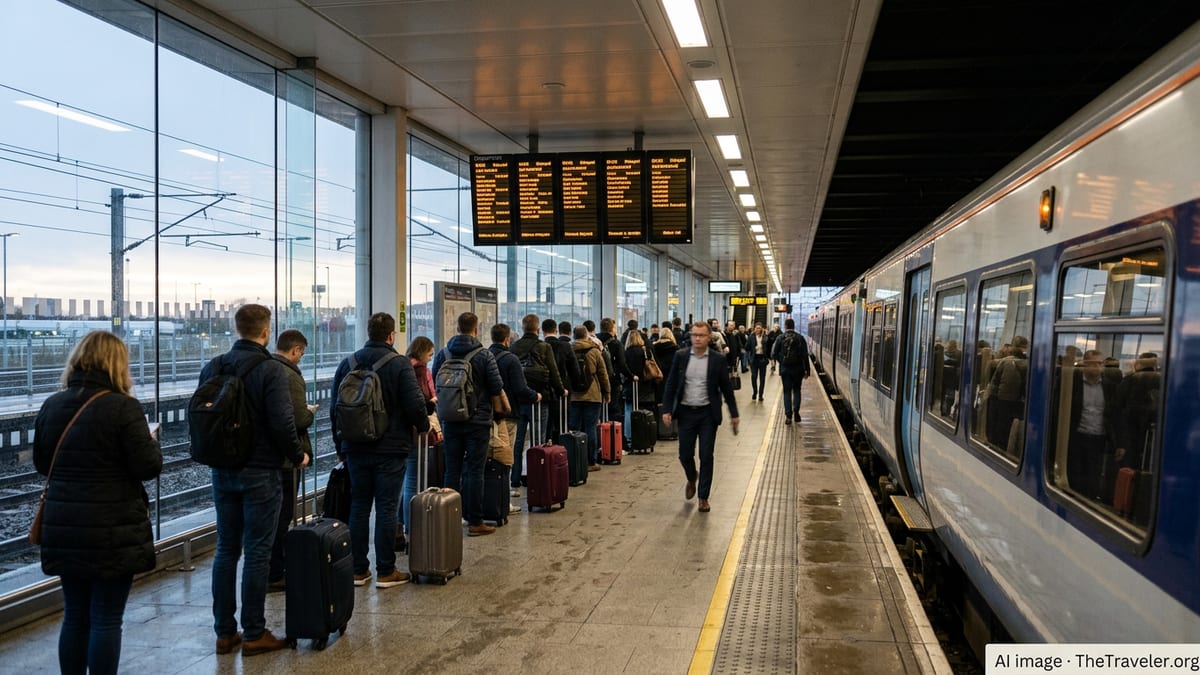
Ongoing disruption on key London to Bedford route
Publicly available information indicates that services on the Midland Main Line between London St Pancras and Bedford remain severely affected following Friday’s collision involving two East Midlands Railway trains south of Bedford. The crash, which occurred in the late afternoon, resulted in the death of a driver and injuries to around 100 people, prompting a major emergency response and the suspension of large sections of the timetable.
Reports from rail operators and transport updates show that very limited services are currently running through the affected stretch of line, with many trains starting and terminating at Bedford instead of continuing to or from London. Some long-distance services from the East Midlands are being diverted, while others are cancelled, significantly extending journey times for passengers travelling between the Midlands and the capital.
Network Rail and East Midlands Railway have both indicated through public statements and travel advisories that disruption is expected to last for several days while investigators examine the scene and engineers undertake complex recovery work. Early estimates suggest that full services are unlikely to resume before Thursday, as damaged rolling stock must be removed and track and signalling equipment inspected and repaired.
Investigation and recovery operations at the crash site
According to published coverage, the collision occurred when two southbound services bound for London St Pancras, one from Corby and one from Nottingham, came into contact on the same stretch of track near the Elstow area. Initial reports describe significant damage to both trains, with several carriages derailed and debris scattered across multiple lines.
The Rail Accident Investigation Branch is reported to be leading a detailed inquiry into the circumstances of the crash, examining on-board data recorders, signalling information and the condition of track and equipment in the area. While early media reports have mentioned potential technical and human factors, investigators are expected to take months to produce a full account of the causes and any safety recommendations.
Recovery operations at the site are described in local and national coverage as complex and time consuming. Heavy lifting equipment is required to move the damaged carriages, and engineers must ensure that overhead power systems and signalling infrastructure are safe before any attempt is made to restore normal train movements. Until that process is complete, capacity through the corridor will remain sharply reduced.
Impact on passengers and alternative travel options
Travel updates from rail operators show that passengers heading between London, Bedford, Luton and key East Midlands cities are facing substantial disruption. Many services that normally run directly to London St Pancras are currently terminating north of the crash site, forcing passengers to transfer to replacement services or seek other routes into the capital.
According to information published by East Midlands Railway and industry travel planners, ticket acceptance has been broadened on some parallel routes, allowing affected passengers to use other operators’ services where capacity permits. However, with a major section of the Midland Main Line constrained, trains that are running are reported to be extremely busy, and journey times may be significantly longer than usual during peak periods.
Rail users are being advised by publicly available journey planners to check departure boards frequently on the day of travel, allow extra time for connections and consider postponing non-essential trips until after the line fully reopens. Commuters who rely on the Bedford and Luton corridor into London are among those most affected, with some reports indicating that early-morning and evening peak services are subject to last-minute changes.
Safety focus as rail network faces renewed scrutiny
National and international media coverage has highlighted that the Bedford collision is one of the most serious incidents to affect the British rail network in recent years, with one fatality and dozens of serious injuries reported. The scale of the emergency response and the extent of the disruption have prompted renewed discussion about rail safety systems and infrastructure resilience on busy main lines into London.
According to specialist rail industry outlets, investigators are expected to examine the performance of train protection systems, signalling arrangements and operating procedures in place at the time of the crash. The aim will be to understand how two London-bound services came to collide on the same section of track and whether any additional safeguards could reduce the risk of similar incidents in future.
Publicly available commentary suggests that the findings from Bedford may influence future investment and safety priorities on the Midland Main Line and other key intercity corridors. While the UK rail network has a strong safety record by international standards, high-profile incidents of this kind typically lead to detailed technical reviews and, in some cases, changes in regulation and operating practice.
What passengers should expect in the coming days
Based on current information from rail operators and infrastructure managers, passengers can expect a phased restoration of services between Bedford and London rather than an immediate return to the full timetable. As track inspections progress and more lines are handed back for use, additional trains are likely to be reintroduced, but service patterns may remain irregular up to and including Thursday.
In the short term, travellers planning to use East Midlands Railway or connecting operators along the affected corridor are advised by publicly available guidance to monitor updates on the morning of travel and prepare for crowding and potential standing-room-only conditions on some services. Those with flexible plans may wish to avoid peak hours or travel on alternative days where possible.
As recovery and investigation work continues at the crash site, the wider rail industry is expected to maintain a focus on passenger welfare, including assistance for those affected by delays and cancellations. For now, the collision near Bedford remains both a serious operational challenge for the network and a stark reminder to travellers of the importance of checking live information before setting out.