


Seeing the Northern Lights ranks high on many bucket lists, yet countless travelers fly home disappointed after cloudy, rushed or poorly planned trips. The aurora is not an attraction you can simply book for 8 p.m. on a Tuesday. It is a natural phenomenon that rewards those who understand its quirks and plan around them. Before you chase the Northern Lights, it helps to know the most common mistakes travelers make and how to avoid repeating them.
Get the latest updates straight to your inbox!
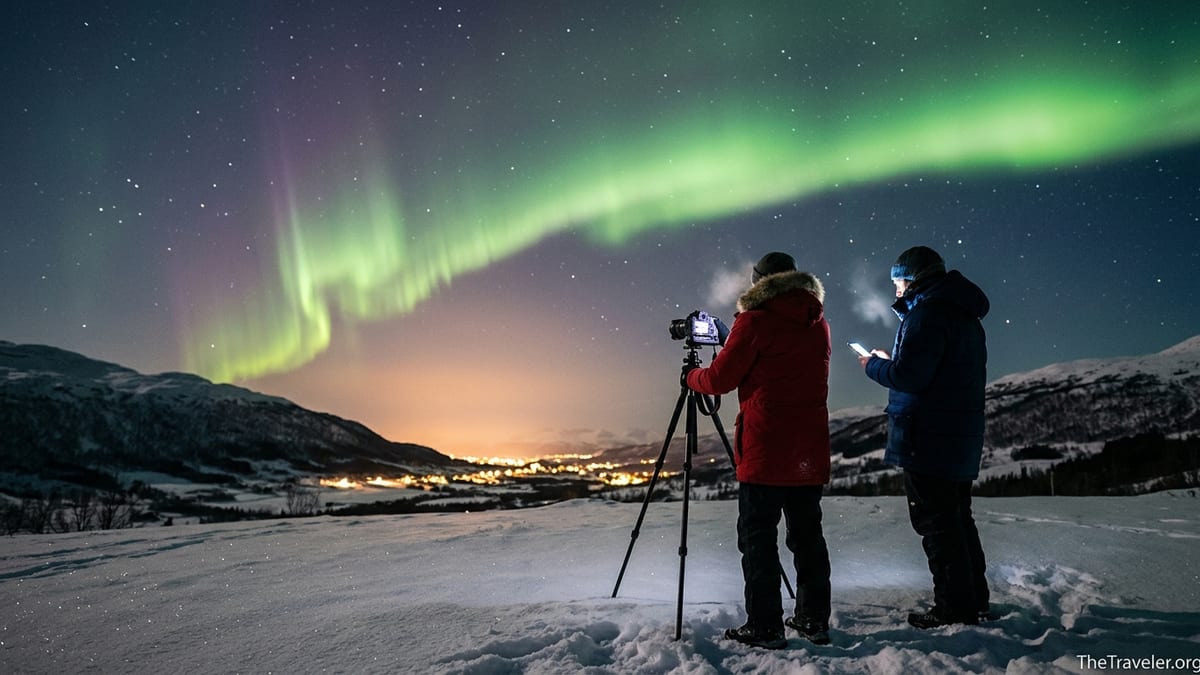
Misunderstanding Where and When You Can Actually See Them
One of the biggest mistakes is assuming you can see the Northern Lights anywhere in the Arctic at any time in winter. In reality, you need both darkness and enough geomagnetic activity, and the odds vary widely by place and month. Classic aurora destinations such as Tromsø in northern Norway, Abisko in Swedish Lapland, Rovaniemi in Finnish Lapland and Reykjavik in Iceland have long, dark nights from roughly late September to late March, but conditions in each place differ. For example, Abisko markets itself on its “blue hole” microclimate that tends to have clearer skies than surrounding regions, while coastal Reykjavik is famous for rapid weather changes and heavy clouds.
Travelers also misjudge timing. Many arrive in late April or early September expecting peak shows, only to discover that nights are too short or too bright. Operators in Rovaniemi note their core aurora season runs roughly from early September to early April, with the most reliable combination of darkness and tolerable temperatures often in February and March, when nights are long but the cold is slightly less brutal than midwinter. ([polarlapland.com](https://polarlapland.com/guides/best-month-northern-lights-rovaniemi?utm_source=openai))
Another common error is booking only one or two nights in an aurora destination. Even in prime season, clouds and quiet solar activity can wipe out several consecutive nights. Guides in Lapland commonly suggest allowing at least four to seven nights in-region to give yourself enough chances. A long weekend in Iceland or northern Norway can certainly be lucky, but it is closer to a lottery ticket than a plan.
Finally, many visitors aim for December because of Christmas markets or school holidays, without realizing that December can bring near-constant cloud in some coastal areas. A traveler who booked three nights in Reykjavik in late December, for instance, might find every evening socked in with rain and low cloud, while someone visiting Abisko in early March stands a much better chance of a clear sky. Being flexible on month and location, rather than chasing a specific holiday date, dramatically improves your odds.
Trusting the Kp Index and Apps While Ignoring Real Conditions
The Kp index, a global measure of geomagnetic activity on a scale from 0 to 9, is heavily overused and misunderstood by first-time aurora hunters. Travelers see a forecast of Kp 5 and assume they are guaranteed a dazzling display, or see Kp 1 and cancel plans to go out. In reality, the Kp index mainly describes how far south the auroral oval may extend, not whether you personally will see lights above your head. At high-latitude destinations like Tromsø or Rovaniemi, local guides routinely report good displays at Kp 1 or 2, as long as skies are clear and it is fully dark. ([stepsauroraguide.com](https://www.stepsauroraguide.com/aurora-photography-blog/kp-index-and-the-aurora-explained-from-kp0-to-kp9?utm_source=openai))
What matters just as much as Kp is cloud cover, moon brightness and local darkness. A quiet Kp of 1 under crystal-clear new-moon skies outside Abisko often beats a Kp 6 storm hidden behind thick cloud in downtown Reykjavik. Experienced chasers pay as much attention to local cloud maps and real-time magnetometer data as they do to headline Kp numbers. Many modern aurora forecast apps now combine Kp, solar wind speed, Bz, and cloud cover to give a more realistic picture of your chances hour by hour. ([polarlapland.com](https://polarlapland.com/guides/best-month-northern-lights-rovaniemi?utm_source=openai))
Another pitfall is relying solely on long-range Kp forecasts. Several popular apps show a 27-day outlook, and people book specific nights months ahead based on a predicted spike in activity. Space weather experts repeatedly warn that such long-range forecasts are approximate at best. A family who book their only aurora tour in Tromsø based on a high Kp prediction for a specific night may arrive to find the forecast downgraded or clouds rolling in. Treat Kp as one tool among many, useful within a day or two rather than a guarantee weeks in advance.
Real-world example: in March 2024, strong geomagnetic storms produced Northern Lights visible across much of Europe and the northern United States, but many people missed the show because local clouds or city lights blocked their view, despite impressive Kp numbers. Others saw spectacular aurora at modest Kp simply because they had learned to watch short-term forecasts, escape light pollution and stay out for several hours instead of giving up after a quick glance outside. ([foxweather.com](https://www.foxweather.com/learn/kp-index-northern-lights-aurora-borealis?utm_source=openai))
Underestimating Arctic Weather, Darkness and Cold
Another major mistake is treating an aurora hunt like an evening city stroll. In winter, Tromsø, Rovaniemi and Abisko often see temperatures well below freezing. Reykjavik, though milder, is notorious for strong wind and sudden sleet. Travelers who head out in jeans, thin sneakers and a fashionable wool coat often last no more than 20 minutes before retreating indoors, precisely when the aurora begins to strengthen. Tour operators across northern Scandinavia routinely provide thermal suits for a reason: standing still on a frozen lake for three hours is far colder than walking around town for 30 minutes. ([rovaniemi.tours](https://rovaniemi.tours/northern-lights-tours?utm_source=openai))
The darkness itself can also be surprising. Between roughly November and January, destinations above the Arctic Circle experience very short days or full polar night. In Tromsø, the sun stays below the horizon for weeks in midwinter. Some travelers underestimate how disorienting that feels and book back-to-back late-night tours plus daytime excursions, only to find themselves exhausted and irritable. Carefully spacing aurora hunts, booking a couple of slower days, and being realistic about jet lag from long-haul flights can make the experience more enjoyable.
Weather patterns differ between inland and coastal regions, and ignoring that can cost you sightings. Abisko’s inland valley, for instance, statistically enjoys more clear nights than cloudier coastal Norway. In Finland, Rovaniemi’s outskirts often offer clearer skies and less light pollution than the city center. A traveler who bases themselves right in a bright resort village without transport may spend several nights under a permanent glow from streetlights and hotels, while another guest who booked a small lodge just outside town has a dark sky at their doorstep.
Concrete example: budget group tours from Rovaniemi often start around 75 euros for a short three-hour “aurora and campfire” outing. These trips may visit only a single nearby spot and spend much of the time around the fire, which is enjoyable but not ideal if clouds roll in. In contrast, more flexible minivan-based “aurora hunts” in the region, priced closer to 100 to 160 euros, include long drives toward clearer skies and provide heavy-duty winter clothing so guests can stay outside far longer without freezing. Understanding the weather and the reality of standing around in the cold helps you choose the right style of trip. ([rovaniemi.tours](https://rovaniemi.tours/northern-lights-tours?utm_source=openai))
Booking the Wrong Kind of Tour or Not Booking a Tour at All
Some travelers assume any “Northern Lights tour” will deliver the same experience, but offerings differ dramatically. In major hubs like Reykjavik and Tromsø you will see everything from 50-passenger coach excursions priced cheaply to small-group minibus hunts and private photography tours that cost several times more. Budget coach tours may simply drive you 45 minutes outside the city, park at a standard lay-by, and wait. If clouds appear or the solar wind quiets down, there is little flexibility to move. On the other hand, a small-group operator in a minivan may analyze cloud charts in real time and drive two hours inland or even across a border in search of clear sky.
In Finnish Lapland, typical prices range from around 75 euros per person for a short group outing up to 250 euros or more for premium small-group or private tours that include photography, thermal clothing and unlimited mileage. Travelers often pick the cheapest option assuming they are just paying for a ride into the countryside, then discover that the bus stayed parked in poor conditions while smaller groups that night drove on and found clear gaps in the clouds. Reading the fine print about group size, distance covered, and whether the operator cancels in bad weather or still goes out hunting is essential. ([rovaniemi.tours](https://rovaniemi.tours/northern-lights-tours?utm_source=openai))
The opposite mistake is refusing to consider a tour at all. Do-it-yourself aurora hunting can be rewarding, especially for those who rent a car and are comfortable driving on winter roads. But visitors from milder climates often underestimate icy highways, white-out snow squalls and the fatigue of driving at midnight after a long travel day. In Norway and Finland, winter roads can be well maintained yet still intimidating for inexperienced drivers. Joining a reputable local operator, at least for the first night or two, teaches you what conditions are normal, where to park safely and how guides interpret forecasts in real time.
Another factor is language and local knowledge. Apps might show “cloudy” over a broad region, yet an experienced Tromsø guide knows that certain inland valleys clear more quickly when the wind swings north. In Iceland, Reykjavik-based operators may steer their minibuses toward the drier interior or along the south coast depending on local weather models. These real-time decisions can mean the difference between a faint glow behind clouds and a full-sky display. Travelers who rely solely on a forecast icon, or who stay anchored to a single spot, frequently miss shows that locals manage to catch.
Finally, check tour policies on “aurora guarantees.” Some companies offer free rebookings or partial refunds if no lights are visible, while others define success as a barely visible arc that technically counts as an aurora. If your heart is set on strong displays and keepsake photos, prioritize operators that clearly explain how they measure success, how many hours they spend hunting, and whether professional photography is included rather than marketed as an add-on at the last minute.
Ignoring Photography Basics and Coming Home Without Usable Images
A frequent regret among travelers is returning with blurry, overexposed, or completely black photos. Many assume that simply pointing a smartphone at the sky will capture what their eyes see. While the latest high-end phones are surprisingly capable in low light, they still require basic technique, and dedicated cameras demand even more care. Guides in Tromsø and other aurora hotspots report seeing the same errors night after night: people leave flash turned on, which lights up nearby snowbanks and ruins the sky, or they use very long exposures that turn dynamic “curtains” of light into a washed-out blur. ([arcticnorwaytours.com](https://arcticnorwaytours.com/en-us/northern-lights-photography-tips/?utm_source=openai))
One real example: a traveler in northern Norway set their camera to a 25-second exposure because a blog had recommended long shutters for night photography. When the aurora intensified and began to dance rapidly, their images showed only a greenish smudge instead of detailed ribbons. Local guides instead suggested exposures closer to 4 to 8 seconds at a wide aperture, with ISO tuned to the brightness of the display. Similarly, people often forget to switch off autofocus. In a dark environment the camera hunts for focus, resulting in soft or completely out-of-focus images. The fix is simple: arrive with a tripod, practice manual focus on a distant light or bright star, then avoid bumping the focus ring.
On the smartphone side, mistakes include relying entirely on automatic mode or standing in a brightly lit car park. Even phones with strong night modes struggle when nearby artificial light overwhelms the sky. Travelers in Reykjavik have discovered that driving just 20 to 30 minutes away from the city’s glow dramatically improves both their view and their photos. Some apps, such as dedicated aurora camera apps, allow longer exposures and manual focus on phones, helping bridge the gap for those who do not want to carry a DSLR.
Another overlooked issue is battery life. Cold drains batteries rapidly, and it is common to see guests in Lapland watch their phones or cameras shut down just as the aurora peaks. Bringing at least one spare camera battery and a small power bank for your phone, kept warm inside an inner pocket, greatly reduces this risk. Many professional aurora tours warn guests about this in predeparture emails, but independent travelers often find out only when their devices die in the field.
Overplanning Daytime Activities and Underestimating Fatigue
The Northern Lights demand patience and late nights. Travelers frequently idealize a schedule that looks like this: dog sledding at 9 a.m., reindeer farm at midday, snowmobiling in the afternoon, a full Northern Lights tour from 8 p.m. to 1 a.m., and a similar pattern for several days in a row. On paper it sounds efficient, but in practice it leaves people exhausted, cold and far less willing to stay outside long enough to catch the best aurora activity, which often occurs after midnight.
Consider a visitor from the United States flying to Rovaniemi for a three-night stay. After a long-haul overnight flight and a connection through Helsinki, they arrive jet-lagged yet determined not to waste a moment. They book a snowmobile safari the first afternoon and an aurora tour that same night. By 11 p.m. they are shivering and half-asleep on the minivan, and when the guide offers to stay out another hour because activity is picking up, they choose to go back to the hotel. The strongest display of the night occurs just after they return, visible from the same roadside lay-by they left behind.
Leaving blank space in your itinerary is not laziness; it is strategy. Many repeat aurora travelers purposely schedule a quiet first evening to recover from flights, followed by two or three nights of serious aurora hunting. They mix in gentle daytime activities such as slow walks, saunas or visiting museums instead of stacking intense tours every day. This approach keeps you alert enough to react when guides suggest a late departure or an extended stay because conditions look promising.
Families with children often underestimate how challenging late nights in the cold can be. In Lapland, some operators offer “kid-friendly” aurora trips that stay closer to town, include warm cabins and hot drinks, and return earlier in the night. While these experiences are more comfortable, they also reduce the chance of witnessing the most dramatic shows. Parents may prefer to alternate nights, with one adult joining a more serious hunt while the other stays back with younger children, rather than dragging everyone along every time.
The Takeaway
Seeing the Northern Lights is never guaranteed, but smart planning tilts the odds heavily in your favor. The travelers who go home satisfied are rarely the ones who simply booked the cheapest bus tour for a single night and checked the Kp index once. They are the ones who understood which destinations offer clearer skies, chose a realistic month, stayed multiple nights, and remained flexible with both weather and sleep schedules.
They also paid attention to the small details: packing proper thermal layers and hand warmers instead of just a city coat, learning a few basic camera settings before boarding the flight, and reading the full description of an aurora hunt rather than the headline price. They treated Kp as a useful indicator, not a promise, and accepted that cloud maps and local knowledge matter just as much as solar data.
Above all, successful Northern Lights travel is about embracing the experience rather than fixating on a single perfect photo. Nights spent under a starry Arctic sky, around a quiet campfire on a frozen lake, or driving along a snowy road in search of gaps between the clouds can be memorable even when the aurora remains modest. If you arrive prepared for the cold, the unpredictability and the long hours, the first time the sky erupts in green and pink curtains will feel even more extraordinary.
FAQ
Q1. What is the best month to see the Northern Lights?
For many classic aurora destinations in the Northern Hemisphere, the most reliable period runs from about late September to late March, when nights are long and dark. Within that window, February and March often offer a good balance of darkness, clearer skies and slightly milder temperatures than midwinter, though local weather patterns vary by region.
Q2. How many nights should I plan for an aurora trip?
Planning at least four to seven nights in an aurora destination greatly improves your chances of a clear, active night. You might see the Northern Lights on your first evening, but clouds or quiet solar activity can also wipe out several nights in a row, so more time on the ground equals better odds.
Q3. Is a higher Kp index always better for seeing the lights?
A higher Kp index means the auroral oval can extend farther south, but it does not guarantee you will see lights where you are. In high-latitude locations above the Arctic Circle, good displays can often appear at Kp 1 or 2 if skies are clear and dark, while a Kp 6 storm can be completely hidden by cloud or drowned out by city lights.
Q4. Do I really need to join a tour, or can I go alone?
You can certainly hunt for the Northern Lights on your own, especially if you have a rental car and experience driving on winter roads. However, first-time visitors often benefit from at least one guided tour, where local experts handle the driving, interpret real-time forecasts and know where to find clear skies and dark viewpoints.
Q5. What should I wear on a Northern Lights hunt?
Dress as if you will be standing still outdoors for several hours in subzero temperatures: insulated boots, thick wool or synthetic socks, thermal base layers, a warm mid-layer, a windproof outer jacket and pants, plus a hat, scarf and insulated gloves or mittens. Many Scandinavian and Arctic operators provide heavy-duty thermal suits and boots, but you still need warm layers underneath.
Q6. Can I photograph the Northern Lights with a smartphone?
Modern smartphones can capture the aurora, particularly in brighter displays, but you will get better results by using a tripod or stable surface, enabling any night or long-exposure mode, and moving away from strong artificial light. Dedicated cameras with manual settings and a fast wide-angle lens still offer more control, but a well-prepared phone can produce impressive images.
Q7. What common photography mistakes should I avoid?
Avoid using flash, extremely long exposures during fast-moving displays, and autofocus in very dark conditions. Using a sturdy tripod, setting a moderately long exposure of a few seconds, keeping ISO high enough for a bright image without blowing out the highlights, and checking focus on distant stars will dramatically improve your results.
Q8. Is December the best time because of Christmas?
December offers a festive atmosphere and very long nights, but it is not automatically the best month for clear skies. Some coastal regions, such as around Reykjavik or northern Norway’s fjords, can be particularly cloudy in midwinter. Late February and March often provide clearer weather while still delivering plenty of darkness, so flexibility on timing can be more important than aligning with holidays.
Q9. How far from the city do I need to go to avoid light pollution?
In many destinations, driving 20 to 40 minutes away from the city center is enough to escape the worst light pollution, as long as you head toward darker countryside or coastline. In very built-up regions you may need to go farther. Local tour operators and dark-sky maps can help you identify good viewing spots with minimal artificial light.
Q10. What if I do everything right and still do not see the Northern Lights?
Even with careful planning, nature does not offer guarantees. If you face clouds or quiet solar activity on your dates, focus on enjoying other Arctic experiences such as husky sledding, snowshoeing, saunas, local food and culture. Many travelers plan a second aurora-focused trip in a different year, applying what they learned the first time to give themselves an even better chance next time.