


On a map, Lake Inari looks like a distant patch of blue on the edge of Europe. In reality, it is one of northern Finland’s most intriguing destinations: a vast wilderness lake framed by Sámi culture, deep silence and extreme seasons. Many travelers arrive here with dreamy images of northern lights or the midnight sun, then quickly discover that distances, weather and limited services demand more preparation than a typical Nordic city break. Drawing on recent traveler experiences and local information, this guide unpacks the practical things most visitors wish they had known before they boarded the plane to Ivalo or drove into Inari village.
Get the latest updates straight to your inbox!
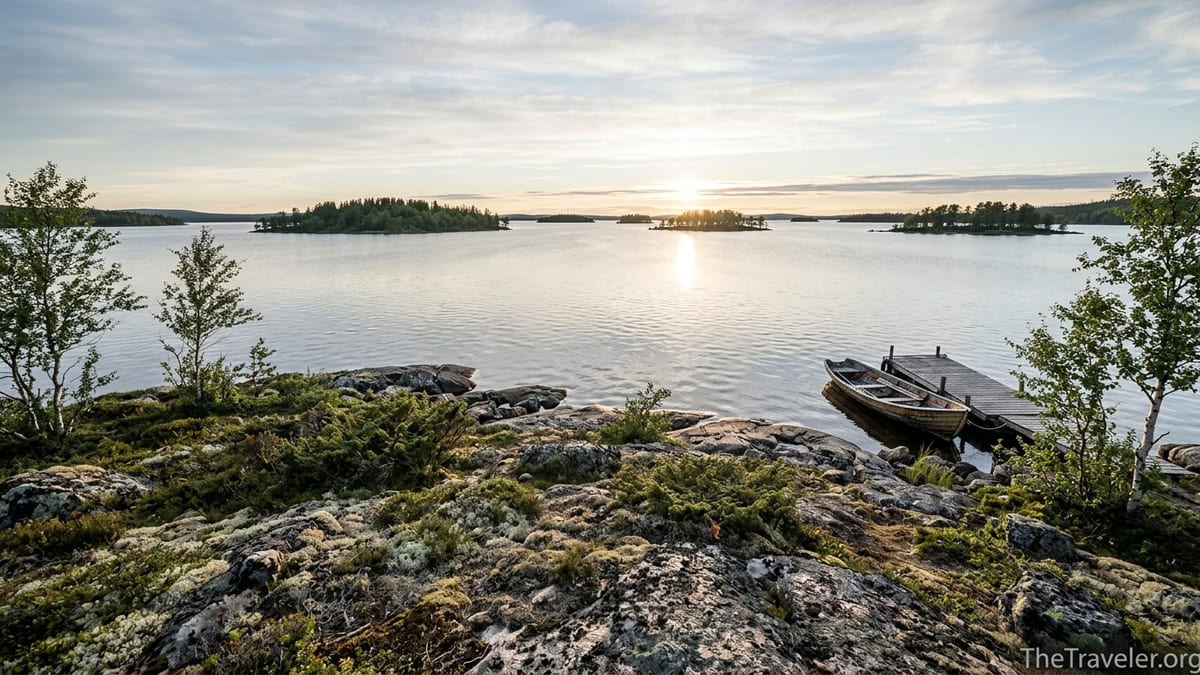
Understanding Where Lake Inari Really Is
Lakes in Finland are everywhere, so it is easy to underestimate just how remote Lake Inari is. This is not a quick side trip from Helsinki. Inari sits in northern Lapland, roughly 1,000 kilometers from the capital, closer to the Arctic Ocean in Norway than to most Finnish cities. The nearest airport is Ivalo Airport, about 50 kilometers south of Inari village, with scheduled flights mainly from Helsinki and some seasonal international services. From Ivalo Airport, travelers typically continue by prebooked shuttle, taxi or rental car to the lake region.
The distances matter because they affect both time and cost. Visitors who assume they can hop on a frequent train or low cost bus at the last minute are often surprised. There is no railroad this far north, so the last rail stop for many itineraries is Rovaniemi, several hours away by road. From there, bus companies operate long haul routes toward Ivalo and Inari, but services can be limited in winter holidays and on public holidays. It is common for first time visitors to realize too late that the bus they expected to catch on Christmas Eve or New Year’s Day simply does not run.
Even once you reach Inari municipality, Lake Inari itself is huge, about the third largest lake in Finland with thousands of islands. “Staying on Lake Inari” can mean a cabin near Inari village, a lodge in the settlement of Nellim on the eastern shore, a wilderness hotel accessible by a long gravel road, or even a mobile cabin placed on frozen lake ice in winter. Before booking, travelers benefit from checking the actual location of their accommodation relative to Inari village, grocery stores and activity starting points.
Because of this scale and remoteness, travel times between local spots can be longer than expected. A 40 kilometer drive to a trailhead or harbor might take close to an hour in winter conditions. Many visitors say that understanding the geography in advance would have helped them plan fewer hotel changes and more relaxed days on the lake.
Getting There and Getting Around Without Stress
Recent travelers often say that transport was the most confusing part of planning a Lake Inari trip. The standard route for international visitors is to fly to Helsinki, then connect to Ivalo Airport. Depending on the season, this connection may operate once or several times a day. In winter holiday periods, flights can sell out, and prices climb sharply when booking at the last minute, so most travelers now reserve their Ivalo flights months ahead.
From Ivalo Airport, you typically have three options to reach Lake Inari: prearranged shuttle, taxi, or rental car. A charter style shuttle service runs between the airport and Inari village when there are flights, but it usually needs to be booked in advance through local operators. Many visitors who assumed there would be an hourly public bus at the airport discovered instead that the only direct option on their arrival day was a taxi, which can cost the equivalent of a couple of hundred euros for the 50 kilometer trip, depending on time and vehicle size. Renting a car at the airport is popular for those comfortable driving in winter, with major international rental brands present, but automatic transmission vehicles and winter equipped SUVs book out quickly in peak months.
There are regional buses between Rovaniemi, Ivalo and Inari operated by Finnish companies whose schedules are listed through national bus ticket platforms. These buses might run once or a few times per day rather than hourly, and some routes only operate on weekdays. Travelers who plan to arrive on a Sunday evening or around national holidays sometimes discover that there is no suitable connection that day. Those who study timetables carefully, including the return leg, and build their itinerary around the actual bus times report far less stress and fewer unexpected hotel nights in Rovaniemi or Ivalo.
Once you are based in the Lake Inari area, having your own car dramatically increases your flexibility for trailheads, small harbors and viewpoints. Without a car, you are largely relying on prearranged tours, occasional local buses and taxis that must usually be ordered by phone. A common pattern is that visitors without a car end up doing more guided activities from Inari village itself, while those with a rental vehicle explore further, driving to smaller harbors for private boat trips or to quiet parking areas for independent hikes.
Extreme Seasons, Extreme Light and What That Means for You
The single biggest surprise for many travelers is how radically the seasons on Lake Inari change not only the scenery, but also daily life. In deep winter, roughly from December to February, you are firmly inside the Arctic Circle. For several weeks, the sun does not rise above the horizon. This polar night does not mean total darkness all day, but daylight is limited to blue twilight hours. Visitors who picture bright snowy afternoons sometimes arrive in late December and feel disoriented by how quickly it is dark again by early afternoon.
Winter brings magical experiences: the lake freezes thick enough to support snowmobiles and sometimes mobile glass cabins, northern lights frequently flicker overhead on clear nights, and activities like husky sledding, snowshoeing and ice fishing are common. At the same time, temperatures can drop well below minus twenty degrees Celsius, and wind over the open lake makes it feel much colder. Travelers who arrive with only fashion winter coats or city sneakers often find that their first unplanned expense is renting proper winter overalls and boots from local safari companies or purchasing thermal layers in the small sports sections of local supermarkets.
Summer on Lake Inari feels like a different world. The midnight sun keeps the sky bright around the clock in June and early July, and even in August nights are short and pale. Mosquitoes and other insects can be intense around wetlands and forests during the warmest weeks, especially near sunset. Many hikers and campers say they wish they had brought head nets and stronger repellent to fully enjoy lake shore campsites. The water in Lake Inari remains cold even in July, so swimming tends to be brief and bracing, but boat trips, paddling, fishing and multi day hikes become easier with long daylight.
Between these extremes, shoulder seasons in October and April can be deceptively tricky. In late autumn, many summer boat tours and attractions close while winter activities have not yet started, and weather tends to be wet, windy and dark. In early spring, melting ice and snow can make some lake routes unsafe and trails muddy. Travelers who time their visit carefully to either the heart of winter or the more settled part of summer usually leave with better memories than those who arrive exactly when locals are waiting for either freeze up or thaw to finish.
What Activities Actually Look Like on Lake Inari
Many visitors imagine Lake Inari as a single, defined attraction, but in practice you assemble your experience from a mosaic of small operators, self guided outings and cultural visits. A typical summer day for a first time traveler staying in Inari village might involve taking a scheduled daytime cruise on a comfortable lake vessel that departs from near the Sámi Museum. These cruises often last a couple of hours, wind between some of the thousands of islands and include a visit to a small island with Sámi heritage, where guides explain old sacrificial sites and island cemeteries. Travelers frequently mention that they underestimated how expansive the lake is until they spent time onboard watching low tree covered islands slide past for kilometers.
Another common experience is a guided or self guided hike to a historic wilderness church inland from a lake bay, reached from a marked trail that starts near the shore. The walk through low fell forest and rocky ground is not technically difficult in summer, but it can be longer and wilder than visitors expect. Paths may be rooty, sometimes wet, and there are few facilities beyond simple fire pits and shelters. Many people say sturdy waterproof footwear and a willingness to be self reliant outdoors made the difference between a long slog and a memorable wilderness day.
Independent travelers also book smaller boat trips with local skippers from tiny harbors scattered around the lake. In places like Nellim, a village on the eastern shore, accommodation providers often arrange private outings where a local takes guests by open boat to secluded islands for campfire coffee, fishing or photography. In winter, these transform into snowmobile or sled tours across the frozen lake, sometimes combining with a visit to an ice fishing spot or a wilderness hut. The reality is usually more low key and closer to local life than a heavily packaged resort excursion, and many return visitors say that these small scale trips are what made them fall in love with the region.
Cultural experiences are as important as nature for many guests. Inari is a central place for Sámi institutions in Finland, and the main museum and cultural center in the village is frequently described as a highlight. Visitors can learn about the different Sámi groups, traditional livelihoods such as reindeer herding and fishing on Lake Inari, and contemporary Sámi art. Many travelers wish they had reserved enough time here instead of treating it as a quick stop between outdoor activities, as the exhibitions and film presentations can easily absorb half a day.
Costs, Availability and Booking Realities in a Small Arctic Community
On a per day basis, Lake Inari trips are not cheap compared with city breaks in southern Europe. Food, transport and guided activities reflect both Finnish price levels and the extra costs of operating in a sparsely populated Arctic region. Accommodation options around Lake Inari range from simple cabins with shared facilities to lakeside hotels and glass igloo style rooms aimed at northern lights watchers. In peak winter weeks and during high summer, rates for well located lakefront properties can reach premium levels, and many sell out months in advance.
Travelers who expected a wide choice of last minute rooms often find that in December and February, the main hotels and more atmospheric cabins in Inari village, Nellim and other popular spots are fully booked by tour groups or organized northern lights packages. Those who booked early usually report better value, for example securing a small cabin with sauna and partial lake view at a moderate price, while late bookers end up paying similar amounts for less charming roadside motels or have to adjust their travel dates. In summer, availability tends to be easier, but particular weeks tied to domestic holidays can still be very busy.
Daily expenses also surprise some visitors. There are no bargain chains or big discount supermarkets in tiny lakeside settlements, so groceries in local markets and snacks from kiosks can feel expensive to those coming from lower cost countries. Restaurant meals, especially those featuring local fish, reindeer or tasting menus, are typically priced at northern European levels. Many travelers recommend booking self catering accommodation with a small kitchen, then mixing a few special restaurant dinners with simple home cooked meals made from local ingredients like Arctic char, potatoes and berries bought in the village supermarket.
Guided activities often represent the biggest discretionary expense. A half day husky tour, northern lights snowmobile safari or private boat excursion on the lake can quickly add up for families or groups. At the same time, nearly everyone who pays for a high quality local tour emphasizes that the experience felt intimate and personal rather than mass market, especially compared with busier Lapland resorts further south. Understanding these cost patterns in advance helps travelers budget realistically and allocate money to the experiences that matter most to them.
Respecting Sámi Culture and the Fragile Arctic Environment
Lake Inari lies at the heart of Sámi homeland in Finland, and for many local residents, tourism is only one strand in a life that also involves reindeer herding, fishing and cultural work. Visitors often say that they did not realize before arriving how important it is here to treat both the land and its people with respect. That can start with small choices, such as learning a few basic facts about Sámi languages and history before visiting the museum, or choosing tour operators who clearly explain how they work with local communities and reindeer herders.
On the environmental side, the lake and surrounding wilderness areas are relatively pristine, with strict rules about building and resource use. Travelers used to heavily developed alpine resorts sometimes expect boardwalks, wide graveled paths and frequent cafes along trails. Around Lake Inari, marked routes can still feel wild and unmanicured. You are often walking on bare rock, through boggy sections or along narrow single tracks with only occasional signposts. Leaving no trace by packing out all rubbish, respecting fire restrictions and staying on marked trails where they exist are simple but important ways to help keep the ecosystem healthy.
Reindeer roam freely throughout the region, often crossing roads without warning and wandering through village streets. For local herders, these animals are both culturally symbolic and economically essential. Visitors in rental cars quickly discover why locals urge slow, cautious driving, especially at night and in winter conditions. Hitting a reindeer is distressing for everyone involved and can create serious problems for herders. On foot, giving animals plenty of space and not attempting to feed or pet them respects both tradition and animal welfare.
Photography is another area where expectations differ. Many travelers are keen to capture images of Sámi people in traditional clothing at cultural events or performances. Locals emphasize that everyday Sámi life is not a living museum, and that asking permission before photographing individuals or private property is basic courtesy. During guided cultural experiences, it is common for hosts to invite photography at specific moments, such as demonstrations of handicrafts or traditional music, while requesting that certain ceremonies or sacred sites not be filmed at all.
Practical Packing and Safety Tips People Wish They Had Followed
Looking back, many Lake Inari visitors say that the difference between a comfortable and a miserable trip came down to a few practical items in their luggage. In winter, proper layered clothing is essential: a moisture wicking base layer, warm mid layer and windproof, insulated outer layer. Local guides note that feet and hands are often the first parts of the body to suffer, so insulated boots roomy enough for thick socks, and serious mittens worn over thin liner gloves, are more useful than fashionable city boots or tight leather gloves. Even if your accommodation supplies thermal overalls for activities, you will still need your own warm everyday clothing for walking between cabins, restaurants and harbors.
In summer, visitors repeatedly mention three essentials they underestimated: high quality insect repellent, a light but effective wind and rain jacket, and quick drying footwear for boardwalks, boats and occasionally boggy trails. The weather can change rapidly on Lake Inari, shifting from hot sunshine to cool wind and drizzle in a single afternoon. Heavy urban umbrellas are less practical than layers you can quickly put on or remove. A thin hat and buff or scarf are useful almost year round to protect from either cold wind or bright sun that never sets.
For navigation and safety, many parts of the Lake Inari area have limited mobile coverage, especially once you move away from main roads and villages. Locals advise downloading offline maps in advance and letting your accommodation or tour operator know about any independent outing you plan, such as a solo paddle or hike. On the frozen lake in winter, sticking to marked snowmobile routes or traveling only with experienced guides is crucial, as conditions and safe ice thickness can vary by bay and season. Travelers occasionally underestimate how disorienting a whiteout or snowstorm over a flat frozen lake can be.
Finally, travel insurance that covers winter sports, remote evacuation and missed connections is more than a formality here. Weather in northern Lapland can delay flights, and a long chain of connections makes it easier for luggage to go missing temporarily. Packing key items, such as one full set of thermal layers and essential medication, in your cabin baggage is a lesson many travelers learn too late.
FAQ
Q1. When is the best time of year to visit Lake Inari?
The best time depends on what you want to experience. For northern lights, many travelers choose late January to March when nights are still dark but days are a bit longer. For hiking, boating and the midnight sun, late June to early August offers long daylight and open water, although insects can be strong in high summer.
Q2. Do I need a car to enjoy Lake Inari?
You can visit without a car if you base yourself in Inari village and rely on guided tours, airport shuttles and occasional buses. However, a rental car gives you much more flexibility to reach trailheads, small harbors and viewpoints around the huge lake, especially in summer.
Q3. How cold does it really get in winter?
Midwinter temperatures around Lake Inari can drop well below minus twenty degrees Celsius, and wind over the lake makes it feel even colder. Short spells of milder weather do occur, but travelers should pack for severe cold rather than hoping to be lucky with temperatures.
Q4. Is Lake Inari a good destination for families with children?
Yes, provided you plan carefully. Families often enjoy husky rides, gentle snowshoe walks, easy summer cruises and cabin stays with saunas. The remoteness, limited indoor entertainment and cold in winter mean it suits children who are comfortable outdoors and parents ready to organize their own downtime.
Q5. Can I see reindeer and northern lights without booking tours?
Reindeer roam freely and are frequently visible along roads and even in village streets, especially in summer and autumn. Northern lights may be visible right from your accommodation on clear winter nights if skies are dark and activity is strong, though guided tours improve your chances by taking you away from any light pollution.
Q6. How many days should I spend at Lake Inari?
Many travelers find that three full days is the bare minimum to settle in, enjoy a couple of activities and visit the main museum. A stay of five to seven nights allows a mix of guided outings, independent exploring and rest days, which is especially valuable in winter when short daylight makes each day feel brief.
Q7. Is it possible to visit Lake Inari on a tight budget?
It is challenging but not impossible. Savings usually come from traveling in shoulder season, choosing simple cabins or guesthouses with kitchens, cooking your own meals and prioritizing one or two key paid activities while enjoying free hikes and lake views the rest of the time.
Q8. How reliable are public buses in the Lake Inari region?
Buses connecting Rovaniemi, Ivalo and Inari are generally reliable but run infrequently. Services may not operate daily, especially on weekends and public holidays. Travelers should check up to date timetables and plan itineraries around actual departure times.
Q9. Do locals speak English around Lake Inari?
Yes, most people working in tourism, shops and services speak good English, and signage in Inari village often appears in several languages. Learning a few basic Finnish or Sámi greetings is appreciated but not essential for getting by.
Q10. Is it safe to drink the tap water and lake water?
Tap water in accommodations and restaurants is safe and usually of excellent quality. Some hikers and locals drink directly from clear streams or the open lake away from settlements, but visitors are often advised to use common sense and treat or filter any wild water if they are uncertain.