


Choosing Rome Fiumicino as your gateway to Italy is not just about flight prices and airline choices. The timing of your arrival and departure, and how you plan to move between the airport and the city each day, can add an hour of stress or an hour of espresso to your itinerary. Understanding how Fiumicino connects to central Rome at different times of day, what your realistic transport options cost, and how they work with your sightseeing schedule is essential before you click “book”.
Get the latest updates straight to your inbox!
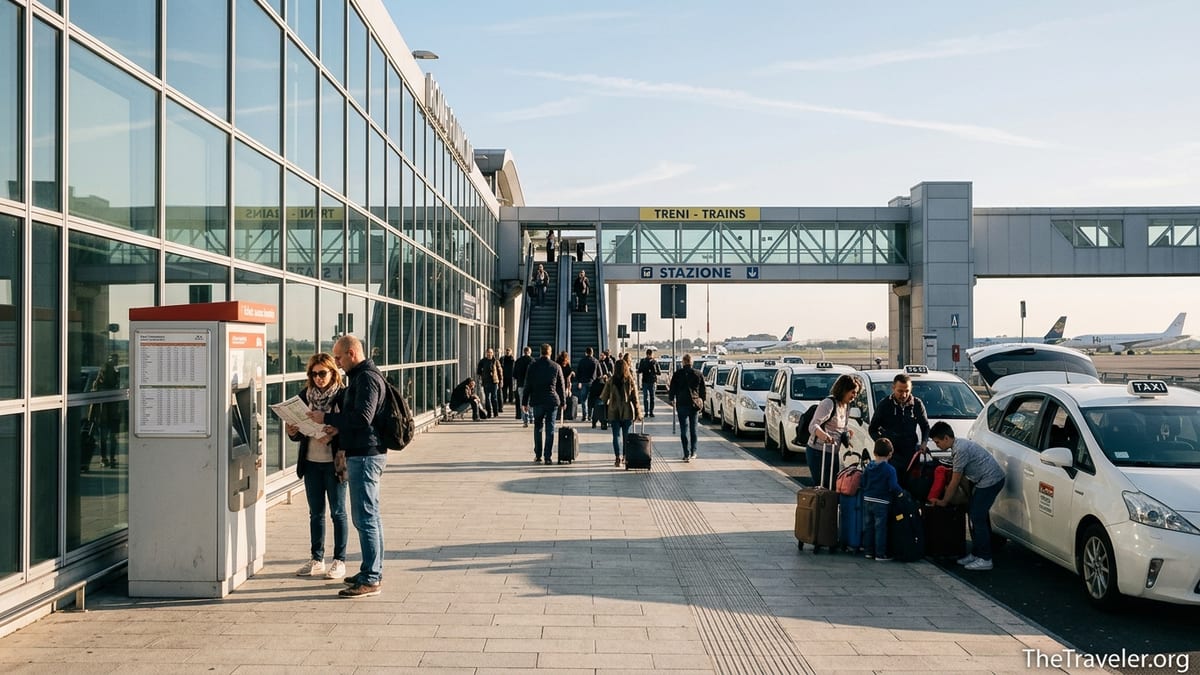
Why Your Arrival Time at Fiumicino Matters More Than You Think
On paper, Fiumicino (Leonardo da Vinci) is a well connected major hub, with frequent trains, buses, and regulated taxis into Rome. In practice, your experience will feel completely different if you land at 10:30 in the morning versus 23:45 at night. Daytime arrivals can step straight onto the Leonardo Express train or a budget bus, while late night passengers may find the last trains gone and only taxis or pre booked cars still operating in a largely quiet terminal.
Consider two visitors staying near Piazza Navona. One lands at 14:00. They can take the Leonardo Express to Termini in about 32 minutes and then a short taxi ride or local bus to the historic center. Their total journey is typically around 60 to 75 minutes door to door. Another lands at 00:15. By the time they clear passport control and baggage claim, the airport trains have stopped. Their realistic choice is a fixed fare taxi or a pre booked transfer, which will still deliver them efficiently, but at a higher cost and with fewer alternatives if something goes wrong.
This timing gap is where many first time visitors are caught out. Airline search engines highlight cheaper late night or very early morning flights into Fiumicino, but they rarely flag that public transport may not be running when you land. Before deciding Fiumicino is the right airport for you, map your flight’s scheduled time against train and bus operating hours, and against the time your hotel reception closes or your rental host can meet you.
The same logic applies to departures. A 07:00 flight from Fiumicino often means leaving central Rome around 03:30 or 04:00. At that hour, you cannot rely on the metro or regular buses, and only a night taxi or private transfer from your hotel will get you to the terminal reliably. That can add a significant extra cost that makes a slightly more expensive midday flight, or even a different airport, better value overall.
Understanding Fiumicino’s Main Transport Options by Time of Day
During the day, Fiumicino is one of Europe’s easier airports for independent travelers. The Leonardo Express, a dedicated non stop train from the airport station to Roma Termini, typically runs roughly every 15 minutes at peak times and takes about half an hour. Tickets cost in the mid teens in euros per person, and the train drops you at Rome’s main rail hub with metro lines A and B beneath your feet and buses radiating in all directions.
Alongside the Leonardo Express, slower regional trains connect Fiumicino with stations such as Trastevere, Ostiense, Tuscolana, and Tiburtina. These are usually cheaper than the express train and are popular with travelers staying in Trastevere or near Rome’s business districts. Add in several airport bus companies running shuttles to Termini for roughly single digit euro fares per person, and the daytime choice leans strongly toward public transport for anyone comfortable managing luggage on and off trains.
After roughly 23:00, the picture changes. Leonardo Express services wind down close to midnight, and regional trains and most airport buses also stop or thin out sharply. If your flight is delayed, you can land in a terminal that feels almost empty, with shuttered ticket counters and darkened bus bays. At that stage, a regulated white taxi from the official airport rank or a pre booked car service are, in most cases, the only realistic options into central Rome.
Overnight, taxis are still relatively straightforward. Rome has fixed official fares from Fiumicino to areas inside the Aurelian Walls that cover most tourist neighborhoods, and these fares are designed to be all inclusive of luggage and supplements. However, night time surcharges and higher quoted prices from some operators can push a ride into the 55 to 65 euro range. For couples and families, that may still be acceptable, but for solo budget travelers the difference compared with a daytime 7 euro bus is significant.
Fixed Taxi Fares, Real Costs, and When a Train Is Not Cheaper
Many travelers choose Fiumicino believing the train will automatically be the cheapest and easiest way into the city. While this is often true for one or two people arriving in daylight, the price picture shifts with group size and exact location. An official white Rome taxi from Fiumicino to a hotel in the historic center inside the Aurelian Walls works on a fixed fare system set by the city. Recent guidance and traveler reports place this fare in the range of roughly 48 to 55 euros during the day, with higher rates at night.
Compare this with the Leonardo Express. Two tickets can cost around the low to mid 30s in euros in total. If that couple then takes a local taxi from Termini to Piazza Navona or Trastevere for another 15 to 25 euros, the combined cost can be similar to, or more than, a single direct taxi from the airport. Add the time and effort of changing modes, and the supposed budget route may not actually save anything.
The equation tilts further toward taxis when you are three or four people with luggage. A family of four buying Leonardo Express tickets can easily spend over 60 euros before they even leave Termini station, then still need a taxi or multiple metro tickets to reach their accommodation. In contrast, one fixed fare taxi from the airport could get the whole group and their bags to a door in Trastevere, Monti, or near the Vatican for a total cost that is similar or only modestly higher, with far less hassle.
Timing and destination matter just as much. If you are staying outside the Aurelian Walls, for example near a hotel on the outer ring road or in a residential neighborhood, the fixed fare may not apply and the taxi meter takes over once you leave the motorway. In those cases, a combination of airport train plus a local train or metro may genuinely be more economical, especially during the day when everything is running and stations feel busy and safe.
Daily Transport Needs: Staying in Rome but Flying Fiumicino
Travelers often think of airport transport only on arrival and departure days, but your choice of Fiumicino can affect your daily rhythm if you plan side trips. For instance, if you intend to take day tours to coastal towns like Santa Marinella or to archaeological sites such as Ostia Antica, Fiumicino’s position west of Rome can be both a help and a hindrance. The airport rail station connects into the wider Lazio rail network, allowing straightforward onward connections, but you need to factor in the time and cost of moving between your central hotel and Termini or other stations each day.
Imagine a four night stay in Rome with one full day reserved for a trip to Florence by high speed train. If you arrive at Fiumicino at 08:30, take the Leonardo Express to Termini, then immediately board a Frecciarossa or Italo train, you can realistically be in Florence by lunchtime. On departure day, however, a 07:20 flight from Fiumicino means leaving your Rome hotel around 03:45. The early taxi will likely cost 55 to 65 euros, eating into the perceived value of using Fiumicino for an early connection.
Similarly, if you expect to use local public transport heavily each day, staying close to a major transport node such as Termini, Tiburtina, or Trastevere makes your movements smoother. Choosing Fiumicino as your airport pairs naturally with accommodations on the western and central side of Rome, where you can reach the airport trains more quickly. If you instead choose a charming but remote guesthouse along the Appian Way, for example, every airport connection and day trip will involve an extra taxi or a complicated series of buses.
It is worth sketching out your daily patterns before booking. List the main sites you want to see and when they open, note the tour departure times you might book, and overlay your flight schedule and airport travel times. If visiting the Vatican Museums at 08:30, for example, you may not want to risk a same morning arrival at Fiumicino followed by a tight train connection and rush hour metro, whereas an evening arrival the day before gives you margin for delays.
Comparing Fiumicino With Ciampino for Timing and Transport
Many airlines serving Rome also use Ciampino, a smaller airport south east of the city that is especially popular with low cost carriers. At first glance, Ciampino’s closer distance to the city ring road appeals to cost conscious travelers. However, Ciampino lacks a direct rail link, and its bus connections into Rome tend to be more limited, making timing even more critical there than at Fiumicino.
From Ciampino, passengers typically rely on dedicated airport buses into Termini or combinations of local buses and regional trains. These services can be inexpensive, but they are more vulnerable to traffic, and late night or very early morning options are sparse. Taxi fares from Ciampino to central Rome are often slightly lower than from Fiumicino, but they are not low enough to compensate if you face long waits for infrequent buses or need multiple taxis during your stay.
For a traveler whose main concern is having robust, predictable connections throughout the day, Fiumicino usually comes out ahead. The presence of both the Leonardo Express and regional trains gives you redundancy: if one service is disrupted, there is often another within a short time frame. That can be critical if you are heading to Rome’s main stations to catch a non flexible high speed train to another Italian city. If your airline offers both Fiumicino and Ciampino and your flight times are outside the core of the day, Fiumicino’s better rail connectivity will typically give you more reliable options.
On the other hand, if you are arriving midday on a budget carrier and staying near Termini, Ciampino’s dedicated bus shuttles may work well and sometimes beat Fiumicino in overall journey time. The crucial step is to line up your exact flight schedules with both airports’ transport timetables and consider how any delay would affect your ability to reach your accommodation before check in desks close or key collections shut for the night.
Real Itineraries: When Fiumicino Works Brilliantly and When It Does Not
Consider a couple from the United States arriving in Rome on a Saturday in October at 11:00 and staying near Roma Termini for four nights before taking a train to Naples. For them, Fiumicino is almost ideal. They can step off their long haul flight, buy Leonardo Express tickets, and be at Termini by around 12:00 or shortly after. Their hotel is a five minute walk from the station, so they avoid taxis altogether. On departure day, they stroll back into the station to board a mid morning high speed train south. Their airport transport is straightforward, predictable, and fits neatly around their sightseeing plans.
Now compare that with a solo traveler from the UK who finds a very cheap Friday night flight landing at Fiumicino at 23:40 in February, staying in a guesthouse near Campo de’ Fiori with a host who prefers arrivals before 22:00. On paper the fare is tempting. In reality, by the time they clear passport control it may be 00:30, with no trains running and limited bus services. They will likely need to pay for a taxi into the center, perhaps around 60 euros, arrive well after midnight, and risk an irritated host or even a late check in fee. In this scenario, either a daytime arrival into Fiumicino or even a different airport or date could be more practical in the long run.
Another common pattern is the cruise passenger connecting through Rome. A traveler disembarking at Civitavecchia in the morning might take a regional train to Rome, spend the afternoon sightseeing, then head to Fiumicino for a 21:00 flight. Here, the combination of regional trains, metro, and the Leonardo Express can work well, but only if connections are padded. A rail delay between Civitavecchia and Rome, or a long wait in ticket lines at Termini, can quickly put a tight same day flight at risk.
Families with young children often report that the simplicity of a door to door taxi wins out over theoretical savings on trains and buses. After a long flight with strollers and multiple suitcases, the ability to wheel out of the terminal and sit in a single car directly to a rented apartment in Trastevere can feel worth the extra 10 or 20 euros compared with public transport combinations. For these travelers, choosing Fiumicino with a mid morning or afternoon arrival and planning for a fixed fare taxi is often the most stress free approach.
How to Match Your Fiumicino Choice to Your Daily Transport Style
Before committing to Fiumicino, it helps to be honest about how you like to move in a new city. If you are comfortable reading train departure boards, validating tickets, and switching between rail, metro, and bus, Fiumicino’s dense web of daytime connections will suit you well. Choosing midday flights lets you exploit cheaper buses and regional trains, leaving more of your budget for meals, museums, and gelato.
If you know you prefer simple, direct routes, especially when tired, then plan around taxis or transfers from the start. In this case, late night or very early morning flights can be viable, but only if you factor a 50 to 70 euro taxi each way into your trip cost. The key is to avoid building an itinerary where you are forced into complicated night transfers because you tried to save on the air ticket.
Your accommodation also plays a role. Guests staying near Termini or Tiburtina can leverage both the Leonardo Express and regional trains easily, making Fiumicino a natural match. Those in medieval lanes of Trastevere or in the narrow streets around the Pantheon will face a trade off between walking over cobbles with luggage after arriving at Termini or paying for a short final taxi hop. In wet weather or during summer heat, that last stretch can feel much longer than it looks on the map.
Finally, think about your wider Italian route. If you will continue to Florence, Naples, or Venice by high speed rail, Fiumicino works well when your flights line up with train timetables and leave you some buffer. If instead you are renting a car immediately to drive into the countryside, some travelers prefer to spend their first night near the airport to avoid navigating Rome’s ring roads when jet lagged, then collect their car fresh the next morning.
The Takeaway
Fiumicino is an efficient, well served airport that works brilliantly for many Rome itineraries, but only if you match your flight times and daily transport habits to what the city’s network can realistically offer. Daytime arrivals and departures pair beautifully with the Leonardo Express and regional trains, keeping costs predictable and connections straightforward. Late night or very early flights tilt you toward taxis and pre booked cars, which may be entirely fine as long as you budget for them in advance.
Before you choose Fiumicino over other options, sketch your days: when you arrive, when you need to be at key sites or onward trains, and when you must be back at the airport. Check when trains and buses actually run, not just when booking engines say flights are cheap. Factor in where your hotel sits relative to Termini and Rome’s metro lines. With that planning, Fiumicino can become a smooth gateway, not a stressful afterthought, and your time in Rome can focus on piazzas and palaces instead of departure boards.
FAQ
Q1. Is the Leonardo Express always the best choice from Fiumicino to central Rome?
Not always. It is fast and convenient for one or two people arriving in the daytime and staying near Termini, but for three or more travelers heading to areas like Trastevere or the Vatican, a fixed fare taxi can be similarly priced and more direct.
Q2. How late do trains run from Fiumicino into Rome?
Schedules vary slightly by season, but services taper off around late evening and typically stop close to midnight. If your flight lands after about 23:00, you should be prepared to use a taxi or pre booked transfer instead of relying on trains.
Q3. Are the fixed taxi fares from Fiumicino to Rome really all inclusive?
Official fixed fares to destinations inside the Aurelian Walls are intended to include luggage and supplements. You should confirm the fare with the driver before departing and only use licensed white taxis from the official airport rank to avoid unofficial operators who may try to add extra charges.
Q4. How do Fiumicino and Ciampino compare for late night arrivals?
Fiumicino generally offers better late night options because of its larger taxi pool and greater likelihood of some bus or transfer services still operating. Ciampino has fewer transport choices and no direct train, so very late arrivals there depend heavily on taxis or specific pre booked buses.
Q5. If I am staying near the Pantheon, should I take the train or a taxi from Fiumicino?
For one or two people landing during the day, the Leonardo Express plus a short taxi or bus from Termini can work well. For families or late night arrivals, a single taxi directly from Fiumicino to a hotel near the Pantheon often balances cost and convenience better.
Q6. What is the cheapest way to get from Fiumicino to Rome?
In general, the cheapest options are airport buses or regional trains that connect Fiumicino with stations like Trastevere or Tiburtina, then onward by metro or local bus. These are very budget friendly but slower and require more changes than the Leonardo Express or a taxi.
Q7. How early should I leave central Rome for a morning flight from Fiumicino?
For morning departures, many travelers aim to reach the airport about two hours before a European flight and at least three hours before a long haul flight. From central Rome, that usually means leaving around three to four hours before your scheduled departure time, especially if using road transport during rush hours.
Q8. Is it safe to use public transport from Fiumicino with luggage?
During the day, trains and buses are widely used by locals and tourists and are generally safe, though you should watch your belongings in crowded carriages and at Termini station. Late at night, options are fewer, and many travelers prefer the security and simplicity of a licensed taxi or pre arranged car.
Q9. Should I stay near Termini if I am using Fiumicino?
Staying near Termini makes airport transfers and onward train travel very easy, especially if you plan day trips by rail. However, if you prefer more atmospheric neighborhoods like Trastevere or the historic center, you can still use Fiumicino comfortably by combining trains with short taxi rides.
Q10. When does it make sense to choose a different airport instead of Fiumicino?
If your only affordable flights into Fiumicino land very late or depart extremely early, and you are on a tight budget or uncomfortable with night taxis, it can be worth looking at daytime flights to Fiumicino, alternative dates, or even routes into Ciampino or another Italian city with better aligned schedules.