


Cover-More is one of the biggest names in travel insurance across Australia, New Zealand and the United States, and their policies are sold everywhere from airline checkout pages to bank credit cards. Before you click “add insurance” on your next Bali escape or European rail adventure, it is worth slowing down to understand how Cover-More actually works, where the cover can be excellent, and where real travelers have discovered uncomfortable gaps. This guide walks you through the essentials so you can decide, with clear eyes, whether a Cover-More policy is the right fit for your next trip.
Get the latest updates straight to your inbox!
Who Cover-More Is Really For
Cover-More is a global travel insurance and assistance group headquartered in Sydney and owned by Zurich Insurance. It protects millions of trips a year and holds leading positions in markets such as Australia, New Zealand and the United States. In practice, that means you will see the Cover-More brand, or products underwritten and serviced by Cover-More, when you book with major Australian travel agents, certain airlines, and even through bank credit cards that bundle travel insurance as a perk.
In Australia, Cover-More sells its own branded plans such as Basic, Comprehensive and Comprehensive+ for domestic, international and annual multi-trip cover. These are aimed squarely at residents who want a one-stop policy that wraps medical, trip cancellation, luggage and personal liability into a single product. Inbound plans are targeted at non-residents visiting Australia, while separate business and corporate policies exist for frequent work travelers.
In the United States, Cover-More operates via travel protection plans that you will often encounter on tour operators’ checkout pages or as standalone policies. These plans emphasize trip cancellation and interruption benefits, delayed or lost baggage, and emergency medical assistance, all supported by 24/7 help lines and Zurich Travel Assist. For a typical American family heading to Italy or Mexico, a Cover-More plan may be pitched as a way to safeguard a five-figure trip cost and provide a safety net for overseas medical bills.
Understanding that Cover-More is a mass-market provider is important. Its policies are designed to suit a broad swath of travelers rather than niche needs. If you are taking a standard two-week holiday to Japan, Cover-More’s mainstream offerings may suit you well. If you are planning a multi-month backpacking trip, remote trekking in Nepal, or travel with complex medical needs, you will need to look much more closely at the fine print and possibly at alternative specialist insurers.
Key Types of Cover-More Policies You Will See
Before buying, it helps to recognize the different ways you might encounter Cover-More policies. Buying direct from Cover-More Australia, you will typically see three tiers: Basic, Comprehensive and Comprehensive+. Basic focuses on essential protections such as overseas medical costs and some additional expenses after events like trip disruption. Comprehensive introduces higher limits and a broader range of benefits, while Comprehensive+ is marketed as the flagship with the highest ceilings and more optional add-ons.
Imagine an Australian couple planning a three-week trip to Italy and Greece with prepaid flights and small boutique hotels. They might find that a Comprehensive plan gives them sufficient cover for medical emergencies, trip cancellation up to the value of their bookings, and decent luggage protection. A frequent flyer who makes several overseas trips a year, on the other hand, might lean toward an annual multi-trip Comprehensive+ plan, which can work out cheaper than buying a new single-trip policy each time.
Inbound plans flip the perspective: they are aimed at travelers from overseas who want cover while visiting Australia. These can be important for relatives flying in from Europe or Asia who may not be fully protected by their domestic health systems once they arrive. Business and corporate products, which are arranged through agents or company channels, consolidate cover for employees making regular work trips, often adding features like higher limits for laptops and business equipment.
There is another category you should not overlook: policies where Cover-More is the underwriter behind someone else’s brand. For example, certain Australian banks and airlines offer complimentary or add-on travel insurance that is administered by Cover-More but sold under the bank’s or airline’s name. The cover, exclusions and claim process may differ from buying directly from Cover-More, even though the same insurer sits behind it. That is why it is crucial to read the specific Product Disclosure Statement for the product you are actually getting, not just rely on a familiar brand name.
The Single Most Important Document: The PDS or Policy Wording
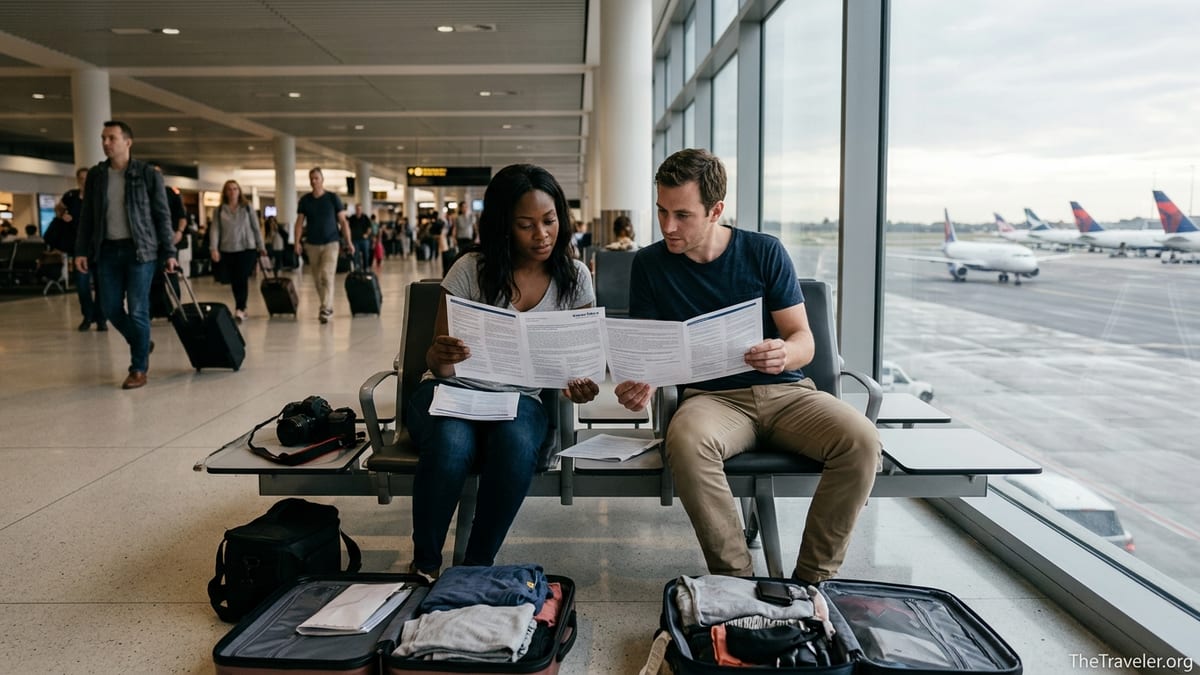
Before you commit to any Cover-More policy, take the time to download and read the latest Product Disclosure Statement in Australia or the state-specific policy wording in the United States. This is the legal contract that spells out what you are buying, what is excluded, how excesses work, and how to make a claim. Cover-More itself urges prospective customers to read these documents “from top to toe” before hitting the buy button.
A real-world example shows why this matters. An Australian traveler booked a ski holiday to Japan and bought travel insurance through their bank, assuming it was the same as buying directly from Cover-More because the insurer was the same. Only later did they notice that the bank-branded policy had different limits and sport-related exclusions. Snow sports were only covered if an extra premium was paid and noted on the certificate. Because they had not added that option, an accident on the slopes would not have been covered in full.
Another traveler in the United States purchased a Cover-More plan at checkout for a cruise. They assumed that any cancellation would be reimbursed. However, the policy wording limited trip cancellation benefits to a list of covered reasons, such as serious illness, injury, or certain unforeseen events. When the traveler simply decided they were uncomfortable cruising after a news report, without a doctor certifying illness or quarantine, the claim was denied. A careful reading of the document before purchase would have made clear that “change of mind” was not covered.
These examples illustrate a simple truth: the brochure, marketing page or verbal explanation from a travel agent is not the contract. The PDS or policy wording is. If you are short on time, at least check the sections on medical benefits, cancellation, exclusions, and claim requirements for the specific destination and trip style you have in mind, and confirm that the issue you are most worried about is actually covered.
Common Pitfalls: Exclusions, Pre-existing Conditions and Covid-19
Most dissatisfaction with travel insurance stems not from claims handling times but from misunderstandings about exclusions. Cover-More is explicit that limits, sub-limits, conditions and exclusions apply. Like most of its competitors, it is not designed to be a catch-all for every possible misfortune.
One key area is pre-existing medical conditions. Cover-More’s Australian plans define “existing medical conditions” and specify when they are automatically covered, when they require medical assessment and an extra premium, and when they are simply excluded. For example, certain common conditions that have been stable for a set period may be covered automatically, while recent diagnoses, ongoing investigations or terminal illnesses may not be. If a traveler with a long-standing heart condition fails to disclose it accurately during the application process, a later cardiac event overseas could lead to a denied claim for medical expenses that run into tens of thousands of dollars.
Covid-19 is another major source of confusion. Cover-More Australia promotes that its current plans include some Covid-19 benefits, but the benefits come with notable limitations. As at mid-2026, Australian PDS documents exclude cover for government border closures, lockdowns, mandatory tests, close contacts of people diagnosed with Covid-19, and cabin confinement costs on cruises related solely to Covid-19. They may still provide cover if you or a traveling companion test positive and a doctor certifies the need to cancel or curtail the trip, but not for broad travel bans or fear of travel.
Imagine a family from Sydney booking a December holiday to Fiji. If one child tests positive a week before departure and must isolate, a Cover-More policy with Covid-19 benefits may reimburse non-refundable costs, assuming all conditions are met and documentation is provided. However, if the Fijian government later imposes a border closure for all tourists, and your flights and bookings are cancelled by providers, the policy may not cover those losses because government actions are a standard exclusion. In that scenario, the family would need to rely on airline refunds and accommodation credits rather than their insurance.
Understanding Benefit Limits, Excesses and Sub-limits
Headline figures on marketing pages often show impressive maximum limits for medical expenses or cancellation. The detail, however, lies in the sub-limits and the excess. Cover-More’s policy conditions explain that an excess applies per event and will be deducted from any approved claim. That means if you slip on a cobblestone street in Lisbon, break your phone and need hospital treatment, the excess is generally applied once to the combined claim arising from that single incident, not separately to each item. Still, if your claim is relatively small, the excess can significantly reduce or eliminate your reimbursement.
Sub-limits can also be decisive. Luggage benefits may have an overall limit and specific caps for items like cameras, laptops, or jewelry. For example, even if your total luggage cover is high, a single piece of electronic equipment might be subject to a much lower per-item limit unless you have specified and paid extra to insure it individually. A photographer traveling with several thousand dollars’ worth of camera gear who assumes the default policy will fully cover loss or theft may be surprised to find only a portion of the kit is reimbursed after applying per-item and total limits.
Travel delay and missed connection benefits require close reading too. Some Cover-More plans provide fixed daily allowances after a minimum qualifying delay. If a storm in Singapore delays your onward flight to Europe, you might be able to claim reasonable extra accommodation and meals, but only once the qualifying delay threshold is reached and with receipts. If the delay is shorter or you cannot document expenses, the benefit may not apply. Similarly, rental vehicle excess cover may protect you against the excess charged by a hire car company if the vehicle is damaged or stolen, but only if you meet licensing, age and rental agreement conditions spelled out in the PDS.
To avoid disappointment, map your biggest potential financial risks against the policy’s benefit table. If your main concern is expensive medical care in the United States, focus first on emergency medical and evacuation limits rather than pushing for the highest baggage cover. On the other hand, if you are carrying high-value sporting equipment or electronics, consider whether the default sub-limits are appropriate or whether you need to adjust the cover or buy additional insurance at home.
Direct Policies vs Bank and Airline Branded Cover-More Plans
Because Cover-More underwrites or administers policies for banks and other brands, many travelers assume that all Cover-More-backed covers are identical. They are not. The PDS or policy wording attached to a complimentary credit card benefit, for instance, can differ markedly from a policy you buy directly on the Cover-More website.
Take a common scenario in Australia. A traveler books a holiday to Thailand using a platinum credit card that advertises free international travel insurance. The fine print reveals that the policy is issued and managed by Cover-More on behalf of the bank, but to activate it, the cardholder must pay at least a minimum amount of prepaid travel costs on the card and receive a confirmation or activation certificate. The cover only starts if those activation steps are completed before departure. If the traveler assumes activation is automatic and does not meet the spending or registration thresholds, they may discover after a medical emergency in Phuket that they never had valid cover in the first place.
Another variation: an airline may offer optional insurance during the booking process, also administered by Cover-More. The benefit levels might be tailored to the typical value of that airline’s routes and may not include all the bells and whistles of Cover-More’s top-tier direct products. A basic add-on might provide solid cancellation cover up to the ticket price but limited baggage or personal liability benefits. That can be perfectly adequate for a quick return flight to New Zealand with no additional prepaid bookings, but less suitable for a multi-stop itinerary with expensive independent accommodation and tours.
The lesson is simple. Always obtain and read the exact policy document tied to how you are buying the insurance. Do not assume that “Cover-More” on the back page guarantees parity with the plans you see advertised on Cover-More’s own site. Small differences in conditions around activation, age limits, adventure sports, or pre-existing conditions can have major consequences at claim time.
Realistic Use Cases: When Cover-More Shines and When to Look Elsewhere
Cover-More’s biggest strengths show up in mainstream scenarios. A young family from Melbourne flying to Hawaii for ten days, paying for resort accommodation and a rental car, might find that a Comprehensive plan offers exactly what they need: high medical limits in a country with expensive healthcare, reasonable cancellation cover for their prepaid bookings, rental vehicle excess protection, and round-the-clock assistance if someone falls ill or is injured.
In the United States, a retired couple booking a two-week river cruise in Europe could benefit from a Cover-More travel protection plan that includes trip cancellation for covered reasons, baggage protection, and emergency medical evacuation. If the husband is hospitalized with appendicitis in Budapest, the plan’s medical and evacuation benefits, combined with on-the-ground logistics support, could easily save the couple tens of thousands of dollars compared with paying those costs out of pocket.
On the other hand, there are cases where Cover-More may not be the best fit. Long-duration backpackers planning six months through South America and Central Asia, especially with high-risk activities like mountaineering or backcountry motorbiking, may find that cover for activities, regions and trip length is more restricted than they would like. They might need a specialist adventure or long-stay insurer that explicitly covers more extreme sports, remote rescue and non-return tickets.
Similarly, travelers with complex or serious pre-existing medical conditions, such as recent cancer treatment or unstable cardiac issues, should approach any mass-market provider with caution. While Cover-More may offer medical assessments and options to extend cover for some conditions at extra cost, there will be situations where the insurer either declines to offer cover for the condition or excludes related claims. In those cases, it can be worth speaking to a specialist broker or insurer that explicitly focuses on high-risk medical travel rather than relying solely on mainstream policies.
The Takeaway
Cover-More is a major player in the travel insurance market, backed by a large global insurer and supported by extensive assistance networks. For many standard holidays and business trips, its policies can provide a solid safety net and peace of mind, especially when it comes to expensive overseas medical care and unforeseen cancellations for clearly defined reasons.
Yet brand recognition and broad distribution do not remove your responsibility to read and understand what you are buying. Exclusions around pre-existing conditions, Covid-19 disruptions, government actions, and risky activities matter just as much as the headline limits. Sub-limits and excesses can dramatically change how much you ultimately receive in a claim. And the exact terms for a bank-branded or airline-branded Cover-More policy can differ from what you see if you go direct.
Before you purchase, start with a simple checklist: confirm that your main concern is actually covered; verify how to activate the policy if it is linked to a credit card; review medical and cancellation sections carefully; and consider whether your trip or health profile might call for a more specialized insurer. With that groundwork done, you can decide with confidence whether Cover-More is the right match for your next journey, or whether another provider is better suited to the way you travel.
FAQ
Q1. Is Cover-More travel insurance any good compared with other brands?
Cover-More is a well-established provider with solid mainstream products, particularly for Australian and New Zealand travelers. Whether it is “good” for you depends on how closely its specific benefits and exclusions match your trip and health profile. For standard holidays it can work well, but you should always compare the PDS or policy wording with at least one or two competitors before deciding.
Q2. Does Cover-More automatically cover pre-existing medical conditions?
No. Some common conditions that are stable for a defined period may be covered automatically, but others require medical assessment, an extra premium, or may be excluded altogether. You must disclose your medical history accurately and check the section on existing medical conditions in the PDS or policy wording to see whether your particular condition is included.
Q3. How does Covid-19 coverage work with Cover-More policies?
As of mid-2026, many Cover-More plans include limited Covid-19 benefits, such as cover if you or a traveling companion test positive and a doctor certifies that you must cancel or cut short your trip. However, most policies exclude losses caused by government border closures, lockdowns, broad travel bans, or fear of travel. Always review the most recent wording for Covid-19 benefits and exclusions before you buy.
Q4. Are bank or airline policies backed by Cover-More the same as buying directly?
Not necessarily. While Cover-More may underwrite or administer these policies, the benefits, limits, activation rules and exclusions can differ from direct Cover-More products. You must read the specific PDS or policy wording for the bank or airline product you are using, rather than assuming it matches what is sold on Cover-More’s own website.
Q5. Do I need to activate complimentary Cover-More-based credit card travel insurance?
Often, yes. Many credit card policies that use Cover-More require you to meet certain conditions, such as paying a minimum amount of prepaid travel expenses on the card and, in some cases, registering or obtaining a confirmation before departure. If you do not follow these steps, you may not be covered even though the card advertises travel insurance.
Q6. Does Cover-More cover adventure sports like skiing or scuba diving?
Some activities are covered automatically, others only if you pay for additional cover, and some may be excluded. For example, recreational skiing on marked runs may be covered on certain plans, while off-piste skiing, mountaineering, or high-risk diving may not be. Always check the list of covered and excluded activities and consider upgrading or choosing a specialist insurer if your trip involves higher-risk sports.
Q7. How does the excess work on a Cover-More travel insurance claim?
The excess is the amount that is deducted from any approved claim and usually applies per event. If one incident leads to multiple types of loss, such as an injury and a damaged phone in the same fall, the excess is generally applied once to that event. You may be able to choose a higher or lower excess when you buy, which can adjust your premium.
Q8. Can I change or upgrade my Cover-More policy after I buy it?
In many cases you can adjust or extend your policy before your trip starts, or sometimes while you are still traveling, but conditions apply. Changes may require insurer approval and can result in additional premiums. If you realize you need higher limits or extra cover for an activity, contact Cover-More or your agent as early as possible rather than waiting until just before or during a claim situation.
Q9. What should I do if I need emergency assistance overseas with a Cover-More policy?
If you face a medical emergency, serious injury or another major problem while traveling, contact the emergency assistance or travel assistance number listed on your policy documents as soon as it is safe to do so. Cover-More’s plans include 24/7 assistance services that can help you find appropriate medical care, arrange hospital guarantees where possible, coordinate evacuations, and advise on next steps for claims.
Q10. How can I make sure a Cover-More policy is right for my trip?
Start by listing your biggest concerns, such as high medical costs at your destination, expensive prepaid bookings, or specific activities. Then read the policy’s benefits table, exclusions and pre-existing conditions section to see how those concerns are handled. Compare at least one or two alternative insurers, check online reviews with a critical eye, and consider speaking with a travel agent or insurance broker if your situation is complex. Only buy once you are confident the policy matches your real-world risks.