


More news on this day
Emirates is expanding a pioneering suite of accessibility initiatives to Australia, using dedicated “travel rehearsal” events and new digital support tools to help neurodiverse passengers and their families navigate long-haul journeys with greater confidence.
Get the latest news straight to your inbox!
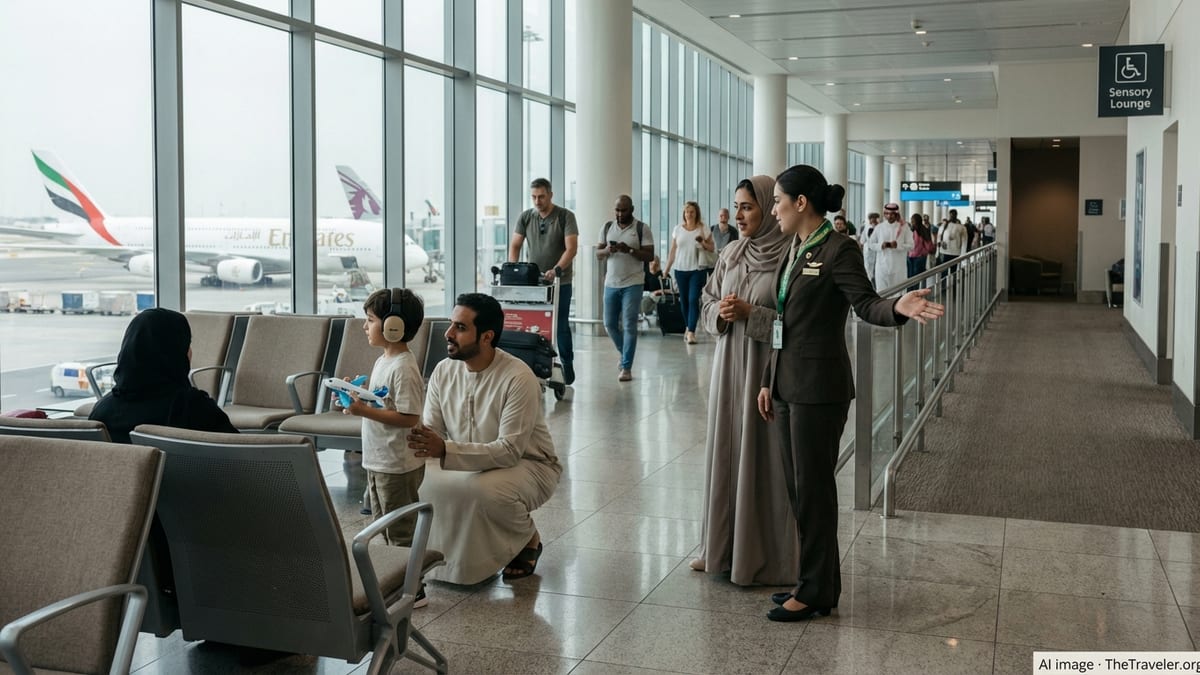
Australia Becomes a Focus for Emirates’ Autism-Friendly Strategy
Recent information from Emirates’ media centre shows that the airline has begun hosting dedicated Travel Rehearsal events across Australia, including a newly publicised session in Perth on 4 September 2026, designed specifically for neurodiverse passengers and their families. These rehearsals guide participants through simulated airport procedures and onboard experiences, allowing them to practice each step of a flight before departure.
The Australian roll-out builds on Emirates’ broader accessibility agenda, which has seen the carrier develop airport sensory guides, autism-friendly travel planners, and familiarisation flights in other markets. The airline has worked with airports and community organisations to adapt the format for different locations, and Australia is now emerging as a key focus for the programme as demand for long-haul travel continues to recover.
Publicly available information indicates that the rehearsals are structured to mirror the full journey: arrival at the terminal, check-in, security, boarding, and time in the aircraft cabin. For many neurodiverse travellers, including those on the autism spectrum and passengers with sensory processing differences, having a predictable sequence and a chance to rehearse can help reduce anxiety associated with crowded, noisy terminals and unfamiliar procedures.
Australia’s strong family travel market and extensive links to Europe, the Middle East, and Asia mean that any improvement in accessibility has a disproportionate impact. By basing its rehearsals in cities such as Perth and expanding to other Australian gateways, Emirates is directly addressing the needs of families who routinely undertake some of the world’s longest flight sectors.
World’s First Autism Certified Airline and a New Model for Long-Haul Travel
The Australian initiatives are underpinned by Emirates’ move to become the world’s first Autism Certified Airline, a status confirmed in early 2025 through a programme with the International Board of Credentialing and Continuing Education Standards (IBCCES). The certification covers Emirates’ facilities in Dubai and requires extensive staff training as well as an independent review of policies and customer touchpoints.
According to published coverage and company reports, more than 30,000 Emirates cabin crew and ground staff worldwide have now completed specialist training on hidden disabilities and neurodiversity. The sessions focus on recognising sensory overload, offering clear and calm communication, and adapting common procedures such as safety briefings and boarding so they are easier to follow.
The airline’s accessibility planning documents outline a multi-year effort to expand autism-friendly products and services, from using recognised visual identifiers for hidden disabilities to formalising travel rehearsal programmes. Emirates has highlighted April’s global autism awareness campaigns with curated inflight entertainment and has steadily embedded its accessibility commitments into annual reporting and future accessibility plans.
For Australian travellers, this framework translates into a more structured and predictable long-haul experience. Passengers departing from cities such as Sydney, Melbourne, Brisbane, Adelaide, and Perth can connect via Dubai to an extensive global network, while benefitting from a consistent set of neurodiversity-aware procedures at the airline’s main hub.
From Airport Rehearsals to Digital Guides: How the Experience Works
Available programme descriptions indicate that Emirates’ travel rehearsals start long before a passenger reaches the airport. Families are encouraged to review an autism-friendly travel planner and sensory guides that explain, in simple steps, what to expect at each stage of the journey. These materials are part of a broader Accessible and Inclusive Travel Hub on the airline’s website, which consolidates information on everything from wheelchair assistance to support for blind, low-vision, and neurodiverse customers.
On the day of a rehearsal in Australia, participants typically arrive at the airport for a guided walkthrough. They practice using check-in counters or kiosks, passing through security, navigating the departure hall, and approaching the boarding gate. Staff demonstrate what happens at boarding, where luggage is stored, and how to settle into a seat, including the sounds and sensations of the cabin environment.
Some rehearsals globally have incorporated time on an aircraft at the gate, allowing neurodiverse travellers to familiarise themselves with safety demonstrations, lavatories, seatbelts, and inflight entertainment systems in a low-pressure setting. Reports indicate that the format helps families identify potential triggers and preferred coping strategies before a real flight, from noise-cancelling headphones to favourite comfort items.
Emirates’ accessible travel hub also directs customers to tools such as an autism-friendly guide to Dubai International Airport, sensory maps of different areas of the terminal, and the ability to contact the airline using visual-assistance apps. For Australian passengers transiting Dubai on the way to Europe, Africa, or the Americas, these resources can be particularly valuable during lengthy layovers.
Impact on Australian Families and the Wider Aviation Sector
Surveys cited by Emirates indicate that a significant majority of families with autistic or neurodiverse members feel hesitant about air travel, with many saying they would take more trips if staff were trained and environments better adapted. In a country as geographically isolated as Australia, such hesitancy can limit access to family visits, education opportunities, and global experiences.
By positioning its Australian travel rehearsals as part of a formal accessibility programme, Emirates is attempting to shape a new standard for long-haul carriers. The initiative complements similar efforts by airports and tourism agencies and may influence how competing airlines design services for passengers with hidden disabilities on routes linking Australia to the Middle East and beyond.
Industry observers note that the long-haul nature of most flights into and out of Australia makes inclusive design particularly important. Multi-leg journeys can involve multiple security checks, long queues, and overnight sectors that are challenging for any traveller, and especially for those with sensory sensitivities. Structured rehearsal opportunities and clear pre-travel information could help prevent crises at the gate or in the cabin and reduce last-minute cancellations.
The Australian expansion of Emirates’ neurodiversity-focused services also aligns with a broader trend, in which airlines and airports are increasingly judged not only on price and schedule, but on how well they support passengers with diverse needs. As more carriers adopt similar measures, travellers may begin to see accessible, autism-aware travel as an expectation rather than an exception.
Next Steps in Inclusive Travel for Routes Linking Australia and Dubai
Looking ahead, Emirates’ published accessibility plans for 2026 to 2029 outline further changes that could shape the experience of neurodiverse passengers flying to and from Australia. These include redesigning passenger announcements to be clearer and easier to understand, using more inclusive language across customer communications, and continuing to refine training for frontline staff.
Accessibility roadmaps also point to the future introduction of additional sensory-support products onboard and further enhancements to digital platforms, enabling customers to specify preferences and special assistance needs earlier in the booking process. For Australian travellers, these changes could translate into greater control over seat selection, meal timing, and cabin environment features that might otherwise be overwhelming.
For now, the roll-out of travel rehearsal events in Australian cities signals an important practical step. Families who have previously avoided long-haul trips because of anxiety about airports or aircraft can increasingly test the experience in a structured environment, supported by staff who have received specialised training on hidden disabilities and neurodiversity.
As other carriers and airports observe the impact of these rehearsals on passenger confidence and satisfaction, the Australian market may serve as a proving ground for more widely adopted neurodiversity-friendly approaches to international travel.
Emirates: Travel rehearsal events for neurodiverse families in Australia
Emirates: Journey to become the world’s first Autism Certified Airline