


More news on this day
Flights across Dubai and the wider Gulf are facing renewed disruption after the United Arab Emirates reported intercepting a drone approaching from Iran, as the United States and Iran traded direct fire for the first time in a month, heightening concerns over airspace safety and travel reliability in the region.
Get the latest news straight to your inbox!
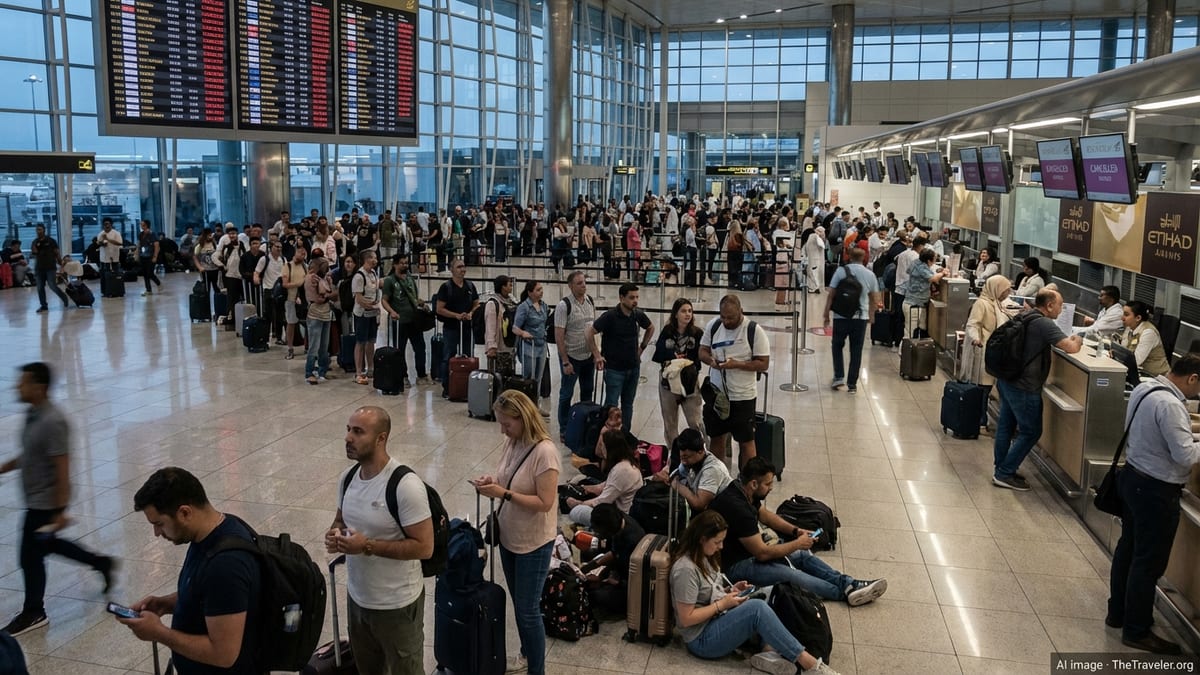
Drone interception adds new strain to Gulf airspace
Publicly available information from Emirati statements and international media indicates that UAE air defences engaged and destroyed a drone approaching over the country’s territorial waters on Monday, August 31, 2026. The aircraft was reportedly tracked coming from Iranian territory, and the interception took place offshore, away from major cities and airports. Published coverage notes that no casualties or damage on the ground were reported, but the incident underscored how closely the conflict has moved toward key travel hubs around the Strait of Hormuz.
The interception followed a weekend in which US forces struck Iranian rocket launchers on Larak Island, a strategic location near vital shipping lanes, prompting Iranian missile and drone launches toward US-linked sites in Jordan and the Gulf. Reports from regional and international outlets describe this as the first direct exchange of fire between Washington and Tehran since late July, ending a fragile period in which pressure had largely shifted back to sanctions and diplomatic maneuvering.
Iranian media accounts claimed that bases hosting US forces in Jordan, Bahrain, Iraq and the United Arab Emirates were targeted in the subsequent barrage. Emirati officials, however, publicly rejected reports that Dubai’s Al Minhad air base had been successfully struck, stating that incoming threats were intercepted before reaching sensitive infrastructure. The contrast between those narratives has added to traveler uncertainty, even as regular commercial operations have continued at Dubai and Abu Dhabi’s major airports.
The latest confrontation builds on months of hostilities that have already seen previous missile and drone incidents in Gulf airspace. Aviation analysts quoted in open sources note that while air defenses across the region have grown more effective, each new attack raises operational risk and forces airlines and regulators to reconsider how close scheduled routes can safely run to known flashpoints.
Dubai and Abu Dhabi airports report rolling disruption
Travel industry reports from September 3 highlight mounting delays and cancellations at Dubai International and Abu Dhabi’s Zayed International Airport, as airlines adjust to rapidly changing risk assessments and airspace constraints. According to regional travel coverage, flights to and from the UAE have been affected by the US strikes on Iranian territory and the subsequent Iranian response, with knock-on effects spreading beyond the immediate Gulf.
Schedules published by local media show a mix of disrupted services, especially on routes connecting Dubai to Central Asia, Russia, parts of the Middle East and East Africa. Affected flydubai flights listed in public reports include services from Almaty, Bishkek, Moscow, Jeddah, Astana, Minsk, Addis Ababa, Damascus, Abha and Baghdad, among others. While many long-haul Emirates and Etihad services continue to operate, some departures have faced delays as air traffic control adjusts routings and spacing between aircraft.
Abu Dhabi’s Zayed International Airport has also reported delays and a limited number of cancellations as operators respond to changing air defense postures and potential temporary restrictions in nearby air corridors. Travel advisories cited in local press urge passengers not to head to the airport without checking the live status of their specific flight directly with airlines, highlighting that situations can change within hours as new information emerges about regional threats.
Despite the disruption, airport operations remain far from a full shutdown. Terminals at Dubai and Abu Dhabi continue to see high volumes of transit passengers, a reflection of the hubs’ central role in connecting Europe, Asia and Africa. However, industry observers warn that even modest schedule changes can cascade quickly across global networks when the Gulf’s megahubs are forced to slow or reroute traffic.
Travel advisories urge vigilance and flexible plans
Governments have updated travel guidance for the UAE and the wider region in light of the latest escalation. Revised foreign office advisories, including those issued by European states, reference recent US strikes on Iran and Iranian retaliatory shots at US-linked targets, warning that further exchanges cannot be ruled out. These notices highlight the possibility of short-notice flight cancellations, diversions and periodic airspace closures for both civilian and military reasons.
Publicly available guidance for residents and visitors in the UAE emphasizes practical steps for anyone traveling in the coming days. Passengers are advised to monitor airline apps and websites closely, ensure contact details are accurate so carriers can send real-time alerts, and allow extra time for security and check-in in case of congestion arising from schedule changes. Travellers are also urged to maintain flexible itineraries and consider booking options that allow rebooking or refunds without heavy penalties.
Security notices circulated by diplomatic missions in Abu Dhabi and Dubai underline broader situational awareness. These advisories encourage people to stay informed through official channels, avoid speculation on social media, and keep family or colleagues updated on movements, particularly when traveling at night or during periods of heightened tension. While there is no general instruction to avoid the UAE’s airports, embassies stress that conditions could evolve quickly if there are further attacks or interceptions involving Iranian projectiles near busy air routes.
Insurance considerations also feature prominently in updated advice. Some policies may classify the current hostilities as a conflict-related event, potentially limiting cover for trip interruption or cancellation. Travellers are being encouraged to review policy wording carefully and, where necessary, discuss coverage with providers, especially if planning multi-stop itineraries that transit several Middle Eastern airports.
Airlines tweak routings as region-wide tensions simmer
The renewed US Iran exchange of fire has prompted airlines and air navigation authorities to reassess routing over and around the Strait of Hormuz and adjacent conflict zones. Open-source flight tracking and aviation commentary suggest that some carriers are shifting flight paths further south over the Arabian Sea or west via Saudi Arabia to keep greater distance from potential missile and drone trajectories connected to Iranian territory and US-linked bases.
In practice, many of these alterations translate into slightly longer flight times, added fuel costs and more complex scheduling for airlines that already operate at tight margins. For passengers, the impact is felt as longer journeys, potential missed connections and altered arrival times, particularly on already busy Europe Asia trunk routes. Industry reports indicate that some non regional airlines have quietly extended earlier suspensions of services to certain Gulf destinations, citing continued geopolitical uncertainty.
Within the region, carriers based in the UAE, Qatar and Saudi Arabia are balancing the need to maintain core connectivity with the imperative to safeguard crew and passengers. Public statements from airlines generally avoid operational specifics for security reasons, but their published schedules and real-time tracking data show a pattern of adjustments concentrated around airspace closest to active military exchanges. Aviation safety bodies note that as long as major hubs remain open, rerouting rather than outright cancellation is likely to remain the main tool for managing risk.
Analysts following the sector point out that the Middle East has weathered previous rounds of tension while keeping key air corridors open, but caution that each additional incident involving drones or missiles increases cumulative risk. The interception of the Iranian drone off the UAE coast, coming on the heels of strikes and counterstrikes between Washington and Tehran, has reinforced concerns that miscalculation or debris could one day impact a civilian aircraft if conflict edges any closer to crowded flight paths.
What travellers through Dubai and the Middle East can do now
For travellers with imminent itineraries through Dubai, Abu Dhabi or other regional hubs, the most immediate step is to verify booking status and routing. Airlines across the Gulf are publishing rolling updates, and many are allowing fee-free changes for passengers scheduled to travel in the days following the drone interception and missile exchanges. Travel experts recommend consolidating bookings under a single ticket where possible, as this usually gives passengers stronger protections if disruptions force rebooking.
Those planning trips later in September or October are being advised to keep watching developments but avoid making hasty cancellations unless official guidance changes significantly. Historically, Gulf hubs have restored regular operations relatively quickly following individual security incidents, though the current multi-month conflict in the region has created a more prolonged period of uncertainty than usual.
Passengers in transit should be prepared for longer layovers or gate changes as air traffic control reshuffles departure slots to manage congestion and any temporary airspace restrictions. Having essential items, such as medication and chargers, in carry-on bags rather than checked luggage can help mitigate the impact of unexpected delays. Access to airline apps, airport Wi-Fi and reliable news sources is also important for staying ahead of schedule shifts.
Ultimately, the interception of the Iranian drone and the renewed US Iran exchanges of fire have added another layer of complexity to flying through one of the world’s busiest aviation crossroads. While major airports remain operational and most flights continue to run, the margin for disruption has widened, making careful preparation and up-to-the-minute information central to any journey through Dubai and the wider Middle East in the coming days.
Al Jazeera coverage of UAE drone interception
Associated Press report on UAE intercepting Iranian drone
The National: Dubai and Abu Dhabi flight delays and cancellations