


InsureMyTrip is one of the best known travel insurance marketplaces for U.S. travelers, promising quick quotes from multiple insurers and help finding the right policy. Before you click “buy,” it pays to understand how the platform actually works, what it does not do for you, and the common misunderstandings that lead to denied claims. This guide breaks down InsureMyTrip in plain language, using real-world examples so you can decide whether buying a policy through the site makes sense for your next trip.
Get the latest updates straight to your inbox!
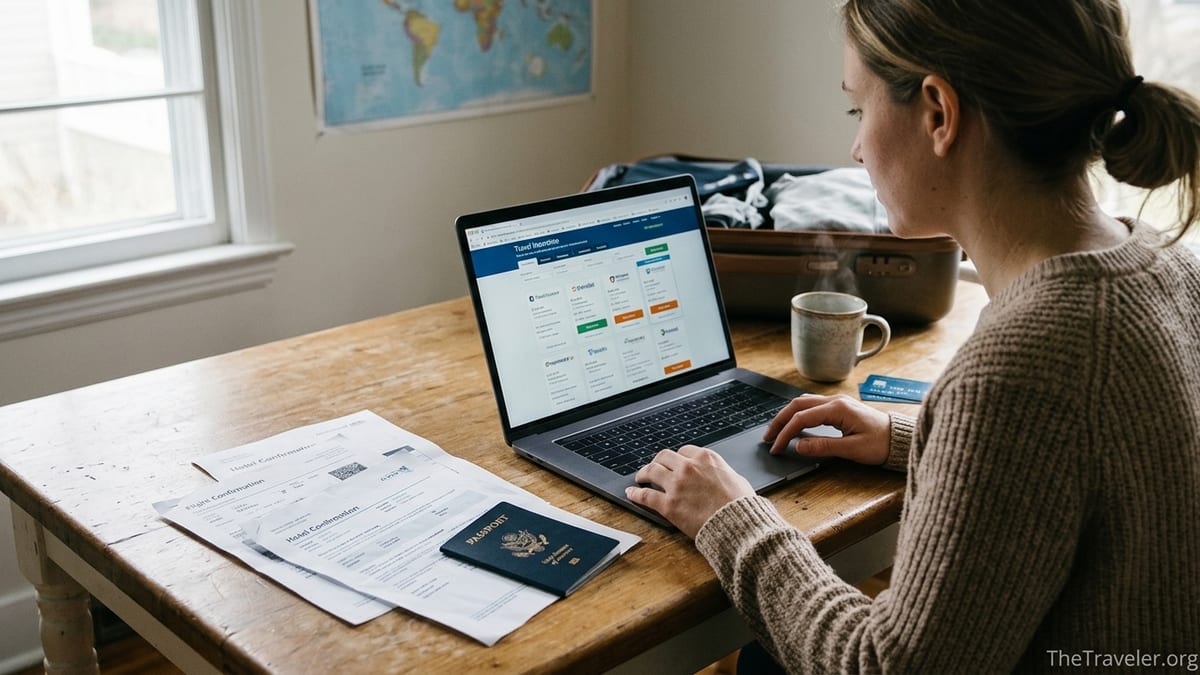
What InsureMyTrip Actually Is (And Is Not)
InsureMyTrip is a comparison website, not an insurance company. Founded in 2000 and based in Rhode Island, it aggregates plans from dozens of insurers and lets you compare benefits, prices and fine print side by side on one screen instead of visiting each insurer separately. When you buy a plan on InsureMyTrip, your contract is with the underlying insurance provider, not with InsureMyTrip itself. If you later file a claim for a cancelled flight to Paris or a broken ankle in Costa Rica, you submit that claim to the insurer that issued your policy, not to InsureMyTrip.
This marketplace model can be useful in practice. For example, a Boston family booking a 10 day summer trip to Italy might pull up InsureMyTrip and enter their dates, ages and total trip cost. The site could show them several options from major brands at once, such as a mid-priced comprehensive plan with strong medical coverage, a cheaper policy with basic trip cancellation, and a premium option that includes cancel for any reason coverage. Instead of spending hours opening insurance company websites one by one, they can scan a single results page and drill into the details that matter for them.
Because InsureMyTrip is a broker, it earns money via commissions when you purchase a plan through its platform. That is standard across insurance comparison tools, but it is worth remembering that the site’s role is to help you shop and connect you to a provider, not to pay claims. If you assume InsureMyTrip itself will be flexible or generous about borderline claims, you may be disappointed when the actual insurer adheres strictly to policy wording.
Understanding this structure is essential before you purchase. You are using InsureMyTrip primarily for research, price discovery and access to a range of insurers. What protects you in the real world if a snowstorm shuts down your Denver departure or your luggage disappears in Madrid is the specific contract you choose within that marketplace.
Pros and Cons of Using InsureMyTrip
For many travelers, InsureMyTrip’s biggest advantage is the ability to compare plans in detail without much effort. The quote form asks for basic information about your trip and then displays policies that match, often including filters for cruise, student travel, medical only plans or options suitable for Schengen visa requirements. A traveler planning a river cruise in France can, for instance, quickly filter for cruise-friendly plans that cover missed connections between flights and ships, then sort by price or medical limits to see which policy offers the best fit.
The site also promotes a “best plans for you” approach where licensed agents can help you narrow choices by phone or online chat at no additional cost. In a practical scenario, this might mean calling InsureMyTrip because you have a pre existing condition such as controlled heart disease and you are not sure which insurer is more generous with look back periods. An agent can walk you through which plans may offer a pre existing condition waiver if you buy within a certain time window after your first trip payment and insure the full nonrefundable cost.
There are trade offs. A comparison marketplace can sometimes feel overwhelming, especially for first time buyers. A New York couple searching for coverage for a winter honeymoon in Japan could see more than a dozen plan options, each with slightly different definitions of covered reasons, policy exclusions and claim documentation requirements. If you skim the simplified comparison grid and never open the full policy wording, you may assume all plans are more alike than they really are.
Another drawback is that not every travel insurer or every policy in the market appears on InsureMyTrip. A low cost annual plan sold directly by a specific company might not be listed, or a boutique medical evacuation membership might sit outside the marketplace entirely. Relying only on InsureMyTrip can create a false sense of completeness. It is a powerful tool, but it is still just one slice of the broader travel insurance landscape.
Key Coverage Types You Will See On InsureMyTrip
Most policies available on InsureMyTrip fall into familiar travel insurance categories. Understanding these categories makes it much easier to interpret your quote results. The most common is comprehensive trip insurance, which usually bundles trip cancellation and interruption, travel delay, baggage loss, emergency medical, and medical evacuation in one package. A couple insuring a 4,000 dollar Caribbean cruise, for example, might choose a comprehensive plan that could reimburse nonrefundable cruise fare if a covered illness forces them to cancel, pay for a hotel if weather delays their connection, and cover hospital bills if one of them needs emergency surgery in Barbados.
Medical only plans also appear frequently on InsureMyTrip, especially for long international trips where travelers have already booked fully refundable flights and accommodation. A digital nomad heading to Portugal for three months might choose a standalone travel medical policy that focuses on hospital and doctor bills abroad and evacuation back to their home country, skipping trip cancellation coverage entirely because their airline tickets and apartment rental are flexible.
InsureMyTrip additionally features plans targeted at specific traveler types. Students going abroad may see options crafted for study programs, where prepaid tuition, program fees and housing linked to travel can be insured if they are nonrefundable. Cruise travelers might notice plans that explicitly cover missed port departures and ship based medical care. There are also policies suitable for obtaining a Schengen visa, with medical limits high enough and deductibles low enough to satisfy European consular requirements.
As you compare, pay special attention to benefit limits and definitions. A budget plan with 25,000 dollars of emergency medical coverage may be sufficient for a week in Canada but feel thin for a trekking trip to Nepal where evacuation by helicopter can be extremely expensive. A policy that caps travel delay reimbursements at 500 dollars might not fully cover two nights in an airport hotel for a family of four during peak season. InsureMyTrip shows those numbers clearly, but it is up to you to interpret whether they are realistic for your specific itinerary.
Why “Cancel For Any Reason” Is Not What Many Think
One of the most talked about features you will see on InsureMyTrip is cancel for any reason, often abbreviated CFAR. It is typically offered as an optional upgrade to certain comprehensive plans rather than as a standalone product. Despite the name, CFAR is not unlimited freedom to cancel at the last minute and get all your money back. It comes with strict rules and usually reimburses only a portion of your trip cost, often around half to three quarters of what you insured.
In real life, this plays out in specific ways. Imagine a traveler books a 10,000 dollar safari in Kenya with nonrefundable deposits and then feels uneasy about regional unrest several months before departure. A standard comprehensive policy bought on InsureMyTrip might not cover cancellation for generalized fear of travel. With a CFAR add on, however, the same traveler could choose to cancel for that non listed reason, provided they do it within the required timeframe before departure, and receive a partial reimbursement, such as up to 75 percent of their prepaid nonrefundable costs.
There are important timing constraints. Many CFAR upgrades on policies sold through InsureMyTrip require that you purchase the coverage within a limited window after your first trip payment, often measured in days, and that you insure 100 percent of your nonrefundable trip costs. Additionally, you usually must cancel at least 48 to 72 hours before your scheduled departure, not the night before you fly. If you book a luxury resort in the Maldives in January, wait two months to look for insurance, and then add a CFAR policy you found late, you may discover you are no longer eligible for that benefit under the insurer’s rules.
CFAR also costs more. On a 5,000 dollar European tour for a family of three, a typical comprehensive plan might cost around 4 to 10 percent of the trip value. Adding cancel for any reason coverage commonly increases that premium significantly. Travelers should therefore weigh how likely it is they will want the option to walk away for a non covered reason, such as a sudden need to change jobs or discomfort about rising geopolitical tensions, against the extra upfront cost of CFAR. InsureMyTrip’s comparison charts can illustrate the difference clearly, but it is your risk tolerance and budget that determine whether the upgrade is worthwhile.
Common Pitfalls and Real World Claim Problems
Many frustrations associated with travel insurance purchased through InsureMyTrip stem not from the platform itself but from how travelers interpret policies. One frequent issue is misunderstanding what qualifies as a covered reason for trip cancellation. For example, a traveler may assume that a doctor’s recommendation to avoid non essential travel will automatically trigger coverage. In reality, an insurer might require a specific diagnosis and documentation that an illness makes it medically necessary to cancel, rather than a general precaution.
Another common pitfall involves pre existing conditions. Policies sold on InsureMyTrip often define a look back period, a window of time before purchase during which any new symptoms, tests or medication changes can cause a condition to be treated as pre existing and potentially excluded. Picture a traveler with well controlled diabetes who experiences a medication adjustment one month before buying insurance. If they later cancel a trip because of complications and the insurer views those events as part of a pre existing condition that was not covered, the claim could be denied even though the traveler felt they disclosed their health situation.
Documentation can also trip people up. Insurers usually require proof of nonrefundable payments, confirmation of penalties from airlines or tour operators, and detailed receipts for additional expenses. A couple whose connecting flight to their Caribbean cruise is cancelled by weather might be covered for hotel and meal costs during the delay, but if they throw away receipts or cannot show that extra hotel night was necessary due to the delay, their reimbursements may be limited. Buying through InsureMyTrip does not change these rules. The underlying insurer applies the same claims standards whether you found the policy on a comparison site or directly on its own website.
Finally, travelers sometimes confuse marketplace customer support with claims authority. InsureMyTrip’s customer care team can often help you understand benefits, suggest steps to take when disruptions occur and sometimes mediate misunderstandings with insurers. However, they do not have the power to override an insurance company’s decisions. If an insurer denies a claim for a winter storm that did not meet its definition of severe weather, InsureMyTrip can help you appeal or clarify, but it cannot force payment. Knowing this in advance can align expectations and reduce disappointment if a claim outcome is not what you hoped.
How to Use InsureMyTrip Wisely Before You Buy
The way you use InsureMyTrip can make as much difference as which policy you choose. Start by entering accurate trip details, including the total nonrefundable cost and the correct departure and return dates. If you underestimate your costs to keep the premium lower, you may limit the amount the insurer will reimburse later. For instance, insuring only 3,000 dollars of a 6,000 dollar nonrefundable Galapagos cruise to save money might seem appealing at purchase time, but if you need to cancel, your claim will likely be capped at the insured amount.
Next, narrow your options based on the risks that matter most for your journey. A traveler taking a short domestic flight for a family reunion might focus on trip cancellation and baggage benefits in case a sudden illness or airline mishandling threatens the trip. Someone booking a remote hiking expedition to Patagonia, on the other hand, should prioritize high emergency medical and evacuation limits. InsureMyTrip’s filters for medical coverage levels, evacuation benefits and sport friendly policies can help you quickly zero in on the plans that match your profile.
Before you commit, always download and read the full policy wording for your top one or two choices. Pay attention to the definitions section, exclusions, and examples related to weather, strikes, civil unrest and pandemics. Translate those into your own scenario. If you live in a hurricane prone state and are planning an August cruise, ask yourself how the policy treats storms that form after you purchase coverage, and whether it restricts claims if your home airport shuts down rather than the cruise port itself. InsureMyTrip provides access to those documents so you can answer those questions in advance instead of learning the rules after something goes wrong.
Finally, consider how travel protections you already have interact with anything you buy through InsureMyTrip. Many premium credit cards in the United States automatically include trip interruption or baggage delay benefits when you pay for travel with the card. You might decide to rely on that existing coverage for a relatively low cost domestic weekend in Chicago, while reserving a full comprehensive plan from InsureMyTrip for a once in a decade, 15,000 dollar safari or cruise where the financial stakes are much higher.
Real World Scenarios: When InsureMyTrip Helps (And When It May Not)
Consider a retired couple from Florida planning a 12 day river cruise through Central Europe in September, with a total nonrefundable cost of about 9,000 dollars including flights, cruise fare and pre cruise hotel. They go to InsureMyTrip shortly after paying their deposit and compare several comprehensive plans. With the help of a phone agent, they choose a policy that includes strong medical evacuation coverage and an optional pre existing condition waiver, since one partner has a stable cardiac history. When a sudden hospitalization related to that condition arises six weeks before departure, they submit documentation to the insurer and are reimbursed for most of their prepaid, nonrefundable costs. In this case, using InsureMyTrip early, disclosing health concerns to an agent, and selecting a plan aligned with those concerns worked in their favor.
Now picture a very different scenario. A family books peak season flights and a resort stay in Hawaii for a total of 7,500 dollars, then waits until a few days before departure to search InsureMyTrip because they start to worry about possible volcanic activity. They find a plan and buy it right away. Two days later, they decide to cancel out of anxiety when no official evacuation order or closure has been issued. The insurer may deny the cancellation claim because the reason does not fit covered categories such as mandatory evacuation or physical damage to their hotel. The family might assume “travel insurance covers volcanoes,” but what matters is whether their specific circumstance matches the definitions in the policy they chose, not the general theme of volcanic risk.
In another example, a solo traveler heading to a language course in Spain uses InsureMyTrip’s education focused offerings and insures their prepaid tuition, housing and airfare. Partway through the program, a close family member at home becomes seriously ill, and the traveler needs to interrupt the trip. Their policy includes trip interruption benefits that reimburse unused, nonrefundable tuition and accommodation costs and cover a change fee for an earlier flight home. Here, the specialized nature of the plan and the clear link between the interruption and a covered family emergency make the claims process more straightforward.
These contrasting outcomes highlight an important truth: InsureMyTrip can be very helpful at connecting you to appropriate coverage, but it cannot override poor timing, misunderstandings of policy language or reasons for cancellation that fall outside what the insurer agreed to cover. Treat the marketplace as a powerful tool, not as a guarantee that any disruption you experience will automatically be reimbursed.
The Takeaway
InsureMyTrip is a mature, widely used travel insurance marketplace that can save time and help you see a broader range of options than you might find on your own. It excels at side by side comparisons and gives travelers access to licensed agents who can answer questions before purchase. For complex trips such as international cruises, study abroad programs or expensive adventure itineraries, that ability to benchmark multiple policies can make a real difference in finding coverage that fits your risk profile and budget.
At the same time, buying insurance through InsureMyTrip requires the same careful reading and realistic expectations that any travel policy demands. Key issues such as pre existing condition rules, covered reasons for cancellation, and the limits of cancel for any reason coverage do not change simply because you used a user friendly platform. Claims are still evaluated by the underlying insurers based on the precise wording in their contracts.
Before you click “buy,” use InsureMyTrip to its full potential. Compare not only prices but also benefit limits and exclusions. Think about the exact ways your trip could go wrong and whether the policies you are considering address those scenarios. Understand what your credit card already covers so you are not doubling up unnecessarily. When you do purchase, keep copies of your policy, receipts and confirmations in one place so that if a flight is cancelled or illness strikes, you are ready to document a claim efficiently.
Used thoughtfully, InsureMyTrip can be a valuable ally in protecting your travel investment. Treated casually, it can give a false sense of security. The difference lies in how much attention you give to the details before you buy, not after something disrupts your plans.
FAQ
Q1. Is InsureMyTrip itself my insurance company?
InsureMyTrip is a broker and comparison site, not an insurance carrier. When you buy a plan there, your contract and any claims are handled by the underlying insurer that issues the policy.
Q2. Can InsureMyTrip help if my claim is denied?
InsureMyTrip’s customer care team can explain benefits, help you understand why a claim was denied and sometimes assist with an appeal, but they cannot force an insurance company to pay a claim that does not meet the policy terms.
Q3. Does cancel for any reason really mean any reason at all?
Cancel for any reason coverage is broader than standard trip cancellation, but it has strict rules. You usually must buy it soon after your first trip payment, insure 100 percent of your nonrefundable costs, cancel well before departure and accept partial reimbursement rather than a full refund.
Q4. How much travel insurance should I buy through InsureMyTrip?
Most travelers insure the full amount of their prepaid, nonrefundable trip costs and choose medical and evacuation limits that match the risks of their destination. Underinsuring may lower your premium but can also cap your reimbursement if something goes wrong.
Q5. Are all travel insurers available on InsureMyTrip?
No single marketplace includes every insurer or every policy. InsureMyTrip lists many well known providers and plan types, but it is still worth considering whether direct from insurer options or specialized memberships might better suit your trip.
Q6. Is it safe to buy travel insurance at the last minute?
You can sometimes purchase coverage close to departure, but waiting reduces your options. Time sensitive benefits like pre existing condition waivers and cancel for any reason upgrades usually require buying within a limited window after your first trip payment.
Q7. Does my credit card travel protection make InsureMyTrip unnecessary?
Credit card benefits can be useful for certain trips, especially shorter domestic ones, but they often have lower limits and narrower coverage than comprehensive policies sold on InsureMyTrip. Many travelers use card coverage for simple itineraries and buy separate insurance for more expensive or international journeys.
Q8. What documents will I need if I have to file a claim?
Insurers typically require proof of nonrefundable payments, confirmation of penalties or cancellations from airlines and tour operators, medical records if illness is involved, and receipts for extra expenses like hotels or meals during delays.
Q9. Can I change my policy after I buy it on InsureMyTrip?
Many insurers allow limited changes, such as updating trip dates or modestly adjusting trip cost before departure, often within specific rules and timeframes. Major changes may require a new policy, so contact customer care or the insurer as soon as your plans shift.
Q10. Is InsureMyTrip a good choice for cruises and study abroad programs?
InsureMyTrip offers plans tailored to cruise passengers and students, including options to insure program fees, tuition tied to travel and missed port coverage. For these specialized trips, the ability to compare multiple targeted policies in one place can be especially helpful.