


More news on this day
Major international airlines are extending suspensions of flights to Dubai, Riyadh and Beirut as renewed hostilities between the United States and Iran unsettle airspace across the Gulf and eastern Mediterranean, disrupting peak summer travel plans for passengers worldwide.
Get the latest news straight to your inbox!
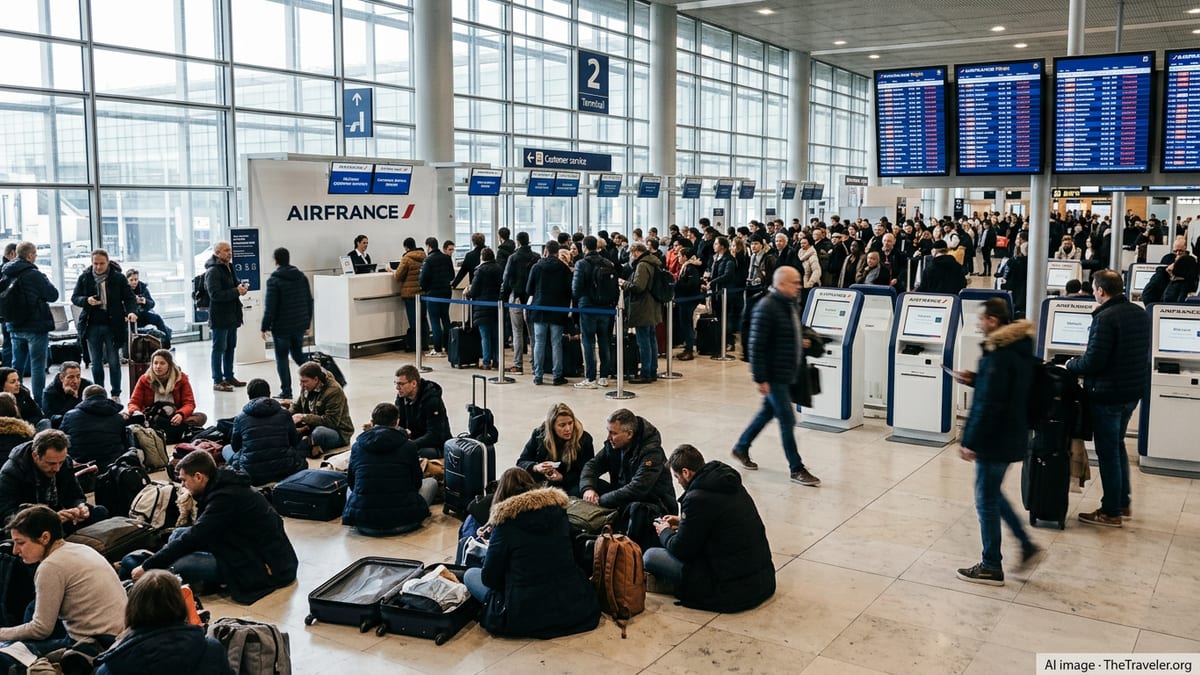
Fresh conflict revives aviation safety fears
The latest round of US–Iran confrontation has reintensified security concerns along some of the world’s busiest long-haul corridors connecting Europe and Asia via the Gulf. Publicly available information shows that airspace closures and military activity around key navigation points have complicated routing for commercial airlines, with several choosing to pull services to major hubs altogether rather than rely solely on detours.
Industry data and published coverage indicate that the conflict, which escalated earlier in 2026 after US and Israeli strikes on Iran, initially triggered widespread shutdowns at airports in Dubai, Abu Dhabi and Kuwait. While many of those hubs later restored limited operations, renewed missile activity and updated risk assessments have prompted some international carriers to again suspend services or delay planned resumptions to destinations in the United Arab Emirates, Saudi Arabia and Lebanon.
Travel advisories compiled by aviation and security analysts describe a patchwork of restrictions. Some Gulf airports remain fully operational but with constrained capacity and tight curfews, while others in the wider region operate reduced schedules or accept only select repatriation and cargo flights. The result is an unstable operating environment in which airlines are reviewing timetables week by week and, in some cases, day by day.
Air France suspends routes as European regulators warn on Gulf airspace
Among the most visible changes for travelers are the route suspensions announced by Air France. According to recent European travel reporting, the French carrier has halted flights to Riyadh, Dubai and Beirut, citing the security situation in Middle Eastern airspace. Earlier guidance suggested these suspensions would be short term, but updated schedules now show interruptions stretching through late July and, for some routes, into August.
The airline’s move follows a conflict-zone information bulletin issued by the European Union Aviation Safety Agency, which advised carriers to avoid airspace over several Gulf states and adjacent waters, including the Gulf of Oman. The bulletin, which remains active, reflects concern about the proximity of civilian flight paths to areas of potential military engagement and missile interception activity.
Other European carriers are not suspending all services to the same degree but have nonetheless redrawn their routings. KLM, British Airways, Lufthansa Group airlines and a number of regional operators have adjusted flight paths to steer clear of Iranian, Iraqi and Israeli skies and certain Gulf flight information regions, sometimes adding significant distance and flight time. For routes still operating to the Gulf, passengers are encountering longer journeys, altered departure times and, in some cases, downgraded frequencies.
Dubai and Riyadh face prolonged disruption despite open airports
Dubai International, one of the world’s busiest hubs, has remained technically open after the most severe wave of attacks earlier in the year, yet its connectivity has been sharply reduced compared with pre-war norms. Industry digests tracking the crisis estimate that overall flight volumes between Europe and the Middle East dropped substantially in the first half of 2026, with Dubai operating at well under full capacity.
While Gulf-based airlines have generally maintained a higher level of service, international carriers continue to tread cautiously. British travel coverage indicates that British Airways has postponed the return of its Dubai service until late October, several months later than originally scheduled. Other foreign airlines, including some from Asia and Europe, have either extended their Dubai suspensions or kept reduced schedules in place, preferring to rely on code-share connections via alternative hubs when possible.
Riyadh, which has been central to broader Saudi plans to expand its role as a global transfer point, has also seen recurring interruptions. Reports summarising airline responses to the conflict list repeated suspensions of services to the Saudi capital by European and regional low-cost carriers during the spring and early summer. Even where routes have technically reopened, timetable reductions and last-minute changes have become commonplace as operators factor in evolving risk assessments and potential diversion scenarios.
Beirut links thinned as Lebanon navigates regional fallout
Beirut’s Rafic Hariri International Airport, already operating in a challenging economic and political context, has been particularly sensitive to swings in regional security. Earlier phases of the US–Iran confrontation coincided with temporary closures of surrounding airspace and a sharp fall in traffic to and from Lebanon, including cancellations by foreign carriers serving the city from Europe and the Gulf.
Recent European travel coverage notes that Air France’s Beirut flights are among those suspended as part of a wider review of Middle East operations. At the same time, factbox-style summaries from global news agencies show that various European low-cost airlines periodically halted services to Beirut in tandem with suspensions to other regional destinations such as Tel Aviv, Erbil and Gulf cities, often extending those pauses multiple times as the conflict evolved.
Lebanon’s national carrier has attempted to preserve a core schedule on strategic routes, but with neighboring states intermittently closing their skies, even operating aircraft into and out of Beirut requires complex rerouting and close coordination with regional air navigation authorities. For passengers, that has translated into fewer direct options and a heavier reliance on multi-stop itineraries via hubs that still offer consistent service.
Passengers face uncertainty, higher costs and longer journeys
For travelers, the overlapping suspensions to Dubai, Riyadh and Beirut form part of a broader pattern of instability along long-haul corridors that normally rely on Middle East hubs. Industry reports on the economic impact of the Iran war describe airlines rerouting traffic around the region, adding fuel burn and flight time, and in some cases abandoning certain city pairs entirely until risk levels fall.
Many carriers have introduced flexible policies for affected passengers, allowing ticket changes, rerouting or refunds when flights are canceled or significantly altered. However, the concentration of suspensions on a limited number of viable alternatives is contributing to full flights, higher fares and tighter competition for seats on remaining routes, particularly during the northern summer peak.
Analysts tracking global capacity trends note that while traffic via some Gulf airports is gradually recovering, the persistence of conflict-zone warnings and the possibility of further military escalation mean that airlines are unlikely to restore full schedules quickly. For Dubai, Riyadh and Beirut in particular, the latest suspensions underscore how vulnerable key aviation hubs remain to geopolitical shocks, even as local infrastructure and airport operations strive to project a return to normality.