


More news on this day
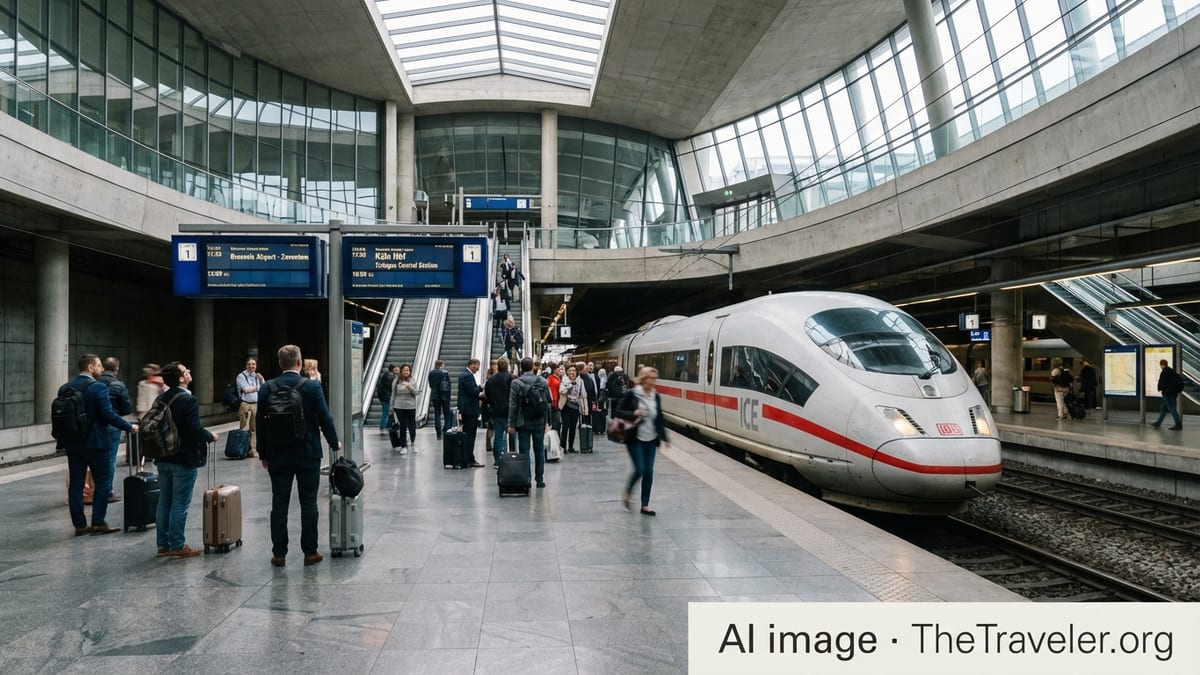
Belgium is quietly turning its dense railway network into a test bed for how straightforward fares and digital ticketing can nudge more travellers off planes and motorways and onto lower carbon trains, both at home and across Europe.
Get the latest news straight to your inbox!
Simpler national fares built around one standard ticket
Belgium’s state operator SNCB has begun rolling out a streamlined fare structure that revolves around a single Standard ticket priced by kilometre, replacing a patchwork of overlapping products that often confused occasional users and visitors. Publicly available information shows that this reform is designed to make it easier for passengers to understand the base price of a journey anywhere in the country at any time of day.
Under the new approach, most discounts sit on top of the same distance-based fare. Information published by transport platforms in cities such as Antwerp explains that passengers are automatically offered the cheapest available option, whether they buy online, at station vending machines or over the counter. This best-price logic means that railcards and multi-trip passes are suggested when they would lower the cost of regular commuting or frequent leisure travel, reducing the need for passengers to master a complex menu of products.
Belgium is also adjusting regulated fares gradually rather than making large one-off increases, with an indexation of a little over two percent for standard tickets scheduled for early 2026. According to official tariff notices, this moderate adjustment is paired with targeted benefits, such as lower average prices for station parking for rail passengers, intended to keep end-to-end rail journeys attractive for those who might otherwise drive.
Together, these changes reduce the number of decisions a traveller has to make before boarding, which industry studies frequently identify as a barrier to choosing rail over higher-emission options. With a clear reference fare and automatic discounts, Belgium is positioning everyday rail use as a default, not a niche product that demands advance research.
Digital ticketing and the end of on-board sales
In a further push toward simplicity, Belgium is phasing out almost all on-board ticket sales. From July of this year, press releases from SNCB indicate that the long-standing practice of buying a ticket from the conductor with a fixed surcharge is ending. Passengers are instead expected to purchase before boarding, using the operator’s app, station ticket machines or staffed counters where available.
While the change removes a last-resort option that some travellers relied on, the operator argues in its public communications that buying a ticket has never been easier. The mobile app allows users to select routes, compare fares and activate flexible products such as multi-journey passes or city-regional tickets with a few taps. For subscriptions and certain integrated tickets, travellers must now activate their day of travel digitally before boarding, a requirement that brings Belgian practice closer to that of neighbouring rail systems.
Digital-by-default ticketing also supports more seamless cross-border travel. The main ticketing portal directs anyone travelling outside Belgium to SNCB’s international platform, where domestic legs can be combined with services operated by Eurostar, ICE and other high-speed or night-train providers. By pushing travellers toward a unified online storefront rather than fragmented local kiosks, Belgium is reducing friction for visitors planning itineraries that cross several borders.
Critics note that the end of on-board sales can be challenging for those without smartphones or bank cards. However, Belgian consumer discussions point out that clearer rules and the disappearance of a relatively expensive on-board surcharge make costs more predictable, which is vital if trains are to compete credibly with long-distance coaches and low-cost airlines.
Targeted passes make frequent low‑carbon travel affordable
Alongside its core Standard ticket, Belgium retains a family of rail passes aimed at frequent travellers, students and young adults, which play a quiet but important role in shifting journeys from road to rail. Public fare guides highlight products such as the Standard Multi and various age-based passes, which allow several trips to be pre-purchased at a discount compared with buying single tickets each time.
In recent years, Belgium has experimented with more ambitious unlimited offers, particularly in the summer. Travellers on public forums describe past off-peak unlimited month passes priced under 60 euros and youth holiday products that offered a month of unlimited national travel for around 35 euros. Although some of these promotions are seasonal or have been revised, they show how simple, flat-fee products can unlock substantial additional rail use when the conditions are right.
Newer tools like the Train+ card, promoted in SNCB’s own facts-and-figures publications, cap the price paid per journey for people who travel regularly, especially those on lower incomes. Commentary from Belgian passengers suggests that these caps create a de facto maximum fare for frequent users, making it easier to budget for a month of rail commuting or weekend trips without a car.
By concentrating discounts in transparent, easy-to-understand passes, Belgium demonstrates how targeted subsidies can encourage repeated low-carbon journeys rather than just one-off promotional trips. For European policymakers looking to reduce transport emissions, these products illustrate that fare policy can be as powerful as infrastructure investment in changing behaviour.
Dense domestic network as a launchpad for European trips
Belgium’s value as a rail pioneer also stems from its geography and infrastructure. The country’s dense web of intercity and local services, together with high-speed corridors to France, the Netherlands and Germany, makes rail a realistic alternative to short-haul flights even for travellers starting in smaller cities. Reference data on Belgian rail services lists frequent intercity trains linking provincial centres with Brussels and Antwerp, where passengers can connect to high-speed Eurostar, ICE and TGV services.
Belgium’s high-speed lines support international trains running at up to 300 kilometres per hour on dedicated tracks between Antwerp and the Dutch border. This allows through services between Brussels, Amsterdam, Paris and Cologne, with journey times comparable to or better than air once airport transfers and security are taken into account. For many cross-border city pairs within 500 to 700 kilometres, the rail option is already viable in terms of both time and cost.
Crucially, the same ticketing reforms that simplify domestic trips also benefit these international journeys. When Belgian passengers use the national ticketing portal, they are guided toward SNCB’s international sales platform for cross-border legs, where they can book a complete itinerary in a single transaction. This reduces a long-standing headache for European rail users, who have often been forced to juggle multiple websites, languages and national booking rules just to travel between neighbouring countries.
By making the first and last domestic segments easy to understand and book, Belgium is lowering the psychological barrier to taking a train from, for example, Ghent to Berlin or Liège to Paris. For climate-conscious travellers comparing emissions, the ability to book these journeys within one ecosystem is nearly as important as the timetable itself.
Belgium’s role in a wider European shift to green rail
The Belgian reforms are unfolding as the European Union promotes rail as a core component of its climate and transport strategies. The European Commission has launched pilot projects to boost cross-border passenger rail, including several night train initiatives that rely partly on Belgian infrastructure. Official EU material frames these pilots as a way to break down the practical barriers that still make international trains harder to use than planes.
One high-profile example is European Sleeper, a cooperative night-train operator linking Brussels with Berlin, Prague and, more recently, Paris. Public information about the service shows that trains use Belgian main lines and high-speed sections to connect the country with major German and Czech cities overnight. Coverage in European media also notes the restart of a Paris–Berlin night train via Mons and Brussels operated by a Belgian-Dutch consortium, underscoring the central role of Belgian tracks in reviving long-distance sleepers as a greener alternative to short-haul flights.
The European Union’s own analysis of cross-border passenger rail argues that simplified ticketing, common standards and better coordination between infrastructure managers are essential if such services are to grow. Belgium’s move toward a unified fare structure and digital front end for both domestic and international trips directly aligns with these recommendations, making it a practical case study in how national systems can support EU-wide goals.
As pressure increases to cut emissions from transport, Belgium’s experience suggests that the most effective interventions do not always require new tracks or trains. By clarifying prices, reducing paperwork at borders and offering straightforward passes that reward frequent low-emission travel, the country is showing how small, user-focused changes can make rail the natural choice for journeys across one of Europe’s busiest crossroads.
Belgian domestic and international ticketing portal
SNCB announcement on the new fare offer
SNCB facts and figures on simpler ticketing