


Seoul’s Incheon International Airport has quietly become one of the most lounge-rich hubs in Asia, with an unusually wide spectrum of spaces ranging from lavish Korean Air flagship lounges in Terminal 2 to practical pay-per-use options and Priority Pass favorites in Terminal 1. With airlines shifting terminals and Korean Air’s multi year lounge overhaul now well under way, choosing the right lounge for your time, budget and travel style can make a real difference to your connection through Incheon.
Get the latest updates straight to your inbox!
Understanding Incheon’s Terminals and Lounge Landscape
Incheon International Airport is split into two main passenger terminals, T1 and T2, plus a midfield concourse linked to Terminal 1. Terminal 2 is the newer building and the main hub for Korean Air and its SkyTeam partners. Terminal 1 handles a broad mix of other full service and low cost carriers, including many oneworld and Star Alliance airlines, and it is where most independent lounges are located. Airlines in Korea have also been reshuffling after Korean Air’s acquisition of a majority stake in Asiana Airlines, which has triggered a wave of moves and refurbishments that directly affect which lounges you can use on a given ticket.
As of mid 2026, Korean Air has completed a major expansion of its lounge network in Terminal 2, growing from a relatively modest footprint to a full suite of seven spaces that include First Class, Miler Club, multiple Prestige (business) lounges and two Garden lounges with large windows and greenery. This has essentially turned T2 into the premium stronghold for Korean Air and SkyTeam elites, while Terminal 1 remains the primary playground for Priority Pass, LoungeKey and paid entry lounges such as Sky Hub and Matina. A newer oneworld branded lounge has also opened in Terminal 1, giving passengers on airlines like American Airlines, Qantas and Cathay Pacific a more consistent experience when flying in premium cabins or with Sapphire or Emerald status.
For travelers, the practical implication is simple but important. You cannot freely move between T1 and T2 once you are airside, and there is no quick airside shuttle between them. That means the “best” lounge is always the best one in the terminal you are actually departing from. A business class passenger on Korean Air to Los Angeles will be in T2, where a Korean Air Prestige Lounge or Garden Lounge is the logical choice. A budget traveler flying a low cost carrier from T1 will be better served by a Priority Pass friendly independent lounge like Sky Hub or Matina, even if Korean Air’s new spaces across the airfield look more glamorous in photos.
Best For Full Service Business Travelers: Korean Air Prestige & Garden Lounges
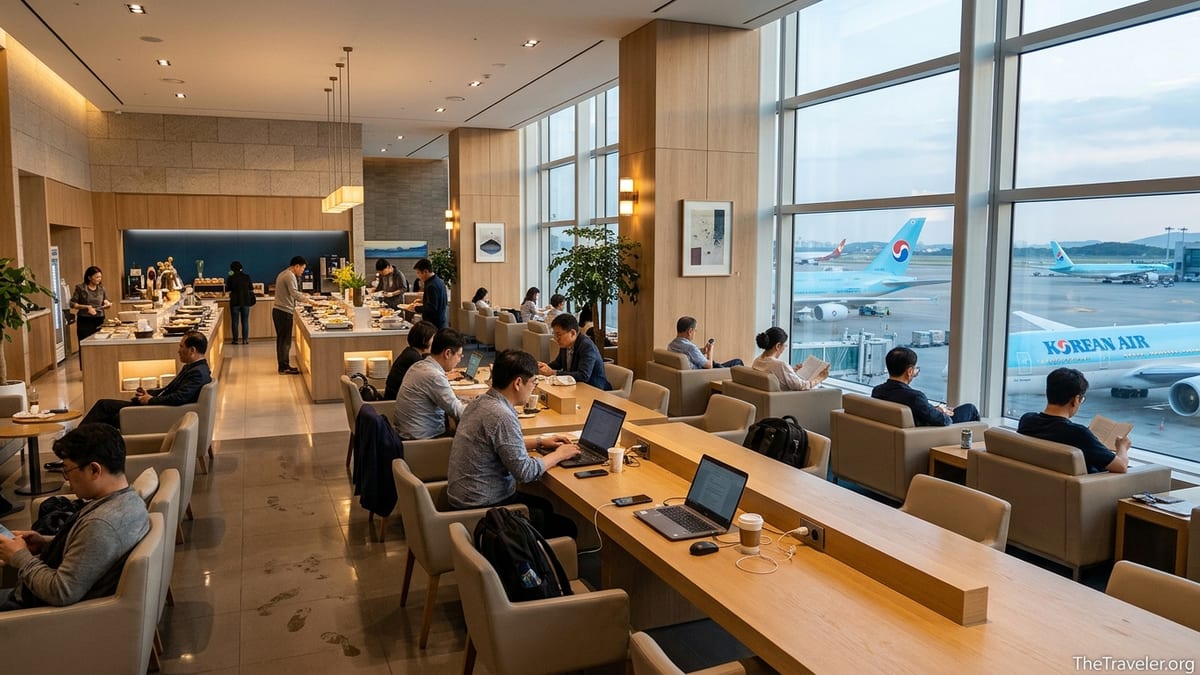
For travelers flying long haul business class on Korean Air or another SkyTeam carrier from Terminal 2, the newly renovated Korean Air lounges are the standout choice. After a multiyear renovation program and significant investment, the airline now offers several Prestige (business class) lounges plus two Prestige Garden lounges with floor to ceiling windows and views over the runways. These spaces have been designed around the idea of a “lounge at the airport” rather than a generic airport lounge, with warmer materials, more distinct zones and quieter seating arrangements than the old, white and open plan facilities Korean Air used to operate.
In practice, that means business travelers will find a substantial buffet with hot Korean dishes like bibimbap ingredients, japchae noodles and seasonal stews, alongside international comfort food such as pasta, salad bars and pastries. The airline has also focused on upgrading coffee and tea service. In the newly opened Prestige Garden East lounge, for example, barista style coffee prepared with specialty beans has become a talking point among frequent flyers. Self pour beer, a selection of wines and spirits, and Korean classics like makgeolli may be available depending on the time of day, which makes the lounge a comfortable place to enjoy a full meal before a late evening departure to North America or Europe.
Typical access rules are straightforward for the full service business traveler. If you are flying in Korean Air Prestige Class or another SkyTeam airline’s business class from Terminal 2, you will normally receive complimentary access to a Korean Air Prestige or Garden lounge, along with one guest if you hold eligible elite status. SkyTeam Elite Plus passengers traveling in economy class can usually enter as well, provided the long haul segment is on Korean Air or a SkyTeam partner. For example, a Delta Air Lines Platinum Medallion passenger flying economy on a Delta operated flight from Incheon could be directed to Korean Air’s Prestige East or West lounge, which many Delta flyers consider a highlight of their journey when connecting through Seoul.
Business travelers who value the ability to work will appreciate that the newer Korean Air lounges include large worktables, plentiful power outlets that accept universal plugs, and relatively strong Wi Fi that holds up even at peak times. Shower suites with amenities from international brands are available in several locations, and the staff are generally efficient about turning them over during busy early evening departure waves to the United States and Europe. If you are planning to shower, it is wise to put your name down as soon as you arrive, especially between about 5 pm and 9 pm when a cluster of long haul departures often means short queues at check in but longer waits for showers inside the lounge.
Best For Airline Elites And Premium Economy: Oneworld Lounge & Partner Spaces
Terminal 1, which serves many oneworld and Star Alliance carriers, has seen its own quiet transformation. One of the biggest changes for alliance loyalists is the opening of a full oneworld branded lounge. This facility offers a shared home for eligible passengers on oneworld airlines such as American Airlines, Cathay Pacific, Qantas, Qatar Airways and Finnair. For travelers used to chasing oneworld Sapphire or Emerald status specifically for lounge access, Incheon’s alliance lounge now feels more in line with what you might find at airports like London Heathrow or Hong Kong, with warm design, good natural light and a food spread that is more than a token selection of snacks.
Here, the access model is governed by alliance rules rather than individual airline payment schemes. Business class passengers on an eligible oneworld flight departing from Terminal 1, as well as Sapphire and Emerald status holders in any cabin, can enter the oneworld lounge without additional fees, usually with one guest. For instance, a Qantas Gold member flying economy from Seoul to Sydney on Qantas can expect to spend their pre flight time there rather than in one of the independent lounges that cater primarily to Priority Pass and paid entries. This is particularly valuable on overnight departures, where a hot buffet with familiar Western dishes, salads and desserts can stand in for a rushed hotel dinner in the city.
Star Alliance loyalists, on the other hand, continue to rely largely on airline operated lounges and contract spaces instead of an alliance branded facility. Asiana Airlines historically ran several business and first class lounges in Terminal 1, but as the integration with Korean Air advances and flight operations shift toward Terminal 2, some of these spaces have closed or been repurposed. The most attractive remaining lounges for Star Alliance passengers tend to be those branded by individual airlines or shared with partner carriers rather than the independent options crowded with Priority Pass holders. A business class passenger on Singapore Airlines or Thai Airways, for example, may be invited to a contracted lounge with a more premium ambiance, though the exact facility can vary by time of day and airline agreements.
In the middle ground, premium economy travelers often find themselves without guaranteed lounge access unless they also hold status. At Incheon, the most effective strategy for these passengers is to combine airline benefits with credit card or lounge membership programs. A traveler holding a premium credit card that offers Priority Pass or LoungeKey access could pair a premium economy ticket on an oneworld or Star Alliance carrier with a stop at an independent lounge like Sky Hub in Terminal 1, gaining a quieter place to sit and a decent meal without paying for the top tier cabins. This hybrid approach is especially popular with frequent leisure travelers and small business owners who fly often enough to value comfort but not always in business class.
Best For Priority Pass And Credit Card Holders: Sky Hub & Matina Lounges
For many travelers passing through Terminal 1, the most practical lounges are the independent spaces that accept Priority Pass, LoungeKey and similar credit card linked programs. The Sky Hub and Matina lounges are the two names you will see most often printed on Priority Pass app screens and credit card benefit guides. Several of these lounges are scattered through Terminal 1 and the connected concourse, meaning that you can usually find one within a five to ten minute walk of your departure gate.
Sky Hub lounges tend to be the better reviewed of the two among frequent visitors, especially for a balance of food, seating and crowd levels. Travelers report a self service buffet with hot and cold Korean and Western dishes, including items like fried chicken, simple stews, steamed rice and salad, plus packaged snacks and dessert bites. An open bar with beer on tap and house wine is a key draw for many. Even during busy daytime hours, some Sky Hub locations feel manageable if you arrive early in your layover, with a selection of armchairs and tables that work reasonably well for a quick meal and some email catch up. For a traveler relying solely on a Priority Pass membership attached to a credit card, Sky Hub is often the first lounge they seek out.
Matina lounges, also located in Terminal 1, offer a similar concept but with a few differences that matter in practice. Food selection can be attractive, with decent hot dishes and a noodle bar at certain times of the day, which makes Matina popular among families and travelers who prioritize a proper meal over workspace. This popularity comes with a trade off: long lines. It is not unusual to see a queue of 20 or more people waiting outside a Matina lounge in the early evening when flight activity peaks. Travelers have reported line ups that wrap around corners and waits long enough to eat into the benefit of having lounge access in the first place. Priority Pass and LoungeKey can also impose time limits, often around three hours, which rarely matter on short connections but can be a factor for long layovers.
If you hold Priority Pass or a similar product and only have time for one lounge visit in Terminal 1, a common strategy is to use Matina for a quick meal if the line is short, then relocate to a quieter Sky Hub if your card or program allows multiple entries. When crowding is heavy, simply choosing the lounge closest to your gate can be more important than chasing the very best buffet. With Incheon’s terminal layout, walking from one end of Terminal 1 to the other can easily take 15 minutes at a brisk pace, and all the independent lounges share similar core amenities: reliable Wi Fi, hot food, soft and alcoholic drinks, and basic showers in certain locations.
Best For Families With Kids: Lounges With Play Areas And Easy Food
Incheon is widely considered a family friendly hub, not just because of its lounges but also because of the airport’s overall design, which includes indoor gardens, cultural performances and kid focused play zones in the public areas. For families, the best lounge is one that combines relaxed seating, plenty of simple food and an environment where children will not feel out of place. In practice, that often means choosing lounges that either explicitly cater to families or are large enough that families do not feel like they are disturbing business travelers.
In Terminal 1, Matina lounges have become known among regulars as family heavy spaces, in part because of their accessible location and Priority Pass compatibility. Inside, you can usually find child friendly options on the buffet, such as plain rice, pasta, soup and fruit, along with Western style snacks. Some Matina locations feature small family areas or clusters of seats that are a bit removed from the main working spaces, which helps parents relax when children get restless. The constant flow of people and the casual feel make it less stressful to manage young kids compared with the quieter, more subdued airline elite lounges.
In Terminal 2, Korean Air’s refurbished network includes zones that work well for families even in lounges not explicitly branded for children. The Prestige Garden lounges, for example, offer expansive views of the airfield and tall windows that let in plenty of daylight, which can be entertaining for aviation obsessed children counting departing jets. The buffet almost always includes safe choices like plain noodles, bread, cereal at breakfast and simple chicken dishes, along with Korean items that more adventurous kids might enjoy. Wide aisles and multiple seating zones also mean strollers are easier to maneuver than in some older, cramped lounges at other airports.
For parents planning an extended connection, it can be wise to mix time in a lounge with time in Incheon’s public play spaces. Terminal 2 features an indoor “digital forest,” rest zones with reclining chairs and a public sauna complex in the basement level that functions more like a local jjimjilbang. Some travelers even suggest exiting the transit area during very long daytime layovers to visit a nearby family friendly spa complex before returning to the departure terminal and finishing the journey in a lounge. Lounges are helpful for feeding and resting children, but the ability to walk, play and experience something beyond an enclosed room often makes the overall layover much more bearable for kids and parents alike.
Best For Long Layovers And Sleep: Quiet Zones, Showers And Nearby Alternatives
Seoul Incheon is a natural connection point for long haul itineraries between North America, Europe and Southeast Asia, which means many passengers face layovers of six hours or more. While lounges improve comfort during these waits, not every lounge is equally well suited to true rest. Travelers who want to sleep, shower and recharge their devices without feeling rushed should look for spaces that emphasize quieter seating zones, dim lighting and shower availability over lively social atmospheres.
Among the airline operated spaces in Terminal 2, Korean Air’s Prestige lounges and especially the First Class and Miler Club lounges offer the calmest environments. These areas feature enclosed relaxation rooms, semi private nooks and, in the top tier lounges, fully enclosed suites. Even business class lounges, though more crowded, often have corners with loungers or reclining chairs that are set away from the buffet and bar. On overnight layovers, staff may dim the lighting in certain sections, and earplugs or eye masks are sometimes available on request. Showers are in high demand during early morning and evening peaks, so checking in at the shower desk immediately after you enter the lounge is essential if your layover is under three hours.
For travelers using independent lounges in Terminal 1 on a long layover, strategy matters. Because Sky Hub and Matina often impose time limits, you may not be able to spend an entire eight hour layover in a single seating. Many travelers choose to use a lounge for the middle portion of their wait, sandwiching it between time spent in Incheon’s public rest areas and, if allowed by their itinerary, a quick excursion landside. Quiet nap zones with reclining chairs exist in both terminals outside lounges, often near the transfer desks or along less busy concourses. These are free to use and can be surprisingly peaceful during certain times of day, especially after late night departure banks when most passengers have already left.
If your layover exceeds eight or ten hours, particularly overnight, consider booking an airport transit hotel or a capsule style room in the terminal complex rather than relying only on lounge seating. Prices vary by season and demand, but even a four to six hour block in a small private room can dramatically improve how you feel on arrival at your final destination compared with trying to sleep in a reclining chair. You can then use a lounge later in your connection window for a hot meal and shower before boarding instead of trying to do everything in one place.
Best For Budget Travelers: Pay Per Use Lounges And Smart Alternatives
Not every traveler passing through Incheon has a business class ticket, elite status or a premium credit card. The good news is that the airport’s lounge ecosystem and public facilities still offer options for budget conscious flyers who are willing to pay a modest fee for food, Wi Fi and a comfortable seat. Many independent lounges in Terminal 1, including some Sky Hub and Matina locations, allow walk in access for a fixed price, typically for a three hour block that includes buffet food, soft drinks and in some cases basic alcoholic beverages. Prices fluctuate, but they often fall into a range that is comparable to the cost of a full restaurant meal in the terminal.
Budget travelers should compare the value of a lounge visit to other ways of spending time in the airport. Incheon’s landside and airside areas feature an array of reasonably priced Korean and international restaurants, coffee shops with power outlets and large seating areas, and even free cultural performances in dedicated zones. For someone with a short layover of two to three hours, a sit down meal at a restaurant followed by time in the public rest zones may offer as much comfort as a lounge, without the risk of queues at check in or at the lounge door. For longer connections, however, an all inclusive lounge fee that covers several plates of food, drinks and Wi Fi can quickly become good value compared with ordering multiple items a la carte in cafes.
One underused strategy for budget travelers is to leverage regional credit cards and bank promotions in South Korea, which sometimes provide single use lounge vouchers even on basic cards. Travelers who spend a few days in Seoul before their flight may encounter such offers when opening local bank accounts or purchasing higher tier prepaid SIM cards that include travel perks. Although these cannot be relied upon, they are worth watching for if you are planning an extended stay. Additionally, some airlines selling promotional economy fares occasionally bundle lounge access as an upsell during online check in, often at a lower price than walk in rates at the door.
Finally, do not overlook the value of simply exploring the terminals themselves. Incheon is known for indoor gardens, live music, rotating art exhibits and comfortable seating areas with power outlets and views of the apron. For travelers on the tightest budgets, a strategy that mixes a modest meal from a convenience style outlet, a walk through the cultural zones and time spent in a quiet seating area might be more rewarding than paying for a lounge that is crowded and time limited. Lounges are a useful tool, but at an airport like Incheon, they are not the only path to a comfortable layover.
The Takeaway
The best lounge at Seoul Incheon Airport is not a single winner but rather the one that fits your ticket, status, budget and personal priorities. Korean Air’s expanded network of Prestige and Garden lounges in Terminal 2 offers a refined experience for business class and elite travelers, with upgraded food, design and shower facilities that make long haul departures more pleasant. Alliance specific spaces such as the oneworld lounge in Terminal 1 bring consistency for frequent flyers on member airlines, while independent operators like Sky Hub and Matina continue to provide essential options for those relying on Priority Pass, LoungeKey or pay per use access.
Families gravitate toward lounges with generous buffets and relaxed atmospheres, long layover passengers prioritize showers and quiet corners, and budget travelers weigh the cost of lounge entry against the robust public facilities and cultural amenities that Incheon provides. The common thread is that a little planning goes a long way. Confirm which terminal your flight uses, check which lounges your ticket or cards actually unlock, and keep realistic expectations about crowd levels at peak hours. With that groundwork in place, you can turn even a long connection at Incheon into an opportunity to eat well, rest and experience a slice of Korean hospitality before your onward flight.
FAQ
Q1. Which lounges are best if I am flying business class on Korean Air from Incheon?
The top choices are Korean Air’s Prestige and Prestige Garden lounges in Terminal 2, which are designed for business class and SkyTeam Elite Plus passengers on Korean Air and partner airlines.
Q2. Can I use Korean Air lounges in Terminal 2 if I am flying economy on a SkyTeam airline?
In many cases SkyTeam Elite Plus status holders flying economy on Korean Air or a SkyTeam partner from Terminal 2 can access a Korean Air lounge, but standard economy tickets without status usually do not include entry.
Q3. What is the best lounge at Incheon for Priority Pass holders?
In Terminal 1, Sky Hub lounges are often preferred by Priority Pass users for a balance of food and seating, while Matina lounges are popular for their buffet but can be crowded with long lines at peak times.
Q4. Is there a oneworld lounge at Incheon and who can use it?
Yes, Terminal 1 has a oneworld branded lounge that typically welcomes business and first class passengers plus Sapphire and Emerald status holders traveling on oneworld airlines such as American Airlines, Qantas and Cathay Pacific.
Q5. Are any lounges at Incheon particularly good for families with children?
Matina lounges in Terminal 1 are family friendly thanks to simple buffet options and a casual atmosphere, while Korean Air’s larger lounges in Terminal 2 offer space, airfield views and plenty of kid friendly food choices.
Q6. Do Incheon airport lounges have showers for transit passengers?
Yes, many airline operated and some independent lounges offer shower facilities. Availability can be limited during peak times, so it is wise to register for a shower slot as soon as you enter the lounge.
Q7. Can I pay to enter a lounge at Incheon without airline status or a premium credit card?
Several independent lounges in Terminal 1, including some Sky Hub and Matina locations, sell walk in access for a fixed time period that typically includes buffet food, drinks and Wi Fi.
Q8. Is it possible to move between Terminal 1 and Terminal 2 to use a different lounge?
No, for practical purposes you should plan to stay in the terminal your flight departs from. Moving between T1 and T2 requires leaving the secure area and going through security again, which is usually not worth it just for lounge access.
Q9. Are Incheon’s lounges suitable for working during a layover?
Yes, most lounges provide free Wi Fi and plenty of power outlets, and Korean Air’s refurbished lounges in Terminal 2 feature dedicated worktables and quieter zones that suit business travelers.
Q10. Is it always worth paying for lounge access at Incheon?
It depends on your layover length and priorities. For very short connections, public seating, restaurants and cultural zones may be enough, while longer layovers often justify the cost of a lounge for food, showers and a quieter environment.