


More news on this day
Hundreds of travellers across England and Scotland have been left stranded after widespread disruption at key UK airports, with 1,223 flights delayed and 21 cancelled at London, Manchester and Glasgow, affecting operations for British Airways, Jet2, Ryanair and several other carriers.
Get the latest news straight to your inbox!
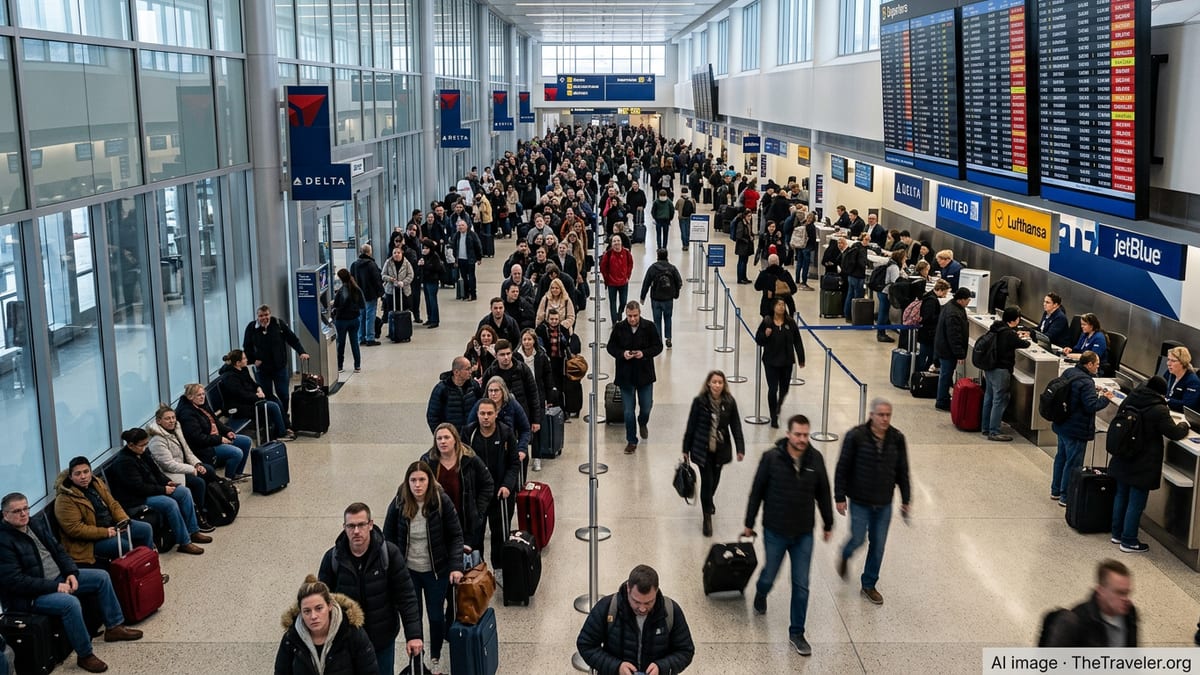
Major UK Airports Hit By Severe Operational Disruption
Publicly available aviation data indicates that a combined total of 1,223 flights were delayed and 21 cancelled at London, Manchester and Glasgow over a short period, triggering significant knock-on disruption for passengers across England and Scotland. The disruption has impacted both domestic and international services, with short-haul European routes and internal UK connections particularly affected.
Reports indicate that London’s main airports, together with Manchester and Glasgow, all experienced elevated levels of delay compared with typical daily averages. While the majority of services eventually departed, even moderate delays of 30 to 90 minutes created bottlenecks at departure gates, forced missed connections and contributed to crew and aircraft rotation problems that later cascaded through evening schedules.
Operational updates published by airlines and airports show that some services were held on the ground due to air traffic flow restrictions, while others encountered turnaround issues such as late-arriving inbound aircraft and congestion during peak departure waves. As airlines sought to consolidate lightly loaded services and re-time others, a small but significant number of flights were cancelled outright, leaving travellers to seek rebooking or overnight accommodation.
The timing of the disruption, during a busy travel period with high load factors, meant that same-day rebooking options were limited on several routes. Passengers connecting at London and Manchester for onward long-haul flights were particularly exposed, with missed connections leading to extended delays and, in some cases, the need to reroute via alternative hubs.
British Airways, Jet2, Ryanair And Others Face Widespread Knock-On Effects
The disruption has touched almost every major carrier using the affected airports, with British Airways, Jet2 and Ryanair among the airlines experiencing the largest volume of delayed or cancelled services. Publicly accessible flight status boards and tracking platforms show multiple instances of delayed departures on key domestic corridors, including London to Manchester and London to Glasgow.
British Airways, which relies heavily on London as a primary hub for both domestic and long-haul operations, has been particularly exposed to schedule knock-on effects when early departures slip behind schedule. Delays to feeder flights from Manchester and Glasgow can lead to missed onward connections at Heathrow, forcing passengers to be re-accommodated on later departures to Europe, North America and beyond.
Low-cost carriers such as Ryanair and Jet2, which operate tighter aircraft rotations and shorter ground times, are also vulnerable when disruption hits early in the day. Even a single extended turnaround or late arrival can have a cumulative impact, with subsequent flights departing progressively later as the day goes on. Public flight data for some of these airlines shows waves of delays building through the afternoon and evening as operations struggled to recover.
Other airlines operating at London, Manchester and Glasgow, including European network and leisure carriers, have also been affected to varying degrees. In several cases, airlines opted to cancel individual flights where passenger numbers were comparatively low, using the freed capacity to protect busier services and reduce the risk of further large-scale knock-on delays.
Travellers Stranded As Delays Ripple Across England And Scotland
The combination of delays and cancellations has left hundreds of travellers stranded or facing substantial disruption to their journeys. Passengers caught up in the issues at London, Manchester and Glasgow have reported extended waits in crowded terminals, with some being advised to seek hotels or alternative transport while they awaited rebooking options.
For travellers on short domestic sectors between England and Scotland, even modest delays have had outsized consequences when linked to long-haul itineraries. Missing a single connection at London can mean an enforced overnight stay or a full day’s delay before another seat becomes available on a heavily booked long-haul service. This has been particularly challenging for those travelling for time-sensitive reasons such as business meetings, events or family commitments.
Families and leisure travellers have also been affected, especially those heading to holiday destinations on Jet2 and Ryanair services from northern England and Scotland. Halting flights close to departure time or re-timing them into the late evening not only disrupts onward ground transport and accommodation plans but can also cause complications for travellers who have already checked out of hotels or completed cruise itineraries.
Publicly shared experiences on travel forums and social media platforms describe travellers sleeping in terminal seating areas, queuing for customer service desks and attempting to secure alternative routes via different UK airports. Some passengers opted to travel overland by train or coach between Scotland and England to reach alternative flights, adding further complexity and cost to their journeys.
Weather, Air Traffic Management And Capacity Pressures Under Scrutiny
Initial indications from aviation tracking services and airport operations updates point to a combination of factors behind the disruption, including challenging weather conditions, air traffic control flow management and wider capacity constraints at busy UK hubs. When visibility or wind conditions deteriorate, even temporarily, air traffic authorities may reduce the rate at which aircraft can land and depart, leading to a backlog that can take hours to clear.
At the same time, high summer traffic levels and tightly optimised schedules at major airports mean there is limited slack in the system to absorb disruption. When inbound flights arrive late, aircraft and crew may not be available on time for outbound services, resulting in compounding delays. This is particularly evident at slot-controlled airports in the London system, where any deviation from schedule must be carefully co-ordinated across multiple airlines and handling agents.
Operational reports and previous episodes of disruption suggest that a single weather or technical trigger can quickly escalate into broader network issues when it coincides with peak travel periods. With London, Manchester and Glasgow all serving as key nodes in domestic and European air traffic, disturbances at even one of these airports can have ripple effects that reach far beyond the immediate region.
The latest wave of disruption has renewed attention on the resilience of the UK’s aviation infrastructure and the balance between maximising capacity and maintaining sufficient buffers to handle unplanned events. Industry observers note that as demand returns to and often exceeds pre-pandemic levels, airlines and airports face growing pressure to maintain punctuality while operating full schedules with limited spare aircraft and staff.
What Passengers Can Do In The Wake Of Disruption
Consumer guidance from public bodies and travel organisations highlights several steps passengers can take when facing delays and cancellations of the scale recently seen at London, Manchester and Glasgow. Travellers are generally advised to monitor flight status information closely through official airline channels and airport departure boards, and to avoid travelling to the airport until a service is confirmed when widespread disruption is being reported.
For cancelled flights, most airlines offer rebooking onto the next available service at no additional fare, subject to seat availability. In cases where the delay or cancellation meets certain thresholds and is within the carrier’s control, passengers may also be entitled to compensation or reimbursement for reasonable expenses such as meals and accommodation, according to established UK and European air passenger regulations.
Travel experts often recommend that passengers keep receipts for any extra costs incurred during disruption and document the timing and duration of delays. This can help support any subsequent claims submitted to airlines or travel insurers. Where same-day rebooking is not possible, some passengers choose to explore alternative routes via different airports or modes of transport, though this may involve additional expense.
The recent disruption underscores the value of flexible tickets, comprehensive travel insurance and allowing longer connection times, especially when itineraries rely on transfers through congested hubs. As London, Manchester and Glasgow work to restore normal operations and airlines gradually realign schedules, passengers are being encouraged to build extra contingency into their travel plans to account for potential knock-on effects in the days that follow.