


Belize’s barrier reef stretches for more than 180 miles, but not every beachfront resort gives you the same underwater access. Some properties are true reef lodges where you can step off the dock and fin over living coral in minutes. Others are conventional beach hotels that simply bundle third party snorkel and dive excursions. For travelers who care more about effortless reef time than pillow menus, understanding these differences is essential when choosing where to stay.
Get the latest updates straight to your inbox!
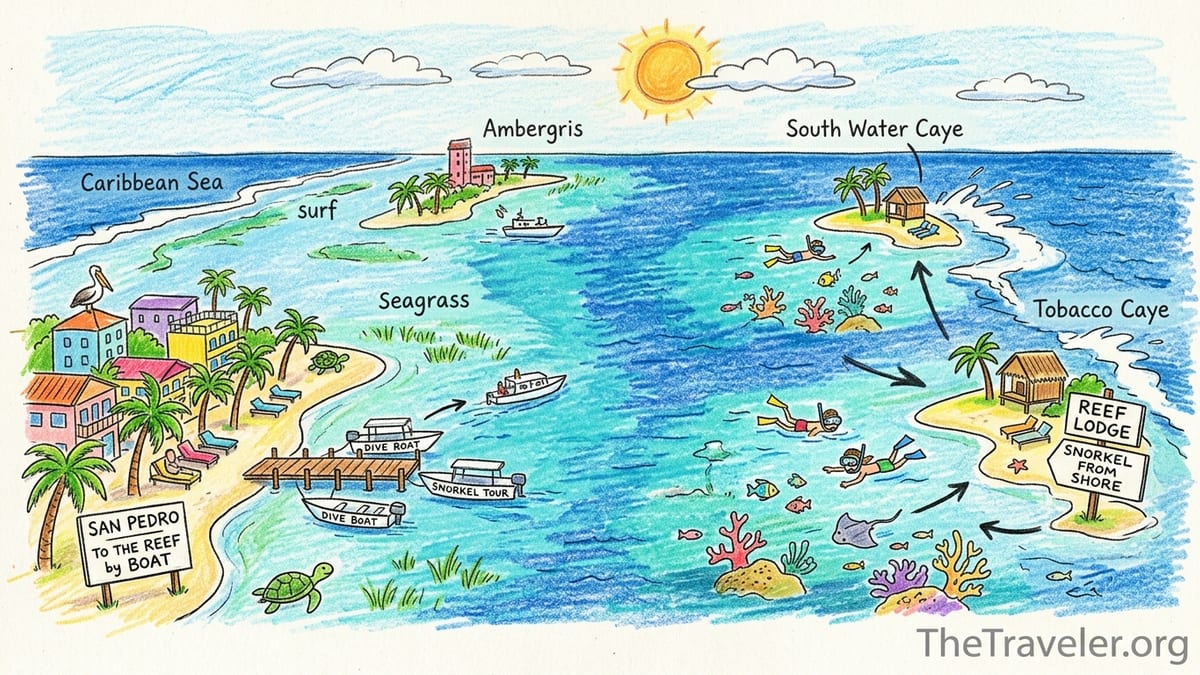
How Reef Access Works Along the Belize Barrier Reef
Belize’s coastline and cayes form a patchwork of very different reef experiences. On popular Ambergris Caye and most of the mainland coast, the barrier reef lies roughly half a mile offshore. That means you can see the white line of surf from your lounger, but you almost always need a boat to reach the main coral wall and the classic sites like Hol Chan Marine Reserve and Shark Ray Alley. In practice, even strong swimmers find it impractical to snorkel that channel from town beaches, so boat-based excursions are the norm.
In contrast, a handful of small islands sit directly on the reef crest or atoll rims. Places like South Water Caye, Tobacco Caye, Glover’s Reef and several Turneffe properties offer house reefs just a few fin kicks from shore. You may still take longer boat trips to signature sites, but you do not have to book a tour every time you want to get in the water. This is a major advantage for keen snorkelers, underwater photographers and families who like short, unscheduled sessions between meals or naps.
When comparing resorts, look beyond generic “water sports” language and focus on specifics: whether you can snorkel from the beach or dock, typical boat ride times to the main dive sites, whether there is an on-site dive center with gear storage and PADI courses, and what non-diving activities are available. The properties below are grouped by region and type, so you can quickly distinguish true reef-focused lodges from regular beach hotels that simply arrange outings with external operators.
Boat transfer logistics and costs also matter. Remote atolls often require a 60 to 90 minute boat ride from Belize City or Dangriga, frequently on a fixed schedule and with a surcharge that can add several hundred dollars per couple. In return, you get quieter reefs, less boat traffic and darker skies at night. Ambergris Caye and the southern coastal bases, by contrast, are easier to reach and better for mixed-interest trips that combine reef time with restaurants, shops and inland excursions.
Ambergris Caye: Island Bases With Quick Boat Access
Ambergris Caye remains Belize’s most popular base for reef visitors. San Pedro town has numerous dive centers and day boats heading to Hol Chan and Shark Ray Alley, where the main reef is just a short skiff ride away. This setup favors travelers who want good diving and snorkeling but also value nightlife, dining choice and reasonably easy transport via short domestic flights from Belize City. The trade-off is that true snorkel-from-shore reef access is limited compared with smaller cayes built on the reef itself.
Most midrange and upscale resorts near San Pedro, such as Alaia Belize or Las Terrazas Resort, sit on pleasant beaches inside the protective lagoon. You can swim off their docks in shallow seagrass and sand, and many offer free kayaks and basic snorkel gear. However, live coral gardens and drop-offs are typically reached by boat. In practice, that means signing up with an in-house or partner dive shop for half-day trips. Many properties host PADI-affiliated operations that can arrange Open Water certification over three or four days, with confined-water sessions in the pool followed by training dives on the reef the next morning.
If snorkeling directly from shore is a top priority on Ambergris, Tranquility Bay Resort on the far north of the island stands out. Located inside the Bacalar Chico Marine Reserve at the edge of the barrier reef, it allows guests to wade or fin a short distance from their beachfront cabanas to patch reef teeming with fish. The resort provides gear and runs additional boat outings, but you are not dependent on tours for every swim. For many visitors this offers a useful compromise between the independence of a house reef and the infrastructure of a larger island with air connections and shops.
Travelers choosing Ambergris should ask very specific questions before booking: Can you see coral heads from the dock, or mostly seagrass and sand. How far and how long is the boat ride to standard snorkel sites. Is there secure gear storage and a rinse area for cameras and wetsuits. Are there early-morning or dusk dives for more serious divers. Clarifying these details with the property or its in-house dive shop will make it easier to match expectations, especially if some members of your group are non-divers who prefer relaxed beach time while others plan multiple boat trips.
South Water Caye and Tobacco Caye: Classic Reef-Edge Lodges
For travelers who want the quintessential “step off the beach onto the reef” experience, South Water Caye and tiny Tobacco Caye, reached by boat from Dangriga, belong at the top of the list. Both sit on the barrier reef itself within South Water Caye Marine Reserve, one of the most celebrated snorkeling areas in the country. Here the reef crest and drop-off lie so close to the sand that you can often hear waves breaking at night from your cabana.
On South Water Caye, Pelican Beach Resort is widely regarded as a classic reef lodge. Guests describe snorkeling directly off the south-end beach and docks, with shallow coral gardens and schooling fish in clear water only a short swim away. For deeper walls and channels, the resort’s small boats typically run five to fifteen minutes to nearby cuts and patch reefs. There is an in-house dive operation that arranges guided dives and snorkel trips, often including gear rental and simple storage areas for guests’ equipment between outings. Non-divers can enjoy paddle-boarding, beachcombing, birdwatching and stargazing, along with casual socializing at the island bar.
Tobacco Caye, even smaller and more rustic, offers a cluster of budget to midrange lodges such as Reef’s End Lodge and Tobacco Caye Paradise. Guests here commonly snorkel “the aquarium” right off the main docks, where resident fish, rays and occasional nurse sharks cruise in shallow, protected water. Because the island is ringed by coral and sand flats, it is realistic to snorkel several times a day without booking a boat, making it attractive for longer stays or travelers who prefer low-key schedules. Simple dive and snorkel operators on the caye arrange short boat hops to nearby sections of the reef and to South Water Caye channel, usually in the 10 to 20 minute range.
Compared with larger islands, facilities on South Water and Tobacco Caye are basic. You should not expect high-end spas or big pools, and electricity may be limited to certain hours in some properties. However, for many snorkelers and divers this is part of the appeal. The focus is firmly on the water. Ask in advance about dedicated gear rinse tanks, secure storage for cameras, and the availability of guided night snorkels or introductory dive experiences. Also note that marine reserve fees are usually collected on site and are an additional per-day cost, which is normal for protected areas in Belize.
Turneffe Atoll: Dive Lodges on a Remote Reef
Turneffe Atoll lies offshore from Belize City and is renowned among divers for its dramatic walls, channels and rich mix of reef and mangrove habitats. It offers more than 70 named dive sites scattered around a large atoll, which means boats are essential, but the distances from lodge docks to the nearest drop-offs are typically short. Staying here suits travelers who prioritize multiple dives per day, including early-morning and night dives, over ready access to towns or inland attractions.
Dedicated dive resorts such as Turneffe Island Resort, Turneffe Flats and Blackbird Caye Resort operate as self-contained lodges. Guests are transferred from the mainland by scheduled boat, often a 60 to 90 minute ride depending on sea conditions. Once there, daily two-tank or three-tank dive trips typically run between 10 and 30 minutes to reach nearby sites. Snorkelers often accompany divers on the same boats, being dropped on shallower sections of the reef. Around some of these lodges, house reef snorkeling from the dock or via a short kayak ride is possible in calm weather, with patch reefs and sand channels offering sightings of rays, juvenile fish and small nurse sharks.
These properties almost always feature on-site dive centers staffed by full-time instructors and divemasters. That enables guests to complete PADI Open Water or Advanced Open Water courses during a week-long stay, sometimes with e-learning theory completed at home beforehand to maximize water time. Gear rental, storage rooms, compressor facilities and camera rinse tanks are standard. Because of the remote location, it is wise to bring any specialized equipment you rely on, such as prescription masks or specific camera batteries, as on-site shops carry mainly mainstream gear.
Turneffe lodges also understand that many guests travel with non-diving partners. Non-divers can snorkel from boats while their companions dive, paddle kayaks in the calm lagoon, fish on the flats with guides, or simply relax in hammocks. However, compared to Ambergris or southern coastal villages, there are fewer independent alternatives like restaurants, bars or shops. This is very much a live-at-the-lodge experience. Travelers who prefer complete quiet and long days on the water tend to love it, while those who crave variety in dining and nightlife may prefer splitting their trip between Turneffe and a mainland or Ambergris stay.
Glover’s Reef: Remote Atoll Stays for Serious Snorkelers
Farther south, Glover’s Reef is a smaller, more remote atoll designated as a marine reserve and famed for its clear water and rich marine life. Here the appeal is even more focused on snorkeling and diving, with minimal distractions. Reaching the atoll usually involves a two to three hour boat journey from the mainland, often on set transfer days. Once there, you are surrounded by shallow lagoon, patch reefs and drop-offs that can keep keen snorkelers and divers busy for a week without repeating too many sites.
On islands such as those hosting Glover’s Atoll Resort or Manta Island Resort, snorkeling is typically possible from the beach or dock. Guests report exploring coral heads and seagrass beds just off the property, with staff advising on safe entry points and currents. For more extensive coral gardens and outer-wall sites, lodge boats often travel 5 to 30 minutes to reach preferred locations. Because of the atoll’s protected status and small number of operators, boat traffic is light compared with more developed areas, and encounters with large schools of fish, turtles and occasionally reef sharks are common.
Facilities on Glover’s are generally simpler than Turneffe’s, although there are differences between rustic camps and more polished all-inclusive resorts. On-site dive operations tend to be compact, focusing on guided dives rather than full-scale retail shops. Gear rental is usually available, but serious photographers and technical divers are advised to bring all essential items and spares. Many visitors bring their own masks, fins and computers even if renting BCDs and regulators, to ensure comfort and familiarity on repeated dives.
Because you are so far from the mainland, non-diving activities revolve around the water: casual kayaking in the lagoon, stand-up paddleboarding, beach walks and stargazing. Most atoll lodges include meals, which simplifies planning but also means limited choice. Travelers with dietary restrictions should communicate clearly with the lodge before booking. If having a reliable house reef is your top priority, Glover’s is one of the best bets in Belize, but it is important to embrace the expedition-style feel and limited connectivity that come with the setting.
Southern Coastal Bases: Placencia, Hopkins and Small Offshore Cayes
While the southern mainland coast does not offer true step-off-the-beach reef snorkeling, it can be an excellent compromise for mixed-interest trips. Villages such as Placencia and Hopkins feature sandy beaches, local restaurants and easy access to inland activities like caving and Maya sites, while still providing boat-based access to the barrier reef and nearby cayes. From these bases, dedicated day boats typically take 30 to 60 minutes to reach outer reef sites, depending on weather and the specific caye visited.
Dive shops and small lodges in Hopkins and Placencia run daily snorkel and dive trips to South Water Caye Marine Reserve, Silk Cayes and other offshore spots. For example, it is common to join a mixed group leaving in the morning for a full-day trip that combines two snorkel sessions on the barrier reef with a beach barbecue on a small caye. These operators provide gear, guides and basic instruction for beginners, making the region well suited to families or groups where only some members are committed divers. Gear storage at the base shop is usually included if you are diving multiple days.
Smaller offshore cayes near this coast, such as Whipray Caye or other private-island lodges, can bring you closer to the reef without the full remoteness of the big atolls. Many function as fishing and snorkel bases, with shallow patch reefs accessible by short boat rides of 10 to 20 minutes. Some offer simple snorkeling directly from their docks over sand and seagrass, with rays and juvenile fish. While these spots may not have the dramatic walls of Turneffe or Glover’s, they offer a relaxed, low-traffic environment and easy logistics via shorter boat rides from the mainland.
If you anchor your trip in Placencia or Hopkins, consider how often you realistically want to visit the reef. Full-day excursions can be tiring and add up in cost, so it may make sense to cluster water days and then dedicate separate days to inland tours. Ask dive centers about multi-day dive or snorkel packages, which often include discounted rates, equipment storage and the option to mix reef days with whale shark or manatee trips in season. This strategy helps avoid the disappointment of booking a “beach resort” that turns out to have limited independent reef access along its shoreline.
Choosing Between Reef Lodges and Conventional Beach Resorts
When planning a Belize reef vacation, it helps to think in terms of two broad categories. True reef-focused lodges sit directly on the barrier reef or an offshore atoll, such as Pelican Beach Resort on South Water Caye, Reef’s End Lodge on Tobacco Caye, and the dedicated dive resorts on Turneffe and Glover’s Reef. At these properties, snorkeling from the beach or dock is either immediately possible or only a short swim or kayak paddle away. On-site dive operations, communal gear rooms and fixed meal plans are standard, and daily life revolves around the water.
Conventional beach resorts, by contrast, are located on Ambergris Caye, Caye Caulker or the mainland coast and rely on partner dive shops for excursions. Examples include many of the upscale properties around San Pedro or along the Placencia Peninsula. They may advertise “reef access,” but this typically means booking half-day or full-day boat trips to offshore sites. You may be able to paddle out to seagrass beds from the resort, but true coral gardens and walls are too far for convenient everyday snorkeling without a boat. These resorts excel at comfort, amenities and variety but are not ideal if you want to snorkel a living reef before breakfast every day.
In practical terms, the choice often comes down to priorities and group composition. Dedicated snorkelers and divers who are happy with simpler rooms and routine mealtimes tend to be happiest on South Water Caye, Tobacco Caye, Turneffe or Glover’s. Travelers who want a balance of underwater time, restaurant variety, spa services and access to inland attractions may prefer Ambergris, Caye Caulker, Hopkins or Placencia while booking multiple reef excursions. Many visitors split their stay, pairing three to four nights on a remote atoll with a few nights in San Pedro or on the mainland to enjoy both styles.
Whichever you choose, ask detailed questions before putting down a deposit. Clarify whether there is house-reef snorkeling, how long typical boat rides to main snorkel or dive sites take, what kind of dive operation is on site, and whether certification courses and private charters are available. Also ask about non-diving activities for companions, from kayaks and paddleboards to birding walks, cooking classes or spa treatments. That way, everyone in your party can enjoy Belize’s barrier reef on their own terms, without surprises when you arrive.
The Takeaway
Belize’s barrier reef is remarkably accessible, but the quality and convenience of that access vary dramatically between resorts. If you dream of slipping into the water from your dock over coral gardens, focus on true reef lodges on South Water Caye, Tobacco Caye, Turneffe and Glover’s Reef, or on rare Ambergris properties that sit right within a marine reserve. These places prioritize dive boats, gear storage and flexible snorkel sessions, creating an experience where your days are organized around the tides and the light underwater rather than restaurant reservations.
If, instead, you want a broader Belize vacation with cafes, shops and inland adventures, a conventional beach resort on Ambergris, Caye Caulker, Placencia or Hopkins paired with reliable dive operators may suit you better. You will trade instant house-reef access for comfort, dining choice and easier logistics, but still enjoy world-class snorkeling and diving on day trips. Many travelers ultimately combine both options, starting with a few intense reef days on an atoll before unwinding on a bigger island or the mainland.
Whichever route you take, approaching your accommodation search with reef access in mind rather than star ratings will pay off. By asking clear questions about shore snorkeling, boat times, on-site dive support and activities for non-divers, you can choose a base that fits your group’s expectations and budget. The result is more time in the water, less time in transit, and a Belize reef trip that feels purpose-built for the way you actually like to travel.
FAQ
Q1. Can I snorkel directly from the beach on Ambergris Caye?
In most areas around San Pedro the barrier reef lies roughly half a mile offshore, so you usually need a short boat ride with a dive shop to reach good coral. A few remote properties closer to the marine reserve offer better shore access, but they are the exception rather than the rule.
Q2. Which Belize islands are best if I want daily snorkels without booking tours?
Small reef-edge cayes such as South Water Caye and Tobacco Caye, along with atoll lodges on Glover’s Reef and parts of Turneffe Atoll, are ideal. At these spots you can usually snorkel from the dock or beach and take short boat hops for variety.
Q3. How long are typical boat rides from Turneffe dive lodges to the main sites?
From most Turneffe resorts, boats reach nearby walls, channels and reefs in roughly 10 to 30 minutes. Transfers from Belize City to the atoll itself are longer, often 60 to 90 minutes each way on scheduled lodge boats.
Q4. Are there on-site dive centers at South Water Caye and Tobacco Caye lodges?
Yes, established properties on South Water Caye and Tobacco Caye either operate their own small dive and snorkel outfits or work closely with resident guides. They provide boats, gear rental and basic instruction, though facilities are simpler than at big-city dive shops.
Q5. Can beginners get scuba certified during a stay at a reef lodge?
Many Turneffe and Ambergris resorts host PADI-affiliated centers that offer Open Water and Advanced courses. At more rustic cayes, formal certification options may be limited, so check ahead if training is a priority.
Q6. What non-diving activities are available for companions at remote atoll lodges?
Common options include kayaking, paddleboarding, beach walking, birdwatching, casual fishing and stargazing. Some higher-end properties add spa treatments or yoga, but nightlife and shopping are minimal.
Q7. How do southern coastal bases like Placencia compare for reef access?
From Placencia or Hopkins you usually join day boats that take 30 to 60 minutes to reach the barrier reef or nearby cayes. You trade instant house-reef access for easier transport, restaurant options and inland tours.
Q8. Are private snorkel or dive charters easy to arrange in Belize?
On Ambergris Caye and in southern coastal towns, many operators offer private charters at a premium, which are useful for families or photographers. At remote atolls, charters may be more limited and should be requested when booking.
Q9. Do I need to bring my own snorkel and dive gear?
Resorts and dive centers across Belize rent masks, fins, snorkels, BCDs and regulators. Regular snorkelers and divers often prefer to bring personal masks, fins and computers for comfort and fit, especially on week-long trips.
Q10. Is it better to stay on one island or split time between locations?
Many travelers split their stay, pairing three or four nights at a remote reef lodge with a few nights on Ambergris or the mainland. This approach combines intense reef time with easier access to restaurants, culture and inland activities.