


Families evaluating a move to Italy must look beyond general quality-of-life rankings and focus on three core factors that shape children’s daily experience: the schooling offer, objective and perceived safety, and the structure of everyday family life. Conditions vary significantly between Italy’s large metropolitan areas, medium-sized regional capitals, and smaller provincial cities, and these differences are material for relocation planning. This briefing synthesizes recent Italian and international data to identify city profiles that are particularly suitable for families, with a focus on education, crime and safety indicators, and practical lifestyle patterns relevant to raising children.
How to Assess Italian Cities for Families: Key Criteria
When filtering Italian cities for family relocation, three groups of indicators are especially relevant: the quality and structure of local schools, objective safety data, and the broader family-oriented lifestyle environment. Italy is highly decentralized in practice, and provincial differences can be more important than national averages. Families should therefore compare specific cities and provinces rather than treating “Italy” as a single, homogeneous context.
On the schooling side, the baseline is the national public system, which is broadly consistent across regions but with meaningful variation in school infrastructure, drop-out rates, and access to optional services such as full-day schedules and after-school care. Larger cities and some affluent northern provinces tend to offer more differentiated options, including public licei with strong academic reputations and a higher concentration of private and international schools that teach in English, French, German, or other languages.
Safety assessment requires attention to both crime statistics and local context. National media regularly report rankings derived from official police reports at the provincial level, highlighting Milan, Rome, and Florence among the highest for reported crimes per 100,000 inhabitants, while smaller provincial capitals in the north and center frequently appear among the safest. Families should interpret these figures carefully: higher reporting rates in urban areas and concentration of visitor-related petty crime can distort the picture, but consistent provincial patterns do indicate materially different everyday exposure to theft and minor delinquency.
Lifestyle for families is closely tied to the size and economic profile of the city. Recent quality-of-life surveys produced by Il Sole 24 Ore show medium-sized northern cities and some Alpine and pre-Alpine provinces scoring particularly well for child well-being, access to sports and green spaces, and availability of services, while the largest metropolitan areas often underperform on indicators focused specifically on children and youth. Families must balance these structural advantages against access to international communities, which is typically stronger in major cities.
Education System Overview: What Families Can Expect
Italy’s education system is structured in stages: scuola dell’infanzia (preschool, generally ages 3 to 5), scuola primaria (primary, 5 years), scuola secondaria di primo grado (lower secondary, 3 years), and scuola secondaria di secondo grado (upper secondary, usually 5 years). Attendance is compulsory from age 6 to 16, though preschool participation is widespread, especially in cities with good municipal provision. Public schools are free, aside from modest contributions for materials and optional services, and curricula are defined nationally, which provides a common academic baseline across cities.
However, the quality and breadth of offerings differ by city and region. Northern and central regions typically show stronger standardized test outcomes, lower early school leaving, and better building conditions than many southern regions. Some provincial capitals maintain well-regarded licei classici and licei scientifici that feed into Italy’s top universities. At the same time, access to all-day school schedules and structured afternoon activities is inconsistent. Families who rely on two full-time incomes should select cities and neighborhoods where primary schools commonly offer extended hours and school-run canteens, as this has a direct impact on daily logistics.
For foreign families, the presence of international or bilingual schools is a critical differentiator. These institutions are concentrated in the largest metropolitan areas such as Milan and Rome, with smaller clusters in cities like Turin, Bologna, and Florence, and more limited representation elsewhere. Italian-language support within public schools is not standardized, so children entering without Italian may face a challenging adjustment in smaller cities without specialist language programs. Families must therefore align their city selection with children’s language profile and the stage of schooling.
Another structural feature is the limited availability of school transportation in many urban areas. While some municipalities operate school buses, especially in suburban or rural zones, in most cities families arrange school runs independently or rely on public transport. This makes proximity between housing and chosen schools, and the safety of walking or cycling routes, a key lifestyle variable when comparing cities.
Safety and Crime Patterns in Italian Cities
Public security in Italy compares reasonably favorably with many other large European countries, but intra-national disparities are significant. Crime rankings compiled from national police statistics consistently place Milan among the provinces with the highest rate of reported offenses per 100,000 residents, with Rome and Florence also close to the top. These figures reflect high volumes of theft, burglary, and other property-related crimes in dense urban environments, magnified by tourism and commuter flows. Families in these cities must factor in a higher baseline of petty crime, especially in central areas and around major transport hubs.
Conversely, several smaller provincial capitals in the north and center regularly rank among the safest in the country, with much lower crime incidence per capita. Recent analyses highlight cities such as Oristano as having particularly low recorded crime levels, and various Alpine and pre-Alpine provinces in Lombardy, Trentino-Alto Adige, and Friuli-Venezia Giulia also score favorably. These environments typically experience less street crime and fewer opportunistic thefts, which can translate into a more relaxed perception of safety for families, especially regarding children’s independent mobility.
It is important to distinguish between violent crime, which is generally low across Italy, and non-violent offenses. Most of the statistical variation between Italian cities concerns theft, robbery, and fraud. The risk of strangers’ violence against children is low by international standards, but cities with high levels of petty crime often see more aggressive pickpocketing and occasional street robberies, which shape families’ daily routines and children’s use of public spaces. Late-evening safety and the security of parked vehicles are also more problematic in the largest metropolitan areas.
Perception of safety can diverge from raw statistics. Some historic centers with heavy tourism show high reported crime per capita because the denominator (resident population) is small compared to daily visitor numbers. Families relocating for the long term should therefore review neighborhood-level dynamics and speak with local contacts, rather than relying exclusively on provincial rankings, particularly in mixed-use tourist districts.
Medium-Sized Northern Cities: Strong Balance for Families
Recent national quality-of-life surveys indicate that medium-sized northern cities often provide one of the best overall environments for families seeking a balance of good schools, safety, and manageable daily life. Cities such as Trento, Bolzano, Udine, and various provincial capitals in Lombardy and Emilia-Romagna regularly appear near the top of composite rankings that factor in education, environment, services, and demographics. These cities tend to combine relatively low crime rates with strong municipal services and well-maintained public spaces.
In these locations, public schools are generally well resourced, and participation in preschool and full-day primary programs is high. There is usually a good network of sports clubs, music schools, and youth organizations, which integrate closely with the school calendar. While the range of private and international schools is more limited than in Milan or Rome, families intending for children to integrate into the Italian system can find high-quality public options and a supportive environment, particularly for outdoor and sports-oriented lifestyles.
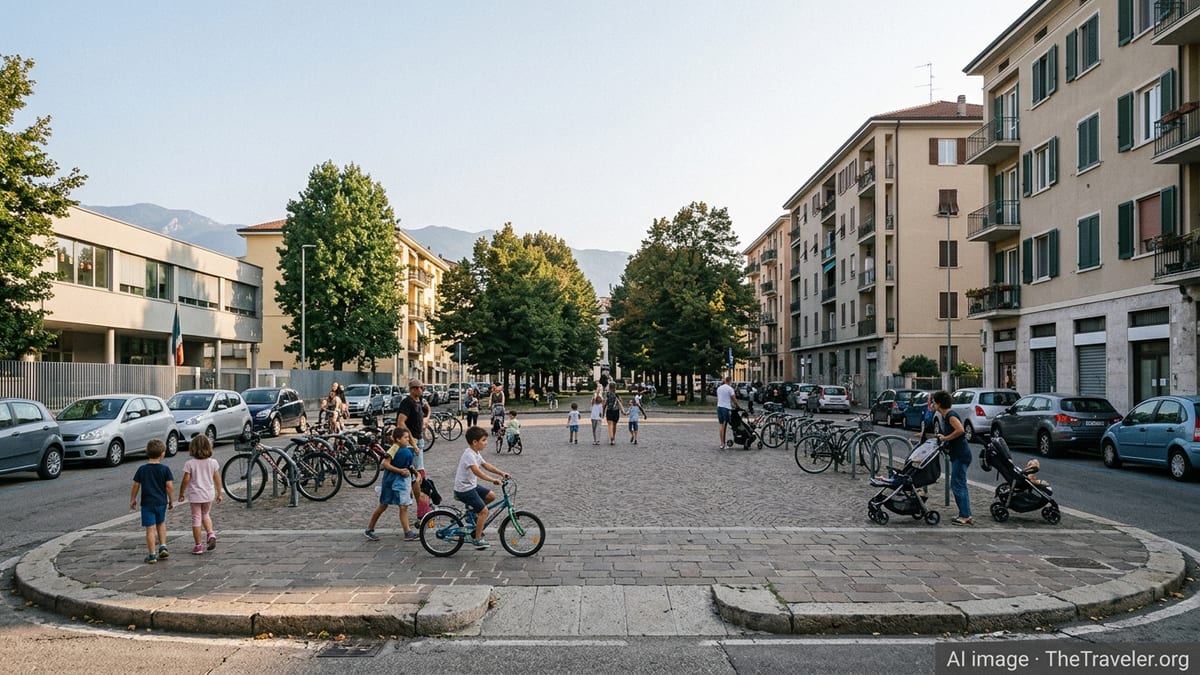
Daily logistics for families can be comparatively straightforward. Commute times are generally shorter, many neighborhoods offer safe routes for walking or cycling to school, and traffic congestion is less severe than in the major metropolitan areas. Access to parks, playgrounds, and sports facilities is typically strong, and many municipalities have policies that prioritize family-friendly services, from childcare subsidies to cultural programming for children and teenagers.
The primary trade-off for foreign families is the smaller expatriate community and reduced choice of curricula in foreign languages. Families who value immersion in Italian and a stable, predictable environment may find these cities particularly compelling, while those needing a robust international schooling ecosystem may need to look toward larger urban centers.
Large Metropolitan Areas: Milan, Rome, and Other Big Cities
Italy’s largest metropolitan areas, notably Milan and Rome, offer the broadest schooling ecosystems, including multiple international schools, bilingual programs, and specialized high schools. In Milan, for example, families can access English-language, American, British, and French curricula, alongside a dense network of private Italian schools. Rome hosts major French, English, and other international institutions that serve diplomatic, corporate, and international organization communities. These options are particularly relevant for globally mobile families who anticipate future moves or need continuity with non-Italian systems.
However, large cities also concentrate many of the country’s safety challenges. Recent crime rankings consistently place Milan at or near the top nationally for reported offenses per 100,000 residents, with Rome and Florence among the higher-risk urban areas. Petty theft, pickpocketing, and burglaries are more prevalent, particularly in central zones and around transport nodes. Families often respond by choosing residential neighborhoods perceived as safer, sometimes at a substantial cost premium, and by relying more heavily on private transport for children’s activities.
Lifestyle in these cities is more complex for families, with longer average commuting times, denser traffic, and higher levels of noise and air pollution compared with smaller provincial capitals. On the positive side, they provide extensive extracurricular options, including high-level sports, arts, and language programs. For adolescents, the diversity of educational and social environments can be an advantage, but parents must invest more effort in supervision and risk management compared with smaller, quieter cities.
Foreign-language support is generally stronger in major cities, both within international schools and in Italian public schools that are accustomed to enrolling non-Italian-speaking students. Educational consultants, speech therapists, and other specialists are easier to source, which can be decisive for children with specific learning or developmental needs. This creates a distinct trade-off between schooling flexibility and the higher security and lifestyle burdens of big-city living.
Smaller Provincial Capitals and Safe Southern Options
Smaller provincial capitals and selected southern cities can offer a very comfortable environment for families prioritizing safety and a slower pace of life. Data on crime rates show that various provincial centers, including some in regions such as Sardinia and across the north and center, are among the safest in Italy when measured by reported offenses per 100,000 residents. Daily family life in these cities often features short school commutes, strong neighbor networks, and higher levels of informal social control, which collectively enhance the feeling of security.
Education in these locations is typically centered on the public system, with few if any international schools and a limited private offer. Class sizes can be moderate, and teacher turnover relatively low, but access to specialized programs, advanced foreign-language instruction, or international curricula is often constrained. For foreign families whose children already speak Italian or are very young, this can be an acceptable compromise; for those needing instruction in English or other languages, it may pose a significant limitation.
Extracurricular options are generally narrower than in large cities, but local sports clubs and cultural associations play an important role. These environments may be particularly attractive to families with younger children who value safe outdoor play, walkable distances, and a high degree of local familiarity. Older teenagers may find the limited social and educational diversification more restrictive, prompting some families to move to larger centers later in their children’s schooling.
One structural consideration is connectivity. While not a focus of this article, limited rail or air links in some smaller cities can indirectly affect lifestyle by making it harder to maintain ties with extended family abroad or attend specialized educational events in other regions. Families should therefore consider a city’s broader regional network alongside its internal safety and schooling profile.
Practical Checklist for Comparing Italian Cities for Families
When narrowing down Italian city options, families benefit from applying a structured checklist tied directly to schooling, safety, and lifestyle. On the schooling side, this includes confirming the availability of places in desired public or private schools, verifying the presence of international or bilingual curricula if needed, and assessing the typical school day structure at the child’s grade level. Visiting candidate schools and requesting information on language support, extracurricular offerings, and parent-school communication practices helps to move beyond headline reputations.
For safety, families should review recent provincial crime data with attention to the breakdown between violent and non-violent offenses. It is advisable to cross-check these statistics with local knowledge about specific neighborhoods, including whether areas near preferred schools and workplaces are considered safe for walking during early morning and evening hours. Observing the presence of children and families in public spaces at different times of day can also provide practical insight into real-world safety perceptions.
Lifestyle evaluation should focus on daily routines rather than attractions. Key questions include whether children can reach school and activities by foot or bicycle, the availability and quality of playgrounds and sports facilities near likely residential areas, and the reliability of public transport on school days. Families should also consider the availability of childcare and after-school programs, particularly if both parents plan to work full time, and whether school holidays align with their employment constraints.
Finally, it is useful to map the distribution of educational and family services within the city. In some Italian cities, the best schools cluster in specific districts, which may not coincide with the safest or most affordable residential areas. Achieving the right balance between schooling quality, neighborhood safety, and practical daily life often requires iterative trade-offs and, where possible, an exploratory visit to test actual commuting times and neighborhood dynamics.
The Takeaway
Italy offers a wide range of urban environments suitable for families, but choices must be calibrated carefully against schooling, safety, and lifestyle requirements. Medium-sized northern cities and selected provincial capitals stand out in national surveys for combining relatively low crime rates with strong public services and child-focused amenities, making them highly attractive for families comfortable with Italian-language schooling and modest international communities.
Large metropolitan areas such as Milan and Rome remain the primary destinations for families needing a broad portfolio of international and bilingual schools, specialist educational services, and diverse extracurricular opportunities. These advantages come at the cost of higher exposure to petty crime, more complex daily logistics, and often greater pressure on housing and commuting, which families must actively manage through neighborhood choice and personal security practices.
Smaller provincial and southern cities can provide safe, community-oriented environments with shorter commutes and strong informal support networks, but generally offer fewer schooling options in foreign languages and more limited educational specialization. This profile can be ideal for younger children and families prioritizing safety and simplicity, provided that the public education system matches the family’s expectations.
For decision-making, families should combine national rankings with locally sourced insights, prioritize school visits where possible, and evaluate potential cities through the lens of an ordinary school week rather than occasional leisure time. Approached systematically, Italy’s varied urban landscape can offer highly suitable environments for a wide range of family profiles.
FAQ
Q1. Which Italian cities are generally considered safest for families?
Smaller and medium-sized provincial capitals in the north and center, and some cities in Sardinia and the Alpine regions, typically show lower crime rates than large metropolitan areas, offering a calmer environment for families.
Q2. Where are the best schooling options for international curricula?
Milan and Rome have the widest range of international and bilingual schools, with additional options in cities like Turin, Bologna, and Florence; outside these hubs, international provision is limited.
Q3. Are public schools in northern Italy significantly better than in the south?
National data often show stronger academic outcomes and infrastructure in many northern regions, but quality varies within each region and depends on individual schools, so local assessment is still essential.
Q4. How safe are Italian cities compared with other European countries?
Italy’s violent crime levels are generally low by European standards, but large cities experience higher rates of theft and petty crime, which families must manage through everyday precautions.
Q5. Is it realistic for children to walk or cycle to school in Italian cities?
In many medium-sized and smaller cities, safe walking and cycling routes to school are common, while in large metropolitan areas families more often rely on public transport or cars due to traffic and perceived safety concerns.
Q6. Are there good schooling options in English outside Milan and Rome?
Some regional centers offer English-medium or bilingual schools, but the range is much narrower than in the major cities, so families needing full English curricula often gravitate to Milan or Rome.
Q7. How early do children start school in Italy?
Compulsory schooling begins at age 6, but most children attend preschool from around age 3, and places in good municipal preschools are an important factor when comparing cities.
Q8. Do Italian schools provide after-school care for working parents?
Provision varies by city and even by school; some offer extended hours and structured after-school activities, while others finish early in the afternoon, requiring separate childcare arrangements.
Q9. How should families interpret crime rankings when choosing a city?
Rankings are useful for identifying broad patterns, but families should also consider neighborhood-level information, the type of crimes recorded, and the impact of tourism and commuting on reported rates.
Q10. Is it easier for foreign children to adapt in bigger or smaller Italian cities?
Bigger cities offer more language support and international communities, which can ease adaptation, while smaller cities may provide a more supportive, close-knit environment but fewer formal resources and foreign-language options.