


More news on this day
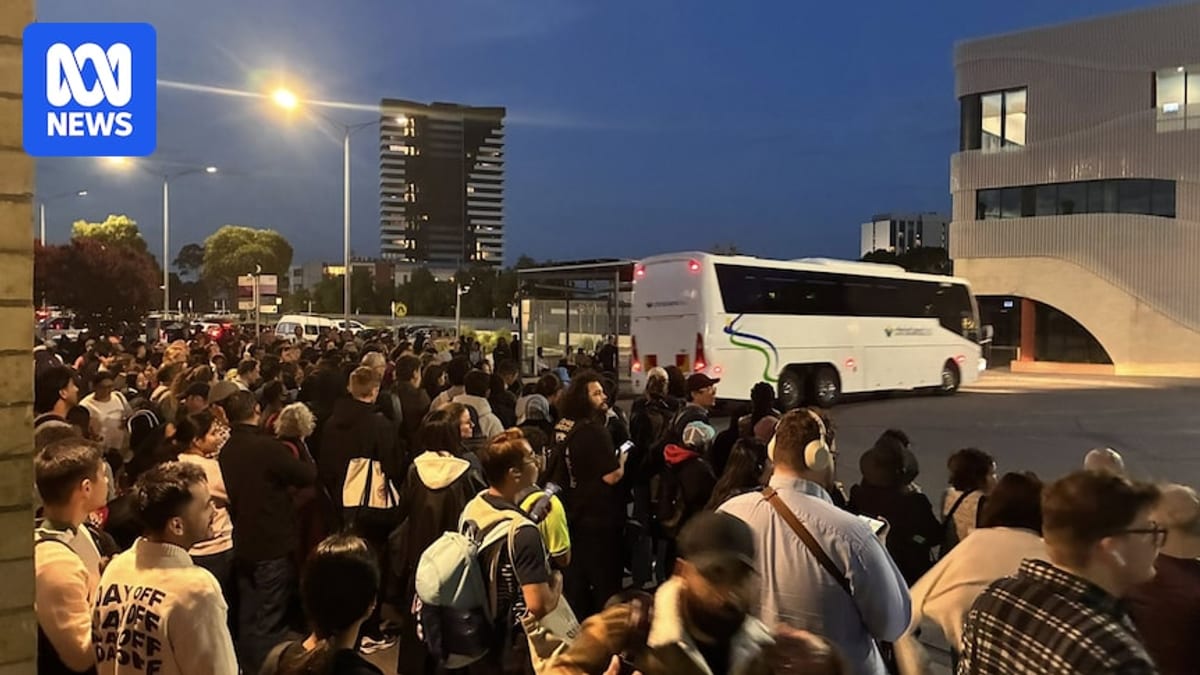
Evening peak-hour travel in Melbourne descended into chaos on Wednesday when a major fault on the busy Geelong rail corridor left hundreds of V/Line passengers stranded, triggering long delays, overcrowded platforms and urgent calls for better resilience on Victoria’s regional network.
Get the latest news straight to your inbox!
Fault on Geelong corridor triggers cascading delays
According to publicly available information, the disruption began on Wednesday evening when a rail equipment fault was reported on the Geelong line between Melbourne and regional centres to the south-west. Services on the V/Line-operated corridor were cancelled or heavily delayed, with some trains terminating short of their destinations and others held outside key stations as controllers attempted to manage a growing backlog.
Reports indicate that hundreds of commuters were caught in the disruption during the height of the after-work rush. Many passengers were left waiting on platforms at Melbourne’s Southern Cross station and at suburban stops as packed services were taken out of circulation and replacement options proved slow to materialise.
Coverage of the incident describes tightly packed crowds at city platforms as commuters jostled to board the few services still operating. Passengers who had already boarded trains reported extended periods of being held outside stations or moving at reduced speeds, with journey times stretching well beyond normal peak-hour conditions.
Information shared by local commuters suggests that by early evening there was still no clear estimate for when regular services would resume, prompting some travellers to abandon trains altogether and seek alternatives by tram, bus or private car.
Replacement buses struggle to keep up with demand
V/Line’s contingency plans relied heavily on buses to move stranded commuters, but publicly available updates and commuter accounts indicate that the rollout of replacement services was slow and uneven. With major arterial roads already congested during the evening peak, buses were caught in traffic, compounding delays for passengers attempting to complete journeys between Melbourne and Geelong.
Some travellers reported waiting extended periods for rail-replacement buses at inner-city locations and outer-suburban stops, only to find services already at or near capacity. Others described confusion over which buses were express services and which were stopping patterns, leading to further frustration for those trying to reach specific regional destinations.
Observers note that the challenge of quickly sourcing enough buses and drivers at short notice remains a recurring weakness in the response to large-scale rail disruptions in Victoria. When an outage hits a high-frequency corridor such as the Geelong line at peak time, thousands of passengers can be displaced within minutes, overwhelming available road-based alternatives.
Transport commentators argue that the latest incident underlines how sensitive the regional network is to single points of failure. Once trains are halted by a signal, track or equipment problem, the task of replicating that capacity on congested roads becomes extremely difficult, particularly when commuters are already relying on connecting services or time-critical appointments.
Free regional fares and surging patronage amplify the impact
The disruption comes at a time of unprecedented demand on Victoria’s regional rail network, driven in part by the current policy of free or heavily discounted fares across V/Line services. Publicly available information on recent travel patterns shows that the fare changes, combined with population growth in key corridors such as Geelong and Ballarat, have significantly boosted ridership.
Passenger accounts over recent weeks describe regular overcrowding on peak trains, particularly on the Geelong line where standing-room-only conditions are now common. On busy weekends and public holidays, some travellers have reported being left behind on platforms when trains reach capacity before all waiting passengers can board.
Advocacy groups and transport analysts have previously welcomed the affordability benefits of capped or free fares, but have also warned that demand-side measures must be matched by substantial investment in capacity. When rolling stock, track infrastructure and staffing levels do not keep pace, any major fault or operational hiccup can rapidly escalate into chaos, as seen in the latest evening peak disruption.
The combination of higher passenger numbers and a vulnerable timetable means that each cancelled train now affects more people than in previous years. The latest incident on the Geelong corridor illustrates how free or low-cost travel, while popular, can magnify the human impact when services fail.
Questions over communication and passenger care
Commuter commentary following the disruption has also focused on the quality and timeliness of information provided during the incident. Some passengers reported limited or inconsistent announcements on platforms and trains, with only brief references to an unspecified fault and little detail on expected delays or alternative options.
Online discussion and regional media coverage indicate that many travellers learned more from social media posts and informal message groups than from official channels while waiting on crowded platforms. Reports suggest that some station displays lagged behind real-time conditions, showing trains as “on time” or “scheduled” even after cancellations had been announced elsewhere.
Transport observers argue that communication shortcomings can significantly worsen the experience of delays. When passengers are unsure how long they will be waiting or whether a train will arrive at all, they are less able to make informed decisions about rerouting via other lines, using buses or arranging pick-ups.
The latest incident is likely to renew scrutiny of how disruption information is shared across apps, station screens and public-address systems, particularly on regional corridors where alternative routes are limited and a missed connection can add hours to a journey.
Pressure grows for long-term fixes on regional rail
The Geelong line chaos is unfolding against a backdrop of broader investment promises for Victoria’s rail network. Recent state budget announcements and project updates highlight plans for additional services on multiple suburban and regional lines, including more capacity for key commuter corridors feeding into Melbourne.
However, transport experts note that rolling out new trains and timetables takes time, while daily commuter frustrations are immediate. Repeated reports of overcrowding, stranded passengers and unreliable peak-hour services on the regional network have prompted growing debate about whether current funding and planning timelines are sufficient to meet demand in fast-growing areas.
Public commentary from commuter groups has increasingly called for targeted measures such as more peak-direction services on the Geelong corridor, stronger maintenance regimes to reduce the risk of equipment faults, and clearer thresholds for when to activate large-scale replacement bus operations. There is also pressure for greater transparency on incident reviews so passengers can understand what went wrong and what will change before the next major disruption.
For now, passengers on the Geelong line face the prospect of further delays as crews work to stabilise the network following the latest fault. With patronage at record levels and the regional rail system under sustained strain, the events of Wednesday’s peak period are likely to intensify demands for a more resilient and passenger-focused approach to keeping Victoria’s trains moving.