


Spain consistently ranks among the most attractive countries in Europe for family life, but suitability varies significantly from city to city. For relocating families, the key variables are not tourism appeal but school options, safety, child‑focused infrastructure, green space and the broader quality of life indicators that shape everyday routines. This briefing outlines how those factors play out in some of Spain’s most family‑oriented urban areas, drawing on recent national quality of life indices, specialist rankings and child‑friendly city initiatives.
How to Assess Family Suitability in Spanish Cities
When comparing Spanish cities for families, the most relevant indicators are education outcomes, access to childcare, personal safety, green space per resident, and the strength of local family policy. Spain’s National Statistics Institute publishes a Multidimensional Quality of Life Index that evaluates regions across material conditions, education, health, environment and safety. In its most recent edition, northern regions such as Navarra, La Rioja and Aragón scored highest overall, reflecting particularly strong results in education and security, while still-beneficial Mediterranean regions tended to be stronger on environment and leisure than on schooling performance and safety metrics.
City-level rankings and specialist surveys add further granularity. Independent assessments of Spanish cities for family life tend to prioritize low crime, the affordability and availability of childcare, density of schools, paediatric health services and commuting patterns that allow parents to combine work and care. Studies that examined 30 or more urban areas identified mid-sized provincial capitals and some large metros with strong transport and service networks as best aligned with these requirements, especially where average childcare costs remain manageable and urban planning supports children’s mobility.
Another major factor is whether a city participates in Spain’s Child Friendly Cities initiative, coordinated with the national government and UNICEF. Hundreds of municipalities are formally recognized for meeting criteria around participation of children in local governance, safe public space, universal access to basic services and structured support for vulnerable families. Across these child‑friendly cities, more than four out of five report universal access to key services and improvements in early childhood education enrolment, as well as ongoing upgrades in school‑area road safety, all of which directly benefit relocating families.
Families should combine these structural indicators with their own priorities: those requiring international schools may focus on the main metropolitan areas, while families comfortable with the public system and seeking calmer environments often gravitate toward smaller northern or inland cities where quality-of-life indices and safety scores are highest.
Madrid and Barcelona: Global Metros with Extensive Education Options
Madrid and Barcelona remain the primary choices for internationally mobile families who require robust schooling ecosystems, particularly in foreign languages. Both metropolitan areas host a dense network of public, concertado and private schools, along with dozens of international schools offering English, French, German and bilingual Spanish curricula, as well as International Baccalaureate, British and American programs. Recent relocation and expat rankings place Madrid and Barcelona regularly in the upper tier of European cities for education access, with Madrid also appearing in global expat rankings for its overall quality of life and employment opportunities for accompanying partners.
From a safety and infrastructure perspective, these cities present a mixed picture. On the positive side, they benefit from comprehensive public transport systems, including metro, suburban rail and bus networks, which reduce car dependency for school commutes. They also have high-performing hospitals, including specialized children’s facilities, and a wide spread of playgrounds and sports installations. However, as the largest urban areas in Spain, they exhibit higher crime rates than most secondary cities and face typical big-city challenges such as congestion and housing pressure. Families therefore often select residential districts on the outskirts or in commuter municipalities, where school catchment areas and perceived safety are stronger while retaining access to metropolitan services.
Cost-related data suggest that childcare and general living expenses for a family of four in Madrid and Barcelona are significantly above the national urban average, with some studies citing monthly nursery costs well over 500 euros in central areas. Despite this, survey findings that ask residents whether their city is “good for families” tend to show relatively high satisfaction rates compared with other European capitals, driven largely by education choice, public services, and the balance of cultural and sports activities available to children and teenagers.
For families who prioritize international education pathways, these two cities remain unmatched in Spain. For those who value community cohesion and low crime more than curricular variety, later sections of this briefing highlight smaller cities that may align better with their expectations.
Seville and Valencia: Large Cities with Strong Family Appeal
Recent studies focused specifically on family life have placed Seville at or near the top of Spanish cities for raising children. One 2025 analysis that compared 30 urban centers on safety, childcare costs, healthcare and work–life balance ranked Seville first, citing a combination of relatively moderate childcare fees, extensive cultural and sports activities for children, and improving employment flexibility. The same study positioned Madrid second, but noted Seville’s advantage in the ratio of family-friendly services to overall cost burden, which is an important consideration for households relocating on local rather than international salary packages.
Valencia, Spain’s third-largest metropolitan area, appears consistently in expat and quality of life rankings as one of the most livable Spanish cities. International surveys of expatriates have repeatedly rated it very highly for quality of life, with particular appreciation for its manageable scale, good public healthcare and a growing number of bilingual and international schools. In global expat city rankings in recent years, Valencia has taken leading positions, and Spain’s own branding and investment promotion bodies highlight the city’s family-compatible combination of urban services and more relaxed daily rhythms than Madrid or Barcelona.
Both cities offer substantial green and recreational infrastructure. Valencia’s redeveloped riverbed park provides a long, continuous green corridor with sports fields, cycle routes and playgrounds, reinforcing its reputation as a child-friendly urban environment. Seville invests heavily in riverfront and park redevelopment, which, together with extensive cycling routes and traffic-calming measures in central districts, has improved perceived safety for children moving independently within the city. Nonetheless, climate is a structural challenge in Seville: average daily highs exceed 36 degrees Celsius in July and August, which can constrain outdoor activity for families during peak summer and may influence how parents assess daily comfort.
In terms of schooling, both cities have solid public and concertado networks. Valencia additionally offers a wider range of foreign-language and international schools than most regional capitals, making it a practical option for families seeking a mid-sized city without fully giving up international curricula. For families comfortable integrating into the Spanish or regional-language public systems, Seville and Valencia both represent strong balances between services, cost, and family-oriented urban planning.
Northern Provincial Capitals: Safety, Schools and Green Space
National and regional quality of life studies consistently highlight several northern provincial capitals as particularly well suited to family life, largely due to exceptional safety levels, strong public education outcomes and substantial green space. Cities such as Pamplona (Navarra), Logroño (La Rioja), Oviedo (Asturias), Santander (Cantabria), and Vitoria-Gasteiz (Basque Country) frequently appear at the top of Spanish rankings on quality-of-life and family indicators. Independent assessments referencing data from the Madrid World Capital Center and other sources place Pamplona first in overall quality of life among Spanish cities, with Logroño, Vitoria-Gasteiz and other northern cities close behind.
Safety is a defining characteristic of this group. Regional analyses indicate that northern communities such as Asturias and Cantabria achieve some of the country’s highest scores for personal security, with particularly low reported crime in provincial capitals like Oviedo and Santander. Some studies report crime indices for these cities substantially below national urban averages, translating into quieter public environments and greater parental confidence in children’s independent mobility as they reach adolescence.
Education and green infrastructure also perform strongly. Basque and Navarrese education systems regularly achieve above-average results in national assessments, while cities like Vitoria-Gasteiz and Palencia are recognized for very high levels of parkland and urban green space relative to their population and surface area. Palencia, for example, has been cited as having one of the largest landscaped areas per inhabitant in Spain and was recognized in national awards for urban sustainability. Vitoria-Gasteiz is often singled out for having some of the highest standards of living of any Spanish city and leading indicators for green areas and cultural facilities per capita.
For relocating families, the trade-off is that these cities are smaller and generally offer fewer international schools or foreign-language curricula than the larger metros. That said, the public systems are strong, and many international families accept Spanish or bilingual education in exchange for the benefits of lower crime, shorter commutes, and a community-oriented environment. These cities tend to appeal to families seeking a stable, low-stress setting and who expect to stay long enough for children to become fluent in Spanish and, where relevant, regional co-official languages.
Child-Friendly Initiatives and Mid-Sized Cities
Beyond the most frequently cited provincial capitals, a broad range of mid-sized Spanish cities have obtained formal recognition under the national Child Friendly Cities framework. This initiative, backed by Spain’s Ministry of Youth and Children and the Spanish Federation of Municipalities and Provinces, certifies municipalities that integrate children’s rights into urban planning, budgeting, and service delivery. Participating cities report significant progress in areas that matter to relocating families, including universal access to key services, improved early childhood education participation, and systematic enhancement of pedestrian safety near schools.
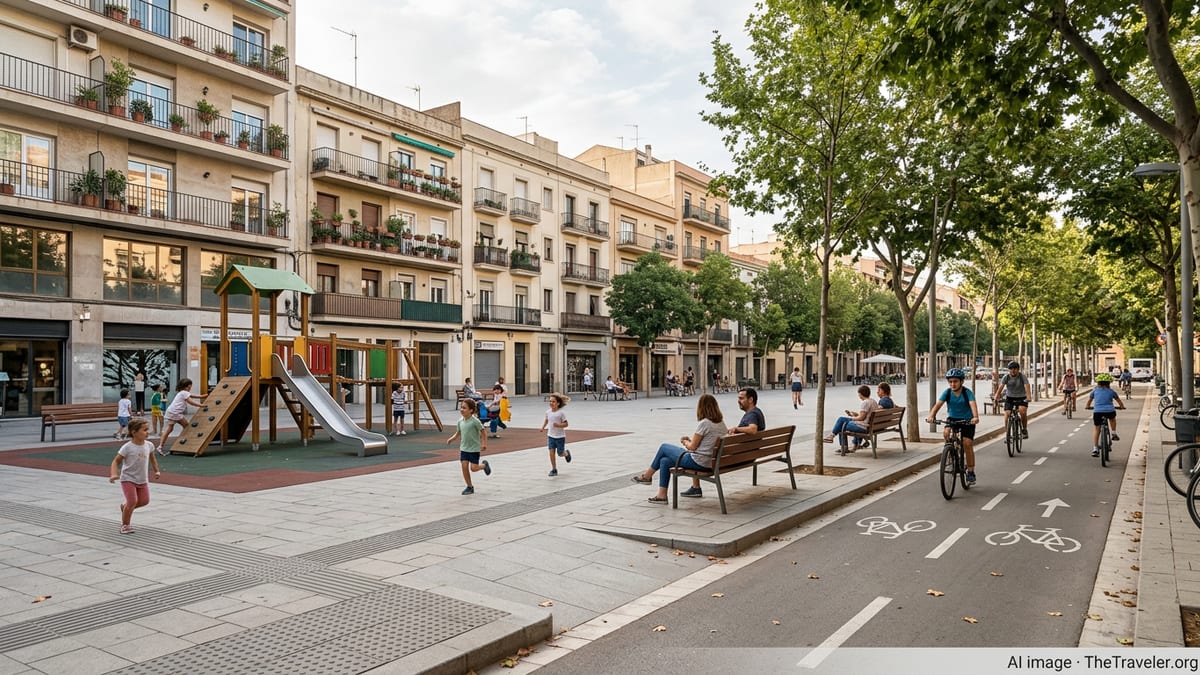
Cities such as Pontevedra in Galicia illustrate how targeted urban policy can transform family life. Pontevedra has received multiple European and United Nations-linked awards for its pedestrian-focused urban mobility model, which prioritizes walkability, traffic calming and safe routes to schools. The city’s “Metrominuto” pedestrian plan and near-elimination of through-traffic in the historic center have become reference points for child-friendly mobility policy across Europe. As a result, children are able to move around much of the city on foot or bicycle, a feature that many families explicitly value when comparing relocation options.
In rural and semi-rural parts of Galicia, the regional government has introduced “casas nido” or “nest houses,” an innovative childcare program designed to provide early-years education and care in villages that lack conventional daycare centers. While these are not urban centers, they show how Spanish regions are experimenting with flexible childcare models that might interest families looking beyond the main cities. Evaluations of the program emphasize adherence to safety and educational standards and the role these micro-centers play in supporting parents’ employment and children’s early learning opportunities.
Other mid-sized cities, particularly in the interior and north, are gradually implementing similar pedestrian and child-participation measures, sometimes in connection with their Child Friendly City status. For relocating families that prioritize safe streets, short distances and participatory school communities over metropolitan amenities, this tier of cities represents a compelling, if less internationally known, segment of the Spanish urban landscape.
Balancing International Schooling with Local Integration
One of the central decisions for relocating families is whether to prioritize international schools or to integrate children into the Spanish public system. In Spain, quality disparities between public schools are generally smaller than in many other countries once differences in socio-economic background are accounted for, which means that families can often expect a reasonably consistent standard of instruction in mainstream state schools. Regional differences exist, but the overall framework for curriculum, teacher accreditation and assessment is nationally regulated, giving parents a degree of assurance when evaluating unfamiliar cities.
International and bilingual private schools are concentrated in Madrid, Barcelona and to a lesser extent in Valencia, Seville, Málaga and some coastal areas. For families with older children nearing key examinations, or for those who anticipate multiple international moves, access to International Baccalaureate, British A-levels or other transferable credentials may carry considerable weight. In these cases, major metropolitan or resort-adjacent cities with established international school clusters will remain the practical focus.
However, families aiming for long-term settlement and linguistic integration frequently choose smaller cities where Spanish or regional-language public schooling predominates. In such locations, children usually reach high levels of Spanish proficiency within two to three academic years, and parents report benefits from closer-knit school communities and high teacher stability. Northern and interior capitals, with strong regional scores on education and safety indices, are particularly attractive under this model, although parents must be ready to navigate limited choice in foreign-language curricula.
Overall, Spain’s distribution of quality schools means that almost all medium and large cities can support family life from an education perspective, but the intensity of school choice and the presence of specific international programs are highly uneven. Families should map their preferences on this spectrum before shortlisting cities, balancing curricular needs against safety, community scale and daily logistics such as commuting times and access to extracurricular activities.
The Takeaway
Evaluating the best cities in Spain for families requires attention to structural indicators rather than tourism appeal. National quality of life indices and regional studies highlight a consistent pattern: northern provincial capitals and some mid-sized interior cities deliver outstanding results on safety, green space and education, while larger metros excel in international schooling, healthcare specialization and employment options. The Child Friendly Cities framework further distinguishes municipalities that actively align urban planning and public services with children’s needs, helping families identify environments where policy and infrastructure are oriented toward younger residents.
For families prioritizing international education, Madrid, Barcelona and to a degree Valencia and Seville offer unparalleled school choice and metropolitan services, albeit at higher cost and with typical big-city safety considerations. Those valuing low crime, close-knit communities and generous green space often favor northern cities such as Pamplona, Logroño, Oviedo, Santander, Vitoria-Gasteiz or Palencia, or mid-sized child-friendly cities like Pontevedra with advanced pedestrian and mobility planning. Policies such as innovative rural childcare models in Galicia illustrate the broader national commitment to supporting families, even beyond major urban centers.
Ultimately, the best Spanish city for a given family will depend on its balance of priorities among schooling pathways, safety, urban scale, and access to services. Spain’s broad range of family-suitable cities, underpinned by relatively even public education standards and a strong national focus on child welfare, provides relocating households with multiple viable options. A structured comparison of these factors, combined with on-the-ground visits, will enable families to identify the city that aligns most closely with their long-term plans.
FAQ
Q1. Which Spanish city is generally considered the best overall for family life?
There is no single definitive winner, but recent quality of life and family-focused studies often highlight Seville, Valencia and several northern provincial capitals such as Pamplona and Vitoria-Gasteiz as consistently strong performers on safety, services and education.
Q2. Are Madrid and Barcelona good choices for families despite being large cities?
Yes, both offer extensive schooling options, high-quality healthcare and rich extracurricular opportunities, but they also come with higher costs and somewhat higher crime levels than smaller cities, so families should carefully select residential districts and weigh commuting and budget implications.
Q3. Which regions of Spain tend to score highest for education and safety?
Northern regions such as Navarra, La Rioja, Basque Country, Asturias and Cantabria frequently achieve top scores in national quality of life indices, with particularly strong results in education performance and personal safety indicators.
Q4. How important is Child Friendly City status when choosing a Spanish city?
Child Friendly City status signals that a municipality has met specific standards on children’s participation, access to services and safe public spaces, and that it continuously invests in improvements around schools, which can be a useful proxy for family orientation when comparing otherwise similar cities.
Q5. Are international schools available outside Madrid and Barcelona?
International schools are most concentrated in Madrid and Barcelona, but there are also options in Valencia, Seville, Málaga, the Balearic Islands and some coastal areas; in smaller northern and interior cities, families typically rely on public or bilingual Spanish schools.
Q6. Do smaller Spanish cities offer enough extracurricular activities for children?
Most provincial capitals provide a solid range of sports clubs, music schools and municipal cultural programs for children, though the variety is narrower than in Madrid or Barcelona; families who prioritize very specialized activities may prefer larger urban areas.
Q7. How does climate influence the choice of family-friendly city in Spain?
Climate affects daily routines and outdoor play: southern cities like Seville can experience very high summer temperatures that limit daytime outdoor activity, while northern cities generally have milder conditions but more rainfall, so families should align climate preferences with their lifestyle.
Q8. Are public schools in Spain considered good enough for international families?
Public schools are generally regarded as offering a solid standard of education, with relatively modest variation once socio-economic differences are considered, and many international families successfully integrate their children into the public system, especially when planning long-term residence.
Q9. Which Spanish cities combine high safety with strong green space for families?
Cities such as Vitoria-Gasteiz, Palencia, Oviedo, Santander and Pamplona are often cited for low crime and generous urban green areas, making them attractive for families who value parks, playgrounds and safe, walkable neighborhoods.
Q10. How should families shortlist Spanish cities before visiting in person?
Families should first clarify their priorities around international versus local schooling, safety, urban size and commuting patterns, then use national quality of life indices, Child Friendly City listings and city-level family rankings to identify three to five candidate cities for detailed research and exploratory visits.