


January 2027 is set to be another busy month for families escaping the grey Northern Hemisphere winter in search of gentle sunshine, warm seas and poolside downtime. Choosing the right winter sun destination means balancing flight time with reliable weather, sea temperatures that children will actually enjoy, and resorts that make life easier for parents. The following guide focuses on realistic options for families travelling from Europe and North America, with current climate data and typical flight durations to help you narrow down your shortlist.
Get the latest updates straight to your inbox!
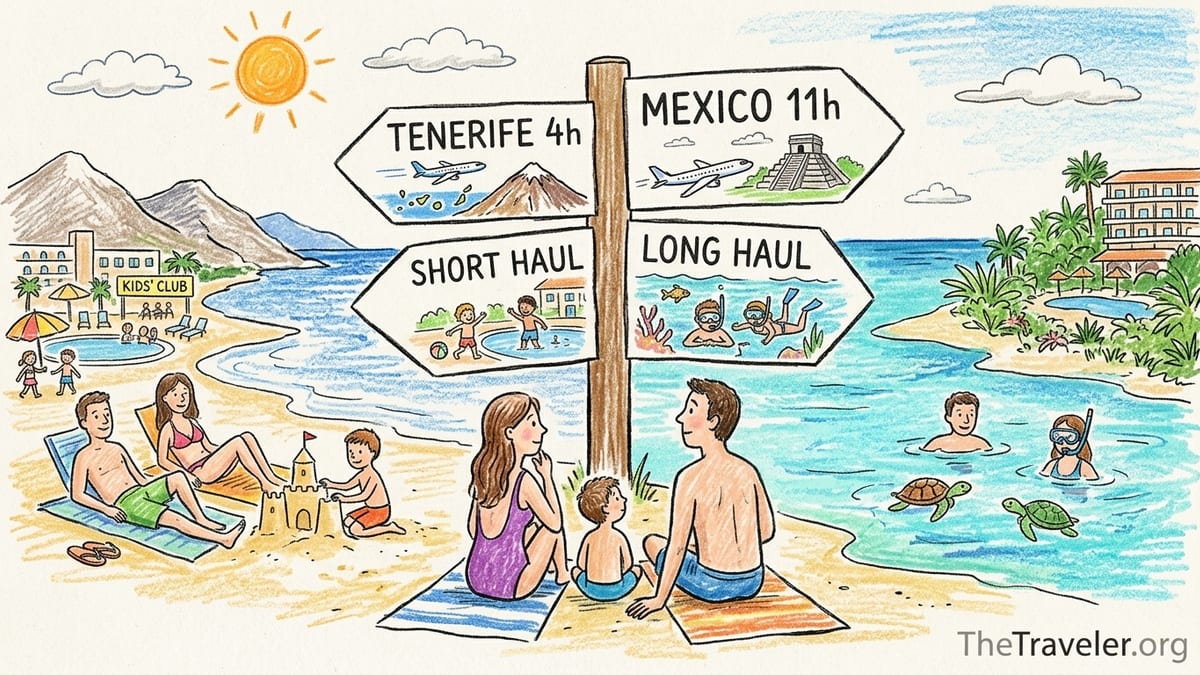
How to Choose a Family Winter Sun Destination for January
For a family holiday in January, the key question is not simply where is hot, but where is comfortably warm for children without excessive travel time. Climate records for destinations such as Tenerife in the Canary Islands show average daytime highs around 21 to 22 degrees Celsius in January in the south of the island, with sea temperatures close to 20 degrees. This is pleasant for play on the beach and heated pools, but may feel cool for long sea swims. Dubai, by contrast, records January daytime maxima close to 24 to 25 degrees, with the sea around 22 degrees, warm enough for most families to swim at midday yet still comfortable for toddlers out of the water.
Flight time has a direct impact on how easy the trip feels with children. Mid haul flights of roughly four to seven hours take you from the UK or much of Western Europe to the Canary Islands, Cape Verde or Dubai. These routes avoid jet lag for European travellers and mean you can often arrive, check into your hotel and be in the pool on the same afternoon. Long haul flights of around ten to eleven hours open up options such as Mexico’s Caribbean coast, including Cancun and the Riviera Maya, which combine reliably warm seas with large family resorts but may feel demanding with very young children.
Sea temperature is another practical consideration. On Mexico’s Caribbean coast, climate data indicates winter sea temperatures of about 26 degrees in January, which feels genuinely warm for long snorkelling sessions and water play. In contrast, Atlantic destinations such as Tenerife or Madeira tend to sit nearer 19 to 20 degrees at the same time of year, which many parents find bracing without wetsuits. Families who value warm sea swimming above all else may therefore look further south or into the tropics, while those content with beach games, boat trips and hotel pools can comfortably choose shorter-haul locations.
Resort suitability matters just as much as climate. Large integrated resorts on Tenerife’s Costa Adeje, Dubai’s Palm Jumeirah or Cancun’s Hotel Zone often provide children’s clubs, shallow splash pools, supervised activities and multiple restaurants within a compact area. This can significantly reduce daily logistics for parents. Smaller properties and self-catering apartments, which are common in parts of Cape Verde or on quieter Canary Islands, appeal to families who prefer local character and more flexible routines, but they demand a little more planning around meals and entertainment.
Tenerife, Canary Islands: Classic Short-Haul Winter Sun
For families based in the UK or Western Europe, Tenerife remains one of the most straightforward winter sun choices for January 2027. Scheduled and charter airlines serve Tenerife South from dozens of European airports, and direct flights from London typically take around four and a half hours. The time difference is minimal, normally just one hour ahead of the UK, so jet lag is not a concern even with very young children. This makes Tenerife particularly attractive for first-time winter sun trips with babies or toddlers.
Weather records from the Spanish meteorological agency show that the area around Tenerife South Airport records average January daytime highs in the low 20s Celsius and night-time lows in the mid-teens. Sunshine is significantly higher than in Northern Europe, and while occasional showers do occur, long spells of outright rain are uncommon. Sea temperatures off Tenerife sit close to 20 degrees at this time of year, which many children tolerate for short swims, especially on calmer days on the south and southwest coasts where the water is more sheltered.
The main resort belt stretching from Los Cristianos through Playa de las Américas to Costa Adeje is heavily geared towards families. Large seafront hotels and apartment complexes typically offer shallow children’s pools, play areas and either in-house or nearby kids’ clubs. For example, many branded family hotels in Costa Adeje advertise supervised children’s programmes for ages four to twelve, baby equipment hire, all inclusive or half-board dining, and easy access to promenades suitable for pushchairs. Away from the busiest strips, smaller complexes in areas like La Caleta or Callao Salvaje appeal to families seeking more peace and self-catering options while still being within a 20 to 30 minute taxi ride of major attractions.
In terms of activities, winter visitors combine beach time with days out to attractions such as Siam Park, a large water park near Costa Adeje that operates year round with heated pools, and Loro Parque, a zoological park near Puerto de la Cruz. For families, this variety is important on cooler or windier days when the beach is less inviting. Overall, Tenerife suits those prioritising modest flight time, a mix of sun and mild temperatures rather than intense heat, and a wide choice of family-focused accommodation at various price points.
Sal, Cape Verde: Warmer Atlantic Waters with Mid-Haul Flights
Families willing to add an extra hour or two to their flight can swap the cooler Atlantic around the Canaries for the warmer waters of Cape Verde. Direct services from UK airports such as London Gatwick and Birmingham to Amílcar Cabral International Airport on Sal generally take a little over six hours. That places Cape Verde comfortably within mid haul range for European travellers while still avoiding time zones that cause jet lag; Cape Verde lies only one or two hours behind the UK, depending on the time of year.
Climate data for Sal indicates January daytime highs around 25 degrees Celsius with nights remaining close to 20 degrees. Crucially for families planning lots of water play, sea temperatures around Sal and neighbouring Boa Vista typically sit around 23 to 24 degrees at this time of year, warmer than the Canary Islands. Rainfall is very low in January, and the islands enjoy long daylight hours. Parents should, however, be prepared for steady trade winds, which keep the heat comfortable but can whip up sand on more exposed beaches.
Most family visitors base themselves in or near Santa Maria on the southern tip of Sal, where large beach resorts sit along the main bay. Many of these properties operate on an all inclusive basis and feature multiple pools, kids’ clubs, playgrounds and direct access to wide sandy beaches. This format works well for families who want predictable budgets and minimal need to travel around once on the island. Some resorts also offer family suites with separate sleeping areas for children, which can make early bedtimes easier to manage.
Families who like low-key local experiences can combine resort facilities with short excursions. Popular child-friendly outings include visiting the shallow natural pools near Ponta Preta on calm days, floating in the salt crater at Pedra de Lume, or taking a gentle boat trip along the coast to look for turtles outside the nesting season. The island infrastructure is more limited than in the Canary Islands, so parents of very young children often pack key medicines and baby products rather than relying on local shops. Overall, Sal suits families who value warm water and a relaxed all inclusive resort environment over extensive theme parks or urban attractions.
Dubai: Reliable Sunshine and High-Comfort Resorts
For those seeking higher air temperatures and extensive resort facilities, Dubai remains one of the most dependable winter sun options in January. From London, direct flights to Dubai International Airport typically take between six and seven hours, and services operate from major carriers including Emirates and British Airways. The time difference of four hours ahead of the UK can be noticeable but is usually manageable on a one-week trip, especially if families adjust their schedule slightly on the first day.
Dubai’s desert climate delivers mild to warm conditions in January. Official climate summaries indicate average daytime highs around 24 to 25 degrees Celsius and night-time lows in the mid-teens, with very low rainfall across the month. The sea in the Arabian Gulf generally sits close to 21 to 22 degrees at this time of year, cooler than the peak-season bathwater conditions but still swimmable for most families during the middle of the day. Many hotels and resorts heat at least one pool in winter, which ensures comfortable water play even for younger children.
When it comes to resort suitability, Dubai is built around the family market. Along the beachfront areas of Jumeirah Beach Residence, Dubai Marina and the Palm Jumeirah, large properties routinely offer dedicated kids’ clubs, shaded splash areas, family suites and long stretches of private or semi-private beach. Some resorts partner with nearby water parks, giving guests complimentary or discounted access to facilities with lazy rivers, wave pools and child-friendly slides. This infrastructure allows families to combine relaxed pool days with occasional high-energy outings without long travel times within the city.
Beyond the beach, Dubai offers a wide range of indoor attractions that are particularly useful in case of the occasional cooler or breezy day. Large shopping malls incorporate aquariums, indoor theme rides and ice rinks, while desert tour operators run gentle afternoon excursions suitable for school-age children, including dune drives and short camel rides with clear guidance on age limits and safety. The combination of direct flights, predictable weather, heated pools and extensive English-speaking services makes Dubai a practical option for families comfortable with a mid haul journey and an urban resort environment.
Cancun and the Riviera Maya: Warm Caribbean Seas for Longer Breaks
For families prepared to take on a longer flight in search of truly warm sea temperatures, Mexico’s Caribbean coast around Cancun and the Riviera Maya is one of the strongest candidates for January 2027. Direct flights from London to Cancun generally take around ten and a half hours, while connections from major US hubs such as New York and Miami are substantially shorter, often three to four hours. The time difference from Europe is greater than for Atlantic or Middle Eastern destinations, so travellers from the UK and mainland Europe usually feel some jet lag for a day or two.
Cancun’s climate data shows January air temperatures hovering in the mid-20s Celsius by day with only small variations between winter and spring, thanks to its tropical setting. What stands out for families is the Caribbean sea temperature, which remains close to 26 degrees in midwinter. This makes the water feel genuinely warm, encouraging long swims, snorkelling and paddle boarding without the bracing sensation sometimes experienced in the eastern Atlantic. While short rain showers can occur, January falls within the drier part of the year, and prolonged storms are less common than in late summer and autumn.
The Hotel Zone in Cancun itself is lined with large beachfront resorts, many of them operating on an all inclusive model that simplifies budgeting for families. These properties usually feature extensive pool complexes, water slides, supervised kids’ clubs and multiple onsite restaurants, as well as direct beach access. Further south along the Riviera Maya, areas such as Playa del Carmen and Puerto Aventuras host similar large-scale resorts, often set within lush grounds where iguanas and tropical birds wander through the gardens, which children tend to enjoy.
January is also a good time for families to explore some of the region’s cultural and natural attractions while avoiding the most intense heat. Day trips to archaeological sites such as Tulum or Chichen Itza involve walking in open areas, and mid-20s temperatures are generally easier on children than the high 30s sometimes seen later in the year. Many operators offer early-morning departures to avoid midday sun and provide air-conditioned coaches, which are worth seeking out when travelling with younger children. For those combining beach time with excursions, the longer flight is rewarded with warm water, a rich activity programme and a strong family infrastructure.
Balancing Flight Time, Sea Temperature and Budget
When comparing these destinations for a January 2027 family holiday, it helps to consider them in terms of trade-offs rather than absolutes. Tenerife offers the shortest typical flight from much of Europe, around four to five hours from major UK airports, with dependable mild sunshine and extensive family facilities, but sea temperatures close to 20 degrees may feel cool for extended swimming. Cape Verde’s Sal adds roughly one and a half to two hours of flight time for warmer seas in the low to mid-20s and similarly dry weather, at the cost of a smaller choice of attractions and more limited infrastructure outside resort areas.
Dubai sits in a similar mid haul category in terms of flight time but offers higher daytime temperatures than Atlantic islands and a particularly polished family resort product, including heated pools and large indoor attractions. For many families, the main considerations are cost and the urban, high-rise character of the destination, which is very different in feel from traditional European beach resorts. Cancun and the Riviera Maya, finally, require the longest travel time from Europe but reward that investment with the warmest seas of the destinations discussed and a vast range of all inclusive resorts and excursions, particularly convenient for North American families for whom flight times are shorter.
Budget plays into these choices. Winter flights to Canary Islands gateways typically include a mix of low-cost carriers and charter airlines, which can bring down fares outside peak school holiday weeks. Cape Verde, Dubai and Cancun may involve higher average flight prices and, in the case of Dubai and certain Caribbean resorts, higher nightly rates for beachfront hotels. Families planning a January trip often secure better value by booking flights several months in advance and remaining flexible by a few days on their departure, especially outside major holiday dates such as New Year and the first week of January.
For those travelling with babies or toddlers, the combination of shorter flights, minimal time difference and ready access to supermarkets and pharmacies in Tenerife or other Canary Islands can be reassuring. Families with older children who are comfortable on longer flights may feel the benefits of warmer seas and more exotic settings outweigh the extra travel. Discussing priorities openly within the family, from pool slides to wildlife encounters, can help concentrate the search on a small number of destinations that genuinely match what everyone is hoping for from a midwinter break.
Practical Planning Tips for January 2027 Family Holidays
Regardless of which destination you choose, a few practical considerations can make a significant difference to how smoothly a January 2027 family trip runs. Flight timing is one. For mid haul journeys to places such as Dubai or Cape Verde, daytime departures that arrive in the late afternoon often work best for families, allowing check-in, an early dinner and bedtime without forcing children to adapt suddenly to night flights. On longer routes to Cancun from Europe, some parents prefer overnight westbound legs so children sleep for part of the journey, while others opt for daytime flights to arrive tired but not disoriented by time zones.
Accommodation choice should take into account not only room size but also layout. Family rooms with sliding partitions or separate sleeping areas can be particularly valuable in resort destinations, allowing adults some evening time while children rest. Properties in Tenerife, Dubai and Cancun frequently advertise such configurations, while on Sal and some smaller islands, options may lean more towards standard rooms with additional beds. Checking how children’s clubs operate in January, including minimum ages, supervision rules and whether services run daily or only on certain days of the week, helps set realistic expectations.
Weather-aware packing is another point that is often underappreciated. Even in warm destinations, January evenings can be cool, especially in breezy Atlantic locations such as Tenerife or Cape Verde. Lightweight layers, long-sleeved tops for evenings and windbreakers for younger children can increase comfort at outdoor restaurants or on seafront walks. For stronger sun in places like Dubai or Mexico, broad-brimmed hats, high-factor reef-safe sunscreen and UV-protective swimwear are advisable, as winter sun at lower latitudes can still be intense, particularly around midday.
Finally, families should keep an eye on practicalities such as passport validity, any evolving entry requirements for 2027 and travel insurance that covers health care and flight disruptions. While these details are less evocative than sea temperatures and pool complexes, they are crucial to avoiding stress before and during the trip. Booking with reputable airlines and accommodation providers, and allowing slightly longer layovers on connecting routes with children, adds a layer of resilience to your plans at a time of year when weather at departure airports can still be unsettled.
Conclusion: Matching the Destination to Your Family
There is no single best family-friendly winter sun destination for January 2027. Instead, each of the major candidates offers a different balance of flight time, sea temperature, resort infrastructure and overall atmosphere. Tenerife suits families seeking mild sunshine within a relatively short flight and a familiar European feel. Cape Verde’s Sal provides warmer Atlantic waters and laid-back all inclusive resorts at the cost of a narrower choice of attractions. Dubai combines higher temperatures with highly developed resort comforts and city diversions, while Cancun and the Riviera Maya offer the warmest seas and rich cultural excursions for those willing to commit to a long haul journey.
By focusing on how these trade-offs align with your children’s ages, your tolerance for longer flights and your budget, you can narrow down your options to a small number of destinations that genuinely fit your family. Looking closely at January climate data, typical flight durations and the specific facilities of shortlisted resorts will help ensure that when you step off the plane, the conditions on the ground match the winter escape you have been imagining. With thoughtful planning, a January 2027 family holiday can deliver not only sunshine but also the sense of ease and shared experience that many families value most.