


For architecture lovers, Barcelona’s greatest pleasure lies behind the undulating facades of Antoni Gaudí’s houses. Beyond their Instagram-famous rooftops, these buildings are highly considered experiments in structure, light, and color. With several major Gaudí houses open to the public and a maze of ticket types and experiences, it pays to plan your visits with a clear idea of what you want to see and how deep you want to go.
Get the latest updates straight to your inbox!
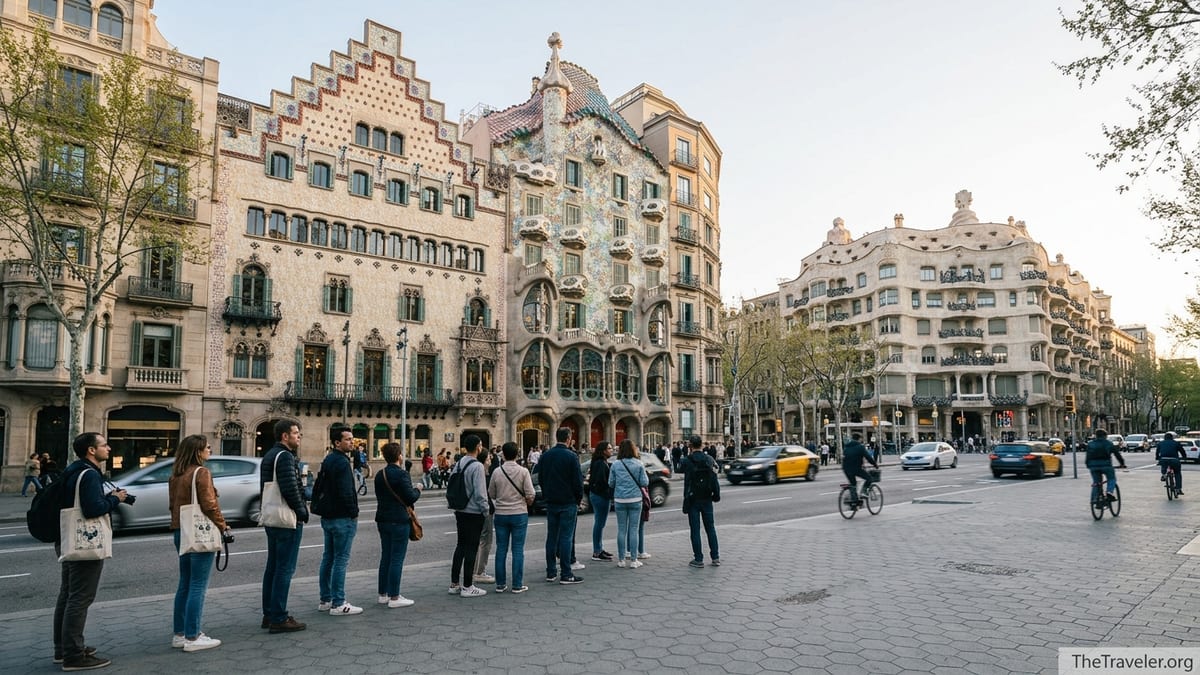
Casa Batlló: Immersive Spectacle on Passeig de Gràcia
If you visit only one Gaudí house, many travelers choose Casa Batlló, right on Passeig de Gràcia. The remodeled townhouse is a masterclass in organic design: a dragon-like roofline, bone-like balconies, and a sinuous interior staircase that feels almost alive. Inside, Gaudí’s obsession with natural light is obvious in the central light well, tiled from deep cobalt at the top to pale blue near the bottom so illumination feels perfectly even on every floor.
Casa Batlló has leaned heavily into immersive technology, which can be a plus for some architecture fans and a distraction for others. The standard “Blue” ticket, typically starting in the low 30 euro range per adult when bought in advance, includes a smart audio guide and access to the main rooms and Gaudí Cube, a 360-degree projection space. Higher-tier Silver and Gold tickets cost more and may include extras such as fast-track entry, access to an additional lounge, or early entry slots before opening hours. As of 2026 there are reports that basic tickets no longer always include full rooftop access, so if standing beneath the dragon’s spine and chimneys is a priority, check the current inclusions carefully before paying.
Architecturally minded visitors might want to go slow, ignoring the more theatrical elements and focusing on details: the carefully shaped wooden window frames that can be opened in sections, the ergonomic built-in door handles, and the parabolic arches in the attic. Casa Batlló can feel crowded from mid-morning to late afternoon, especially on weekends and in summer, so consider booking the earliest or latest time slots available on your dates. These off-peak times usually offer clearer sightlines to the main salon’s famed stained-glass windows and more space to photograph the tiled light well without constant foot traffic.
Expect to spend around 1.5 to 2 hours here if you listen to the full audio guide and linger on the rooftop. Photography is allowed, but tripods and large camera bags are typically discouraged. For those combining multiple Gaudí sites, some Barcelona city passes include Casa Batlló in a package with La Pedrera or Park Güell; compare the combined prices against buying timed-entry tickets directly, as dynamic pricing can change the value of bundles week to week.
Casa Milà – La Pedrera: Rooftop Sculptures and Structural Genius
A ten-minute walk up Passeig de Gràcia from Casa Batlló brings you to Casa Milà, better known as La Pedrera, or “the stone quarry.” Its undulating stone facade and twisting wrought-iron balconies mark one of Gaudí’s last civic works. Inside, serious architecture enthusiasts will appreciate that La Pedrera is more restrained than Casa Batlló in terms of multimedia effects, making it easier to focus on structure and circulation. The building’s skeletal iron framework and self-supporting stone facade allowed Gaudí to create open-plan apartments without load-bearing walls, well ahead of his time.
The standard daytime visit, often branded as “La Pedrera Essential” or similar, usually includes a self-guided route through a furnished period apartment, the attic with its forest of catenary brick arches, and the famous rooftop. Adult tickets are typically in the high 20s to low 30s in euros when purchased online in advance. The attic is especially rewarding for architecture lovers, as scale models and drawings explain how Gaudí developed his catenary chain models before translating them into stone and brick. Plan to spend at least 90 minutes if you want to read the displays and study the structural models closely.
The rooftop is the real star: a surreal landscape of helmet-like chimneys, ventilation towers, and stair turrets. During the day, expect sharp sunlight and strong contrasts, especially in summer; an early morning time slot can give softer light for photography and cooler temperatures. Handheld cameras are fine, but wind can be surprisingly strong at the top, so keep straps secure and avoid loose hats. From the roof you get unusual views across the Eixample grid toward the Sagrada Família, which can help you understand how Gaudí’s works sit within the broader cityscape.
For a different perspective, consider the La Pedrera Night Experience, which combines a guided tour of key spaces with a rooftop light and sound show. It is more atmospheric than analytical, but walking the building with a small group after closing hours offers rare quiet moments in the attic and on the staircase. Night tickets cost more than daytime admission, and places can sell out on weekends and in high season. Architecture-focused travelers might opt for a daytime visit for detailed study, then stay nearby for dusk views of the illuminated facade from Passeig de Gràcia without necessarily paying twice.
Casa Vicens: Early Gaudí and Fewer Crowds
Casa Vicens, tucked away in the Gràcia neighborhood, shows Gaudí at the beginning of his career. Unlike the flowing stone forms of La Pedrera, this house is a colorful, angular mix of brick, tile, and ironwork, with strong Moorish and Oriental influences. For anyone interested in how Gaudí’s style evolved, Casa Vicens is essential: you can directly compare his early decorative experiments in patterned tilework and geometric ceilings with the later organic forms of Casa Batlló.
The experience at Casa Vicens is generally calmer than at the more famous houses near the city center. Timed-entry tickets are required, but day-of purchases at the door are still often possible outside of peak dates, according to recent visitor reports. Prices for standard self-guided visits are usually a bit lower than Casa Batlló or La Pedrera, making it a good value stop for design enthusiasts. A guided tour option is sometimes available in English on select days; this can be particularly worthwhile if you want in-depth discussion of specific rooms and their iconography.
Inside, look out for the smoking room with its intricate stucco and tile, the garden-facing veranda, and the richly decorated ceilings that show Gaudí experimenting with color and relief. The small garden, though modest compared with later works, hints at his lifelong interest in integrating architecture and landscape. Because Casa Vicens is in a residential neighborhood rather than a major shopping avenue, the surrounding streets also offer a more local feel; grabbing a coffee at a nearby corner bar before or after your visit can turn this into a relaxed half-day outing away from the busiest tourist corridors.
From an itinerary perspective, Casa Vicens combines well with an afternoon or evening stroll around the Gràcia district’s plazas, such as Plaça de la Vila or Plaça del Sol. For photography, late afternoon light often brings out the greens and ochres of the exterior tiles beautifully. The house is compact enough that an architecture-focused visitor can see it thoroughly in 60 to 90 minutes, leaving time to sketch or take detailed notes without feeling rushed.
Palau Güell: Gaudí’s Urban Mansion Near La Rambla
Palau Güell, just off La Rambla in the Raval district, is often overlooked by first-time visitors focused on Passeig de Gràcia. Yet for architecture lovers, this city palace built for industrialist Eusebi Güell is one of Gaudí’s most revealing early works. From the street, its austere stone facade and heavy wrought-iron gates are easy to miss among neighboring buildings, but stepping inside reveals an ingenious vertical plan organized around a central hall.
The visit typically follows a set route through the entrance hall, stables, main staircase, piano nobile rooms, and rooftop. Ticket prices are generally lower than for Casa Batlló or La Pedrera, making Palau Güell a relatively budget-friendly Gaudí experience. The audio guide is particularly strong on explaining how Gaudí manipulated natural light through skylights and colored glass, and how he concealed ventilation shafts within decorative elements. Because capacity is more limited and tour groups are smaller, it is usually possible to pause and really examine details like the fine stone carving around the balconies or the timber ceilings with inlaid stars.
The rooftop of Palau Güell is another highlight, with a cluster of chimneys capped in colorful trencadís mosaic. While smaller in scale than La Pedrera’s rooftop, it offers a more intimate sense of Gaudí’s experimentation with sculptural chimney forms. From here, glimpses of the nearby harbor and the dense urban fabric around La Rambla help you appreciate how this private mansion functioned as an oasis of wealth and creativity within 19th-century Barcelona.
Because Palau Güell is close to popular areas like the Boqueria market and the Gothic Quarter, it works well as a late-morning or early-afternoon stop before lunch. Keep in mind that the immediate streets can feel crowded and busy, but the interior itself tends to be calm, especially if you book an earlier time slot. For serious students of architecture, this house is particularly instructive when combined with Casa Vicens, as together they trace Gaudí’s early transition from more historicist styles toward the distinctive modernisme vocabulary he later refined.
How to Prioritize Gaudí Houses Based on Your Interests
With limited time in Barcelona, it is rarely realistic to visit every Gaudí house in detail, especially once you factor in Sagrada Família and Park Güell. A practical approach is to decide what aspect of Gaudí’s work matters most to you: immersive spectacle, structural innovation, early experimentation, or quieter study. Casa Batlló offers the most theatrical experience with projections and soundscapes; La Pedrera balances interpretive exhibits with access to key structural spaces; Casa Vicens and Palau Güell provide quieter, more analytical visits where you can stand still and really look.
If you are fascinated by form and structure, La Pedrera should be at the top of your list, followed closely by Palau Güell. Both explain how Gaudí used catenary arches, light wells, and innovative structural systems. If you lean more toward color and surface, Casa Batlló and Casa Vicens will likely appeal more, with their intense tilework, stained glass, and ornamental iron. For those interested in Gaudí’s evolution over time, you might start at Casa Vicens or Palau Güell, then move chronologically to Casa Batlló and finally to La Pedrera to see how his language becomes more fluid and abstract.
Budget and crowd tolerance also matter. As of mid-2026, standard adult tickets to the major Gaudí houses often fall in the 20 to 35 euro range depending on the site and time slot, with premium nighttime or early-access experiences costing more. Doing three or four houses at that price can add up quickly, especially for couples or families. Some visitors choose one “headline” house such as Casa Batlló at a premium time, then complement it with a lower-priced but equally rich visit to Palau Güell or Casa Vicens. This mix can give you both spectacle and substance without overwhelming your schedule or budget.
In practical terms, architecture lovers might aim for two Gaudí houses per day at most, allowing generous time for reflection, sketching, or simply resting between visits. For example, you could plan a morning at Casa Batlló followed by afternoon coffee and people-watching on Passeig de Gràcia, then tackle La Pedrera the next morning when your attention is fresh. Trying to squeeze three or more major sites into a single day often leads to architectural fatigue, where the details begin to blur together and even Gaudí’s most inspired decisions lose their impact.
Ticket Strategies, Time Slots, and On-Site Etiquette
Tickets for Gaudí houses increasingly rely on dynamic pricing and timed entry, especially in high season from April to October. Official websites generally offer the best selection of time slots and the most accurate descriptions of what each ticket tier includes. For popular times, such as mid-morning at Casa Batlló or sunset slots for La Pedrera’s night experience, it is wise to book at least several days ahead in spring and autumn and longer in peak summer. Less central sites like Casa Vicens sometimes still have same-day availability, but counting on walk-up tickets in July or August can be risky.
When comparing ticket options, look carefully at inclusions like rooftop access, guided versus self-guided formats, and whether you receive any printed guide or digital app. Some visitors find that a well-produced audio guide is enough, while others prefer scheduled group tours that allow for questions, particularly at Casa Vicens or Palau Güell where guides may highlight details that are easy to miss. Third-party platforms sometimes bundle Gaudí houses together with city passes or hop-on hop-off buses, but you should check whether these packages still require you to reserve specific entry times; in many cases they do, and flexibility can be more limited than it appears at first glance.
On-site, standard museum etiquette applies, but there are a few architecture-specific considerations. Leaning on fragile balustrades, touching original woodwork, or resting bags on antique furniture can cause wear, and staff will usually ask you to step back. Tripods, flash photography, and bulky camera gear are often restricted, especially on busy rooftops where space is tight. If you want to sketch, small notebooks and pencil are generally accepted, but larger pads or portable stools may not be allowed during peak hours. Respect marked circulation routes; they are designed both for conservation and for managing visitor flow through narrow staircases.
Timing your visits around light can significantly affect your experience. Morning light at Casa Batlló’s main salon emphasizes the cool tones of the stained glass, while late afternoon at La Pedrera’s rooftop throws long shadows from the chimneys across the undulating surface. On overcast days, the interiors may feel softer and more atmospheric, and photography can benefit from reduced contrast. Have a flexible mindset: even if crowds or weather are not ideal, focusing on one or two key spaces and really studying them in depth can still make the visit memorable.
The Takeaway
Experiencing Gaudí’s houses in Barcelona is less about ticking off famous sights and more about choosing the encounters that match your curiosity. Casa Batlló offers an immersive, high-energy immersion in color and form; La Pedrera reveals Gaudí’s structural daring and rooftop sculptures; Casa Vicens and Palau Güell reward those who enjoy quieter, more contemplative visits where the early hints of his mature style come into focus.
For architecture lovers, the most satisfying trips balance headline attractions with lesser-known gems and leave space between visits to absorb what you have seen. Rather than racing from house to house, consider building an itinerary that pairs a major Gaudí site with time in the surrounding neighborhood, or mixing one immersive multimedia visit with one traditional, text-rich museum experience. With thoughtful planning and realistic expectations around time, crowds, and cost, Barcelona’s Gaudí houses can feel less like a checklist and more like a series of vivid architectural conversations across the city.
FAQ
Q1. Which Gaudí house should I visit first if I am short on time?
If you have time for only one, many architecture lovers choose La Pedrera for its balance of structure, exhibits, and rooftop, while Casa Batlló is best if you prefer immersive spectacle.
Q2. How far in advance should I buy tickets for Gaudí houses?
For peak months between April and October, buying tickets several days in advance is sensible for Casa Batlló and La Pedrera, while a shorter lead time often works for Casa Vicens and Palau Güell.
Q3. Are guided tours worth it for architecture enthusiasts?
Guided tours can be especially valuable at Casa Vicens and Palau Güell, where small groups and knowledgeable guides help interpret early design features that are easy to overlook on a self-guided visit.
Q4. Can I visit more than two Gaudí houses in one day?
It is possible but not ideal; most architecture lovers find two houses per day to be the maximum before fatigue sets in and details start to blur together.
Q5. Do any Gaudí houses offer good experiences for visitors with mobility issues?
Major houses like Casa Batlló and La Pedrera provide elevators and adapted routes for many areas, though some rooftops and narrow staircases remain challenging; checking current accessibility details before booking is important.
Q6. Is it better to visit La Pedrera during the day or for the Night Experience?
Daytime visits are better for studying structural details and exhibits, while the Night Experience offers a more atmospheric guided walk and rooftop light show aimed at mood rather than analysis.
Q7. Are photography and sketching allowed inside Gaudí houses?
Handheld photography without flash is generally allowed, but tripods are usually banned and sketching is limited to small notebooks and pencils so walkways stay clear.
Q8. Which Gaudí house is usually the least crowded?
Casa Vicens and Palau Güell typically feel less crowded than Casa Batlló or La Pedrera, especially outside peak hours, making them good options for slower, more detailed study.
Q9. Can I buy Gaudí house tickets at the door?
Same-day tickets are sometimes available, particularly at Casa Vicens and Palau Güell, but relying on walk-up entry for Casa Batlló or La Pedrera in high season can lead to limited time slots or sold-out days.
Q10. Are combined tickets or city passes good value for Gaudí houses?
Combined tickets can be worthwhile if you plan to visit several paid attractions in a short time, but dynamic pricing means you should compare current direct ticket costs with any pass before buying.