


As travelers look ahead to 2027, the most in-demand destinations are already taking shape on major booking platforms. Recent reports from Expedia, Skyscanner, Priceline and Booking.com, based on millions of flight and hotel searches, show clear patterns: travelers are spreading out beyond the usual big capitals, mixing city breaks with nature, and hunting for better value in lesser-known regions. Using those live trends as a guide, this article highlights the places most likely to dominate 2027 travel wishlists and explains what that means in practical terms for planning and budgeting your next trip.
Get the latest updates straight to your inbox!
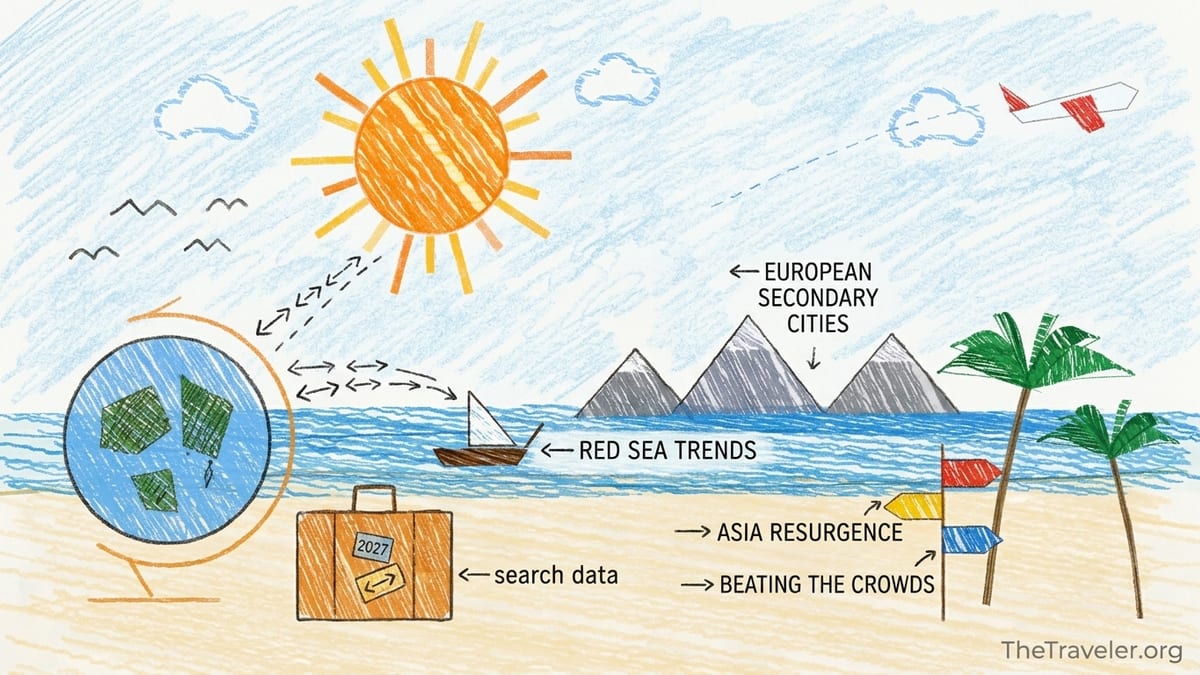
How Search Data Is Rewriting the 2027 Bucket List
Unlike traditional rankings based on expert opinions, the newest wave of 2027 forecasts is built on actual traveler behavior. Expedia’s Unpack ’27 report, released in October 2026, draws on changes in flight and accommodation searches between late 2025 and mid 2026 to identify its “Destinations of the Year.” Similar internal trend reports from Booking.com, Skyscanner and Priceline rely on billions of daily queries for routes and stays to see where interest is rising fastest rather than just where it has always been high.
This shift matters because it pulls emerging hotspots into the spotlight earlier. When Expedia notes that a mid-sized European city has seen a search spike of more than 30 percent year over year, or Booking.com flags a Red Sea resort city climbing its “trending destinations” lists for summer travel, that is a signal that travelers are already voting with their searches. It also hints at what 2027 prices and crowds could look like if demand keeps building.
For travelers, using search trends as a planning tool can be as simple as paying attention to how often certain places appear across platforms. If a destination appears in Expedia’s Destinations of the Year, in Skyscanner’s trending routes, and near the top of Priceline’s deal alerts, it is usually a sign of strong and growing interest. That can mean more nonstop flights and new hotels, but also a higher likelihood of price swings around peak periods, so timing and flexibility become increasingly important.
Europe 2027: Beyond the Usual Capitals
Europe remains one of the world’s most searched regions, but platform data suggests that 2027 will be less about first-time visits to Paris and Rome and more about smaller regional hubs. Expedia’s Unpack ’27 Destinations of the Year list includes secondary European cities that have recorded double-digit growth in searches, such as hilltop towns in central Italy and lesser-known provincial capitals that give access to wine regions and countryside. These places appeal to travelers who want the food and culture of Europe without the dense crowds of the big capitals.
On the ground, that can translate into more value for the same trip length. For example, a traveler checking summer 2027 dates for Florence might see mid-range hotels in the historic center already trending toward the equivalent of several hundred dollars per night during peak weeks, while properties in a nearby Umbrian city highlighted in Expedia’s list often undercut that by a substantial margin, especially for stays of four nights or more. Rail connections between these secondary cities and major hubs are usually straightforward, which allows travelers to combine a classic capital with a slower-paced regional stay.
Skyscanner’s recent trend reports also point to increased searches for smaller Mediterranean airports, including gateways to the Greek islands and coastal Spain. Routes to islands that once required a connection through Athens or Madrid are now more frequently searched as direct seasonal flights appear in airline schedules. For 2027, that means it may be easier to fly directly into a Greek island airport, spend a few days in a harbor town, and then hop by ferry to quieter neighboring islands without ever passing through a capital city.
Booking.com’s historic “trending destinations” lists reinforce this pattern. Cities that climbed quickly in past years, such as beach towns in southern Turkey or mid-sized Portuguese cities near surf coasts, often saw a rise in apartment-style stays and guesthouses on the platform. Travelers planning 2027 trips to similar emerging European spots can expect a wider choice of family-run accommodation, flexible cancellation policies, and more frequent short-notice discounts compared with the tight inventory in long-saturated capitals.
Asia’s Resurgence: Japan, Southeast Asia and New City Gateways
Across platforms, Asia is again one of the strongest climbers in travel search data heading toward 2027. Expedia’s traveler insights and independent tourism rankings show Japan regaining its status as a top global destination after a period of intense demand in the earlier 2020s. Skyscanner’s archived Horizons material and more recent regional briefings continue to highlight routes into Tokyo, Osaka and other Japanese cities as some of the most searched in the region, in part driven by the combination of pop culture interest and convenient airline schedules.
For travelers, that renewed interest can already be seen in pricing patterns. On U.S. routes to Tokyo for peak cherry blossom season, economy fares that once hovered at levels typical for transpacific trips have increasingly shown higher starting points when searched several months out, especially on nonstop flights. However, search data also shows growing interest in flying into alternative Japanese gateways, such as Osaka or Fukuoka, which sometimes display lower fares and better seat availability on certain days of the week. Using Skyscanner or Expedia’s flexible date tools to compare nearby airports can be an effective way to stay within budget while still accessing the same rail network.
Beyond Japan, Southeast Asia continues to feature heavily in Booking.com and Expedia destination summaries. Beach destinations in Thailand and Indonesia, along with Vietnamese coastal cities, appear frequently among top searched regions for longer stays. Travelers setting dates in January or February 2027 may find that mid-range beachfront hotels in these areas still undercut Caribbean resort prices by a meaningful margin, even after factoring in longer flight times from North America or Europe.
Another data-led change is the rise of regional Asian city gateways. Low-cost carriers and full-service airlines alike have added capacity into secondary hubs, such as mid-sized Malaysian and Philippine cities, and searches for these routes have climbed accordingly. For a 2027 trip, that could mean flying into a smaller international airport identified as a trending route in Skyscanner’s reports, spending a night in the city, then connecting onward by domestic flight or ferry to less crowded islands that have begun to appear more often in Booking.com accommodation searches.
Sun, Sand and Value: Red Sea, Caribbean and Mexico
Sun destinations continue to dominate short- and mid-haul travel, but search reports show travelers are more price-sensitive than in the past. Booking.com’s summer trend pieces have repeatedly highlighted Hurghada on Egypt’s Red Sea coast as a fast-rising global beach destination, driven by resort inventory and diving attractions. In practical terms, travelers comparing a July 2027 week in Hurghada with a similar all-inclusive stay in the eastern Mediterranean might find that room rates and package prices in Egypt remain noticeably lower for comparable amenities, particularly outside the highest-demand European school holiday weeks.
Expedia’s recent seasonal analyses for North American travelers show strong search growth for Caribbean islands and Mexican beach areas during winter months, especially destinations like Aruba and Puerto Vallarta that combine reliable weather with established resort zones. That demand has prompted airlines to add or extend nonstop routes from U.S. and Canadian cities, which can be seen directly in Skyscanner’s route search volumes. For 2027 planning, this means more options to fly direct to mid-size Caribbean airports, cutting travel time but also introducing larger swings between peak and off-peak fares.
Travelers tracking prices on Priceline’s deal tools can see how these trends translate into concrete savings. For example, shoulder-season flights from East Coast hubs to Cancun or Montego Bay often surface with significant percentage discounts compared with mid-winter school holiday dates, even on full-service carriers. Pairing those flights with all-inclusive resorts that show softer midweek occupancy on Booking.com can bring a seven-night winter-sun trip into the budget range that might previously have covered only a long weekend in a major U.S. city.
The Red Sea and certain Caribbean ports are also benefiting from cruise-related searches. As cruise lines schedule new itineraries for 2027 and beyond, Skyscanner and Expedia note increased search volume into embarkation ports, from Jeddah and Aqaba to San Juan and Fort Lauderdale. Even if you are not cruising, this extra demand often brings more competitive hotel options near the port and improved local transport links, making it easier to tack on a land-based stay before or after a sailing or to organize an entirely independent coastal holiday.
North and Latin America: City Breaks Meet Outdoor Adventure
Search data across all four platforms suggests that North and Latin America will remain central to 2027 travel, with a blend of classic city breaks and increasingly popular outdoor regions. Expedia’s quarterly insights have shown New York City climbing its internal rankings for global searches, a sign that urban travel remains resilient. Simultaneously, Priceline’s trend reports emphasize that deal-focused travelers are looking for secondary U.S. cities and national park gateways where hotel rates and car rental costs can be lower.
For example, during summer 2026 searches, cities close to major national parks or hiking regions have seen steady increases in hotel queries, hinting that 2027 could bring even more interest. Travelers planning a one-week trip might use Priceline or Expedia to compare staying in a smaller city within a few hours’ drive of a well-known park rather than in the premium-priced gateway town itself. A mid-range chain hotel in such a secondary city can often cost significantly less per night than a lodge at the park entrance, especially during peak weekends.
In Latin America, Booking.com trend lists and various regional reports point to strong demand for Mexican and Caribbean-coast destinations, but also growing interest in smaller colonial cities and highland regions. Cities in central Mexico and in the Andes that once attracted primarily regional travelers now appear more frequently when users search for longer stays and apartments. By 2027, that could translate into more competitively priced boutique hotels and guesthouses, giving travelers an alternative to both beach resorts and big capitals.
Skyscanner’s route data also reflects sustained interest in South American capitals with good connections to nature, including gateways for Patagonia and the Amazon basin. Travelers planning for 2027 may find that multi-city tickets, such as flying into one country and out of another, price more favorably than separate one-way fares when searched across multiple platforms. That flexibility can make complex itineraries, like combining a city such as Buenos Aires with an outdoor region, more realistic within a set airfare budget.
The Rise of “Set-Jetting,” Hobbies and Event-Based Trips
One of the most talked-about findings in Expedia’s Unpack series is the expansion of “set-jetting,” where travelers seek out filming locations and landscapes seen in series and movies. The 2027 forecast highlights destinations that are expected to feature prominently in upcoming productions or literary adaptations. In practice, this can shift demand toward coastal regions, historic towns and wilderness areas that once attracted more niche interest but now see sustained jumps in searches following a popular release or streaming season.
At the same time, Priceline’s Where to Next report points to hobby-led travel as a growth area. More travelers are filtering their destination searches by experiences such as racquet sports, running clubs, food festivals or live music. A traveler who once searched simply for “weekend in Europe” may now start with a term like “tennis camp” or “marathon weekend” and then choose among destinations where prices and dates align. This creates spikes in search volume around cities hosting tournaments, races and cultural events, sometimes months before full schedules are publicly confirmed.
Booking.com’s prediction studies show a similar pattern for wellness, dark sky tourism and nature-focused stays. Destinations that invest in observatories, stargazing platforms or wellness retreats often see outsized growth in accommodation searches once those features filter through social media and travel content. By 2027, travelers who are flexible about geography but specific about experiences, such as “sauna and wild swimming” or “desert stargazing,” may find themselves choosing between multiple countries that offer comparable packages at noticeably different price points.
For practical planning, that means checking event calendars and production news early and cross-referencing them with search tools. If multiple platforms suddenly show a surge of interest in a small coastal town known to be a filming location, securing accommodation and local transport several months ahead can help avoid the price hikes that often follow when a series or film premieres and the location goes viral.
How to Use Trend Data to Plan and Save for 2027
Pulling insights from Expedia, Skyscanner, Priceline and Booking.com into a single strategy can make 2027 trips both more interesting and more affordable. A common thread across recent reports is that travelers who are flexible with dates and open to alternative airports or secondary cities tend to capture better value, especially in trending regions such as southern Europe, Southeast Asia and the Caribbean. Starting with broad searches, then narrowing down by price, connection time and accommodation options can reveal combinations that would be easy to miss when focusing on one platform alone.
One practical approach is to begin with Skyscanner’s everywhere-style search or flexible month view to identify the cheapest weeks and routes from your home airport over a several-month window in 2027. Once you have a shortlist of affordable destinations, you can cross-check hotel and apartment availability on Expedia and Booking.com for those exact dates. If you notice that a destination highlighted in Expedia’s Destinations of the Year still has a wide range of mid-range properties under a certain nightly budget, that can be a sign to lock in early before further demand pushes prices higher.
Another tactic uses Priceline’s strength in packaged deals and last-minute savings. After you have identified your target region based on trend data, you can monitor bundle offers that combine flights and hotels. These bundles sometimes price lower than booking the same components separately on other sites, particularly for U.S. departures to sun destinations like Mexico or the Caribbean. Keeping an eye on these packages several months before departure allows you to recognize when a particular deal is genuinely favorable relative to typical search results.
Finally, it is important to remember that trend reports describe averages drawn from large volumes of data. Individual routes and dates can behave differently. Before committing to a 2027 itinerary, travelers should run a few comparison searches on each of the major platforms, experiment with midweek departures, and check nearby airports. Where official tourism boards and airlines publish up-to-date fare sales or festival calendars, cross-referencing them with search tools can confirm whether a sudden price spike is likely to persist or is simply a short-term fluctuation.
Looking Ahead: What 2027 Travelers Can Expect
Taken together, the latest search trends from Expedia, Skyscanner, Priceline and Booking.com point toward a 2027 travel landscape that is both more dispersed and more data-driven. Classic icons like Tokyo, New York and major European capitals will still draw high volumes of visitors, but much of the growth in searches is flowing toward smaller cities, regional beach areas and nature-focused destinations that offer better value and a sense of discovery. Travelers willing to explore those emerging places stand to benefit from lower average nightly rates, less congestion and a wider choice of authentic local experiences.
At the same time, interest in set-jetting, hobby travel and wellness-focused getaways means that demand can concentrate rapidly around specific events, filming locations or trending activities. In 2027, it will be increasingly common for a festival or new series to send searches for a previously quiet town sharply higher within a matter of weeks. Travelers who monitor trend reports and act early will be better positioned to secure flights and accommodation before those spikes translate into higher prices.
Looking ahead, the most successful 2027 itineraries are likely to be those that blend insight from real search data with personal priorities. Using the big booking platforms as radar rather than just checkout pages can help identify which destinations are on the rise, where good-value windows still exist, and how to structure dates and routes to keep costs manageable. With that approach, travelers can turn today’s trend reports into tomorrow’s well-timed, well-priced adventures.