


Reindeer rides are one of the defining images of an Arctic winter. Yet on the ground, experiences range from quick photo-op loops beside a parking lot to deep, evening-long encounters hosted by Sámi families who still herd reindeer for a living. If you are planning a trip to Lapland or northern Norway and want your reindeer ride to feel meaningful, culturally respectful and genuinely memorable, it pays to choose carefully. This guide highlights some of the best options, what makes them authentic, and how to tell a responsible Sámi- or herder-run experience from a generic tourist conveyor belt.
Get the latest updates straight to your inbox!
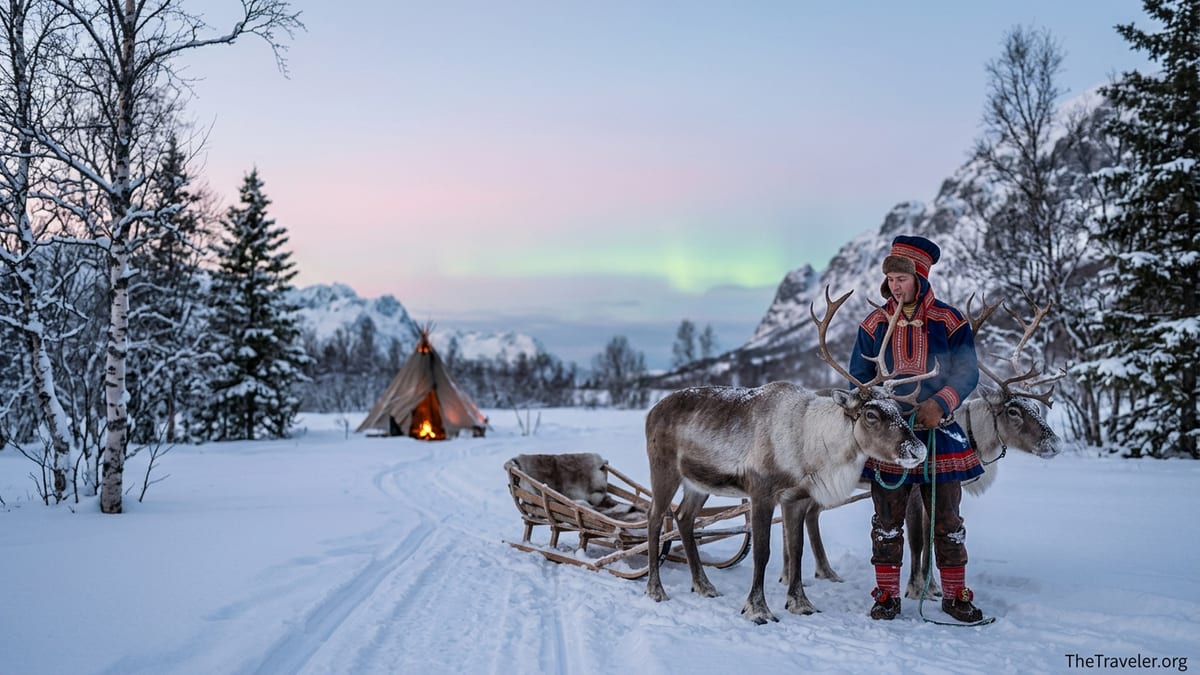
What Makes a Reindeer Ride Feel Truly Authentic
An authentic reindeer experience in Sápmi, the traditional Sámi homeland that spans northern Norway, Sweden, Finland and parts of Russia, is about far more than a short sleigh loop. You are stepping briefly into a living herding culture. Many of the most respected tours in Tromsø, Kiruna or Rovaniemi are run by Sámi families who still work reindeer professionally. They invite small groups to their corrals or winter grazing land, share food like bidos reindeer stew or fish soup, and talk openly about daily life and current challenges such as climate change and pasture loss.
Look for tours where the reindeer ride is just one part of a wider visit. For example, several outfits around Tromsø combine a 20 to 30 minute sleigh ride with feeding a free-roaming herd of dozens or even hundreds of animals, followed by storytelling in a lavvu, the traditional tent. Guests are usually offered coffee, hot chocolate and a warm meal while their Sámi hosts explain how herding cooperatives work, what the yearly migration cycles look like and why many younger Sámi now balance tourism with traditional livelihoods.
Group size and pace also affect how “real” an outing feels. A camp that runs one or two departures per day, limited to perhaps 20 to 30 guests, has scope for questions and unhurried feeding time. In contrast, some high-volume Santa-style attractions near Rovaniemi or other Lapland resorts run very short, 400 to 800 meter reindeer rides that last under 10 minutes, with minimal interaction beyond a quick photo. Those can be fun for young children, but they feel more like amusement rides than genuine cultural encounters.
Finally, authenticity shows in the details. Ethical operators are transparent that reindeer are working animals, not pets, and that herd welfare comes first. They explain that sledding speed is slow because reindeer are not race animals, and that cancellations can happen if temperatures rise and the snow turns icy. They also tend to employ Sámi guides or herders directly rather than outsourcing guiding to seasonal staff with little local knowledge.
Tromsø, Norway: Classic Sámi Reindeer Rides Under Arctic Skies
Tromsø has become one of the easiest places for visitors to add an authentic reindeer ride to a Northern Lights trip. Several camps just outside the city work with large herds and focus on Sámi storytelling as much as sledding. Typical day tours last around four to five hours including transfers. Prices in winter 2025–26 for quality experiences generally start around 1,700 to 2,200 Norwegian kroner per adult, including transport, warm clothing, a hot meal and time in the lavvu.
Tour structures are often similar. A short bus ride, from 25 minutes to about an hour, brings you from downtown Tromsø to the camp. On arrival, you are given thermal suits and boots before meeting the reindeer. Most guests spend 20 to 40 minutes feeding lichen to the animals and taking photos. Then a guide shows you how to sit safely in the sleigh while a single reindeer pulls you in a gentle loop over the snow. Some camps offer a longer ride of perhaps 30 to 45 minutes for guests seeking more time on the trail, but the emphasis remains on calm, steady travel and enjoying the silence rather than speed.
Where Tromsø really stands out is the chance to combine reindeer sledding with the Northern Lights. Evening departures usually leave the city in late afternoon so that you reach the camp around dusk. After feeding the herd and taking a shorter sled ride, guests gather inside the lavvu for dinner while guides monitor the sky. If the aurora appears, everyone heads back outside for photographs among the reindeer fences and snowy hills. Because these camps are located away from city lights, even modest aurora displays feel impressive, and high-latitude weather gives you several nights per week with clear enough skies during peak season.
When comparing Tromsø tours, pay attention to who runs the experience. Some of the longest established operators are Sámi-owned, with reindeer herding as their primary livelihood and tourism as a supplementary income. Their marketing materials and briefings typically emphasise that reindeer have legal owners and that herd numbers are limited by pasture quotas. By choosing these providers, you are helping sustain local communities and ensuring that your money stays within Sápmi instead of flowing to distant intermediaries.
Rovaniemi, Finland: From Santa Village Rides to Wilderness Safaris
Rovaniemi, capital of Finnish Lapland, offers a very broad spectrum of reindeer rides. At one end are ultra-short loops near Santa Claus Village or the city center where you might glide for 500 meters around a fenced track, pay per lap and be finished in less than 10 minutes. These are convenient if you are pressed for time or traveling with small children who mainly want to “sit in a sleigh like in the Christmas movies.” However, they rarely include deeper cultural context or much contact with herders.
At the other end are three-hour or half-day reindeer safaris that venture into forest landscapes outside the city. These often start from working reindeer farms where families have kept animals for generations. Prices commonly fall in the range of 160 to 230 euros per adult for a small-group tour that includes hotel pickup, a 1 to 2 kilometer sled ride, warm drinks by a fire and storytelling about reindeer husbandry. Winter 2025–26 brochures from local outfitters advertise “wilderness experiences” and longer safaris, with some promising up to an hour of sledding through quiet spruce forest if conditions allow.
Rovaniemi also has hybrid experiences that combine Santa-focused fun with glimpses of real herding culture. For example, farms based near Santa Claus Village may invite you to help feed the reindeer and step into a small museum space or cabin where old harnesses, traditional clothing and photographs show how families moved between seasonal pastures. While these venues inevitably see higher visitor numbers, they can still feel meaningful if you choose time slots outside peak Christmas weeks and go in with realistic expectations about crowds.
One practical advantage of Rovaniemi is accessibility. The city is well connected by flights and overnight trains from Helsinki, and many medium-priced hotels partner with local farms. That makes it easy to add a reindeer ride into a short Lapland stay without renting a car. If you are visiting primarily for Santa-themed attractions, budget for at least one half-day excursion out of town with a smaller farm that limits group sizes and includes proper time by the fire listening to your hosts. This is where you are most likely to hear candid stories about current issues such as predators, extreme weather and how herders cooperate in local cooperatives.
Kiruna and Swedish Lapland: Slower Travel with Herding Families
Compared with Tromsø and Rovaniemi, the Kiruna region in Swedish Lapland receives fewer international visitors, which can work in your favor if you want a slower, more personal experience. Around Kiruna, Gällivare and traditional Sámi settlements like Nikkaluokta, small family businesses invite guests to meet reindeer, learn lasso skills and taste flatbread cooked over open fires. Many of these hosts still spend much of the year following their herds across mountain valleys, so the tourism side tends to be seasonal and low-volume.
A typical half-day visit around Kiruna might begin with a transfer from your hotel or from the Icehotel village. Once at the corral, you may spend 30 minutes simply being among the animals, moving quietly and listening to the sound of hooves on snow. Some operators do offer short sleigh rides, but the focus is often more on explaining migratory routes, the meaning of different Sámi clothing patterns and language, and how herding families share responsibilities during the darkest weeks of winter.
Because Swedish Lapland has a history of mining developments and land use conflicts, conversations with herders here can be particularly eye-opening. When they talk about how new infrastructure cuts across migratory paths, or how warmer winters are changing grazing conditions, you get a sense of the pressures facing reindeer culture in real time. Many guests find that what lingers most from these visits is not the short ride itself but the stories told around the fire while drinking strong coffee and tasting smoked meat or fish.
Prices in Swedish Lapland are broadly similar to those in neighboring regions, with authentic small-group experiences often in the 1,500 to 2,200 Swedish kronor range per adult for a half-day including transfers, hot drinks and a light meal. Because many operations are family-run, booking well in advance is advisable, especially if your visit coincides with popular events in Kiruna or Abisko. Snow conditions can be more volatile in shoulder seasons, so be prepared for flexibility: a planned sled outing may turn into a feeding and storytelling visit if temperatures rise or a thaw reduces trail safety.
Choosing Ethical and Responsible Reindeer Experiences
As visitor numbers to Lapland and the Arctic grow, questions about animal welfare and cultural respect have become more pressing. Authenticity is not just about atmosphere; it is about making sure your experience does not put undue stress on the herd or trivialise Sámi traditions. Responsible tourism bodies in the Nordic north increasingly emphasise that “every reindeer belongs to someone,” and that stress or injury to these animals directly harms a family livelihood rather than some anonymous company.
To choose responsibly, start by looking at who owns and operates the tour. Experiences run by Sámi cooperatives or individual herding families usually highlight their background clearly in their descriptions. They may explain which siida or herding district they belong to and how tourism fits around the seasonal calendar of calf marking, migration and roundups. Their guest numbers per day are often modest, and they talk openly about cancellations or reductions in sled length when conditions are not safe for the animals.
Also pay attention to how reindeer are treated during the visit. Ethical operations avoid forcing constant close contact; reindeer can approach guests during feeding sessions and then retreat if they wish. Sled routes should be on snow-covered trails suited to the animals’ hooves, not bare ground or ice. Guides should refuse to overload sleds beyond agreed weight limits, even if that means splitting your group between two departures. If you see signs of rushed handling, frequent shouting or aggressive pulling on harnesses, it is appropriate to raise concerns or choose another provider next time.
Cultural respect is equally important. True Sámi-led tours make it clear that what you are seeing in a few hours is only a glimpse of a complex culture, not the whole story. They avoid dressing guides in costume-style outfits for entertainment and instead explain which garments are used for different occasions and why. They may also address uncomfortable topics, such as historical assimilation policies or present-day conflicts over land rights. If a tour treats Sámi identity merely as decoration for tourist photos, with little substance behind it, you are likely not supporting the communities who have shaped reindeer traditions for centuries.
Planning, Pricing and Practical Tips for Your Reindeer Ride
Reindeer rides are highly seasonal. In most of Sápmi, the main sledding period runs from early December through late March, when temperatures stay low enough for stable snow. Some farms near Rovaniemi or Levi can offer very short track rides earlier in November if cold weather arrives early, but shoulder months increasingly see freeze-thaw cycles that make conditions unpredictable. In Tromsø and coastal Norway, mild spells can interrupt the season, and reputable operators will cancel rides on days when the snowpack becomes icy or patchy, sometimes switching guests to feeding and cultural programs instead.
In terms of pricing, expect authentic, small-group experiences with transfers and meals to cost roughly 150 to 220 euros or the local equivalent per adult. Evening tours that combine sledding with Northern Lights watching may cost a bit more due to longer guiding hours and higher demand. Short, track-based rides at Santa-themed attractions can be cheaper, sometimes around 25 to 50 euros for a quick loop paid on the spot, but these rarely include much cultural content. Children’s discounts are common, and some camps offer family packages or reduced rates on midday departures outside peak holiday weeks.
Packing correctly will greatly affect how much you enjoy the ride. Even though most operators provide thermal suits, gloves and boots, you should still wear a base layer of wool or technical long underwear, a warm mid-layer such as a fleece or wool sweater, and thick socks. Temperatures on open sleds can feel significantly colder due to windchill, especially on longer routes across frozen lakes. Carry a thin face buff or balaclava, as well as hand warmers if you know your fingers get cold quickly. Cameras and phones can lose battery life rapidly below freezing, so bring a power bank and keep devices close to your body between photos.
Finally, consider timing your reindeer ride for a day when you are relatively well-rested. Sleigh travel is gentle but often combined with late nights chasing the aurora or early morning flights. Allow a buffer in your itinerary in case weather forces rescheduling. Many travelers try to pack husky sledding, reindeer rides, snowmobiling and multiple Northern Lights tours into just two or three days. Spreading key activities across a longer stay, or prioritising a single high-quality reindeer encounter rather than two or three rushed ones, usually leads to deeper memories and less stress.
The Takeaway
Reindeer rides can be a fleeting holiday postcard or a doorway into one of the Arctic’s most enduring cultures. The difference lies in where you go, who your hosts are and how much time you allow. In places like Tromsø, Rovaniemi and Kiruna, you can choose between quick Santa-style loops and immersive half-day visits led by Sámi herders who still live with their animals year-round. The most rewarding experiences weave together slow sled travel, quiet moments feeding the herd and honest conversations about life in Sápmi today.
If you focus on Sámi- or herder-owned operators, accept that weather and animal welfare dictate the pace, and come prepared for deep cold and deeper stories, your reindeer ride will be more than just a line on your itinerary. It will be a rare chance to sit low in the snow, listen to the gentle jingle of harness bells and feel, for an hour or two, the rhythm of an Arctic way of life that has shaped these landscapes for centuries.
FAQ
Q1. When is the best time of year to book a reindeer ride in Lapland?
The most reliable months for snow and sledding are typically from early December to late March, although exact dates vary each year with weather and location.
Q2. How long does a typical reindeer sled ride last?
On quality small-group tours, actual sled time is often 20 to 45 minutes, combined with several hours of feeding, storytelling and a meal around the fire.
Q3. Are reindeer rides suitable for young children and older travelers?
Yes, reindeer sledding is generally gentle and low-speed, so it suits families and many older visitors, provided they can sit low in the sleigh and handle the cold.
Q4. What should I wear for a winter reindeer excursion?
Dress in warm layers with wool or thermal base layers, a thick mid-layer, warm socks, hat and gloves. Most operators supply outer thermal suits and boots.
Q5. How much do authentic reindeer experiences usually cost?
Expect to pay roughly 150 to 220 euros or the local equivalent per adult for a half-day tour with transfers, clothing, a meal and cultural activities.
Q6. How can I tell if a reindeer tour is Sámi- or herder-run?
Authentic operators clearly describe their Sámi background, mention their herding district and focus on culture and animal welfare, not just quick photo rides.
Q7. Is reindeer sledding ethical for the animals?
When managed by experienced herders who limit workloads, respect weather conditions and allow rest, reindeer sledding can be a low-stress, traditional working task.
Q8. Will I see the Northern Lights during a reindeer tour?
Many evening tours are timed for aurora viewing, especially around Tromsø and Finnish Lapland, but sightings are never guaranteed and depend on weather and solar activity.
Q9. Do I need to book reindeer rides far in advance?
For peak Christmas and school holiday weeks, it is wise to book several months ahead; outside of those periods, a few weeks’ notice usually gives you good options.
Q10. Can I combine reindeer sledding with other Arctic activities in one day?
Some itineraries pair a reindeer visit with husky sledding or snowmobiling, but spacing activities over multiple days generally allows for a more relaxed experience.