


Reindeer sleigh rides sit high on many winter travel wish lists, from families dreaming of Lapland snowfields to couples chasing the Northern Lights. Experiences range from five‑minute photo‑op loops beside Santa huts to long, quiet journeys through Arctic forest with Sámi herders. Knowing where to find rides, what they really cost and how to choose an ethical operator will help you turn a childhood fantasy into a trip that actually feels worth the money.
Get the latest updates straight to your inbox!
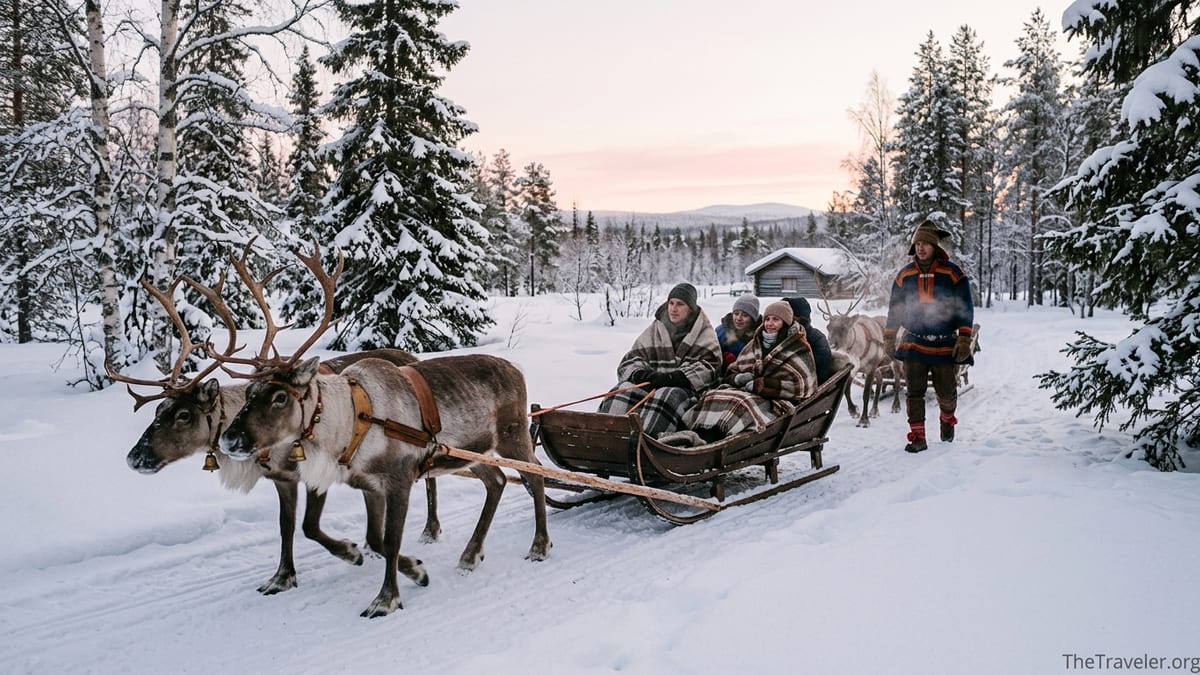
Where in the World You Can Ride in a Reindeer Sleigh
For authentic, snow‑covered reindeer rides, the heartland is northern Scandinavia and Finnish Lapland. Rovaniemi in Finland, sometimes marketed as the official home town of Santa Claus, is one of the easiest hubs for visitors. Here, short walk‑up sleigh rides operate directly inside Santa Claus Village at the Arctic Circle, as well as at farms and wilderness camps outside town. Similar experiences exist in Levi, Inari and Ranua, all within Finland’s reindeer‑herding region, where reindeer husbandry is part of local Sámi and Finnish culture rather than only a tourist product.
Across the border, northern Norway offers reindeer experiences around Tromsø, Alta and Karasjok. In Norway, only Sámi are legally allowed to own reindeer, which means many tours there are run directly by Sámi families. Travelers often combine an evening reindeer sled ride with Northern Lights watching and dinner in a lavvu, a traditional tent. These trips give a different angle on reindeer culture, focusing more on indigenous history and herding life than on Santa‑style branding.
Swedish Lapland, around Kiruna, Jokkmokk and Abisko, rounds out the classic reindeer belt. Here, rides tend to be paired with visits to reindeer enclosures and explanations of how reindeer have supported Arctic communities for centuries. Distances are often modest, but the scenery can be exceptional, especially around Abisko National Park where clear winter skies are common.
Outside the Arctic, reindeer are rarer and experiences are usually shorter or seasonal. In North America, a handful of farms in states like Alaska and some northern US states keep domesticated reindeer and offer winter sleigh rides or meet‑and‑greet sessions around Christmas. These tend to be brief, family‑focused outings rather than wilderness adventures, but they can still be a memorable way for children to see real reindeer up close without a long‑haul flight.
Typical Reindeer Ride Formats and What to Expect
Most reindeer experiences fall into a few clear formats that repeat across Lapland and Arctic destinations. At the shortest end are village loops, often 400 to 800 meters and lasting roughly 5 to 10 minutes. In Rovaniemi’s Santa Claus Village, for example, operators advertise short rides within that range, designed as a quick photo‑friendly taste of the experience with no advance booking required. This type of ride suits visitors on tight schedules who simply want to say they sat in a sleigh.
Step beyond the village and you find mid‑length forest rides, typically 1 to 3 kilometers and taking 20 to 45 minutes. Operators near Rovaniemi describe these as “forest path” rides through quiet snowy woodland, long enough to feel the rhythm of the sleigh and the silence of the forest. One reindeer farm outside Rovaniemi markets a 2‑kilometer ride combined with a guided farm visit, often framed as one of their signature experiences for first‑time visitors.
Full safaris stretch the concept further. In Lapland, some tour companies list 7‑kilometer daytime safaris lasting around 2 hours door to door, including transfers, hot drinks and time with the animals. Evening aurora rides are a variation on this format: travelers ride out in a sleigh for 30 to 40 minutes to a darker location away from city lights, then wait by a fire with snacks while watching for the Northern Lights with a guide.
Many farms also offer reindeer encounters without a sleigh ride, such as feeding the animals, learning about herding practices, or sitting inside a kota or lavvu hearing stories from a Sámi host. These can be gentler options for visitors who are nervous about the cold or hesitant to spend extra on a full safari but still want meaningful contact with the animals and culture.
What Reindeer Rides Really Cost
Prices vary widely by location, length and what is bundled with the ride, and they have generally risen in recent seasons. Around Rovaniemi, local guides and tour comparison sites now describe a distinct price ladder. At the bottom rung, very short, walk‑up rides in Santa Claus Village typically cost around 30 to 50 euros per person for a 400 to 800 meter circuit, with no transfers or extra activities included. These are usually cash or card on the spot, first come first served.
Mid‑length farm and forest rides run higher. A family‑run operator near Levi in Finnish Lapland, for example, currently lists a 0.6‑kilometer reindeer ride at around 69 euros per person and a 1.5‑kilometer version at around 99 euros, each lasting about 1 to 2 hours including farm time and instructions. Another Rovaniemi‑area operator advertises a 2‑kilometer ride plus farm visit at roughly 160 euros per adult and a reduced child rate. These packages often include hot drinks, guiding and sometimes winter clothing rentals, which helps explain the higher price compared with basic village loops.
At the top end sit longer safaris and bundled winter packages. Recent winter pricing guides for Lapland activities suggest that 3 to 4 hour reindeer excursions with campfire stops can reach roughly 180 to 250 euros per adult once transfers, guiding, food and warm gear are included. Premium farm experiences that combine a longer sleigh ride, extended herding demonstrations and a full meal have been listed in the 200 to nearly 300 euro range per adult for the 2025 and 2026 winter seasons.
In Norway and Sweden, prices are broadly similar when converted from local currencies, particularly for tours run by Sámi families that bundle storytelling and dinner inside a lavvu. In North America, where reindeer farms are fewer and rides are usually shorter, prices for a brief Christmas‑season sleigh ride are often significantly lower, more in line with other farm attractions. However, the overall value still depends on what is included, how many people share your sleigh and whether winter clothing is provided or must be rented separately.
How to Choose an Ethical, Animal‑Friendly Operator
Ethical considerations should be central when booking a reindeer ride. In the Arctic, reindeer are working animals and semi‑domesticated herd animals, not theme park props. Look for operators who present reindeer in that context and talk openly about herd welfare, grazing rights and seasonal rhythms. In northern Norway, for instance, restrictions that allow only Sámi people to own reindeer mean many tours are directly connected to traditional herding families. That can be a positive signal that the animals are part of a year‑round livelihood, not only a seasonal attraction.
Across Lapland, farms that limit group sizes, cap daily working hours for the animals and offer rest days are generally better for welfare. If an operator can tell you how long the reindeer work each day, how often they rotate teams and what they do with them outside the tourism season, that transparency is a good sign. Pay attention as well to how staff speak to and handle the animals on site. Calm, unhurried behavior and clear boundaries around not chasing or grabbing reindeer indicate a stronger welfare culture.
Consider how heavily an experience is staged. Village rides in front of crowds, blasting Christmas music, are fun for some visitors but may be more intense for the animals, particularly in peak weeks around December. Forest farms that keep the atmosphere quieter can offer a more relaxed experience for both reindeer and riders. Some travelers also prefer to prioritize Sámi‑run experiences, both to support indigenous businesses and to hear directly from the people whose culture is most closely tied to reindeer.
Finally, think about your own group’s behavior. Teach children to stay seated in the sleigh, avoid sudden movements, and listen to the guide’s instructions. Never attempt to feed a reindeer without explicit permission. Remember that flash photography at very close range can unsettle animals, so follow the operator’s guidance about when and how to take photos.
Practical Planning: Seasons, Weather and Booking Strategy
Reindeer sleigh rides depend on snow and safe trail conditions, so timing matters. In Rovaniemi and much of Lapland, the core season for sleigh rides usually runs from late November through late March, with some operators publishing dates into April when snow cover allows. For example, one Santa Claus Village provider has listed forest path rides operating from early November to the end of April for the 2026 and 2027 seasons, signaling their expectation of a long winter window under typical conditions.
The most popular travel weeks are early December through New Year and the school holiday periods in February. During these times, short rides at Santa‑style attractions can build long queues, while longer farm safaris often sell out weeks or even months in advance. If you are traveling with children and have a specific date in mind, pre‑booking a mid‑length experience can reduce stress on the ground, especially when snowstorms or bus delays compress your schedule.
Temperatures in Lapland can fall well below freezing, particularly in January and February. Many operators provide thermal overalls, boots and mittens as part of the ticket price, but not all do. Check what is included before you book and bring your own base layers, wool socks, hat and scarf. Wind chill in an open sleigh can be significant even on a calm day, and the experience is far less magical if you or your children are too cold to enjoy it.
When comparing prices, look beyond the headline rate. Some hotel desks and international travel agents resell reindeer safaris at a markup compared with booking directly with local farms or activity companies. Recent traveler reports from Rovaniemi, for instance, mention hotel‑offered husky and reindeer rides at around 150 euros per person, while similar experiences booked directly through local tourism portals or farms were notably lower. If budget matters, it is worth checking regional tourism websites or going directly to operators once you have specific dates.
Family Tips and Accessibility Considerations
Reindeer rides are generally gentle, making them accessible to a wide range of ages and fitness levels. Many Lapland operators describe their rides as suitable for children from about four years old, with younger children sometimes accepted on a parent’s lap depending on the sleigh design and conditions. Village loops are often the easiest option with very small children because they are short, close to warm indoor facilities and simple to abandon if someone becomes upset or cold.
For older children and adults, forest rides and safaris can feel more rewarding. The slower pace of a reindeer sleigh compared with dog sledding or snowmobiling allows conversation, photos and quiet moments, which can be ideal for multigenerational groups. Evening aurora rides add a touch of adventure, though they require everyone to tolerate more time sitting still in low temperatures.
Travelers with limited mobility should look closely at sleigh design and transfer arrangements. Getting in and out usually involves stepping down into a low sleigh and then up again at the other end, sometimes in deep snow. Some farms can position the sleigh at a packed path or provide extra assistance if requested in advance. Because many rides take place on uneven forest tracks, they may not be suitable for those with serious back issues, and pregnant travelers are often advised to consult a doctor and the operator before booking.
Noise‑sensitive visitors, including some autistic travelers, often find reindeer rides calmer than many other winter activities. The soundscape tends to be hushed: the slide of runners on snow, soft bells and muffled voices. Choosing a smaller farm and avoiding peak Christmas weeks can reduce crowds and sensory overload, creating a more manageable experience for those who find busy attractions overwhelming.
The Takeaway
A reindeer sleigh ride can be a fleeting tourist box‑tick or one of the most quietly moving moments of a winter trip. The difference usually lies in where you go, how long you spend and which operator you choose. Short village loops deliver the classic Santa photo at a predictable price, while longer forest and farm experiences in Finnish or Norwegian Lapland offer deeper encounters with Arctic landscapes and reindeer culture.
Prices have climbed in recent seasons, especially in high‑demand hubs like Rovaniemi, so it pays to research formats carefully, compare direct farm rates with hotel‑packaged excursions and decide upfront whether you want a quick taste or a more immersive half‑day. For many travelers, the sweet spot is a mid‑length forest ride bundled with time to learn about herding and warm up by a fire.
With realistic expectations, warm layers and an eye for animal welfare, riding in a reindeer‑drawn sleigh can still feel surprisingly timeless. In an era of crowded attractions and busy itineraries, the slow glide of a sleigh through snow‑laden trees may be one of the few winter experiences that encourages you simply to sit, watch your breath in the cold air and listen to the quiet.
FAQ
Q1. When is the best time of year to book a reindeer ride in Lapland?
The core season usually runs from late November through late March, when trails are reliably snow covered. Peak demand is early December through New Year and the February school holidays, so advance booking is strongly recommended for those periods.
Q2. How far in advance should I reserve a reindeer sleigh ride?
For visits around Christmas and New Year, it is sensible to book several months ahead, especially for longer safaris or evening aurora rides. Outside peak dates, a few weeks’ notice is often enough, and very short village rides may not require any advance booking at all.
Q3. How much does a typical reindeer ride cost in Rovaniemi?
Short village loops of roughly 400 to 800 meters are often priced around 30 to 50 euros per person. Mid‑length forest rides and farm visits commonly range from about 70 to 160 euros per adult, while longer safaris and premium packages with meals can reach 180 to 250 euros or more.
Q4. Are reindeer rides suitable for young children?
Yes, many operators welcome children and design their rides with families in mind. Village rides are usually easiest with very young children because they are short and close to indoor facilities. For safety, each provider sets its own age and seating policies, so check the details before you book.
Q5. What should I wear for a reindeer sleigh ride?
Dress in warm, layered clothing suitable for sub‑zero temperatures. A moisture‑wicking base layer, insulating mid‑layer, windproof outer layer, wool socks, insulated boots, gloves or mittens, a hat and a scarf or neck warmer are typical. Many Lapland operators also provide thermal overalls and winter boots, but you should confirm this in advance.
Q6. Are reindeer rides physically demanding?
The rides themselves are usually gentle and seated, so they suit a wide range of ages and fitness levels. The main physical challenge is the cold and stepping in and out of the sleigh, sometimes on uneven or snowy ground. Travelers with mobility issues should discuss access needs with the operator before booking.
Q7. How can I tell if a reindeer tour is ethical?
Look for operators that explain how they care for their animals, limit working hours, keep group sizes moderate and rotate reindeer to allow rest. Tours run by herding families or Sámi operators often place the animals within a broader cultural and seasonal context rather than treating them as props.
Q8. Will I see the Northern Lights during a reindeer ride?
Some evening tours combine a reindeer sleigh ride with Northern Lights watching, but aurora sightings can never be guaranteed. Cloud cover, solar activity and timing all play a role. Booking an aurora‑focused excursion simply improves your chances compared with staying in a bright town center.
Q9. Do I need travel insurance that covers winter activities?
It is wise to have travel insurance that includes winter activities such as sled rides and transfers on icy roads. While reindeer rides are generally low risk, insurance can help cover delays, cancellations or medical costs arising from slips, falls or severe weather disruptions.
Q10. Can I book a reindeer ride outside Scandinavia?
Yes, a small number of reindeer farms in places like Alaska and some northern US states offer seasonal sleigh rides or animal encounters around Christmas. These are usually shorter and less wilderness‑focused than Lapland safaris but can be a convenient option if you live in North America and want a festive experience without long‑haul travel.