


Mandelieu la Napoule is often treated as Cannes’ quieter seaside neighbor, a place to sleep while spending days on the Croisette or zipping along the coastline. Yet step a little inland or off the main promenade and you find a completely different destination: mimosa-covered hills, a gentle river lined with gardens, historic estates, serious golf, and relaxed, very local food culture. This guide focuses on what to do in Mandelieu la Napoule beyond the famous coastline, with practical, real-world ideas you can build an entire stay around.
Get the latest updates straight to your inbox!
Explore the Storybook World of Château de la Napoule
Although it sits on the waterfront, Château de la Napoule feels like a world apart from the typical Riviera beach scene. The medieval fortress was transformed in the early 20th century by American artist Henry Clews and his wife Marie into an atmospheric residence filled with sculptures, whimsical carvings, and lush gardens. Today it is one of the most interesting cultural visits on this stretch of coast, far more intimate than the grand museums in nearby Cannes.
You can usually visit the castle and gardens on a self-guided basis, with a modest entry fee that is typically under 10 euros for adults and reduced prices for children. Guided tours, often available in French and English on selected days, help decode the humor hidden in Clews’ work, from cheeky gargoyles to allegorical sculptures. Plan at least 60 to 90 minutes if you want to linger in the different garden “rooms” and take in the sea views framed by stone arches.
The gardens themselves are officially recognized as remarkable, combining formal alleys, clipped hedges, and more relaxed Mediterranean planting. It is a surprisingly peaceful place even in summer, and one of the best spots in Mandelieu la Napoule to simply sit with a book under the shade of a pine tree while ferries and pleasure boats move in and out of the nearby harbor. If you are staying in the area for several days, check the local program: the castle occasionally hosts small exhibitions, concerts, or evening events that give you an excuse to experience the setting after hours.
For a quieter experience, aim for late morning outside of school holidays or shoulder-season afternoons in May, June, September, and October. The light on the stone and the gardens is particularly beautiful in the last hour before closing, and the atmosphere feels very different from the busy seafront just beyond the walls.
Follow the River Siagne: Electric Boats, Kayaks, and Riverside Strolls
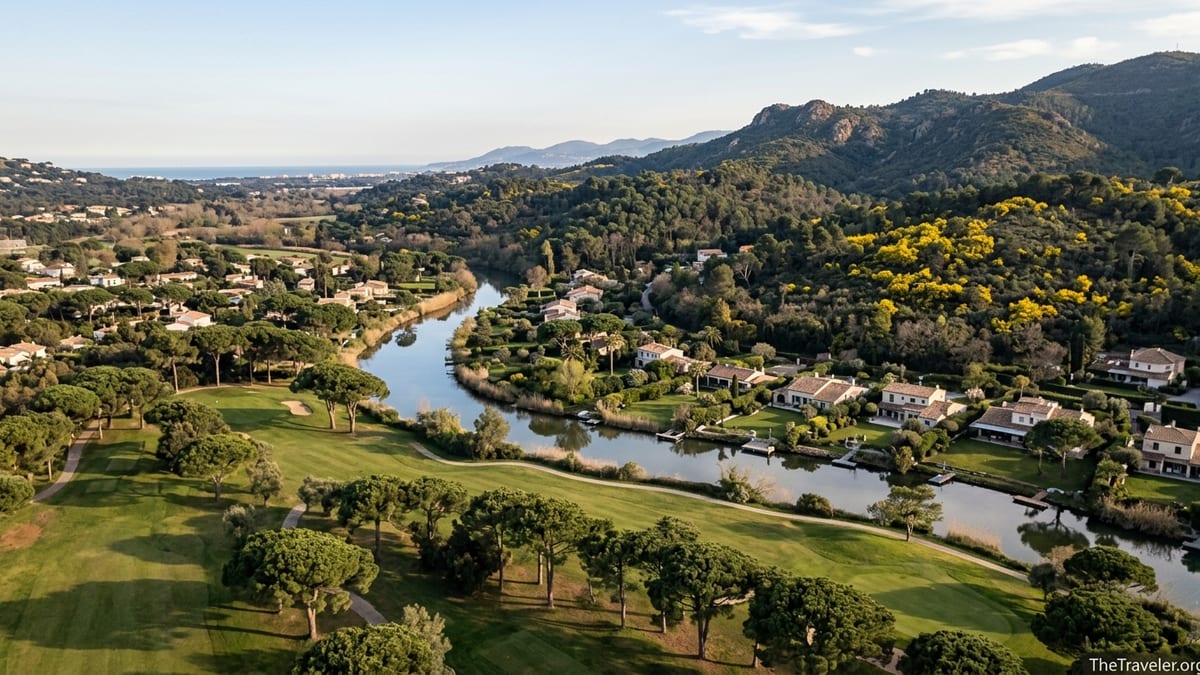
Look away from the sea and you will notice that Mandelieu la Napoule is also shaped by water coming from the mountains: the River Siagne. Flowing gently into the Mediterranean at Mandelieu, the Siagne offers a calm, green corridor that feels surprisingly rural given how close you are to Cannes. Instead of joining the crowds on a speedboat, consider exploring this softer side of the Riviera along the riverbanks.
One easy way to do this is to rent a small electric boat that does not require a license. Local operators near the Robinson car park typically offer simple wooden boats designed for quiet cruising, usually fitting around four to five adults. Standard outings run from about 30 minutes to one hour, with special breakfast or aperitif cruises sometimes available if you book ahead. Expect to pay a family-friendly rate for a short ride, making it a realistic option even if you are traveling with children or older relatives who prefer gentle outings.
If you prefer a little more exercise, look for canoe and kayak bases along the Siagne. These rental centers usually provide life jackets, basic instruction, and suggestions for short loops suitable for beginners. On calm summer mornings you can paddle past riverside gardens, small private jetties, and stretches of reed and willow that feel far removed from the Riviera’s high-rise hotels. In busier school holiday periods, go early or later in the day to avoid the warmest hours and the peak of boat traffic.
Even without getting on the water, the Siagne is worth seeking out. Paths and small roads run close to the river in several sections, allowing for relaxed walks or easy jogs under the trees. If you are staying in a nearby campsite, apartment, or hotel away from the sea, it is often faster and more pleasant to head to the river for a morning stroll rather than driving to the beach. Bring a picnic from the local bakery and look for benches or grassy spots where locals quietly read or chat while fishing.
Walk Among Mimosas and Forests in the Tanneron Hills
Just inland from Mandelieu la Napoule, the Tanneron Massif climbs away from the coast, covered in oak, pine, eucalyptus, and large plantations of mimosa. For much of the year this is a green, wooded area ideal for hiking and scenic drives. In winter, roughly from late January to early March depending on the weather, the mimosa bursts into bloom and the hills turn bright yellow, giving Mandelieu its reputation as a mimosa capital.
The Grand Duc forest, part of the Tanneron area, is a popular starting point for marked hikes. Trails here range from short family-friendly loops to more demanding routes gaining several hundred meters of elevation. The local tourist office sells a detailed hiking brochure that covers some of the best itineraries for a modest fee of around 5 euros, which is worth investing in if you plan to spend a whole day or more walking. The guide includes estimated times, elevation gains, and useful notes on viewpoints and natural features.
Even a half-day walk reveals a very different personality of Mandelieu la Napoule: views over the Siagne valley, glimpses of the Lérins Islands and the bay of Cannes, and in clear weather the outline of the Southern Alps on the horizon. In mimosa season, you can literally walk through tunnels of blossoms, but it is important to manage expectations. Flowering varies from year to year and from slope to slope, so you may find some areas in full bloom while others are already fading. Dress in layers, as winter sun can feel warm at midday but temperatures drop quickly in the shade or late afternoon.
Arriving by car, expect narrow, winding departmental roads such as the D38 and D92 with limited passing places and informal parking lay-bys at viewpoints. Start early to secure a parking spot near trailheads and to enjoy the soft morning light. Bring water, snacks, and good footwear; while many tracks follow wide fire roads, the ground can be rocky and uneven. If you are traveling in high summer, consider an early-morning hike followed by a long lunch back in town, as midday heat on exposed slopes can be intense.
Play Serious Golf at Old Course and Riviera Golf de Barbossi
Mandelieu la Napoule is one of the most established golf centers on the Côte d’Azur, with two highly regarded courses within a short drive of each other. The Old Course, founded in 1891 near the mouth of the Siagne, is often cited as the oldest golf course on the French Riviera. Its flat, tree-lined fairways weave between umbrella pines on around 70 hectares, with the unusual feature of crossing the river by small ferry to reach certain holes. This detail alone makes a round here feel memorable even for seasoned golfers.
Green fees at the Old Course vary by season and time of day, but as a rough guideline you should plan on a mid- to upper-range price compared with typical inland courses in France. Visiting players can often book online or by phone, with options for 9-hole and 18-hole rounds. Facilities include a driving range, practice areas, and on-site restaurants where you can linger over a post-round lunch or an evening drink under the pines. Dress codes tend to follow standard golf norms: collared shirts, appropriate footwear, and no beachwear.
A few kilometers inland, Riviera Golf de Barbossi offers a different style of course. Set on about 65 hectares in a more undulating landscape, it combines fairways lined with cork oaks, olive trees, and mimosas with contemporary sculptures placed along the course. The result is a golfing experience that doubles as an open-air art walk. This course usually attracts players who appreciate both the sporting challenge and the sense of being in a landscaped park rather than a purely coastal setting.
Non-golfers in your group are not excluded from these venues. Both clubs typically offer restaurant terraces, lounge areas, and sometimes spa or fitness facilities open to non-playing guests. Booking a leisurely lunch on-site on a non-tournament weekday can be a pleasant way to experience the green heart of Mandelieu la Napoule without picking up a club. If you are thinking of playing during peak months like July and August, reserve tee times well in advance and check whether any major events are scheduled that might affect availability.
Discover Everyday Mandelieu: Markets, Local Dining, and Village Life
Step away from the seafront and golf courses and you quickly encounter a more everyday, residential Mandelieu la Napoule. This is where you find weekly markets, small bakeries, and neighborhood bistros that cater as much to locals as to visitors. Spending even half a day exploring these parts of town gives you a more grounded sense of life along this stretch of coast.
The main markets typically set up several times a week, often in central squares or along key streets. Stalls might sell seasonal produce from the surrounding hills and plains, local cheeses, cured meats, honey, and bunches of mimosa in winter. Prices are usually competitive compared with supermarket chains, and vendors are accustomed to international visitors. If your French is rusty, simple phrases and a smile go a long way. A practical approach is to buy picnic supplies here before heading to the riverbanks or up into the Tanneron for the day.
For dining, look beyond the most prominent seafront terraces, which often focus on simple fish dishes, salads, and pizzas aimed at beachgoers. Slightly inland you will find establishments that serve more traditional Provençal cuisine, with dishes like daube (slow-cooked beef), stuffed vegetables, and grilled local fish when available. Menus du jour at lunchtime can offer particularly good value, with a starter, main, and sometimes dessert for a fixed price that is usually more affordable than evening à la carte options.
Many visitors also stay in holiday apartments, small hotels, or campsites set back from the coast. These often include shared pools or gardens that encourage a slower rhythm of travel. Walking or cycling to a neighborhood bakery for fresh croissants in the morning, shopping at the supermarket for an evening barbecue, or chatting with the owner of a small café about local events all become part of the experience. If your schedule allows, consider visiting outside of peak summer weeks; in May, June, September, and October, the town feels more local while still offering comfortable weather and long daylight hours.
Enjoy Quiet Beaches and Under-the-Radar Watersports
While the main brief here is to go beyond the famous coastline, it would be unrealistic to ignore the sea entirely. The advantage in Mandelieu la Napoule is that you can access watersports and small coves in a more low-key way than on the busier promenades of Cannes or Nice. Instead of day-long parties on large yachts, this stretch of coast leans towards paddles, pedal boats, and family-friendly fun.
At La Rague and nearby small beaches, local watersport bases often rent stand-up paddleboards and pedal boats suitable for children from about three years old, with life jackets provided. Rental slots commonly start at 30 minutes, giving you time to glide along the shoreline, peek at rocky inlets, or let children burn off energy without committing to a full-day excursion. Prices are in line with other Riviera towns but can be better value than branded resorts further east.
For a quieter sea experience, aim for early mornings when the water is typically calmer and temperatures are gentle. Even in high season, you can often find space to paddle along the coastline before the midday influx. Some operators also offer kayak rentals or small guided outings along the red rocks that start to appear as you move towards the Esterel Massif. It is worth asking about weather and swell conditions on the day, especially if you are traveling with less confident swimmers.
If you would rather stay on land but still enjoy the maritime atmosphere, use the coastal paths near smaller ports. These short walks let you watch fishing boats and recreational craft come and go, smell the pine resin from the trees leaning over the water, and photograph the contrast between golden evening light and the darker silhouette of the Esterel hills. Combining an hour on the water with a simple seafood dinner in one of the modest harbor restaurants makes for a balanced evening that feels more local than luxurious.
The Takeaway
Mandelieu la Napoule is far more than a place to park yourself on a beach or commute into Cannes. Its personality reveals itself along the banks of the Siagne, in the shadow of mimosa-covered hills, on fairways shaded by old pines, and in the courtyards of a castle rebuilt by artists rather than princes. By combining a few half-day excursions inland with unhurried meals and simple time outdoors, you can turn what might have been a generic Riviera stay into something quieter and more distinctive.
Plan at least two or three full days if you want to balance hiking in the Tanneron, a river outing, cultural visits, and perhaps a round of golf or a long lunch at one of the clubs. Take advantage of the tourist office’s local brochures and maps, especially for hiking, and remain flexible with your schedule so you can adapt to weather and crowd levels. In return, Mandelieu la Napoule will show you a softer, greener, and more everyday version of the Côte d’Azur that many travelers speeding along the coast never stop to see.
FAQ
Q1. How many days should I spend in Mandelieu la Napoule if I want to explore beyond the beach?
Most travelers find that two to three full days is enough to combine a visit to Château de la Napoule, a half-day on the River Siagne, one inland hike in the Tanneron hills, and some relaxed time exploring local markets and restaurants. If you play golf or want to take multiple walks, extending to four or five days allows for a slower pace.
Q2. When is the best time to see the mimosa in bloom in the Tanneron Massif?
Mimosa usually flowers between late January and early March, but exact timing varies with each winter. In a typical year, mid-February offers a good chance of seeing large swathes of yellow blossom. It is wise to check recent local reports or contact the tourist office shortly before your trip, as a warm or cold spell can shift the peak by a week or more.
Q3. Do I need a car to enjoy the inland hikes and the Tanneron hills?
A car gives you the most flexibility for reaching trailheads in the Tanneron and Grand Duc forest, especially early in the morning or outside peak season when public transport is limited. However, if you do not drive, you can still enjoy shorter walks starting from Mandelieu la Napoule itself and join organized excursions offered by local agencies during busier months. Taxis or private transfers are another option if you want to reach a specific starting point without renting a vehicle.
Q4. Are the electric boat trips on the River Siagne suitable for families with young children?
Yes, the small electric boats on the Siagne are designed for calm, low-speed cruising and are generally suitable for families, including younger children, as long as everyone wears life jackets and basic safety guidelines are followed. Boats usually accommodate around four to five adults, so a typical family can travel together. Choose a shorter 30- or 60-minute outing at first and avoid the hottest midday hours in summer.
Q5. How expensive is it to play golf at Old Course or Riviera Golf de Barbossi?
Green fees at both courses are in the mid to upper range for French golf, reflecting their Riviera location and quality. Prices fluctuate with season, weekday versus weekend, and time of day, but many visitors consider a round here a worthwhile holiday splurge. Booking in advance and choosing off-peak tee times, such as midweek mornings outside July and August, can help you secure better availability and sometimes more favorable rates.
Q6. Is Château de la Napoule a good visit for children?
Château de la Napoule can be engaging for older children who enjoy castles, stories, and gardens. The whimsical sculptures and sea views break up the visit, and there is space outside for them to stretch their legs. Very young children may find the interior rooms less interesting, but the gardens still provide a pleasant environment. Families should plan a relatively short visit of about an hour and combine it with beach time or a riverside walk.
Q7. What should I pack for hiking in the Tanneron and Grand Duc forest?
For most hikes, comfortable walking shoes or light boots with good grip, a hat, sunglasses, sunscreen, and a refillable water bottle are essential. In winter and early spring, add a light jacket or fleece, as temperatures can change quickly between sun and shade. Trails often follow rocky or uneven fire roads, so flip-flops and very thin-soled shoes are not recommended. A small daypack with snacks and a printed or downloaded map from the tourist office completes the basics.
Q8. Are there quieter alternatives to the main beaches in Mandelieu la Napoule?
Yes, by walking a little further from the main access points or exploring around smaller ports such as La Rague, you can often find less crowded stretches of sand or shingle, especially early in the morning or outside school holidays. These spots may have fewer services than central beaches, so bring your own water, snacks, and shade if needed. For complete quiet, combine a morning river or hill walk with only a short swim rather than spending the entire day on the sand.
Q9. Can I visit Mandelieu la Napoule as a day trip from Cannes or Nice?
From Cannes, Mandelieu la Napoule is close enough for an easy day trip by car, bus, or train, allowing time for a castle visit and a riverside or coastal walk. From Nice, travel times are longer but still manageable for a full-day outing if you start early. To properly enjoy the slower pace, many travelers choose to spend at least one night in Mandelieu, taking advantage of campsites, holiday rentals, and smaller hotels that are often more relaxed than big-city accommodations.
Q10. Is Mandelieu la Napoule a good choice if I want a quieter base than Cannes?
For many visitors, Mandelieu la Napoule strikes a good balance between access to the wider Riviera and a calmer local atmosphere. You can reach Cannes and other coastal towns relatively quickly by car or public transport, yet return in the evening to a community that feels more residential and less dominated by nightlife. If your ideal trip involves walks, golf, simple meals, and time by the river or in the hills rather than late-night clubs, Mandelieu makes an appealing base.