


More news on this day
South Shore Line commuter rail service between Chicago and northwest Indiana remains shut down after a freight train derailed near East Chicago, interrupting power and blocking key tracks used by the line.
Get the latest news straight to your inbox!
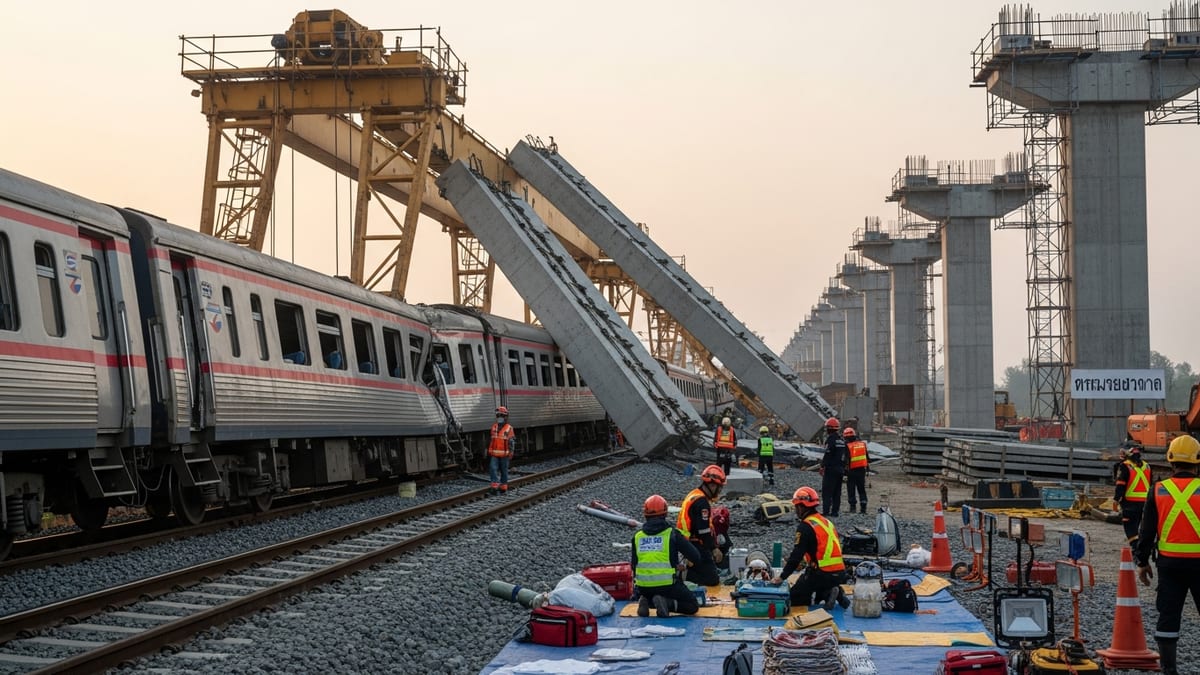
Freight derailment and power loss halt commuter corridor
According to regional broadcast coverage, the disruption began when a freight train derailed near East Chicago, Indiana, along a segment of track shared by freight operations and the South Shore Line commuter service. Reports indicate that the incident also triggered a power loss in the area, compounding the difficulty of moving equipment and restoring normal operations.
Initial reports described freight cars off the rails near the corridor that links Chicago with communities including Hammond, Gary and Michigan City. The South Shore Line, operated by the Northern Indiana Commuter Transportation District, relies on overhead electric power, meaning any damage to power systems can bring trains to an immediate stop even if passenger equipment is not directly involved in a derailment.
Regional outlets in Chicago and northern Indiana describe a scene of halted trains and damaged infrastructure as railroad crews work along the right of way. Freight derailments can require extensive inspections of track, signals and overhead lines before any passenger service can safely resume, which appears to be contributing to the ongoing shutdown.
At this stage, publicly available information has not indicated any injuries linked to the incident, and reports focus primarily on operational disruption and infrastructure damage. Cleanup and investigation activity around the derailment site is continuing as agencies and rail operators assess the full scope of repairs needed.
Complete suspension of South Shore Line trains
Coverage from local television stations in South Bend and Chicago indicates that the South Shore Line has suspended all trains in response to the derailment and power loss. Passenger services scheduled between downtown Chicago and South Bend, as well as intermediate communities, have been canceled while the line remains impassable.
The timing of the shutdown, spanning the midweek commuting period, has left regular riders searching for alternatives on short notice. Published reports describe announcements of wide-ranging cancellations with no immediate timeline for resuming even limited service. Unlike some earlier disruptions in the region, the current outage affects the entire South Shore Line rather than only a particular branch or off-peak period.
Passenger rail experts note that when derailments occur on shared freight and commuter corridors, the impact can be especially acute because rerouting options are limited. Even if portions of the route remain unaffected, operating partial service can be difficult if the damaged area lies between major hubs or near critical junctions, which appears to be the case near East Chicago and Gary.
While other regional railroads have at times been able to restore modified service within hours of a derailment, the combination of track damage, overhead power issues and the location of the incident suggests that a more extended interruption is possible on the South Shore Line.
Commuters turn to highways and other transit options
With South Shore Line trains not running, commuters across northwest Indiana are shifting to cars, buses and remaining rail options closer to Chicago. Published coverage notes heavier reliance on nearby interstate corridors and local highways that already handle significant weekday traffic between Indiana communities and downtown Chicago.
Transit observers in the region point out that the South Shore Line normally offers an important alternative to driving, particularly for passengers traveling from cities such as Michigan City, Portage and Gary. The suspension of service removes a key link for workers, students and leisure travelers who depend on predictable rail schedules to reach the Loop and other Chicago destinations.
Some riders are reportedly using other Metra lines within Illinois where feasible, but the geography of northwest Indiana means that for many, longer car trips or improvised carpools are the only options in the short term. Travel times are likely increasing, especially during peak periods, as additional vehicles enter already busy routes toward downtown Chicago.
Local agencies and transportation planners have previously highlighted the importance of the South Shore Line in reducing congestion and supporting economic ties between Indiana communities and Chicago. The current outage serves as a reminder of how quickly a single infrastructure incident can ripple through daily mobility patterns across the region.
Repair work, inspections and investigations underway
Publicly available information from news outlets indicates that railroad crews and contractors are working along the derailment site to clear freight cars, repair damaged track and inspect power systems. Before any passenger trains can operate, the rail line must pass a series of safety checks focused on rails, ties, switches, signals and the overhead catenary that powers South Shore equipment.
Industry practice following derailments typically involves methodical removal of affected railcars, followed by detailed measurements and inspections of track geometry. Any damage to poles, wires or substations supplying electric power must also be addressed. Reports suggest that these combined tasks are likely to take time near East Chicago, where the line carries both freight and commuter traffic.
Investigative work to determine the cause of the derailment is expected to continue alongside repairs. National and state railroad safety data often examine factors such as track condition, equipment performance, operating speeds and recent maintenance history when evaluating freight incidents. While that process can take weeks or months, operators normally focus first on restoring safe operations and then on implementing any longer-term recommendations.
Until on-site work is complete and the route is cleared for use, published coverage indicates that commuter rail service on the South Shore Line will remain suspended, leaving riders dependent on temporary travel arrangements and frequent checks of service alerts.
A key Midwest commuter link under strain
The South Shore Line is one of the country’s few surviving interurban railways, linking downtown Chicago with South Bend along the southern shore of Lake Michigan. Over the past decade it has undergone a series of modernization and expansion efforts, including the recent double-track project designed to boost capacity and improve reliability.
Transportation planning documents from Illinois and Indiana describe the route as a critical connection for the regional labor market, allowing Indiana residents to reach Chicago’s employment centers without driving. The derailment-related shutdown interrupts that role just as the line has been working to attract new riders and rebuild post-pandemic demand.
Rail analysts often note that shared freight and passenger corridors can face particular vulnerabilities, especially where infrastructure was not originally designed for today’s heavier and longer freight trains. Recent derailments in other metropolitan areas have also temporarily halted commuter services, underscoring how disruptions in freight operations can spill over into public transit.
As work continues near East Chicago, travelers across northwest Indiana are watching for signs of progress and eventual restoration of service. Until then, the South Shore Line’s temporary silence highlights both the benefits and fragility of rail-based commuting in the Midwest.