


Few winter festivals in Europe feel as exuberant as Nice Carnival. For two weeks every February, the Promenade des Anglais and Place Masséna fill with giant illuminated floats, brass bands, confetti, and the famous flower battles, while nearby Menton explodes in citrus sculptures for its Lemon Festival. Choosing the right moment to visit can mean the difference between shivering in showers at a half-empty parade and basking in soft Riviera light as streamers fall around you. This guide focuses on when to come to Nice specifically for Carnival and for the most vibrant festival atmosphere, with practical examples to help you turn dates on a calendar into a memorable trip.
Get the latest updates straight to your inbox!
Understanding Nice Carnival Dates and Rhythm
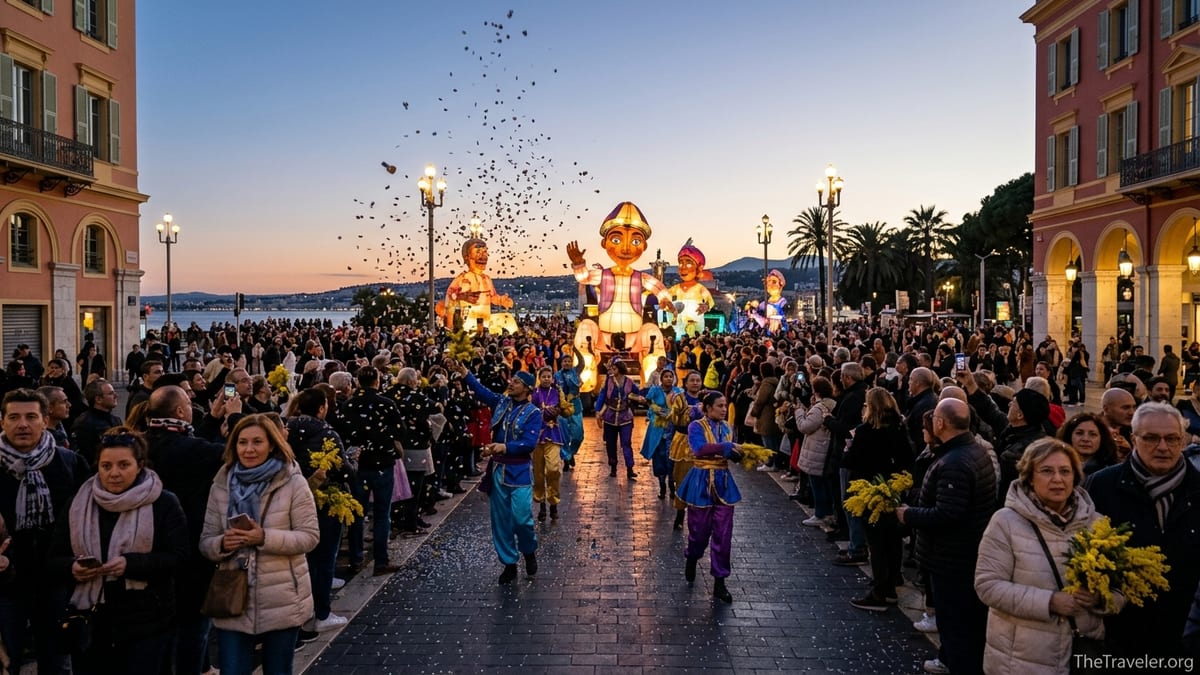
Nice Carnival takes place each year in February and sometimes spills into early March, following the traditional pre-Lent calendar. In practice, this means you can expect roughly 10 to 14 days of festivities, with several major parades scheduled across that period. For example, the official Côte d’Azur tourism calendar lists the 2026 edition from 11 February to 1 March, mirroring the pattern of recent years in which the city programs events over three consecutive weekends to give visitors flexibility.
Within that window, the city stages three main types of events: daytime “Carnival Parades,” “Parades of Lights” in the evening, and the Batailles de Fleurs, or flower battles, usually on late mornings or early afternoons along the Promenade and around Place Masséna. A Flower Battle might run at 14:30 with around a dozen floats, each loaded with thousands of fresh mimosa, roses, and carnations that costumed performers throw to the crowd. On another day, a nocturnal parade sees illuminated floats and music rolling past grandstands and standing zones under spotlights.
The schedule is typically densest on weekends. A Saturday might feature an afternoon flower battle and an evening illuminated parade, while Sundays often host a big daytime corso that draws families from across the region. Midweek events exist and are often less crowded, but they tend to be fewer in number. When planning, it helps to think in terms of weekends within the Carnival period rather than specific weekdays, especially if you want to catch multiple parade formats.
Because the precise dates shift with the religious calendar, travelers booking long in advance should use recent patterns as a guide and then confirm with the official Nice tourism office once the program is announced, usually in late spring or early summer for the following winter. For instance, if Carnival ran from mid February to early March in 2026, you can reasonably expect a similar mid-February start in 2027, give or take a few days.
Weather in Carnival Season: What “Winter” Feels Like in Nice
Nice has a mild Mediterranean climate, and February here feels very different from February in northern Europe or North America. Long-term weather records indicate typical daytime highs around 11 to 13 degrees Celsius in February, with nights hovering near 4 to 6 degrees. Cold snaps can happen, but snow in the city remains rare. Many visitors describe it as “sweater weather with a light coat,” especially when the sun is out and you are sheltered from the sea breeze on Place Masséna.
Rain is a real possibility, so it is important not to romanticize winter sunshine too much. Climatic averages suggest several days of rain in February, often arriving in short, intense showers rather than endless drizzle. In practical terms, that might mean a Flower Battle that starts under a bright sky but finishes in a quick shower that sends spectators diving under the arcades of the old town. Pack a compact umbrella and a waterproof layer you can throw over a warm sweater or fleece rather than a heavy parka more suited to snowbound cities.
Wind matters just as much as temperature. The open Promenade des Anglais can feel chilly if there is a brisk onshore breeze, especially in the evening for the Parade of Lights when you are sitting still in the grandstands for up to two hours. Travelers who went to the 2025 edition reported being comfortable in jeans, ankle boots, and a wool coat, with many locals adding a scarf, gloves, and a beanie once the sun went down. By contrast, those attending daytime events in late February often remarked that they could sit on café terraces in the sun without a jacket.
Sea temperatures are cold in Carnival season, typically around 13 degrees Celsius, so swimming is for hardy locals or wetsuited paddleboarders rather than casual tourists. Still, the light reflected off the bay and the often crisp visibility create a striking backdrop for parade photographs, especially on days when snow dusts the distant Alps behind the city.
Early vs Late Carnival: Choosing Your Sweet Spot
Within the two to three weeks of Nice Carnival, timing your visit for early or late in the program can shape your experience. The opening weekend often feels electric: floats appear fresh, performers are full of energy, and locals are eager to see how the year’s theme has been interpreted. If the 2026 dates are 11 February to 1 March, for example, the first Saturday and Sunday will likely feature a flagship illuminated parade and one of the first Flower Battles, both packed with Niçois families.
However, that early buzz also brings higher demand for accommodation and parade tickets, especially for Saturday night. Travelers checking hotels in the Carré d’Or and around Place Masséna in previous years have found that midrange double rooms that cost around 120 to 150 euros per night in January can jump to 200 to 260 euros during opening weekend, especially if you wait until December to book. If you arrive a few days before the official opening, you might see crews assembling floats in the depot near the port, but you will miss the full spectacle.
Late Carnival, by contrast, can offer a slightly more relaxed atmosphere. The closing weekend typically includes a major nighttime parade and, on the final evening, the burning of the Carnival King and fireworks over the bay, which many repeat visitors describe as a highlight. By then, performers are well-drilled, and visitors have had time to share on-the-ground tips about the best viewing areas. Accommodation prices can ease slightly in the very last days, especially for midweek nights leading into the final weekend, although Saturdays remain in high demand.
If you care most about maximum festival atmosphere with manageable prices, many travelers target the “middle” dates: arriving on the Thursday of the first week and leaving on the Tuesday of the second week. This window lets you catch at least one Flower Battle, an illuminated parade, and a big Sunday daytime corso without necessarily paying the peak opening or closing premiums. It also leaves room for a day trip to Menton’s Lemon Festival while you are on the coast.
Combining Nice Carnival with Menton’s Lemon Festival
One of the great advantages of visiting for Nice Carnival is the chance to experience two major Riviera festivals in a single trip. Just 40 to 50 minutes by regional train east of Nice, the town of Menton hosts the Fête du Citron, or Lemon Festival, each February. Recent programs have scheduled the 2026 edition for 14 February to 1 March, almost exactly overlapping Nice Carnival. The event features giant sculptures and floats created from citrus fruit in the Jardins Biovès and themed parades on specific days.
In practice, many visitors base themselves in Nice and dedicate one full day to Menton. A typical plan might be to take an early train from Nice-Ville station on a weekday morning, arriving in Menton around 9:00. You could stroll through the citrus exhibition in the gardens, stop for a coffee and a tarte au citron in a café near the seafront, then watch an afternoon parade where brass bands march past floats covered in lemons and oranges. Regional transport authorities often add extra services during the festivals so that trains run roughly every 15 minutes between Cannes and Menton on busy days.
Accommodation prices in Menton are generally lower than in Nice during this period, so budget-conscious travelers sometimes invert the pattern: they stay in a small Menton hotel or guesthouse for 80 to 120 euros per night and use the train to reach Nice for key Carnival events. This can work particularly well for couples or solo travelers who prefer a quieter base but still want the option to join the crowds for a Saturday night Parade of Lights on Place Masséna.
If you plan to combine both events, pay careful attention to the specific dates of the Lemon Festival’s parades and nighttime events, which do not run every day. For example, in previous years Sunday afternoons focused on big citrus corsos, while certain Thursdays or Saturdays hosted night parades. By plotting those dates against the Nice Carnival program, you can create an itinerary where, say, Saturday night is reserved for an illuminated parade in Nice, Sunday afternoon for a Lemon Festival procession in Menton, and a midweek day for the Flower Battle back in Nice.
Crowds, Costs, and Booking Strategy in Peak Season
Nice Carnival is considered one of the largest winter events on the French Riviera, regularly attracting hundreds of thousands of spectators across its full run. That scale has concrete implications for how early you should book and what kind of experience to expect in the city center. Hotels around the Promenade des Anglais, Place Masséna, and the old town tend to sell out first, particularly properties with sea-view rooms or balconies overlooking the parade route. Visitors browsing reservation platforms just one or two months before Carnival often find only scattered rooms left at higher-end prices.
A practical rule is to secure your accommodation 6 to 9 months in advance if you want a central location at a midrange price. For instance, a three-star boutique hotel near the tramway stop Jean Médecin might offer double rooms in June for the following February at around 150 euros per night, including breakfast. By November, the same room could have risen to 220 euros or be completely booked for key parade dates. Budget alternatives include staying a few tram stops inland in neighborhoods such as Libération or Cimiez, where you might still find respectable hotels or apartments under 130 euros per night even closer to the event.
Parade tickets come in several categories: reserved grandstand seating, standing areas along the route, and sometimes family or reduced-price zones. Prices vary by event type, but it is common to see seated tickets for flagship illuminated parades cost more than daytime standing tickets for a regular Carnival parade. Travelers posting about the 2026 edition noted that grandstand seats for popular nights had sold out weeks in advance, while same-day standing tickets were still available at on-site booths. If sitting is important to you, especially for older travelers or families with young children, buying tickets as soon as the online ticket office opens is advisable.
Within the city, expect restaurants in the old town and near the parade route to be busy before and after events. Reservations help for places like traditional Niçoise bistros serving socca, daube, and salade niçoise. On parade days, some cafés on the Promenade offer set “Carnival menus” at slightly higher prices, for example 28 to 35 euros for a two- or three-course meal, trading on their prime viewing locations. Savvy visitors eat in less central neighborhoods or grab filled baguettes and pastries from boulangeries like those on Avenue Jean Médecin, then head to the route early to secure a good spot.
Alternative Months for Festival Atmosphere Without Carnival Crowds
If your main goal is to enjoy a lively atmosphere in Nice but Carnival dates do not work for you, consider other months when the city hums with events, while keeping in mind that the feel of the city changes with the season. Late May, for example, brings the Cannes Film Festival and Monaco Grand Prix nearby, which sends hotel prices along the Riviera soaring and fills trains with race fans and film industry visitors. Nice itself hosts related cultural happenings and benefits from warm weather, with average highs in the low 20s Celsius, but the vibe is less about street parades and more about beach clubs and terrace dining.
Spring and early autumn can deliver a balanced experience. In April, the weather softens into mid-teens to low-20s Celsius, making it a comfortable time for hikes in the hills above Nice and leisurely coastal walks to Villefranche-sur-Mer or Cap Ferrat. Outdoor events and weekend markets gain energy, and café terraces on Place Garibaldi and Cours Saleya fill with both locals and visitors. Prices are lower than in the summer peak, and you are unlikely to encounter the intense bottlenecks that occur in the old town during Carnival nights.
September is another strong choice for a festival-like mood without the official Carnival. Sea temperatures remain warm enough for swimming, often around 23 to 24 degrees Celsius in early September, and many cultural festivals, outdoor concerts, and local fêtes continue into the month. You might, for instance, stumble onto a small jazz festival in a hill village like Saint-Paul-de-Vence or a food event celebrating local olive oil and rosé at a nearby winery. Nice itself hosts heritage open days and street performances that bring people onto the promenades in the evening.
What you will not find outside February, however, is the concentrated spectacle of giant papier-mâché figures rolling past grandstands at night or costumed performers showering the crowd with flowers. If those visual, theatrical elements are essential to your trip, aligning your visit with Carnival season remains the most rewarding strategy, even if it means navigating higher prices and more complex logistics.
The Takeaway
For travelers focused on Nice Carnival and a peak festival atmosphere, the sweet spot typically lies between mid and late February, when the majority of flower battles, illuminated parades, and daytime corsos take place. In years like 2026, when the official program runs from 11 February to 1 March, arriving for the middle and second weekend allows you to experience multiple event types without necessarily paying the highest opening-night premiums.
Weather in this period is cool but generally mild compared with much of Europe and North America, with daytime highs often in the low teens Celsius and a mix of clear days and quick showers. Plan for layers, bring a compact umbrella, and prioritize warm but comfortable footwear for long periods of standing on stone pavements. If you are sensitive to cold, consider booking seats a few rows back from the seafront, where you are more sheltered from breezes.
Booking strategy matters. Reserve central accommodation and grandstand seats as early as possible, ideally 6 to 9 months in advance if you are targeting Saturday nights or want a balcony overlooking the route. Think creatively about your base: a quieter neighborhood in Nice reached by tram or even a hotel in Menton, combined with regional trains, can keep costs in check while still placing you within easy reach of the biggest events.
Finally, remember that Nice Carnival rarely stands alone. The overlapping Menton Lemon Festival adds a second major spectacle just down the coast, and the broader Riviera offers day trips to hilltop villages, coastal walks, and museums that round out a winter escape. With thoughtful timing and a bit of forward planning, you can enjoy the full intensity of Carnival at its best without feeling overwhelmed by crowds or logistics.
FAQ
Q1. When is the best overall time to visit Nice specifically for Carnival?
The optimal period is usually the middle to second weekend of the Carnival window in mid to late February, when most major parades and flower battles occur and the atmosphere is at its liveliest without being limited to opening or closing nights.
Q2. How far in advance should I book hotels and parade tickets?
For central hotels and grandstand seats at flagship parades, aim to book 6 to 9 months in advance. If you are flexible on location and happy with standing tickets, you can book later, but popular Saturday nights still sell out weeks ahead.
Q3. What is the weather like in Nice during Carnival?
Expect daytime highs around the low teens Celsius and cooler evenings, with a mix of sunny days and occasional showers. It feels like a mild coastal winter: you will want layers, a light coat or warm jacket, and something windproof for evening parades on the seafront.
Q4. Can I comfortably combine Nice Carnival with Menton’s Lemon Festival in one trip?
Yes. The two festivals overlap in February, and regional trains connect Nice and Menton in under an hour. Many visitors base in Nice and dedicate one full day to Menton, while others stay in Menton for lower prices and day-trip into Nice for key Carnival events.
Q5. Is it better to attend the opening or closing weekend of Carnival?
Opening weekend offers the excitement of seeing floats and themes for the first time and draws many locals, while the closing weekend usually includes the burning of the Carnival King and fireworks. If you must choose, think about whether you prefer the sense of launch or the drama of the finale; both are busy and need early booking.
Q6. Are midweek Carnival days worth it or should I focus on weekends?
Midweek events can be very worthwhile, especially if you prefer smaller crowds. There are fewer parades scheduled, but flower battles and certain nighttime events may fall on weekdays, and you will find more elbow room on tramways, in restaurants, and in standing zones along the route.
Q7. What should I wear to stay comfortable during outdoor parades?
Choose warm layers such as a sweater and light insulated jacket, closed shoes or boots with good grip, and accessories like a scarf and gloves for evening events. A small umbrella or compact rain poncho can be helpful, as showers can pass quickly during the parade without cancelling it.
Q8. Are there quieter areas to stay in Nice during Carnival that still offer good access?
Yes. Neighborhoods slightly inland from the seafront, such as Libération, parts of the Carré d’Or west of the main parade loop, or residential streets near the tram line, offer calmer evenings and lower prices while keeping you within a 10 to 20 minute tram or walking distance of Place Masséna.
Q9. How expensive is Nice during Carnival compared with other times of year?
Accommodation and some restaurant prices rise compared with January or early spring, particularly for seafront hotels and venues along the parade route. However, you can still find reasonably priced bakeries, market stalls, and neighborhood bistros away from the busiest streets, and regional train fares remain relatively stable.
Q10. If I cannot travel in February, which other month offers a lively atmosphere in Nice?
If February is impossible, consider late May or September. Late May taps into the energy of nearby Cannes Film Festival and Monaco Grand Prix, while September offers warm seas and a full calendar of cultural events without the intensity of summer crowds.