


Each February, Nice Carnival transforms the Riviera into a whirl of illuminated floats, flower battles and packed terraces. It is also, unfortunately, the time of year when even experienced travelers make basic planning errors that cost time, money and sanity. From misunderstanding the ticketing system to booking the wrong hotel location or misjudging winter weather on the Mediterranean, small missteps can quickly snowball once the parades begin. This guide looks at the most common mistakes people make when organizing a trip around Nice Carnival and offers practical, real-world ways to avoid them.
Get the latest updates straight to your inbox!
Misunderstanding the Dates and the Nature of the Event
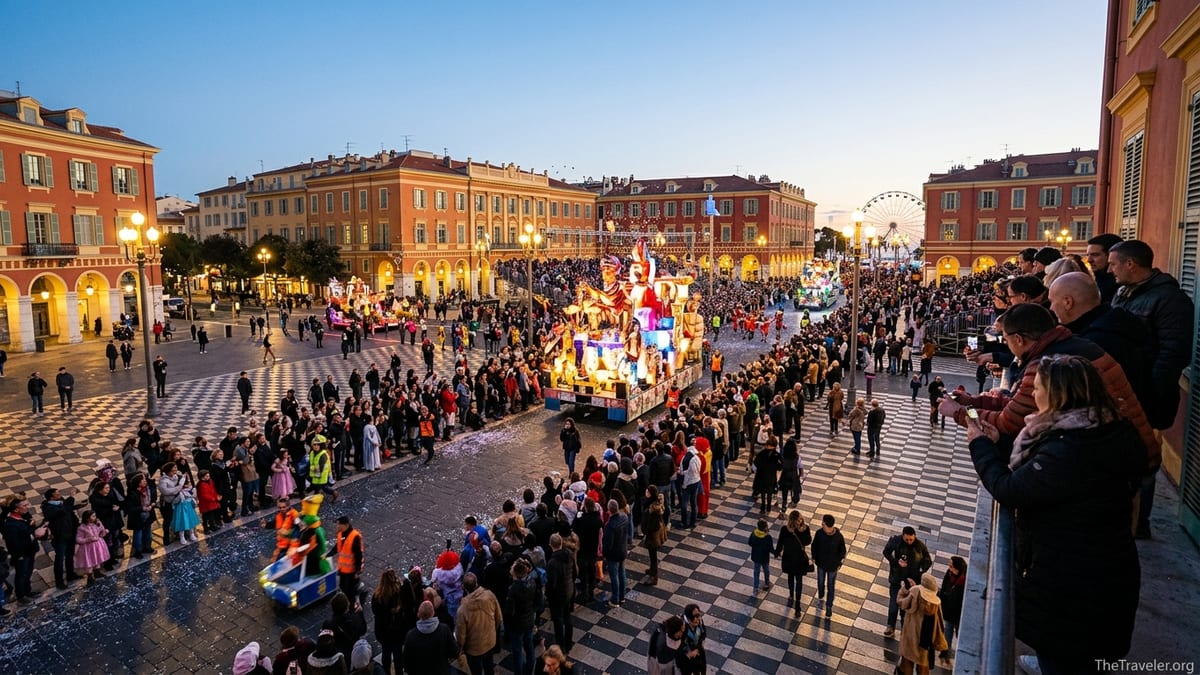
One of the biggest planning errors is treating Nice Carnival like a single weekend event instead of a multiweek festival with different types of parades. The carnival usually stretches over roughly two weeks in February, with daytime flower battles on the Promenade des Anglais, illuminated night parades around Place Masséna and additional themed evenings like Lou Queernaval, an LGBTQ+ friendly night. Travelers who only check “Nice Carnival” in passing often assume everything happens on a single Saturday and end up picking dates that do not align with the main parades they imagined.
A common real-world example involves visitors who fly in for a long weekend because that is when their budget airline offers good fares, only to discover that they have arrived between major events. One couple who booked a Friday to Monday stay timed to Valentine’s Day found that the only big parade during their visit was a weekday night they could not attend with young children. The lesson is simple: before booking flights, check the official carnival program for specific dates and times of each type of event, then build your trip around the parades you most want to see, not the other way around.
Another misunderstanding is not realizing that Nice Carnival is largely a ticketed, seated event rather than a free street party. First-time visitors expect a Brazilian-style open carnival where you can simply wander in and out of parades wherever you like. In Nice, access to the main circuit around Place Masséna is controlled, with grandstands and standing zones that require tickets, and security checks at all entrances. There are festive things happening elsewhere in the city, but if you want to be close to the floats and flower parades, you must plan ahead as you would for a concert or sports match.
Finally, travelers often assume that dates and schedules never change once announced. In reality, specific events can be adjusted, added or canceled due to weather or security constraints. A heavy rain forecast has already forced the rescheduling of evening parades in recent years. Booking your entire stay around a single night parade without allowing at least one backup evening in your schedule is a gamble. Flexibility of one or two extra nights in Nice can make the difference between missing the illuminated corso entirely and simply attending the following evening instead.
Booking the Wrong Accommodation in the Wrong Place
Accommodation mistakes around Nice Carnival tend to fall into two categories: booking too late or booking in the wrong area. Prices around Place Masséna, the Old Town and the seafront climb sharply once the program is published, especially for weekends. Hotels that might cost around 120 euros per night in January can easily push toward 250 to 300 euros or more during peak carnival dates. Many travelers decide to “wait and see,” only to find themselves forced into distant suburbs or generic airport hotels that require long tram rides at the end of each night.
Location is just as critical as price. It can be tempting to save 50 euros a night by booking a room several tram stops away in neighborhoods like Saint-Isidore or near the Allianz Riviera stadium, but this often proves a false economy once late-night crowds and potential tram delays are factored in. A practical target is to stay within walking distance of Place Masséna or at most a short ride on tram line 1 or line 2. For example, booking a studio near Jean Médecin or in the Carré d’Or area behind the Promenade des Anglais lets you walk back in 15 minutes after the night parade instead of fighting for a spot on a packed tram.
Another common misstep is underestimating noise. Some visitors book charming apartments directly overlooking Place Masséna or the main streets of the Old Town without realizing that parades, rehearsals and post-parade crowds can continue well into the evening. Families with young children and light sleepers often fare better a few streets back from the action, for instance around Boulevard Dubouchage, the Musiciens quarter or the residential streets behind the Negresco. Reading recent guest reviews that mention carnival specifically can be more informative than simply trusting the map location.
Finally, many travelers fail to check cancellation policies and minimum stays. During carnival, some hotels and vacation rentals impose three or four-night minimums or non-refundable rates. If the program changes or you later decide to adjust your dates, you may be locked in. When possible, choose semi-flexible rates from mainstream chains along the tram line, such as midrange business hotels north of the station or near Avenue Jean Médecin, where you maintain walkable access to the center without betting everything on one unchangeable reservation.
Leaving Tickets, Transport and Logistics to the Last Minute
Nice Carnival is a major logistical operation, and yet many travelers arrive assuming they can improvise everything on the day. One of the costliest mistakes is waiting until arrival to buy parade tickets, only to face sold-out evening corsi or only scattered seats in distant grandstands. While same-day ticket booths do exist near Place Masséna, availability during popular nights, especially Saturdays, can be limited. Booking online as soon as tickets are released gives you a clear view of seat categories and prices, which often start in the 20 to 30 euro range for standing areas and rise for central tribunes.
Transport is another area where improvisation backfires. Car rental might sound convenient, but during carnival many streets around the center are closed, on-street parking is drastically limited and underground car parks near Place Masséna fill early. Travelers who insist on driving often find themselves stuck in heavy traffic on the Promenade des Anglais or circling for half an hour before paying premium rates in distant parking garages. In contrast, tram line 2 from the airport to the city center and tram line 1 through the main shopping axe usually offer extended service during carnival, allowing visitors staying near stops like Masséna, Opéra Vieille Ville or Garibaldi to walk in and out of the controlled zone more easily.
Some visitors also forget that access to the parade circuit itself is strictly controlled and can require specific entrance gates indicated on the ticket. Travelers who show up at the wrong gate shortly before the start time may be redirected and end up missing part of the show. Security checks are thorough and queues can build rapidly. The official advice is to arrive up to two hours before the published start time, especially for night parades and for seats close to Place Masséna. Underestimating this leads to a familiar sight: latecomers sprinting down cordoned streets while the first floats are already passing.
On departure day, a classic logistical pitfall is pairing a very late-night parade with an early morning flight from Nice airport. Night parades and post-event crowds can keep you out until close to midnight, and special security around the center can affect taxi availability and traffic. Booking a flight at 7 a.m. the next morning might look efficient on paper, but in reality leaves you sleep deprived and vulnerable to any minor disruption, from a tram delay to a long check-in line. Leaving a buffer morning after your last big night parade, or at least scheduling a midday departure, significantly reduces stress.
Dressing for the Wrong Climate and Forgetting Practical Comfort
Because Nice is on the Mediterranean, many first-time visitors picture mild spring conditions and pack accordingly. In February, daytime temperatures can be pleasantly cool, often around 10 to 15 degrees Celsius, but evenings frequently feel much colder once you are sitting still in the stands or standing in light sea breezes off the Baie des Anges. Travelers who arrive with only a thin jacket and fashion sneakers often spend night parades shivering, cutting evenings short simply because they are too cold to enjoy the show.
Practical carnival attire means layers, closed shoes and at least one warm outer layer you would be comfortable wearing at a winter football match. A typical outfit might include a long-sleeved top, a sweater or fleece, a windproof coat, jeans or warm trousers, and socks thick enough for standing several hours on cool pavement. Even locals who appear in light outfits for daytime events often pull on heavier coats as soon as the sun goes down. Lightweight gloves, a scarf and a beanie can all make the difference between staying through the final float and heading back halfway.
Footwear is another underestimated detail. Many visitors dress as they would for a casual city break, in leather boots or trendy trainers not designed for long standing. Parades can last two hours or more, and if you are in a standing zone you may be on your feet well before the first float arrives. Shoes with good cushioning and grip are essential, especially if light rain leaves patches of the pavement slick from confetti and flower petals. It is better to appear slightly less stylish in photos than to end the night with sore feet and a twisted ankle a long walk from your hotel.
Costumes deserve specific mention because Nice Carnival offers free access to certain standing areas for anyone fully disguised from head to toe, within rules. A frequent mistake is assuming that a simple eye mask or colored hat qualifies as fully disguised. In practice, officials expect an entire outfit that clearly transforms your appearance, such as a full-body superhero suit, historical costume, or coordinated ensemble of wig, makeup, clothing and accessories. Visitors who rely on the “free if dressed up” policy without reading the fine print sometimes arrive with minimal accessories and end up queuing for paid tickets at the last minute. If you want to take advantage of the free access, invest in a proper costume before arrival or budget for tickets instead.
Ignoring Security Rules, Local Etiquette and Crowd Realities
In recent years, security at major French events has tightened significantly, and Nice Carnival is no exception. Yet many travelers still arrive with large backpacks, glass bottles or aerosols, assuming rules will be more relaxed than at airports or stadiums. Security checks at parade entrances typically prohibit bulky bags, hard-sided coolers, large bottles and certain costume items like realistic replica weapons. Turning up with a picnic basket full of glass wine bottles or a giant foam sword attached to your costume might lead to confiscation or refusal of entry. Checking the latest list of prohibited items before packing can prevent unpleasant surprises at the gate.
Another recurring issue is crowd behavior. Pickpocketing, while not rampant, does occur in dense carnival crowds, particularly around tram stops and in tight standing zones. Travelers who keep phones in back pockets, carry open tote bags or sling expensive cameras loosely on one shoulder are easy targets. A practical approach is to use a small, zippered crossbody bag worn in front, keep only essential cash and one card inside, and leave passports in a hotel safe. Families should also agree on a meeting point just outside the secured area in case someone becomes separated, for example near a recognizable statue on Place Masséna or a particular tram stop.
Local etiquette plays a role in how enjoyable your experience will be. Confetti, streamers and foam are part of the fun, especially for children, but there are unwritten rules. Spraying foam directly into strangers’ faces or throwing confetti handfuls at very small children is frowned upon. Many locals also prefer to keep steps, benches and statues free from people climbing on them, both for safety and respect for public spaces. Visitors who respect these norms tend to find locals more patient and welcoming, especially in bars and restaurants crowded before and after parades.
Finally, some travelers treat Nice Carnival as a purely tourist spectacle and ignore the fact that they are in a working city where residents still commute, shop and sleep. Staying aware of noise in residential streets after the parades, avoiding blocking tram doors so locals can board and not leaving heaps of takeaway containers on steps or in squares all contribute to a better atmosphere. In addition, France sometimes adds temporary security decrees around the carnival period, which can affect things like drone use or gatherings in specific zones. Checking a recent city information bulletin or asking at the tourist office on arrival helps you stay on the right side of local rules.
Overplanning the Carnival and Underplanning the Rest of the Trip
Many visitors pour all their energy into ticket choices and parade timings and forget they are staying in one of the most rewarding regions in France. The result is a schedule of back-to-back night parades with no time left to enjoy Nice itself or nearby day trips. A more balanced approach treats carnival parades as the evening centerpiece while leaving days relatively open for exploring the Promenade des Anglais, the Old Town markets and nearby coastal villages like Villefranche-sur-Mer, Antibes or Menton.
One typical pattern is a group booking three or four parade events in as many days, then discovering that they are exhausted by the second evening from late nights and early sightseeing starts. They spend the final parades half watching and half scrolling on phones, simply too tired to enjoy the spectacle. A more sustainable plan might include one flower parade, one illuminated night parade and possibly a themed evening, with at least one quiet night in between to stroll the Old Town, visit the Musée Matisse or simply enjoy a long dinner in a neighborhood bistro.
Another oversight is not considering regional transport when planning side trips. During carnival, trains along the Riviera line can fill quickly, especially on weekends, and ticket machines at Nice-Ville station may have queues. For example, a day trip to Menton for its famous citrus festival, which sometimes overlaps with Nice Carnival, sounds straightforward but can involve packed trains in both directions. Buying return tickets the day before, traveling slightly outside peak hours and considering buses when they offer direct routes helps keep day trips enjoyable instead of stressful.
Food planning also matters. It is easy to end up grabbing only quick snacks from festival stands near Place Masséna, paying a premium for basic sandwiches and fries. For a richer experience, plan at least one meal in a traditional Niçois restaurant, perhaps trying socca, a chickpea pancake cooked in a wood-fired oven, or a hearty daube niçoise stew if the weather is cool. Making dinner reservations for popular times, such as 7:30 to 8:30 p.m. on parade days, ensures you are not turned away from fully booked brasseries just as you need to eat before the night events.
The Takeaway
Planning a trip around Nice Carnival is not particularly complicated, but it does require treating the event with the same seriousness you might give a major concert or sports final. The most common mistakes tend to come from assumptions: assuming all events are free and casual, that Mediterranean winters are warm, that you can book a central hotel at the last minute or that security and crowds will be light. In reality, this is one of the biggest winter events in France, drawing large numbers of visitors and operating under strict organizational rules.
By checking exact dates and parade times before booking flights, choosing accommodation that balances proximity with comfort, securing tickets and transport in advance, packing practical winter clothing and staying aware of local rules and etiquette, you transform potential stress points into smooth background details. That leaves you free to focus on the essentials: the surreal floats towering over Place Masséna, the shower of flowers along the Promenade des Anglais and the rare pleasure of seeing the Côte d’Azur dressed not only in winter light, but in full carnival color.
FAQ
Q1. How far in advance should I book my Nice Carnival trip?
Booking three to six months in advance is sensible for popular weekends, especially if you want central accommodation near Place Masséna. For flexible midweek dates, two to three months may still offer good options, but parade tickets for prime grandstand seats should be secured as soon as they are released.
Q2. Is it possible to enjoy Nice Carnival without buying tickets?
Yes, you can feel the atmosphere in the streets, watch parts of the parades from a distance and enjoy smaller events, but access close to the main floats and the best viewing areas is usually ticketed. If you want to be in the heart of the action, plan on purchasing at least one or two parade tickets.
Q3. Where is the best area to stay during Nice Carnival?
The most practical areas are within walking distance of Place Masséna and the tram, such as the Carré d’Or, Jean Médecin, the edges of the Old Town and the streets between the station and the Promenade des Anglais. These locations balance convenient access with a manageable walk home after night parades.
Q4. Do I really need warm clothing for February in Nice?
Yes. While afternoons can feel mild, evenings sitting or standing at the parades can be cold, especially with sea breezes. A warm coat, layers, closed shoes and possibly gloves and a scarf will make the experience far more comfortable.
Q5. Can I get into the carnival for free if I dress up?
There is often free access to certain standing areas for visitors in full costume, but “full” means clearly disguised from head to toe. A simple mask or colorful hat is usually not enough. If you are unsure your outfit qualifies, budget for a ticket rather than relying on free entry.
Q6. Is driving and parking in central Nice a good idea during carnival?
Generally no. Road closures, diversions and full car parks make driving stressful and time-consuming. It is usually easier to rely on trams, buses, trains or walking, especially if you book accommodation along the main tram lines.
Q7. How safe is Nice during Carnival for solo travelers and families?
Nice is generally safe, including during carnival, but crowds increase the usual risks of petty theft. Use a small zippered bag, keep valuables to a minimum, be mindful around tram stops and in dense standing zones and agree on a meeting point if you are with others.
Q8. How many carnival events should I attend during a short stay?
For a three to four-night trip, many visitors find that one daytime flower parade and one illuminated night parade offer a satisfying experience without causing fatigue. You can then use other evenings for relaxed dinners or light exploring rather than scheduling parades every night.
Q9. Are restaurants and bars very crowded before and after parades?
Yes, places near the parade route, especially in the Old Town and around Place Masséna, become busy in the early evening and immediately after events. Booking dinner for a slightly earlier or later time and making reservations where possible helps you avoid long waits.
Q10. What is one mistake first-time visitors regret most?
Many first-timers say they underestimated either logistics or weather. Arriving at the last minute for parades without tickets or enough time for security checks, or attending night events without warm layers, are the two issues most likely to spoil the experience. Planning those details in advance pays off.