


For many travelers in North America and Europe, February 2027 will fall squarely in the coldest stretch of the year. It is also a month packed with school breaks, Carnival celebrations and Valentine’s getaways, all of which can push prices up across classic winter‑sun spots. Yet February remains one of the most rewarding months to travel if you know where the climate is reliably warm, when school holidays fall, and how to trade a little flexibility for far better value. The destinations below combine sunshine with realistic budgets and explain the key seasonal patterns to watch before you book.
Get the latest updates straight to your inbox!
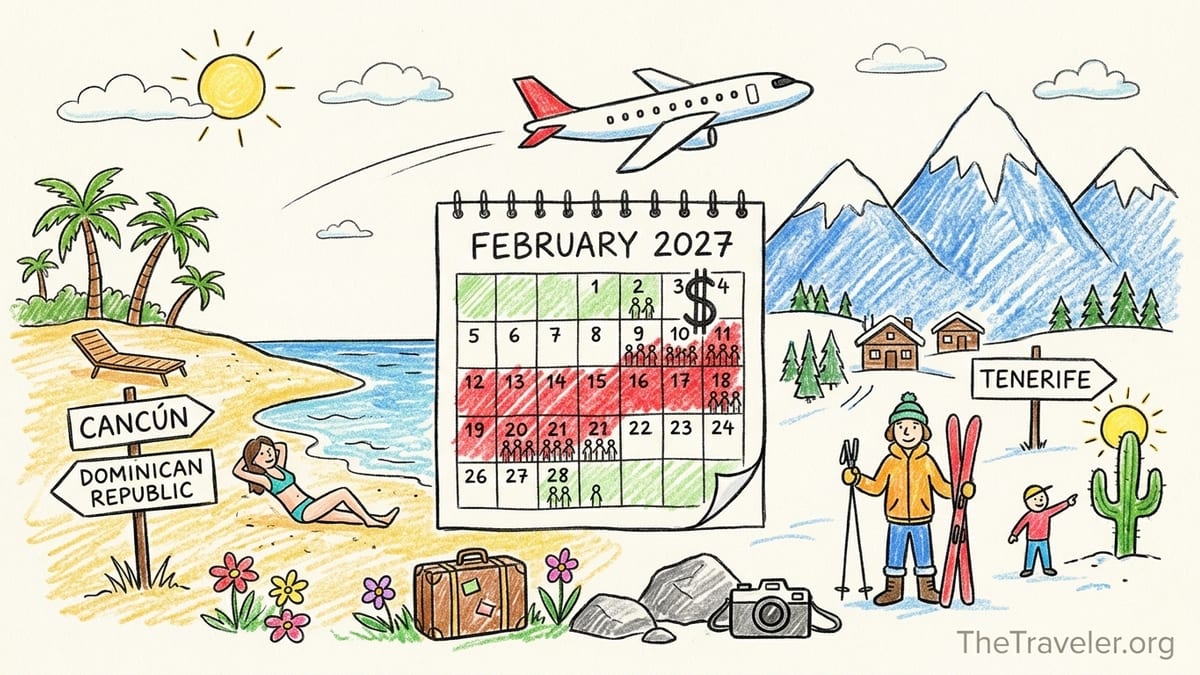
How February 2027’s calendar shapes prices and crowds
Before choosing a destination, it helps to understand how February 2027 is structured. In 2027, Presidents’ Day in the United States falls on Monday 15 February, which means many American schools schedule a mid‑winter break around the week of 13 to 21 February. Sample district calendars published for the 2026–27 school year show mid‑February breaks covering most of that period, which concentrates family travel demand on exactly those dates. On transatlantic and Caribbean routes, airfares in that week are often significantly higher than in late January or early March.
Across Europe, February is also a core school‑holiday month. Compilations of official calendars covering major countries such as France, Germany, the Netherlands and the United Kingdom show that from roughly 6 February to 7 March 2027 at least one large European country is on a winter break. In practice, that means popular ski resorts in the Alps, and winter‑sun package destinations like the Canary Islands and Egypt’s Red Sea coast, see heavier crowds and higher prices, especially around the middle two weeks of the month.
If your dates are flexible, you will usually find noticeably lower prices in the first week of February or in the final week that ends around 28 February. Travel analysts who track package‑holiday lead‑in prices for February 2027 already highlight that the cheapest deals from European airports tend to depart in those quieter weeks, with starting prices from roughly the equivalent of a couple of hundred US dollars per person for basic self‑catering stays in shorter‑haul destinations.
For long‑haul travelers from North America, another factor is that February is still technically high season in many tropical regions but just before the Easter peak in 2027. This can create a sweet spot, especially in places where the weather is dry and settled but demand has not yet reached March and April’s level. The trade‑off is that the most predictable climates and shortest flights, such as to the Caribbean, command higher fares, while better value often lies in slightly longer or less obvious routes.
Cancún and the Mexican Caribbean: classic winter sun with careful timing
The Mexican Caribbean remains one of the most popular warm‑weather escapes for February from both North America and Europe. Historical climate data for Cancún show average daytime highs around 28 to 29 degrees Celsius in February, with relatively low rainfall compared with the late‑summer and autumn wet season. The Atlantic hurricane season is long over by then, and conditions tend to be dry and breezy, which is ideal for days on the beach and excursions to sites such as Chichén Itzá or Tulum.
Because Cancún is so well connected, it is also one of the easiest places to reach at a manageable cost if you are flexible on dates. Recent fare snapshots for February 2027 collected by independent flight‑deal trackers show competitive round‑trip economy prices from major US hubs into Cancún, especially outside the Presidents’ Day week. From cities like Chicago or Dallas, sale fares under about 350 US dollars return have appeared for early‑February departures, while mid‑month often prices closer to or above 500 dollars as families lock in school‑break trips.
On the ground, Cancún and neighboring areas such as Playa del Carmen and Puerto Morelos span a wide budget range. At the lower end, simple guesthouses and non‑beachfront hotels can often be found in the region of 40 to 70 dollars per room per night for early February 2027, based on current listings and advance sales. All‑inclusive beachfront resorts closer to the main hotel zone can easily run several hundred dollars per night, particularly around Valentine’s Day, when couples’ packages are heavily marketed.
The main trade‑off here is between convenience and atmosphere. Large resorts along the hotel zone and Riviera Maya coast deliver predictable packages and keep most costs on a fixed basis, which suits travelers who prefer to know their budget upfront. Independent travelers willing to stay in downtown Cancún or in smaller coastal towns will usually find lower nightly rates and cheaper local restaurants, but may need to budget more time and a modest amount for local buses or taxis to reach the best beaches.
Canary Islands and southern Spain: European winter sun at shoulder‑season prices
For European and British travelers in particular, the Canary Islands are among the most reliable warm destinations in February. Long‑term weather statistics for Tenerife’s south coast, for example, show average February daytime highs in the low twenties Celsius, with many days feeling warmer in sheltered spots. Rainfall is limited and sea temperatures remain cool but swimmable for many visitors, especially on beaches protected from Atlantic swells.
Package‑holiday aggregators that monitor February 2027 departures from European airports already list the Canaries among the cheapest winter‑sun options, especially for departures in the first week of the month. Lead‑in prices advertised from the United Kingdom and Germany frequently start around the equivalent of 200 to 300 US dollars per person for one‑week packages in basic self‑catering or simple hotel accommodation, excluding checked luggage. During the peak European school‑holiday weeks in mid‑February, the same properties can price several tens of percent higher.
Southern mainland Spain, including areas such as the Costa del Sol and cities like Málaga, also remains relatively mild in February, with average highs usually in the mid‑teens Celsius and a mix of sunny and cooler days. While not as reliably beach‑worthy as the Canaries, these regions can offer strong value for travelers more interested in city sightseeing, tapas bars and day trips than in swimming. Off‑season hotel rates for February 2027 currently show many mid‑range rooms in central Málaga or nearby coastal towns priced well under 100 dollars per night, with occasional advance deals lower than that outside Carnival weekends.
For both the Canaries and southern Spain, the climate‑budget trade‑off is that you gain lower prices and shorter flights relative to long‑haul destinations, but you accept some variability in warmth. A sunny day in Tenerife or Gran Canaria may feel like early summer on a northern European beach, while a windy spell can feel more like spring and may encourage hiking or sightseeing rather than sunbathing. Travelers focused on guaranteed heat for pool days might still prefer the tropics, but those happy with light‑jacket evenings can stretch their budget further here.
Caribbean alternatives: Dominican Republic, Puerto Rico and secondary islands
Outside Cancún, February is part of the dry season for much of the northern Caribbean. Resorts in the Dominican Republic’s Punta Cana region market February as prime beach weather, with daytime temperatures near the mid‑ to high‑twenties Celsius and many days of sunshine. Independent monitoring by climate services confirms that the wettest months in this area tend to fall later in the year, from late summer into autumn, making February comparatively settled for outdoor activities and water sports.
From a budget perspective, the Dominican Republic often undercuts other Caribbean islands on package pricing because of its large all‑inclusive resort inventory. Travel‑deal sites analyzing February 2027 fares have found that packages combining charter flights from some US and Canadian cities with all‑inclusive stays in Punta Cana can sometimes be priced competitively with, or even below, self‑arranged trips to smaller islands. Entry‑level all‑inclusive deals outside the Presidents’ Day period have been advertised around the low hundreds of dollars per person for several nights, though headline prices usually apply only to specific airports and dates.
Puerto Rico, with San Juan as its main gateway, offers another appealing combination of warm weather and relatively good flight value from the mainland United States. In a recent analysis of February 2027 fares, San Juan emerged as one of the cheaper Caribbean destinations from certain US cities, with some economy round‑trips from Chicago quoted just above 200 dollars in limited sales. Once on the island, travelers can choose between historic urban neighborhoods, such as Old San Juan, and beach areas along the Isla Verde and Condado strips, with mid‑range hotels outside the most fashionable properties often running in the low to mid‑hundreds of dollars per night.
To keep overall costs manageable in the Caribbean, travelers in February 2027 might look beyond the most famous islands. Secondary destinations served by low‑cost carriers or regional airlines, such as Tobago or some of the smaller Dutch Caribbean islands, often have fewer large resorts but more guesthouses and apartment rentals. While flights can be less frequent and sometimes more expensive than to major hubs, day‑to‑day expenses for dining and activities can be noticeably lower, especially if you favor local restaurants and public beaches instead of private resort facilities.
Florida and the US Gulf Coast: warm escapes without passport hassles
For US‑based travelers seeking warmth without international travel formalities, southern and central Florida remain tried‑and‑tested options in February. Climate summaries for cities such as Miami and Key West indicate average February highs in the mid‑ to upper‑twenties Celsius, often with low humidity compared with the steamy summer wet season. The risk of tropical storms is at its lowest in winter, and many days are clear enough to combine beach time with outdoor dining and walking tours.
Domestic airfare within the United States can still spike around Presidents’ Day and major events such as the Miami International Boat Show or sports fixtures, but overall competition on key routes into Miami, Fort Lauderdale, Orlando and Tampa helps keep prices within reach outside those windows. Budget travelers who book several months ahead can often find round‑trip economy fares under 250 dollars from eastern seaboard cities for early‑February dates, while last‑minute holiday‑week bookings will tend to be higher.
Hotel pricing in Florida in February 2027 varies sharply by location. Beachfront properties in Miami Beach or Key West command premium rates, with many mid‑range hotels priced in the high hundreds of dollars per night around popular weekends. However, travelers willing to stay a few blocks inland, or to base themselves in less famous but still sunny destinations such as the Gulf Coast towns around Fort Myers or St. Petersburg, can often secure clean chain or independent hotels in the low to mid‑hundreds of dollars per night. Renting a car adds flexibility, particularly if you aim to explore state parks, wildlife refuges or a mix of towns over a week.
The main trade‑off in Florida is between convenience and crowds. The same mild weather that attracts visitors also brings conferences, festivals and a flow of domestic tourists escaping colder states. To keep both stress and spending lower, consider midweek arrivals and departures, and check local event calendars before locking in dates. Avoiding major festival weekends can shave a noticeable amount off nightly room rates while still delivering the same winter‑sun experience.
Southeast Asia: long‑haul flights, high value on the ground
For travelers able to commit to a longer trip, parts of Southeast Asia offer some of the strongest value in February 2027. Countries such as Thailand and Vietnam are in one of their main dry seasons, with many coastal regions experiencing warm, sunny weather. In southern Thailand, including destinations such as Phuket and Krabi, typical February daytime highs sit around the low thirties Celsius with relatively low rainfall, while central Vietnam’s beach areas, including Da Nang, are transitioning toward warmer, drier conditions.
The biggest cost element for visitors from North America or Europe is the intercontinental airfare. Return economy flights from major US or European hubs to Bangkok, Ho Chi Minh City or Singapore can run into several hundreds of dollars or more, with little seasonal discount around February because the region is also popular with regional travelers. However, once on the ground, daily expenses for accommodation, food and local transport remain significantly below those in most Western countries, according to comparisons compiled by travel‑cost aggregators in late 2026.
In concrete terms, city guesthouses and basic hotels in Bangkok, Chiang Mai or Ho Chi Minh City can often be booked for the equivalent of 20 to 40 US dollars per night in February 2027 based on current listings, while comfortable mid‑range hotels in central locations are widely available in the 50 to 100 dollar range. Street‑food meals and simple restaurant dishes commonly cost just a few dollars each. That means a traveler who invests in a higher airfare can, over a two‑week stay, see their average daily budget balance out to levels comparable with, or even lower than, a shorter holiday in Europe or the Caribbean.
The trade‑off here involves distance and time. A one‑week trip to Southeast Asia is rarely economical from North America once jet lag and travel days are factored in, but for a two‑week or longer escape, the combination of warm, reliable weather and low local prices can represent excellent value. Travelers should also keep an eye on entry requirements, such as visa rules and any remaining health‑related regulations, which can change between now and early 2027; official government sources are the most reliable place to check these details shortly before departure.
Southern hemisphere options: Brazil and beyond at the tail end of summer
In the southern hemisphere, February falls toward the end of summer. That makes parts of Brazil, particularly along the Atlantic coast, appealing for those chasing both warmth and cultural events. Coastal cities such as Rio de Janeiro and Salvador typically experience hot, humid conditions in February, with daytime highs in the high twenties or low thirties Celsius and a chance of heavy showers, but also many hours of sunshine. For beachgoers comfortable with summer heat, this period delivers classic tropical conditions.
February 2027 is also a Carnival season in Brazil and other countries with strong Carnival traditions. Carnival events typically cluster around late February or early March, depending on the date of Easter; in 2027, main celebrations and parades will be taking place in the latter part of February in many cities. This is a double‑edged sword for budget‑minded travelers: on one hand, it offers an extraordinary cultural experience, with samba schools in Rio and blocos, or street parties, in cities such as Salvador and Recife. On the other, accommodation prices in central and beachfront areas surge during the peak days, and minimum‑stay requirements are common in guesthouses and hotels.
Travelers who value affordability over experiencing Carnival at its height often choose either to arrive earlier in February and leave before the main parade days, or to base themselves away from the most famous neighborhoods. For example, staying in residential districts rather than directly on Rio’s Copacabana or Ipanema beachfront can reduce nightly rates substantially while still leaving you just a short metro or taxi ride from the festivities and the shore. Domestic flight networks within Brazil also make it relatively simple to combine a few days in a major city with time in a smaller coastal town where rates relax once local holidaymakers return to work and school.
Elsewhere in the southern hemisphere, certain regions of South Africa, coastal Australia and some Pacific islands can also deliver warm February weather. However, conditions vary widely between areas, and some locations face tropical cyclone risks at that time of year. Because of that, travelers considering these options for February 2027 should consult up‑to‑date climate information and, where relevant, local meteorological guidance closer to departure to understand the balance between warmth and weather‑related disruption risks.
Budget strategies and booking tips for February 2027
Across all of these destinations, the same few strategies help stretch a February 2027 budget further. The first is to be flexible on exact dates within the month. As school‑holiday calendars from North America and Europe show, the difference between traveling in the first week of February and the busiest mid‑month week around 13 to 21 February can amount to several hundred dollars in airfare and accommodation on the same routes. Shifting even by two or three days on either side of a public‑holiday weekend can move you from peak to shoulder pricing.
Second, consider mixing higher‑ and lower‑cost elements within a single trip instead of focusing only on headline airfares. For example, a traveler from New York might find that a non‑stop flight to Cancún in early February is slightly more expensive than a domestic flight to Florida, but that lower day‑to‑day costs in Mexico on food and lodging make the overall spend similar for a week. Conversely, a sale fare to a more distant destination, such as Lisbon with a connection on to the Canary Islands, could be paired with a self‑catering apartment and public‑transport transfers to keep the total lower than an all‑inclusive Caribbean resort that appears cheap upfront but bundles in extras.
Third, book cancellable or flexible rates where possible if you are planning far ahead. While many airlines and hotels still offer lower, non‑refundable prices, travel patterns can shift between now and February 2027, and having the option to adjust dates by a few days could allow you to take advantage of off‑peak periods or respond to updated school‑holiday calendars and event announcements. Monitoring prices across several weeks rather than booking on the first search can also reveal patterns, such as cheaper outbound flights midweek or better rates in business‑oriented hotels on weekends.
Finally, remember that “affordable” depends on where you are starting from, how long you stay and what you want to do once you arrive. A long‑haul destination such as Southeast Asia may look expensive because of the headline airfare but can end up cheaper on a per‑day basis for a longer break. A nearby resort area, whether in Florida or the Canary Islands, may deliver immediate winter sun with minimal travel time, but at a higher per‑night rate. By matching your own tolerance for flight length, your need for guaranteed heat, and your flexibility on dates, you can make February 2027 one of the best value months of the travel year.
Conclusion: choosing the right February 2027 escape
February 2027 offers a rich mix of options for travelers seeking warmth and value, from the dependable beaches of Cancún and the Dominican Republic to the more nuanced charms of the Canary Islands, Florida, Southeast Asia and Brazil. Each destination presents its own balance of climate reliability, cost and crowding, shaped by school holidays, Carnival dates and how easy it is to reach from your home airport.
The key is to treat February not as a single, uniform peak season but as a patchwork of micro‑seasons. The first and last weeks of the month often reward flexible travelers with quieter beaches and lower prices, while mid‑month brings lively festivals and busier resorts at a premium. By combining careful date selection, a willingness to look at secondary destinations and neighborhoods, and realistic expectations about how warm you need it to be, you can plan a February holiday that feels indulgent without overstraining your budget.
Whether you choose a passport‑free week in Florida, a Caribbean all‑inclusive, an apartment on a Canary Island cliff or a longer adventure in Southeast Asia or Brazil, February 2027 can still be your warmest and most affordable month of the year to travel. The earlier you start comparing climates, calendars and prices, the more options you will have to assemble a trip that fits both your wallet and your winter‑sun dreams.