


Reaching Los Angeles International Airport can be as challenging as the flight itself. Between new rail links, legacy shuttles, ever-busy freeways and the maze of curbside rules, choosing the right way to get to LAX can save serious time, money and stress. Here is a clear, on-the-ground guide to the main options: train, shuttle, taxi and rideshare, and when each one makes the most sense in 2026.
Get the latest updates straight to your inbox!
Understanding How Ground Access to LAX Works in 2026
Los Angeles is finally entering the era of real transit access to its main airport. As of summer 2026, travelers can reach the new LAX/Metro Transit Center station on both the C Line and K Line light rail, then transfer to a free airport shuttle that runs between the station and all terminals. The long‑promised automated people mover, now branded locally as SkyLink, is in late testing and expected to replace the shuttle with a direct train connection across the airport. Until that opens, the shuttle is the last step between rail and your terminal.
The LAX/Metro Transit Center, located at Aviation Boulevard and 96th Street, has become the central hub for buses, trains and future rail links to the terminals. It brings together the C Line from Norwalk, the K Line from Expo/Crenshaw through Inglewood and towards Redondo Beach, and a collection of municipal buses including Santa Monica’s Big Blue Bus, Culver CityBus, Beach Cities Transit, GTrans from Gardena and Torrance Transit. From this single hub, you can move between much of metropolitan Los Angeles and LAX with one or two transfers.
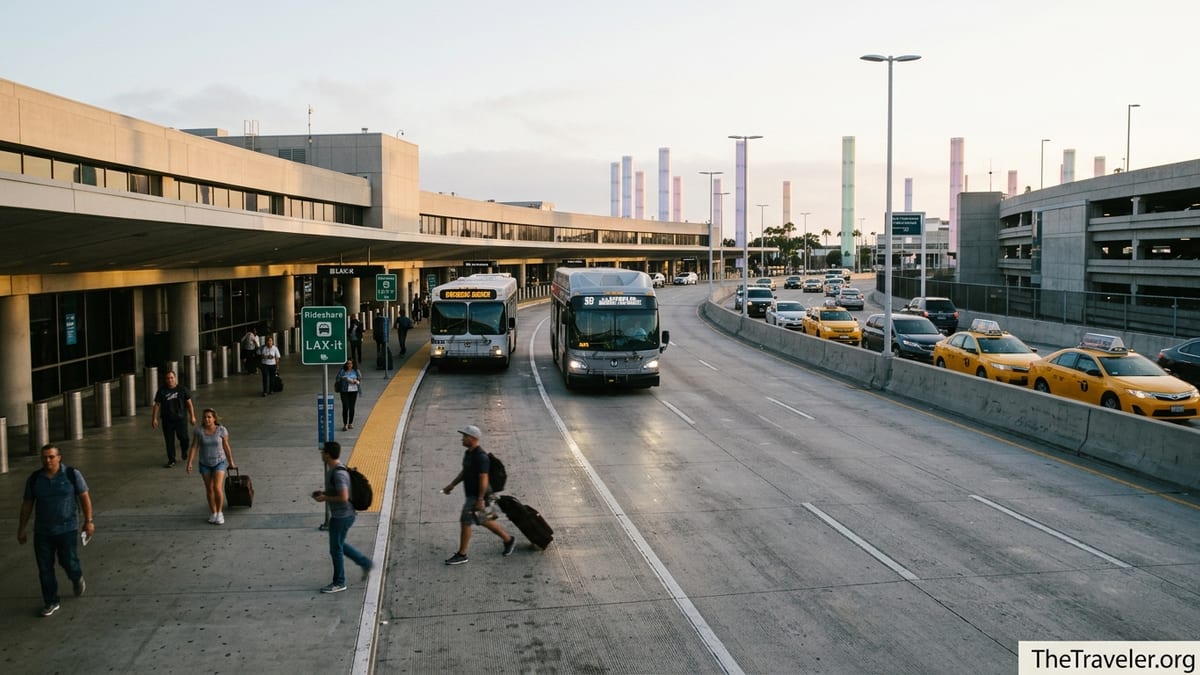
At the terminals themselves, the airport continues to use a horseshoe-shaped upper and lower roadway, with private vehicles and shuttles allowed to pick up and drop off at the curbs. Taxis and rideshare pickups, however, are funneled to a dedicated area called LAX-it, an outdoor lot just east of Terminal 1. Most travelers either walk or take a short green shuttle from the terminals to LAX-it when meeting their rideshare or taxi.
With these layers in mind, the key question becomes how much you are willing to trade money for time and comfort. A peak-hour taxi straight from Santa Monica to your terminal could cost more than a one-way sale fare to San Francisco, while a train plus shuttle combination might cost about what you would pay for a single local bus ride. Choosing wisely depends on where you are starting, when you are traveling and how much luggage you are carrying.
Taking the Train to LAX: Metro C Line and K Line
For many travelers, particularly solo passengers staying along the light rail corridors, train plus shuttle is now the best value way to reach LAX. The Metro C Line runs east–west from Norwalk to the LAX/Metro Transit Center, with connections to neighborhoods like Downey, South Gate, Lynwood and Hawthorne. The K Line runs from Expo/Crenshaw near the Expo light rail (with access to downtown Los Angeles and Santa Monica) down through Leimert Park, Inglewood and the new SoFi Stadium district before reaching the transit center.
A typical airport-bound trip might look like this: a traveler staying near downtown Los Angeles walks to 7th Street/Metro Center, takes the A or E Line to Willowbrook/Rosa Parks, transfers to the C Line, and rides directly to the LAX/Metro Transit Center. From there, they follow clear airport signage to the free shuttle bays and board a shuttle labeled for their terminal. The entire rail portion can often cost only a few dollars using a TAP card with stored value or passes, making it attractive for budget-conscious visitors and airport employees.
Another common route is from Santa Monica or the Westside. Someone staying near the Santa Monica Pier could take the E Line inland, transfer to the K Line at Expo/Crenshaw, continue to the LAX/Metro Transit Center, then hop on the shuttle. Compared with a rideshare during afternoon rush hour that might inch along the 10 and 405 freeways, the train journey offers a more predictable travel time, even if it requires a couple of transfers.
The main drawbacks of the rail option are luggage handling and late-night service patterns. Trains can be crowded at peak commuter hours, and carrying large checked suitcases onto a packed light rail car is not ideal. While Metro does run service into the late evening, frequencies can drop, meaning longer waits on platforms. Families with small children, travelers with mobility issues or those lugging ski bags or surfboards may find the train-shuttle combo more effort than it is worth, especially if they are not accustomed to urban transit.
Airport Shuttles and FlyAway Buses
Before the rail hub opened, dedicated airport buses were the most straightforward public transport to LAX, and they remain a strong option for many travelers. The best-known service is the LAX FlyAway, which currently runs non-stop routes from Union Station downtown and from Van Nuys in the San Fernando Valley to LAX. A typical adult fare is under 15 dollars one way, with children often discounted. For a downtown-based traveler staying near the Historic Core or Little Tokyo, walking or taking a short Metro ride to Union Station and boarding a FlyAway bus can be a simple, luggage-friendly choice.
FlyAway buses are designed with air travelers in mind, so you get under-floor luggage compartments, onboard restrooms on some vehicles and a direct drop-off at the terminal roadway. During most of the day, buses from Union Station run roughly every 30 to 60 minutes, though overnight and early-morning frequencies can be lower. The trip time can vary widely with traffic on the 110 and 105 freeways. At 10 a.m. on a weekday, you might make it from Union Station to LAX in around 45 minutes; at 5:30 p.m. on a Friday of a long weekend, the same route can take well over an hour.
In addition to FlyAway, a number of private shared ride shuttle companies operate between hotels or regional hubs and LAX. Examples include hotel-branded shuttles serving clusters like the Century Boulevard hotel row, the Manhattan Beach and El Segundo business district or large convention hotels in downtown Los Angeles and Anaheim. These shuttles are often free for hotel guests and run every 15 to 30 minutes, making them a reliable final leg if you choose to stay near the airport the night before an early flight.
For travelers coming from farther afield, such as Ventura County, Orange County or the Inland Empire, regional coach operators run pre-booked airport shuttles that pick up at designated park-and-ride lots or transit centers. While prices vary, a seat on one of these coaches can be significantly cheaper than a long rideshare journey, especially when pre-booked with a round-trip discount. They do, however, operate on fixed schedules, so you must plan your flight time and check-in carefully around bus departure times.
Taxi vs Rideshare: What to Expect at LAX
Taxis and rideshares remain the most door-to-door options for LAX access, but the airport’s curb management rules mean picking up a ride is less straightforward than at many other airports. Since the introduction of the LAX-it lot, arriving passengers who want a taxi or rideshare such as Uber or Lyft must either walk to the lot from Terminals 1, 2 and 3 or take a dedicated green shuttle from the arrivals level of any terminal. The walk from Terminal 1 can be under 10 minutes; from the Tom Bradley International Terminal it is longer and most passengers prefer the shuttle.
At LAX-it, rideshare passengers enter a series of signed zones based on their app’s instructions. During busy times, you might see dozens of vehicles circulating through pickup lanes, with airport staff directing both passengers and drivers. A late-night arrival from New York might mean only a few minutes’ wait for your car. Arriving at 9 p.m. on a Sunday when multiple international flights land at once can mean longer lines, even if you have already requested a ride in the app.
Taxis queue separately at LAX-it, and unlike rideshares, they have regulated rates and may offer flat fares to certain zones, such as downtown Los Angeles. A business traveler staying near the Los Angeles Convention Center, for example, might choose a traditional cab to avoid surge pricing during a major event or a sudden rainstorm. The meter can still climb quickly if traffic is heavy on the 110, but the predictable structure of the fare and the ability to pay by card or cash appeals to some passengers.
From most of central Los Angeles, it is common for a standard rideshare trip to LAX to cost anywhere from the price of a nice lunch to the price of a decent dinner for two, depending on distance, time of day and surge multipliers. For example, a midafternoon ride from Echo Park or Koreatown might be comparatively modest, while the same trip during a Friday rush hour or after a major concert at the Crypto.com arena could be double. Rideshare remains the most flexible option around the clock, but travelers should open the app and price their trip before committing, especially when traveling on a budget.
Driving Yourself, Parking and Hotel Park-and-Fly Options
Despite the growth of transit options, many Southern California residents still prefer to drive themselves to LAX. The airport operates multiple official parking facilities, including an economy parking structure east of the terminals with shuttle service, as well as premium garages closer to each terminal. Daily rates vary, with economy lots typically offering significantly lower prices than central terminal garages. For a week-long vacation, the difference between leaving your car in economy versus premium parking can often cover a nice meal at your destination.
Off-airport private parking lots on streets like Century Boulevard or near Sepulveda Boulevard compete aggressively on price, often bundling free shuttles to the terminals and amenities like car washes or oil changes while you travel. Reviews and service levels vary widely, so checking recent customer feedback is important. Some lots operate on a reservation-only basis during holidays and major events, such as the Super Bowl, international soccer tournaments or large conventions.
Hotel park-and-fly packages offer another hybrid option. Many airport hotels near LAX, including those on Century Boulevard and in nearby El Segundo, sell room packages that include up to a set number of days of parking. A family catching an early morning flight to Hawaii, for instance, could book a one-night stay at an airport hotel, leave their car in the hotel’s secured lot for the duration of their trip, and use the hotel’s shuttle to and from the airport. When you factor in the cost of a typical airport-area hotel room versus a week of independent parking, the math can favor park-and-fly, especially for longer trips.
The biggest challenge for those driving themselves remains unpredictability on the 405, 105 and surface streets feeding into the airport. A crash near the 105/405 interchange during afternoon rush hour can add 30 to 45 minutes to your drive without warning. Giving yourself a generous time buffer, especially for international departures or early boarding cutoffs, is essential if you are relying on your own car and parking.
How to Choose: Time, Budget, Luggage and Comfort
The best way to reach LAX is rarely one-size-fits-all. For a solo traveler staying in a downtown Los Angeles hotel, the combination of a short Metro ride to Union Station and the FlyAway bus can balance cost, simplicity and a luggage-friendly environment. Someone staying directly on the K Line corridor in Leimert Park, Hyde Park or Inglewood might find that tapping into the train plus shuttle is the obvious choice, with no need to worry about freeway traffic or parking.
For small groups or families, cost calculations shift. A family of four staying in West Hollywood, for example, might find that a single rideshare trip to LAX is competitive with, or even cheaper than, four individual FlyAway tickets plus the cost and time of getting to Union Station. On the other hand, that same family traveling at 4 p.m. on a weekday could spend a long time in freeway traffic, so they might choose to leave much earlier or book a hotel near the airport the night before.
Luggage and mobility also matter. A backpack-only traveler on a short city break from San Diego might happily take the train into Los Angeles, transfer to the C Line and ride the shuttle to LAX, relishing the lower cost and predictable timing. An older traveler with a large checked suitcase, a carry-on and a cane might place a much higher value on a point-to-point taxi or a friend dropping them at the terminal door, even at a higher cost.
Finally, time of day can dramatically alter the equation. Early-morning flights, particularly those departing before 7 a.m., can be challenging on public transit, depending on your starting point and how early trains and buses run from your neighborhood. Late-night arrivals may find that trains and some bus routes run less frequently, while rideshare prices can spike around bar closing times. Checking real-time transit schedules and rideshare estimates the day before travel is one of the simplest ways to avoid unpleasant surprises.
Practical Tips for a Smooth Arrival at LAX
Regardless of how you reach LAX, a bit of planning goes a long way. If you are using Metro rail, look up the current schedules for the C and K Lines and note any planned weekend construction or service changes. Build in extra time for transfers, especially if you are unfamiliar with key hubs such as Willowbrook/Rosa Parks or Expo/Crenshaw. When you reach the LAX/Metro Transit Center, follow the large airport pictograms and directional signs to the shuttle bays and confirm with the driver that the bus serves your terminal.
For FlyAway or regional shuttles, purchase or reserve tickets in advance when possible, and double-check the pickup location. At Union Station, for example, the FlyAway bus uses a particular bay in the bus plaza; walking to the wrong side of the station can cost you valuable minutes. During peak holiday travel periods like Thanksgiving week or the December holidays, arrive at the bus stop one or two departures earlier than you think you need in case a bus fills up.
Rideshare and taxi users should confirm pickup rules before they land. Since rideshare drop-offs still occur directly at the terminals but pickups are routed to LAX-it, some visitors are caught off guard when they step outside and cannot see their app-branded vehicles at the curb. After collecting your baggage, follow signs for LAX-it or the green shuttle icons. Once at LAX-it, wait to request your ride until you are in the designated zone to avoid your driver looping unnecessarily or cancelling.
If you are driving and parking, pre-booking is becoming more important. Many official airport parking structures and off-airport lots now allow advance reservations that lock in a rate and guarantee a space. This can be especially useful before holiday weekends or marquee events, such as an international soccer match at SoFi Stadium or a major festival at the Hollywood Bowl, when both local and visitor traffic spikes. Keep a photo of your parking location and shuttle stop on your phone so the return journey is less stressful.
The Takeaway
Los Angeles has long been known as a car-first city, but in 2026, there has never been a wider range of ways to reach LAX. Trains on the C and K Lines feeding into the LAX/Metro Transit Center make airport access viable for many more neighborhoods. The FlyAway bus and regional shuttles continue to provide luggage-friendly rides from key hubs like Union Station and Van Nuys. Taxis and rideshares offer door-to-door convenience, albeit at potentially high and variable prices, while driving and parking remains the preferred option for many local residents.
The right choice for you will depend on where you are staying, how much time you have, what you are willing to spend and how you feel about navigating transfers with your baggage. A traveler spending a week in downtown Los Angeles might build their airport trip around rail and the FlyAway. A family based in the Valley could compare the cost of a rideshare to Van Nuys versus driving and parking for the duration of their vacation. By weighing your priorities against the strengths of each mode, you can turn what is often the most stressful part of a trip into a routine, even pleasant, experience.
As the SkyLink people mover begins full service and more visitors arrive for upcoming global events, LAX will only become more connected to the city around it. Learning the basics of trains, shuttles, taxis and rideshares today will pay off on every flight you take tomorrow.
FAQ
Q1. What is the cheapest way to get to LAX right now?
The least expensive options are usually Metro rail to the LAX/Metro Transit Center plus the free airport shuttle, or local buses that connect to the same hub. These can cost only a few dollars, but they require more time and luggage handling than door-to-door services.
Q2. Is the automated people mover to the LAX terminals open yet?
As of mid-2026, the automated people mover connecting the LAX/Metro Transit Center to all terminals is still in testing. Travelers currently use free shuttle buses between the station and the terminals, with the train system expected to replace them once fully launched.
Q3. How early should I arrive at LAX if I am taking public transit?
For domestic flights, aim to reach your terminal at least two hours before departure, and for international flights at least three. When using trains or buses, add an extra 30 to 60 minutes to your usual airport arrival target to allow for transfers, possible delays and finding your way at the transit center.
Q4. Where do I pick up Uber or Lyft at LAX?
Rideshare pickups take place at the LAX-it lot, not directly at the terminal curb. After collecting luggage, follow signs for LAX-it or board the green shuttle from the arrivals level. Once there, open your app, follow the zone instructions and meet your driver in the designated pickup lane.
Q5. Are taxis still available directly at the terminals?
Most standard taxi pickups have also been consolidated at the LAX-it lot. Taxis queue in a separate area there, and you can line up and board the next available cab. Some specialized services may operate differently, but for most visitors, LAX-it is the main taxi pickup point.
Q6. Is the FlyAway bus from Union Station a good option?
Yes, the FlyAway from Union Station is a strong choice if you are staying downtown or can easily reach the station by Metro. It offers a simple, mostly non-stop ride with space for luggage and predictable fares. Travel time depends on freeway traffic, so give yourself a generous buffer, especially during rush hours.
Q7. Should I drive and park at LAX or use a rideshare?
For short trips of a few days, rideshare can be cheaper and more convenient than paying for parking, particularly if you live far from the airport. For longer trips or for households traveling together, airport parking or a hotel park-and-fly package can be more economical, especially if you find discounted rates by booking ahead.
Q8. Is taking the train to LAX safe with luggage?
Many people, including airport employees, use Metro rail with luggage every day. As in any big city, stay aware of your surroundings, keep valuables close and avoid blocking doors with bags. Traveling outside of the most crowded rush-hour periods can make the experience more comfortable.
Q9. What if my flight leaves very early in the morning?
For flights departing before about 7 a.m., public transit options may be limited depending on your starting point. In those cases, consider staying at an airport hotel with a shuttle, booking a taxi or rideshare, or arranging for a friend or family member to drive you. Always check transit schedules for your specific date and time.
Q10. How much extra time should I allow for traffic when driving to LAX?
On weekdays, adding 30 to 60 minutes of buffer time is wise, especially if you must use the 405 or 105 freeways at peak hours. During holidays, major concerts or sporting events, add even more time. It is better to arrive early and relax in the terminal than risk missing your flight because of an unexpected jam.