


More news on this day
Germany and Belgium are emerging as early European leaders in the shift to next-generation in-flight connectivity, as Lufthansa Group and Brussels Airlines move to equip fleets with Starlink WiFi that promises home-style broadband speeds at 35,000 feet.
Get the latest news straight to your inbox!
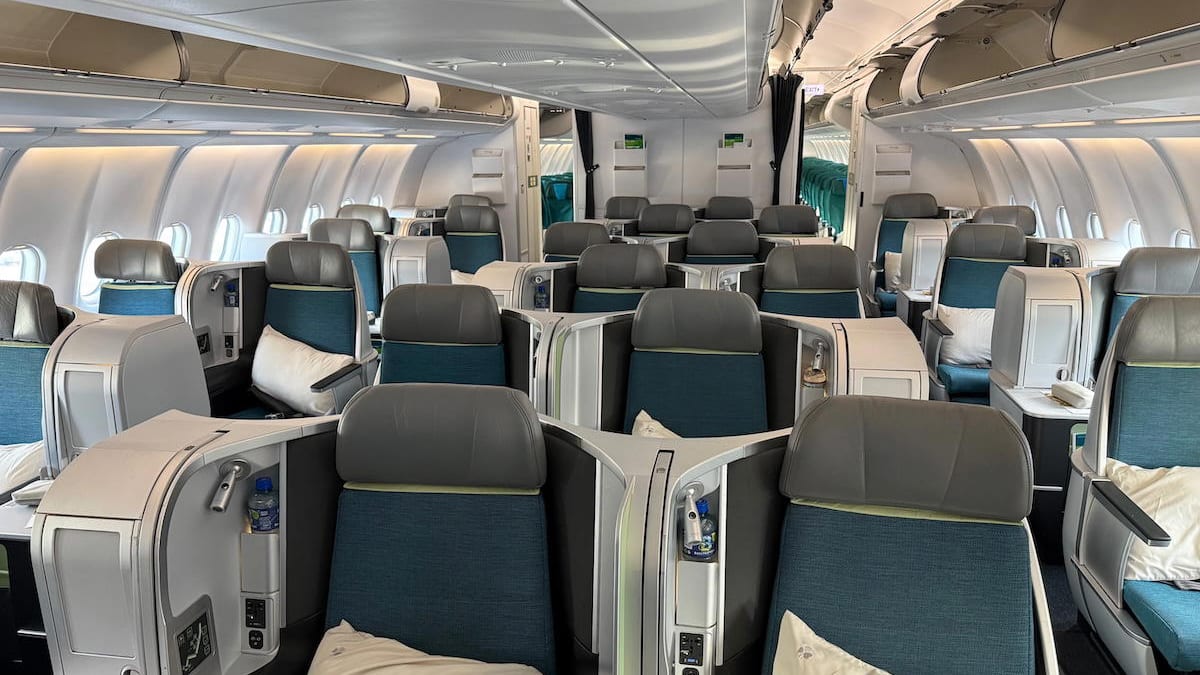
Lufthansa Group Bets on Starlink to Fix Patchy In-Flight Internet
Lufthansa Group, headquartered in Germany, is moving to overhaul its reputation for slow and inconsistent onboard WiFi by committing to Starlink across its airlines. Publicly available information indicates that the group plans to roll out the low Earth orbit satellite service on a large share of its short- and long-haul aircraft over the next two years, replacing or supplementing legacy systems that have frustrated passengers for years.
The strategy positions Lufthansa as one of Europe’s largest adopters of Starlink for commercial aviation. Early indications suggest that initial installations are focusing on newer Airbus A320neo aircraft, with additional types to follow as certification progresses. Aviation tracking and company material point to mid-2026 as a milestone period, when the first reconfigured jets with “Lufthansa Group Wi-Fi powered by Starlink” begin operating scheduled services from German hubs.
For travelers, the upgrade is being framed as a shift from basic messaging connectivity to full broadband that can support video streaming, file uploads, and cloud-based work. Speed tests reported from other Starlink-equipped airlines show triple-digit megabit downloads in cruise, a step change compared with many of the single-digit megabit connections still common over Europe. The expectation is that German travelers who have learned to treat Lufthansa WiFi as unreliable will notice a clear difference on Starlink-equipped aircraft.
Lufthansa Group’s move also reflects a broader recalibration of how European carriers approach connectivity. After years of incremental improvements to older satellite and air-to-ground systems, the decision to adopt Starlink signals that Germany’s flagship airline group sees high-speed, low-latency broadband as a competitive necessity rather than an optional extra.
Brussels Airlines Turns Starlink into a Passenger Perk
In Belgium, Brussels Airlines is pairing Starlink with a different message: free, fast WiFi as a core part of its refreshed onboard experience. Company press material describes plans to provide complimentary high-speed connectivity for all passengers, not just premium cabins, as Starlink hardware is installed on its fleet in phases from 2026.
The Belgian flag carrier, part of the Lufthansa Group, has framed the Starlink upgrade as a pillar of a broader product revamp that includes new interiors and a refreshed lounge in Brussels. Reports indicate that the airline aims to use reliable WiFi as a key differentiator on European routes where competitors still charge by the megabyte or offer only limited messaging packages. By bundling connectivity into the fare, Brussels Airlines is trying to reposition itself as a tech-forward carrier in a crowded short-haul market.
Travel-industry analyses suggest that making WiFi free can meaningfully influence booking decisions for business travelers who need to work in transit, as well as younger leisure passengers who expect continuous access to social media and messaging. For Belgium, having its national airline associated with one of the most advanced connectivity solutions in the air also carries a reputational dimension, aligning the country’s main hub with the aviation tech upgrades rolling out in North America, the Middle East and parts of Asia.
The challenge for Brussels Airlines will be managing expectations as installations ramp up. Starlink availability is tied to individual aircraft, not entire route networks, so some flights may offer the new service while others rely on older systems until the retrofit program is complete. Communicating clearly about where and when Starlink is available will be central to preserving passenger trust.
What Starlink Changes for Travelers in the Air
Starlink’s low Earth orbit design is at the heart of its appeal for airlines in Germany, Belgium and beyond. Unlike traditional geostationary satellite systems that sit tens of thousands of kilometers above Earth, Starlink satellites orbit much closer, which reduces latency and makes real-time tasks such as video calls and cloud collaboration far more practical. For travelers, that translates into web browsing and app usage that feels closer to a home connection than to the lag-prone links many flyers have learned to tolerate.
Technical documentation and early performance studies of Starlink Aviation report sustained speeds sufficient for simultaneous streaming, gaming and large file transfers on test flights. While these peak numbers can fluctuate depending on satellite coverage and network load, the consistency appears to be improving as additional satellites are launched and aviation-optimized beams are fine-tuned. For passengers, the most visible difference may be that common pain points, such as losing connectivity during takeoff, landing or over busy air corridors, become less frequent.
There are also operational benefits in the cockpit and cabin. More reliable broadband links can support real-time weather and routing updates, digital maintenance reporting, and more detailed customer service tools for crew. Analysts note that airlines in Germany and Belgium are likely to use the same Starlink pipe that carries passenger traffic to enhance internal communications and operational efficiency, potentially reducing delays and improving schedule recovery during disruptions.
However, observers caution that better connectivity does not automatically mean an unrestricted experience. Many airlines adopting high-speed WiFi still choose to restrict certain uses such as voice calls to preserve cabin calm, and fair-use policies may limit very heavy data consumption. Travelers boarding Starlink-equipped flights from Frankfurt, Munich or Brussels can expect a step change in capability but not always a completely unfiltered internet experience.
Europe’s Competitive Race for Connected Skies
The decisions in Germany and Belgium come as European aviation enters a competitive race over connectivity. Some groups are aligning with hybrid models that blend satellite with ground-based networks, while others are doubling down on new-generation satellite partners such as Starlink. Industry reports show that airlines across the region are weighing trade-offs in hardware weight, installation time, licensing and long-term bandwidth costs as they choose a path.
Lufthansa Group’s choice to scale Starlink, paired with Brussels Airlines’ free WiFi strategy, sends a signal that leading carriers in central Europe see value in aligning with the same technology stack being adopted by major airlines in North America and the Gulf. For travelers, this integration could mean a more consistent experience on long-haul itineraries that combine German or Belgian segments with connecting flights on other Starlink-equipped airlines.
At the same time, resistance remains. Some European low-cost carriers have publicly argued that the additional drag and fuel burn from large satellite antennas do not justify the investment, especially on short sectors where passengers may be willing to remain offline. That divide underscores a widening gap between full-service networks that market connectivity as part of a premium product, and budget airlines that continue to prioritize ultra-low operating costs over digital amenities.
Regulators and consumer groups are also watching closely. As high-speed WiFi becomes more common in the skies above Germany, Belgium and neighboring states, questions about privacy, data usage and potential congestion from streaming-heavy behavior are likely to surface. How airlines design their terms of service, and how transparently they communicate bandwidth limitations, could shape public perception of this new phase of connected travel.
What Travelers Should Expect on Upcoming Flights
For passengers flying from airports such as Frankfurt, Munich, Brussels and other European hubs, the transition to Starlink will be gradual rather than overnight. Retrofit schedules, aircraft rotations and certification timelines mean that a mix of connectivity experiences will coexist on German and Belgian carriers over the next several seasons. Travelers may find that one leg of a journey offers near home-quality WiFi while another still relies on older systems.
Experts advise that passengers check airline communications carefully when booking, as some carriers are beginning to indicate when specific routes or aircraft types are equipped with upgraded WiFi. Within Germany and Belgium, this may initially be most common on flagship routes and newer aircraft, with regional and lower-density services following later as hardware and installation slots become available.
For those who do find themselves on a Starlink-equipped flight, early user accounts from other markets suggest practical benefits: the ability to join video meetings in the air, quickly download work documents, or stream entertainment without constant buffering. At the same time, travelers are encouraged to bring offline backups, such as downloaded playlists or documents, as even advanced satellite systems can be affected by weather, congestion or routing over less-covered regions.
As Lufthansa Group and Brussels Airlines advance their respective rollouts, Germany and Belgium are poised to become reference points for how Europe implements the next generation of in-flight connectivity. The outcome will help determine whether fast, reliable WiFi becomes a new baseline expectation for air travel in the region, or remains a premium differentiator concentrated on selected fleets and routes.