


Few sights define the Bay of Naples like the dark cone of Mount Vesuvius rising behind the city. Standing on its crater rim, looking down into the volcano that buried Pompeii and across the bay to Capri and the Amalfi Coast, is one of southern Italy’s most memorable experiences. Visiting Vesuvius, however, is not as simple as hopping on a single cable car. Trains, shuttle buses, timed tickets and changeable weather all play a role. This guide breaks down the most reliable, up to date ways to visit Mount Vesuvius from Naples for hiking and crater views, with concrete examples to help you plan a smooth day out.
Get the latest updates straight to your inbox!
Understanding Mount Vesuvius and the National Park
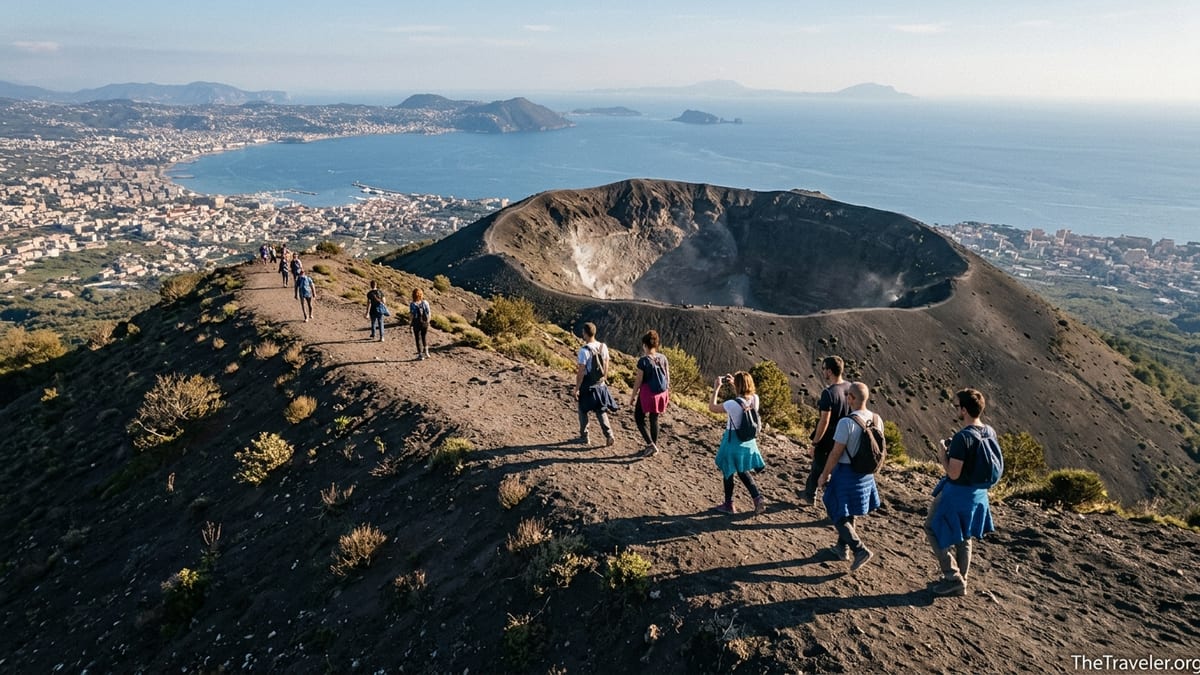
Mount Vesuvius sits about 12 kilometers southeast of central Naples, within Vesuvius National Park. The volcano is still considered active, though its last eruption was in 1944. Today, most visitors come to walk the “Gran Cono” path along the rim of the main crater at roughly 1,200 meters above sea level. The park also protects older volcanic formations such as Monte Somma, plus a network of nature trails lower down, but the classic experience for first-time visitors is the short but steep walk from the upper parking area to the crater edge with panoramic views of the bay.
Access to the crater area is controlled and ticketed. You cannot simply arrive at the summit by car or regular bus without a valid entry slot. The upper road finishes at about 1,000 meters, where shuttles and taxis drop you near a gate and a small cluster of kiosks. From there, a wide cinder path climbs the final 20 to 30 minutes to the rim. On the edge, basic facilities include a few wooden shelters, small souvenir stands and informal park guides who offer short explanations about the volcano in Italian and English, generally included in the ticket price.
Vesuvius is best thought of as a half-day mountain excursion, not just another city attraction. While some travelers combine it with Pompeii or Herculaneum, the logistics involve at least one train journey, an uphill shuttle and walking on uneven volcanic gravel. In peak summer, heat and crowds can make it more tiring than many visitors expect. Planning your route from Naples, choosing your time slot and packing appropriately will determine whether the day feels effortless or frustrating.
Park regulations and transport timetables are reviewed regularly, and capacity at the crater is limited to avoid overcrowding. That means that what worked smoothly for a friend two years ago may no longer be the best option. As of mid 2026, the general patterns are stable: timed online tickets for the crater, train connections from Naples to Ercolano or Pompeii, and a mix of public shuttles and private tour buses climbing the final stretch.
Getting from Naples to Mount Vesuvius: Main Options
Most visitors start from Napoli Centrale or the adjacent Piazza Garibaldi station. From here, the Circumvesuviana suburban trains and the more comfortable Campania Express connect Naples with Ercolano Scavi and Pompei Villa dei Misteri, the two main jumping-off points for Vesuvius. A standard Circumvesuviana ticket from Naples to Ercolano typically costs just a few euros one way and takes about 20 to 25 minutes, while the Campania Express charges a higher fare in exchange for air conditioning and guaranteed seating.
The most common independent route is Naples to Ercolano Scavi by train, then a dedicated shuttle such as Vesuvio Express from just outside the station up to near the crater trailhead. Round trip packages that bundle bus transport and crater admission usually fall in the 25 to 35 euro range per adult, depending on season and inclusions. Travelers might, for example, pay around 30 euros for a combined Vesuvio Express bus plus official park entry ticket purchased on the day in Ercolano, compared with buying the train ticket from Naples separately at the station ticket office for a few euros.
An alternative is to ride the same Naples to Sorrento line a bit farther to Pompei Villa dei Misteri. From there, regional EAV buses and a few private shuttles operate up to Vesuvius. In practice, many travelers choose Ercolano because the ride to the volcano is slightly shorter and the Vesuvio Express service is straightforward to find across from the station. That said, if your main interest is visiting Pompeii first, especially on a hot day, boarding an EAV bus to Vesuvius directly from the ruins saves backtracking.
There are also direct excursion buses from Naples that include round trip transport by coach to Vesuvius, often sold through major ticket aggregators and local agencies. These buses typically depart from central meeting points near the port or main station, cost somewhere between 40 and 70 euros depending on whether they include entrance fees and a guide, and are ideal for travelers who prefer to avoid navigating local trains and public buses at all.
Public Transport vs Organized Tours
Choosing between independent travel and an organized tour usually comes down to budget, confidence with Italian public transport and how much you value flexibility. Public transport is the cheapest option. A realistic independent itinerary might involve a 2 euro train ticket from Napoli Garibaldi to Ercolano Scavi, about 30 euros for a combined Vesuvio Express bus and entry, and the same small train fare back to Naples. In total, many visitors spend around 35 euros per person using this method, plus any snacks or coffee at kiosks near the station or on the mountain.
In contrast, a mid-range group tour from Naples that covers Vesuvius alone might cost around 50 to 60 euros and include coach transport, skip-the-line entry and a tour leader to manage timings. More elaborate full-day trips combine Pompeii and Vesuvius for roughly 90 to 140 euros per person, with hotel pick up, entry to the ruins and sometimes lunch or wine tasting. For instance, several Naples-based operators advertise full-day “Pompeii and Mount Vesuvius” excursions leaving the city around 8:30 a.m., spending the morning in the archaeological site with a licensed guide and then continuing by minibus to the crater for an afternoon hike.
The main advantage of going independently is that you can set your own pace. If you want to be at the crater as early as possible for clearer skies and cooler temperatures, you can aim for a morning train to Ercolano, hop on the first shuttle, hike to the rim and be back in Naples by early afternoon. This works well for backpackers, solo travelers and families who are comfortable managing tickets and schedules. Independent travelers also avoid the sometimes rushed feeling of large groups, where time at the crater can be limited to 60 or 90 minutes before the bus departs.
Guided tours, on the other hand, greatly reduce the chance of missed connections or confusion over which bus to take. For travelers unfamiliar with the Italian language or stressed by crowds at busy stations, paying extra for a coach that departs from a clear meeting point in central Naples and returns you there at a fixed time can be worth the premium. Tours are also a safer bet in shoulder seasons when some public services run less frequently. A couple visiting in early April, for example, might find that a scheduled tour is the only option that comfortably fits both Pompeii and Vesuvius into a single daylight window without long waits between buses.
Tickets, Timed Entry and Practical Logistics
Entry to the crater area of Mount Vesuvius works on a timed ticket system managed through official park channels and their appointed dealers. Visitors reserve a specific time slot, typically in 10-minute increments, during which they can pass the automatic entry gates at the top. There is usually a grace period that allows arrival a bit before and after the chosen time, but you are expected to reach the gate on the correct day and roughly the correct hour. During peak summer days, the most popular late morning and early afternoon slots can sell out in advance, particularly when cruise ships are in port in Naples.
Some shuttle services like Vesuvio Express in Ercolano sell combined bus and entry packages. In that case, staff coordinate your time slot with their departure schedule, often bundling a return bus around two hours after arrival at the crater. If you buy the crater ticket yourself online through the official vendor, you should time your train and bus accordingly. For example, if you hold a 11:40 entry slot, a sensible plan might be to catch a 9:50 or 10:10 Circumvesuviana from Naples, board a 10:45 shuttle in Ercolano and reach the park gate around 11:30, allowing for minor delays.
Last minute tickets are sometimes released on the day, including additional slots visible only when you are physically near the park. Accounts from recent travelers describe buying same-day tickets via their phones using the free park Wi-Fi once they had already reached the upper parking area. This system is not guaranteed and depends on availability, network reliability and park policy at the time of your visit, so it is wise not to rely solely on last minute releases if your schedule is tight or you are visiting in high season.
Regardless of how you purchase your ticket, you will need an electronic copy or printed voucher to scan at the entry gate. Mobile reception on the upper slopes can be patchy, so saving your ticket as a screenshot before leaving Ercolano or Pompeii is a simple safeguard. Remember also that shuttle and bus tickets are separate from crater entry unless specifically sold as a package. It is common to see travelers arrive at the national park parking area on a bus or in a taxi but then queue at a kiosk to buy their crater tickets online before they can pass through the turnstiles.
Hiking the Gran Cono Trail and Enjoying the Views
The classic Gran Cono trail from the upper access point to the crater rim is not a long hike in distance, but it can feel demanding if you are not used to walking uphill. The path is roughly 800 to 1,000 meters one way with a steady gradient on loose volcanic ash and gravel. Most visitors take between 20 and 40 minutes to reach the top, depending on fitness and how often they stop to catch their breath or take photos. The surface is uneven in places, so sturdy walking shoes or trainers with good grip are far better than sandals or smooth-soled city shoes.
As you climb, views open over the Bay of Naples, the island of Capri in the distance, and the ribbon of urban sprawl that surrounds the mountain. On clear days, the light can be harsh around midday, while early morning and late afternoon bring softer colors and longer shadows along the crater rim. In summer, temperatures are significantly cooler at altitude than in central Naples, but there is often strong sun and minimal shade. In winter, days can be brisk or even cold, with occasional snow patches lingering near the top, so a windproof layer, hat and gloves can make the experience much more pleasant.
At several points along the rim, informal park guides stand by the path and offer short explanations about the volcano’s history and geology, often gathering small groups of visitors for 5 or 10 minutes at a time. These talks are usually included in the entry ticket and are a good opportunity to learn about the 79 AD eruption that destroyed Pompeii and Herculaneum, the more recent 20th century eruptions and the extensive monitoring system that tracks the volcano today. After listening, you can continue walking along the accessible portion of the rim to look directly down into the crater, where you may see wisps of steam depending on recent conditions.
Facilities at the top are basic but sufficient for a short visit. Small wooden kiosks sell bottled water, coffee, packaged snacks and simple souvenirs such as postcards and volcanic rock samples. Prices are higher than in Naples, so it is sensible to bring your own reusable bottle and a few snacks purchased beforehand at a city supermarket or bar. There are usually portable toilets near the entry area and sometimes at intermediate points along the path. Plan to spend about 60 to 90 minutes at the crater if you want time to walk portions of the rim in both directions, take photographs and simply sit and enjoy the view.
Weather, Safety and Seasonal Considerations
Because Mount Vesuvius rises directly from the coastal plain, weather can change quickly. Strong winds, fog and heavy rain can force the park authorities to close the crater path with little notice. In such cases, shuttles may still take visitors up to the upper parking areas, but access beyond the entry gate may be restricted. When conditions are unstable, booking a flexible tour that offers partial refunds or alternative itineraries can help protect your plans. Independent travelers should check forecast information for Ercolano or the Vesuvian area on the morning of their visit and be prepared to adjust.
Summer, particularly July and August, brings high temperatures and heavy crowds. Daytime highs in Naples often climb above 30 degrees Celsius, and though it is cooler at altitude, the trail can feel hot and dusty by late morning. In this period, an early train from Naples and a morning crater time slot are strongly recommended. Shoulder seasons like late April, May, September and early October strike a better balance between pleasant temperatures and regular transport services, making them ideal for hikers who value comfort on the trail.
In terms of safety, the Gran Cono path is wide and well graded, but the combination of loose gravel and steep sections means that people with significant mobility issues may find it challenging. There are no guard rails along some edges, though the route itself stays back from steep drop-offs. Children who are used to walking uphill can usually manage the hike, but parents should be prepared to go slowly and keep a close eye on them near the rim. Strollers are not practical on the volcanic surface, so very young children are best carried in appropriate hiking carriers if brought along.
Vesuvius is carefully monitored by Italian authorities using seismic sensors and gas analyses. Any significant increase in volcanic activity would trigger closures and evacuation plans long before it posed a danger to day visitors. The main practical risks for tourists are much more mundane: sunburn, dehydration, slipping on loose stones and occasional confusion around transport and tickets. Bringing water, sunscreen, a hat, closed shoes and a printed or saved copy of your crater ticket will do more for your safety and comfort than worrying about the volcano’s deeper rumblings.
Sample Itineraries from Naples
For travelers who want to focus primarily on Vesuvius and are staying in Naples, a half-day itinerary is realistic. One common plan is to leave central Naples around 8:30 a.m., catching a mid-morning Circumvesuviana or Campania Express to Ercolano Scavi. After a quick coffee at a bar opposite the station, you board a late-morning Vesuvio Express shuttle that includes your crater ticket. You arrive near the park entry by late morning, hike to the crater, enjoy the views and descend in time for an early afternoon shuttle back to Ercolano. With a return train, you are usually back in Naples by mid afternoon, leaving time to explore the historic center or waterfront.
Combining Vesuvius with Pompeii in one day from Naples is possible, but it requires a disciplined schedule. A practical version is to take an early train from Naples to Pompei Villa dei Misteri, enter the archaeological site at opening time for a focused three or four hour visit, then leave around midday to catch an EAV bus up to Vesuvius. After hiking the crater in the afternoon, you return to Pompeii by bus and then catch a train back to Naples in the early evening. Many travelers who try this report that it feels rushed and tiring, especially in summer heat, so it is wise to prioritize what you most want to see in Pompeii rather than attempting to cover the entire site.
If you want to explore both Pompeii and Herculaneum in addition to Vesuvius, spreading activities over two days is usually more enjoyable. One approach is to dedicate a full day to Pompeii, using a guided tour for the morning and exploring independently in the afternoon, then returning to Naples without adding the volcano. On a second day, you can visit the more compact Herculaneum ruins in the morning, have lunch in Ercolano, and then take an afternoon shuttle up to Vesuvius. This pattern allows you to absorb each site properly without constant clock-watching or worrying about missing the last bus down from the mountain.
Travelers with rental cars have extra flexibility, but also a few details to manage. Driving from Naples involves taking the A3 highway toward Salerno and exiting either at Ercolano or Torre del Greco, then following signs marked for Vesuvio. Private parking areas near the upper part of the road typically charge a flat fee per vehicle, often around 5 euros for the day, after which you either pay for a short minibus transfer to the crater ticket office or walk up the remaining stretch along the road. Traffic on the access road can be slow in peak season, so drivers should plan extra time and be comfortable with narrow bends and local driving styles.
The Takeaway
Mount Vesuvius is not only a symbol of Naples’ dramatic landscape but a highly accessible summit for travelers willing to plan their logistics. The combination of a short, manageable hike and sweeping views over one of the Mediterranean’s most storied bays makes it an ideal addition to a Naples itinerary. With clear information about train routes, shuttles, tickets and trail conditions, the experience feels far less intimidating than it appears at first glance on a map.
For most visitors staying in Naples, the sweet spot lies in using the regular train to Ercolano or Pompeii and then relying on a shuttle or organized transfer up the mountain, rather than attempting to piece together a full journey by public buses alone. Booking crater tickets in advance for a morning time slot, wearing solid shoes and carrying water, and leaving room in your schedule for minor delays will help ensure that the day’s memories are dominated by crater vistas, not crowded platforms.
Whether you stand on the rim after a budget-friendly independent ascent or arrive with a tour group that has handled every detail, the moment you look into the volcano that reshaped Roman history is much the same. The dark cliff of the crater, the faint smell of sulfur in the air and the glittering curve of the Bay of Naples below are reminders of how closely beauty and risk coexist in this landscape. With up to date planning and realistic expectations, visiting Mount Vesuvius for hiking and crater views is an unforgettable, achievable goal for almost any traveler to southern Italy.
FAQ
Q1. Do I need to book Mount Vesuvius crater tickets in advance?
Booking in advance is strongly recommended, especially from late spring to early autumn and on weekends. Timed slots for the crater can sell out, and while some last minute tickets are sometimes released on the day, relying on them is risky if you have limited time.
Q2. What is the easiest way to reach Vesuvius from central Naples without a car?
The simplest option for most travelers is to take the Circumvesuviana or Campania Express train from Napoli Garibaldi to Ercolano Scavi, then use a dedicated shuttle service from just outside the station up to the crater area. Many shuttles sell combined transport and entry packages.
Q3. How difficult is the hike to the crater rim?
The Gran Cono trail is short but steadily uphill on loose volcanic gravel. Most reasonably fit people can reach the rim in 20 to 40 minutes, but those with knee, hip or breathing issues may find it demanding. Good footwear and taking your time make a big difference.
Q4. Can I visit Pompeii and Vesuvius on the same day from Naples?
It is possible but can feel rushed, particularly in summer. A typical combined day means an early start in Naples, three or four focused hours in Pompeii, then a midday bus to Vesuvius, a quick hike and a return to Naples in the evening. Travelers who like a slower pace may prefer to split them over two days.
Q5. Are there toilets and food options on Mount Vesuvius?
There are basic facilities near the crater entrance and along the path, including portable toilets and small kiosks selling drinks, coffee and packaged snacks. However, choice is limited and prices are higher than in Naples, so bringing your own water and some food is sensible.
Q6. Is Mount Vesuvius suitable for children and older travelers?
Children who are used to walking uphill and older travelers with moderate fitness can usually manage the hike, provided everyone goes slowly and wears proper shoes. Very young children may need to be carried, and people with significant mobility issues might find the loose, sloping path too challenging.
Q7. What should I wear for hiking Vesuvius?
Closed shoes with good grip, comfortable clothes you can layer, a sun hat and sunscreen are essential. In cooler months, add a windproof jacket and light gloves, as wind at the rim can make temperatures feel much colder than in Naples.
Q8. Can I drive all the way to the crater?
No, private cars must stop at designated parking areas below the crater. From there, you either walk a remaining section along the road or pay for a short shuttle or minibus to the crater ticket area. Access beyond the gates to the actual crater path is on foot only.
Q9. What happens if the weather is bad on the day of my visit?
In strong wind, heavy rain or fog, park authorities may close the crater trail, sometimes at short notice. In that case you may still be able to reach the upper parking areas, but access to the rim can be denied. Policies on refunds or rescheduling vary by ticket seller or tour operator.
Q10. Is it safe to visit an active volcano like Vesuvius?
Yes, for ordinary day visits under normal conditions. Vesuvius is closely monitored by Italian scientific agencies, and authorities would close access if there were signs of significant unrest. The main practical risks for visitors are slips, sun exposure and dehydration, all of which can be managed with sensible preparation.