


Mount Vesuvius looms on the skyline of Naples, its dark cone a constant reminder of the eruption that buried Pompeii and Herculaneum. From rooftop bars in the historic center to the ferry decks in the bay, you will see it everywhere. The real question for many travelers is not whether Vesuvius is iconic, but whether it is worth the time and effort to visit the crater in person on a short trip to Naples or the Amalfi Coast. The answer depends a lot on your interests, fitness, budget and how much time you have in Campania.
Get the latest updates straight to your inbox!
How Close Vesuvius Really Is to Naples
On the map, Mount Vesuvius looks almost on top of Naples. In reality, the volcano sits about 9 kilometers east of the city as the crow flies, overlooking smaller municipalities like Ercolano and Torre del Greco. From central Naples, getting to the park entrance at about 1,000 meters altitude typically takes 60 to 90 minutes one way once you factor in urban traffic, train connections and the final shuttle or road climb.
Most independent travelers start at Napoli Piazza Garibaldi, the city’s main rail hub beneath Centrale. From here, frequent Circumvesuviana local trains run toward Sorrento, stopping at Ercolano Scavi and Pompei Scavi stations, which act as gateways to both the archaeological sites and the volcano. Journey time from Naples to Ercolano Scavi is usually around 20 to 30 minutes on a commuter train, a bit quicker on tourist-focused services like the seasonal Campania Express that offers reserved seating and air conditioning.
Once in Ercolano, you step out of the small station onto a busy piazza where shuttle operators sell combined bus-and-park-entry tickets. The most widely used is the Vesuvio Express shuttle, which drives the steep provincial road up to the parking area known as Quota 1000. That last stretch by minibus typically takes around 20 to 30 minutes depending on traffic and how many stops the driver makes to coordinate with other buses on the mountain road.
Door to door, a realistic timeline from a central Naples hotel to the crater path is about 90 minutes if connections go smoothly, and longer at peak hours. This is important when you decide whether Vesuvius fits into your schedule, particularly if you are also trying to visit Pompeii, Herculaneum or the islands in the same short stay.
What the Hike Is Actually Like
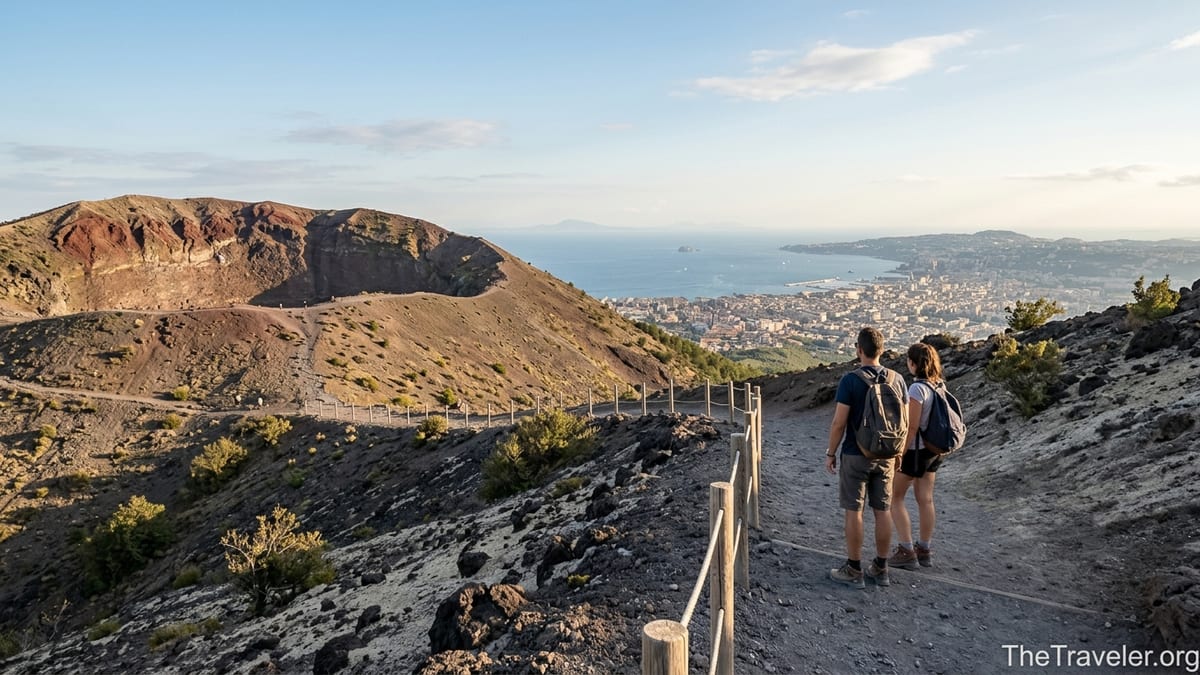
The classic visitor experience at Vesuvius is the “Gran Cono” trail, the official path number 5 in the Vesuvius National Park network. It starts from the Quota 1000 parking area, roughly 1,000 meters above sea level. From there, you walk up a cinder and ash track that spirals around the cone and brings you to viewpoints on the crater rim.
The hike itself is shorter than many expect but can feel strenuous. The main section is about 800 to 1,000 meters each way, with a total elevation gain of roughly 150 meters. Most reasonably fit adults complete the ascent in 20 to 40 minutes, but the surface is a mix of compacted ash and loose gravel. Standard city sneakers will manage, but walking shoes or trail trainers with good grip feel noticeably safer, especially on the way down when the path can be slippery.
There are no trees along the upper path, so shade is minimal. In summer months, daytime temperatures on the bare slopes can feel much hotter than in Naples, and the sun reflects off the pale volcanic dust. Travelers routinely underestimate how draining this combination of steep gradient and heat can be. Carrying at least a liter of water per person, wearing a hat and applying sunscreen is not optional if you are visiting between late May and early September.
At the top, the reward is a raw view into the crater and over the Bay of Naples. The crater itself is a wide bowl of rust-colored rock and ash with fumaroles that sometimes emit faint wisps of steam. Around the rim, simple wooden fences mark where you can walk. On clear days you can see the sprawl of Naples, Capri silhouetted in the distance, and the Sorrento Peninsula stretching south. For many visitors this panorama, combined with the knowledge of the 79 AD eruption, is the emotional payoff for the effort.
Tickets, Tours and Realistic Costs
To visit the crater area you must buy a ticket for Vesuvius National Park’s Gran Cono trail with an assigned entry time. These are generally purchased online in advance, especially in high season, or combined with shuttle tickets sold at Ercolano Scavi and other pickup points. Expect the park ticket alone to be in the low-teens of euros per adult, with a small discount for children and some age categories. Prices can change from season to season, and some operators bundle entrance with guiding services at a markup.
The most common independent route involves three separate costs: the local train from Naples to Ercolano Scavi, the shuttle bus up the mountain, and the park ticket. A single Circumvesuviana ticket from Naples to Ercolano is usually just a few euros each way. Round-trip shuttle plus park entrance packages sold by operators such as Vesuvio Express can come in around several tens of euros per person, so a realistic total budget for an independent round-trip from Naples might sit somewhere in the 30 to 45 euro range per adult by the time you factor in all components.
Guided day tours from Naples or Sorrento that combine Pompeii and Vesuvius are typically more expensive but offer a more streamlined experience. Examples include small-group excursions that pick you up from central hotels or the port in the morning, include skip-the-line tickets for Pompeii, a guided tour of the ruins, a pizza or light lunch, then coach transport up to Vesuvius in the afternoon with pre-booked park entry. Per-person prices often fall in the 90 to 150 euro range depending on group size, inclusions and the season.
Whether that cost feels justified depends partly on how much you value convenience over navigating local trains and buses. Independent travelers on a budget may prefer to piece the trip together themselves, while others find the reliability and time savings of a door-to-door tour well worth the extra outlay, particularly in the peak summer heat when delays and queuing can be tiring.
Who Will Find Vesuvius Worth the Effort
Vesuvius tends to be most rewarding for travelers who are drawn to geology, hiking and dramatic landscapes. If you are the kind of person who enjoys scrambling up volcanic slopes in places like Iceland or the Canary Islands, standing on the rim of an active volcano that destroyed entire Roman cities will probably feel like a highlight. Photographers also appreciate the broad sweeping views over the bay, especially in the late afternoon when the light softens over Naples and the islands.
History enthusiasts often combine Vesuvius with a visit to Pompeii or Herculaneum on the same or adjacent days. For them, seeing the volcano that caused the devastation can make the ruins feel more immediate and real. Walking through a Roman street in Pompeii in the morning, then staring into the crater that buried it in ash in the afternoon is a powerful, if emotionally heavy, experience.
Active families with older children or teenagers typically find the hike manageable and memorable, provided everyone has sensible shoes and an honest conversation about the steepness. The clear goal of reaching the crater rim helps motivate younger hikers, and the almost lunar scenery is very different from typical European city sightseeing. Visitors who enjoy being outdoors rather than spending the whole trip in museums and churches usually appreciate the contrast.
On the other hand, travelers who prioritize leisurely food experiences in Naples, time on the beach along the Amalfi Coast or slow wandering in the historic center may conclude that the three-quarter or full day needed for Vesuvius could be better invested elsewhere. If you have only two full days in Naples, for instance, you may find more depth in focusing on Pompeii and the city itself rather than squeezing in a Vesuvius climb at the expense of your energy and schedule.
When It Might Not Be Worth It
There are several clear scenarios where a visit to Vesuvius may not be the best use of your limited vacation time. The first is if your stay in the region is very short. With just one or two nights in Naples, the logistics of getting to and from the volcano plus the hike itself can feel rushed. In such cases, many travelers prefer to focus on Pompeii or Herculaneum, where you can still feel the volcano’s presence through their story without leaving the coastal plain.
Another concern is mobility and fitness. The path to the crater is short but steep, with loose volcanic gravel in sections. There is no cable car or road that takes you right to the rim. If you have significant knee issues, cardiovascular limitations or troubles with balance on uneven surfaces, the climb may be uncomfortable or unwise. Even those in moderate shape can find the gradient combined with heat and altitude tiring. Portable stools or walking poles can help, but they do not change the basic nature of the terrain.
Weather can also blunt the experience. On days when the top of Vesuvius is shrouded in cloud or haze, the much-hyped view over the Bay of Naples can shrink to a gray wall, and strong winds can whip ash and dust around the path. In high summer, midday temperatures can be punishing, and there is very limited shelter from sun or sudden showers. If your travel dates are flexible, checking the forecast and aiming for a clear, cooler morning or late afternoon can make the difference between a magical and a miserable trip.
Crowds and atmosphere matter too. At peak times, especially on weekends and in August, the crater rim can feel like a busy promenade rather than a wild volcanic landscape. Lines of people in flip-flops and the smell of cigarette smoke sometimes clash with the image of a remote, fiery mountain. If your idea of a perfect hike involves solitude and silence, you will either need to arrive early, visit in the shoulder seasons like April, May, late September or October, or perhaps reconsider whether this is the right volcano experience for you.
Planning Tips if You Decide to Go
If you decide that Vesuvius belongs in your Naples itinerary, a little planning goes a long way. The most important step is securing your national park entry ticket for the Gran Cono trail with a timeslot that fits your day. These tickets are now primarily sold online, and same-day availability can be limited during high season and on weekends. Booking at least a few days in advance is wise if your schedule is tight or you are traveling with a group.
Next, decide whether to join an organized tour or travel independently. If you are comfortable riding regional trains and do not mind a bit of wayfinding at Ercolano Scavi station, the DIY route is budget-friendly and flexible. Leave Naples early, ideally before 9 a.m., to avoid the hottest hours on the volcano and secure a morning entry time. Pairing Vesuvius with Herculaneum in Ercolano makes logistical sense, as both use the same train station; attempting to cram Pompeii and Vesuvius into a single independent day from Naples is possible but can leave you rushed at both sites.
For organized tours, read recent reviews from other travelers to gauge punctuality and crowd management. Pay attention to what is actually included: some tours cover all transportation and tickets but leave you self-guided on the crater path, while others provide professional guides on both the ruins and the volcano. Cruise passengers docking in Naples for a single day often find that cruise-aligned excursions, either through their line or trusted local operators, deliver the smoothest experience given the strict time constraints.
Finally, prepare as you would for a true mountain walk even though you are taking a bus most of the way. That means closed-toe shoes with grip, a light jacket or windbreaker even in summer, at least one bottle of water per person, sun protection, and a small amount of cash or card for snacks or souvenirs at the kiosks near the parking area. Starting your day fed and hydrated, not hungover from a late night in Naples, will also make the steep ash path feel far more manageable.
The Takeaway
So is Mount Vesuvius near Naples worth the effort during your trip? For many travelers, yes, but not for everyone. If you are fascinated by volcanoes, enjoy moderate hikes, and can dedicate most of a day to the experience, standing on the rim of Vesuvius and looking into the crater is a rare opportunity. The combination of views, geology and history is hard to replicate elsewhere in Europe, and it adds a physical dimension to visits to Pompeii and Herculaneum.
However, Vesuvius requires time, energy and some logistical patience. The journey from Naples is not difficult but involves several steps, and the hike is short yet steep and exposed. On a trip where you already feel your schedule is overflowing with must-see sites and you only have a couple of days in the area, it may make more sense to enjoy the volcano from a distance, framed against the bay at sunset while you sip a spritz on a rooftop terrace.
Think honestly about what you enjoy most when you travel. If you light up at the idea of crunching cinders underfoot and standing on the lip of history, Vesuvius will likely be a trip highlight. If you prefer lingering at trattorias in the Spanish Quarter, hopping ferries to Capri, or getting lost in Naples’ chaotic streets, you may find better value in keeping your feet at sea level and letting the volcano remain a dramatic backdrop to your days in Campania.
FAQ
Q1. How long does a visit to Mount Vesuvius from Naples take door to door?
A round-trip visit from central Naples typically takes four to six hours, including the train to Ercolano Scavi, the shuttle to the park entrance, the hike to the crater and some time at the top.
Q2. Is the hike up Mount Vesuvius suitable for children and older travelers?
The path is short but steep with loose gravel. Active children and reasonably fit older travelers usually manage it, but those with mobility or heart issues may find it difficult or should consider skipping the hike.
Q3. Can I visit Pompeii and Mount Vesuvius on the same day?
Yes, many tours and independent travelers combine them, but it makes for a long, tiring day. If you have the time, spreading Pompeii and Vesuvius over two days allows for a more relaxed experience at both.
Q4. Do I need to book Mount Vesuvius tickets in advance?
Advance booking is strongly recommended, especially in high season and on weekends, because entry to the Gran Cono trail is controlled by timeslots and same-day tickets can sell out.
Q5. What should I wear to hike Mount Vesuvius?
Wear closed-toe shoes with good grip, comfortable clothing suitable for a steep walk, a hat, and layers for wind or sudden weather changes. Bring sunscreen and enough water.
Q6. Is it possible to drive my own car up to Mount Vesuvius?
You can drive up the provincial road toward the park, but private vehicles usually stop at designated parking areas below the crater, and you still need to walk the final stretch on foot with a valid park ticket.
Q7. Are there toilets and food options near the crater?
Basic toilet facilities and small kiosks or snack stands are usually available near the parking area at Quota 1000, but services at the crater rim itself are minimal, so do not rely on finding full meals at the top.
Q8. Is Mount Vesuvius currently considered safe to visit?
The volcano is classed as active but is continuously monitored by Italian authorities. Access to the crater area is controlled and may be restricted if seismic activity or weather conditions raise safety concerns.
Q9. What is the best time of day to visit Mount Vesuvius?
Morning and late afternoon are generally best, offering cooler temperatures, softer light and somewhat fewer crowds than midday, especially in the summer months.
Q10. Is a guided tour necessary to enjoy Mount Vesuvius?
A guided tour is not strictly necessary, but guides can enrich the experience with geological and historical context, and organized tours remove much of the transportation and ticketing hassle for first-time visitors.