


Standing on the Bay of Naples, you are spoiled for choice. On one side, the jagged cone of Mount Vesuvius promises sweeping views and an active volcano under your feet. On the other, the ruins of Pompeii spread out like a frozen Roman city, streets and villas preserved in ash. Many travelers try to squeeze both into a single day, but for a lot of visitors, time, budget, or energy mean choosing one highlight. This guide walks you through the real-world differences so you can decide whether Mount Vesuvius, Pompeii, or a combination of the two is the better fit for your style of travel.
Get the latest updates straight to your inbox!
Understanding the Two Experiences
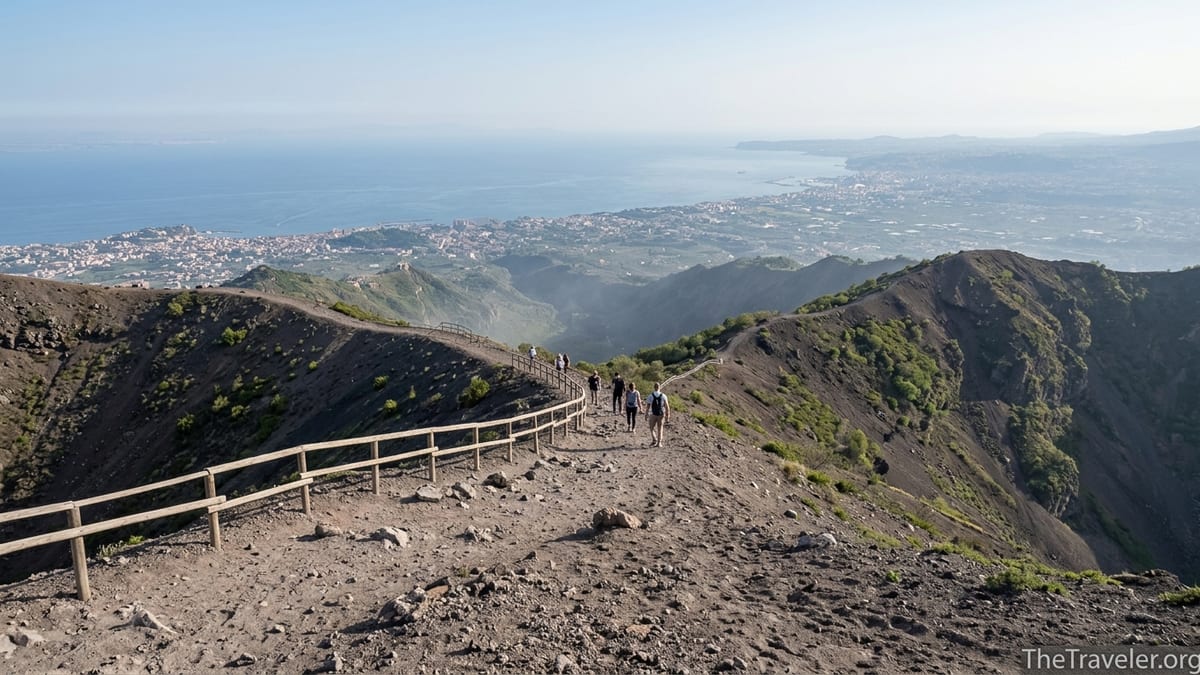
Mount Vesuvius and Pompeii are often spoken about in a single breath, but on the ground they feel like very different trips. Vesuvius is first and foremost an outdoor, nature-heavy experience: you ride or bus up into the national park and then hike on ash and gravel to reach the crater rim. The reward is a panorama over the Bay of Naples, Capri in the distance on clear days, and the chance to literally peer into the volcano that shaped this region. It is a short, focused visit that centers on views, geology, and the thrill of standing on an active volcano.
Pompeii, by contrast, is about immersion in history and urban archaeology. The archaeological park covers roughly 66 hectares open to the public, with stone streets, intact facades, painted walls, bakeries, bathhouses, and grand villas. Even a quick visit of 3 to 4 hours only scratches the surface. Instead of one big viewpoint, the experience is a series of moments: stepping into the Villa of the Mysteries, seeing ruts carved by ancient carts in the paving stones, or wandering the amphitheater at the eastern edge of the site.
For many travelers, the key difference is energy and focus. Vesuvius is a half-day peak moment built around a single hike. Pompeii is an all-day wandering experience that can be as structured or as free-form as you like. Deciding which fits you better starts with being honest about what you enjoy more: scenic walking and big landscapes, or detailed historical exploration and museums in the open air.
Both are straightforward to reach from Naples, Sorrento, or the surrounding area on public transport. Typical itineraries mix and match: one traveler might go from Naples to Pompeii on the commuter train, then continue by EAV bus up to Vesuvius for a crater hike in the late afternoon, while another might dedicate a full day just to Pompeii and its nearby villas, leaving Vesuvius for a separate excursion or skipping it entirely.
Time, Logistics, and How Each Fits Into Your Itinerary
Pompeii is the more time-consuming visit. In 2026, standard opening hours run from about 9:00 to 19:00 in the main season from April through October, and until around 17:00 in winter, with last entry roughly 90 minutes before closing. Many travelers find that 4 hours is the bare minimum to see main highlights like the Forum, the Stabian Baths, the brothel, and at least one or two grand houses. If you enjoy wandering, photography, or reading interpretive panels, you can easily spend 6 to 7 hours on-site without repeating anything.
Mount Vesuvius is inherently shorter. Most crater visits involve a 30 to 40 minute uphill walk from the drop-off area to the rim, plus time to loop part of the crater path, take photographs, and listen to a short talk by one of the on-site volcanology guides. Many people find that 90 minutes to 2 hours at the top is enough. Accounting for transport up and down, Vesuvius is usually a 3 to 4 hour commitment door to door from Pompeii or Naples, assuming you have crater tickets booked in advance for a specific time slot.
In real terms, that means a traveler arriving in Naples on a morning high-speed train from Rome has two main options. One is to dedicate the bulk of the day to Pompeii, taking the Circumvesuviana or Campania Express commuter line to Pompeii Scavi station beside the park entrance, and returning in the early evening. The second is to treat Vesuvius as a half-day side trip. For example, you could explore Naples in the morning, then in early afternoon take the train to Pompeii, switch to the EAV bus or a private shuttle organized locally, and do a late-afternoon crater visit before coming back.
If you only have a single day in the area and dislike rushing, Pompeii alone usually makes more sense. If your schedule already includes several archaeological sites in Rome, Ostia Antica, or Paestum and you are craving a change of scenery, Vesuvius might be the better use of your limited time, particularly in summer when long days allow you to plan around evening light on the summit.
Costs, Tickets, and Value for Money
Budget is another way to frame the decision. In early 2026, official standard adult tickets for Pompeii are around the high teens in euros for a single-entry day ticket, with significant reductions for EU visitors aged 18 to 25 and free entry for under-18s. There are also combo options that bundle Pompeii with nearby sites like Herculaneum or suburban villas for a modest surcharge, and an annual pass for those based in the region. On the first Sunday of every month, entry is free, but crowds are correspondingly heavier and you cannot pre-book a time slot.
For Vesuvius, costs split into two parts: crater access and transport. Crater tickets are sold for specific time slots through the official booking system and are typically in the low teens in euros for adults, with smaller reductions for certain age groups. On top of that, you need to reach the upper parking area inside Vesuvius National Park. From Pompeii, an EAV-operated public bus that runs seasonally between the archaeological park and the volcano is usually around a handful of euros each way, with a 2026 schedule published in advance. Private shuttle services branded names like Vesuvio Express from the Circumvesuviana station in Ercolano typically charge a combined fee that includes both the bus ride and crater ticket, often in the 25 to 35 euro range per adult, depending on inclusions.
Full-day guided tours that combine Pompeii and Vesuvius from Rome, Naples, or Sorrento are a different price bracket. Typical 2026 group tours that include coach transport, a licensed guide in Pompeii, and a guided crater visit often start in the 100 to 150 euro per person range from Rome, and somewhat less if departing from Naples or Sorrento. These can be good value if you prefer not to handle separate bookings, tickets, and bus schedules, but the trade-off is less flexibility and a more fixed timetable that may not suit slow travelers or photographers.
If you are traveling as a family, value can tilt quickly. A family of four with two teenagers might find that Pompeii offers better cost-per-hour value, especially when reduced youth tickets apply, and because you can bring your own picnic or snacks and stay all day. Vesuvius, on the other hand, concentrates more expense into a shorter window. It can still feel worthwhile if the volcano is a once-in-a-lifetime bucket-list item for you or your children, but it is helpful to think of it as an add-on rather than a substitute for a full-day activity.
Physical Effort, Climate, and Accessibility
The physical demands of the two sites are quite different. Pompeii is mostly flat to gently sloping, but you will walk a lot. On a typical visit, many travelers log between 8,000 and 15,000 steps over uneven Roman paving stones, worn curbs, and sometimes gravel. Sturdy walking shoes or trainers are important, and anyone with knee or ankle issues should be prepared for frequent stepping up and down from high sidewalks and crossing stones. Shade is limited in the central parts of the site, so in July and August the combination of heat and reflected sunlight off pale stone can be draining.
Vesuvius concentrates the effort into a steep but relatively short climb. From the highest parking area, the main Gran Cono path to the crater ascends roughly 200 vertical meters. The path is wide and maintained, but underfoot you are walking on loose volcanic ash and gravel that can feel like a sustained staircase on a beach. Many reasonably fit people complete the climb without issues, stopping periodically to catch their breath. However, travelers with cardiovascular concerns, respiratory problems, or limited mobility may find the incline and lack of shade challenging, especially in mid-day summer heat.
Climate also matters. In midsummer, the summit of Vesuvius is usually a few degrees cooler than sea level, and breezes can make it feel refreshingly pleasant compared to the streets of Naples. In shoulder seasons like April or October, it can be windy and cool at the rim even when Pompeii feels mild, so a light jacket is worth packing. In winter, access to the crater can be limited or temporarily suspended in bad weather, so flexibility is important. Pompeii, being lower and more sheltered, is generally more predictable year-round, though winter rain can still make some exposed areas slick.
In terms of formal accessibility, Pompeii has made efforts to open up barrier-free routes, including a dedicated accessible path that runs from the main entrance through parts of the ancient city, though large portions remain challenging for wheelchair users or anyone with severe mobility limitations. Vesuvius, on the other hand, is fundamentally a mountain trail. If anyone in your group cannot manage a 30 to 40 minute uphill walk on loose ash, the experience will be compromised, and it may be better to enjoy views of the volcano from a lower viewpoint or focus on Pompeii instead.
Crowds, Atmosphere, and What It Feels Like On-Site
Atmosphere can be as important as practicalities. Pompeii, despite its size, can feel crowded around the main sights. In high season, tour groups often cluster in the Forum, in the brothel, and in famous houses like the House of the Faun. You may find yourself listening to guides in multiple languages as you pass. That said, because the site is so extensive, it is surprisingly easy to find quiet corners. Moving just a couple of blocks away from the main axes, you can walk nearly alone down side streets lined with smaller houses, or sit on a low wall in the shade of a garden with few others in sight.
Vesuvius has a different rhythm. Visitor numbers at the crater are controlled by time slots, so while it can still feel busy around the main viewpoints, the flow is steadier and less chaotic. The walk itself tends to spread out as people find their own pace. On a clear afternoon, the mood at the rim is almost festive, with visitors posing for photos against the Bay of Naples and others staring quietly into the crater. The sense of being high above the region, with Naples, Sorrento, and the islands spread out below, gives the experience an open, airy quality that contrasts with the intimate streets of Pompeii.
Emotionally, Pompeii is often more intense. The preserved plaster casts of victims, the traces of daily life in shops and houses, and the knowledge that this was once a living city can be moving or even overwhelming. Some travelers find half a day is enough simply because of the emotional weight of walking through such a well-preserved disaster site. Others relish the depth and find that the more they explore, the more they connect with the place. Vesuvius, by contrast, feels lighter: it is more about awe at nature and volcanic power than about confronting a human tragedy, though most visitors cannot help but think about the eruption as they look down toward Pompeii and Herculaneum.
If you prefer quiet reflection, aim to visit Pompeii shortly after opening or in the final two hours before closing, when group tours thin out. For Vesuvius, early morning and late afternoon time slots often offer gentler light and slightly fewer people than midday. Travelers who dislike feeling rushed generally report that they enjoy Pompeii more when not trying to squeeze in the volcano on the same day.
Who Should Choose Pompeii, Who Should Choose Vesuvius
Thinking in terms of traveler profiles can make the choice clearer. Pompeii is ideal for visitors who love history, architecture, and storytelling. If you enjoy audio guides, museum labels, and imagining daily life in another era, the site rewards attention. Families with school-age children often find that Pompeii holds their interest longer than expected, thanks to recognizable spaces like bakeries with stone ovens, street food counters, and a large amphitheater that feels similar to a modern stadium. Independent travelers who like to explore at their own pace also appreciate that you can roam widely without being tied to a fixed route.
Vesuvius, on the other hand, will appeal more to hikers, photographers, and those who crave a strong sense of place from a single view. If your perfect travel day includes a physical challenge followed by a panoramic payoff, Vesuvius fits the bill. It is also a good choice if you have already visited several archaeological sites on your trip and risk “ruins fatigue.” For example, a traveler who has spent days in Rome’s Forum, the Colosseum, and Ostia Antica may find that yet another ruined city is less compelling than a high, fresh-air vantage point over the entire Bay of Naples.
Mixed groups can compromise. One common solution is to base in Sorrento or Naples for several nights and allocate one full day purely to Pompeii, with an optional half-day trip to Vesuvius on another day for those in the party who feel up to it. Another is to join a small-group tour that combines both, accepting the pace and seeing each as a snapshot rather than an in-depth visit. In such a case, it can help to supplement the brief Pompeii visit with a good guidebook or documentary before you go, so that the limited on-site time still connects with a wider understanding.
Ultimately, there is no single “better” choice in absolute terms. Instead, the better fit is the one that matches your energy level, curiosity, and the kind of travel memories you value most. If you picture yourself remembering intricate mosaics and silent streets, lean toward Pompeii. If you picture a windswept crater and sweeping views, lean toward Vesuvius.
Sample Itineraries: Making the Decision Real
To make this more concrete, imagine three different travelers. The first is a couple in their late 20s visiting in May, staying in Naples, without a rental car. They enjoy walking and photography. For them, a realistic choice might be to take the morning Circumvesuviana train to Pompeii Scavi, spend around 5 hours exploring major highlights and quieter backstreets, then return to Naples for an evening meal. If they have a second day free, they could book a mid-afternoon time slot for Vesuvius, riding the EAV bus from Pompeii or a shuttle from Ercolano, so they can photograph the bay in softer late light.
The second traveler is a family of four with children aged 8 and 12 visiting in August, based in Sorrento. High heat and shorter attention spans are factors. In this case, a guided half-day tour of Pompeii in the morning, focusing on kid-friendly stops like the amphitheater, a snack bar counter, and a house with vivid wall paintings, may be enough. They might skip Vesuvius entirely if the idea of a dusty uphill walk in midday sun sounds like a struggle, or save it as a special half-day treat if both children are enthusiastic about volcanoes and the forecast suggests slightly cooler temperatures.
The third traveler is a solo visitor in shoulder season, staying one night in Pompeii town itself. They arrive in the afternoon, stroll around the modern town, and eat an early dinner. The next morning they walk to the archaeological park entrance at opening time, spend 3 to 4 hours exploring, then grab a simple pizza near the station before catching the early afternoon EAV bus up to Vesuvius. With a mid-afternoon crater time slot, they can be back in town before evening, having experienced both sites without the stress of rushing in a single continuous block.
These examples show that choosing one experience over the other is sometimes less about absolute preference and more about fitting the pieces of transport, opening hours, and personal rhythms together. When planning, look closely at 2026 schedules for trains and buses, as well as for crater time slots, and draft a realistic timeline on paper. This will often reveal whether your day works better as a Pompeii-focused visit with an optional extra, or a Vesuvius hike that leaves just a taste of the ruins for another trip.
The Takeaway
When you weigh the trade-offs, Pompeii usually makes more sense for first-time visitors with only one full day in the area, particularly those interested in history and culture. It offers more depth, more to discover, and a fuller sense of how the eruption of 79 AD changed the region. It is also logistically simpler, with frequent trains from Naples and Sorrento, clear opening hours, and the freedom to stay as long as your energy allows.
Mount Vesuvius, meanwhile, shines as a complementary experience rather than a replacement. It delivers a concentrated burst of scenery, geology, and physical challenge that many travelers remember vividly, but its time-limited, weather-dependent nature makes it slightly more complex to slot into a tight schedule. For hikers, photographers, and those captivated by volcanoes, it can be the undisputed highlight of a trip to Campania.
If your schedule can stretch to two days in the area, the ideal solution is simple: give each its own focused visit. Start with Pompeii to understand the human story, then climb Vesuvius to grasp the natural forces that caused it. If you must choose only one, let your own travel style decide. Whether you walk ancient streets or volcanic ash, the Bay of Naples offers an experience that is hard to forget.
FAQ
Q1. Can I realistically visit both Mount Vesuvius and Pompeii in one day?
Yes, it is possible, but it will be a long and fairly rushed day. Many travelers take an early train from Naples to Pompeii, visit the main highlights in 3 to 4 hours, then catch an afternoon bus or shuttle up to Vesuvius for a crater time slot. You will get a taste of both, but little time for quiet exploration or rest.
Q2. Which is better for children, Pompeii or Vesuvius?
It depends on your children and the season. School-age kids who like stories and imagining daily Roman life often enjoy Pompeii, especially when adults point out bakeries, theaters, and houses. Vesuvius can be thrilling for children fascinated by volcanoes, but the steep, dusty walk can be hard in summer heat or for younger kids under about 7 or 8.
Q3. If I have mobility issues, which site is more suitable?
Pompeii is generally more manageable if you use accessible routes, though much of the site remains uneven. There is a designated barrier-free path that avoids the worst cobblestones and steps. Vesuvius requires a sustained uphill walk on loose ash and gravel, which is difficult for many travelers with mobility or balance challenges.
Q4. Do I need to book tickets in advance for both sites?
Advance booking is strongly recommended for both, especially in high season. Pompeii day tickets can usually be purchased online a few weeks ahead, and some dates, such as free-entry Sundays, cannot be reserved and are very busy. Vesuvius crater access is sold in timed slots and often sells out on popular days, so securing your preferred time before you travel is wise.
Q5. Which experience is more affected by bad weather?
Vesuvius is more vulnerable to weather. High winds, heavy rain, or low cloud can lead to temporary closures or poor visibility at the crater, making the hike less rewarding. Pompeii is open in most conditions, though rain can make some areas slippery and very hot sun can make midday visits uncomfortable in summer.
Q6. Are guided tours worth it for Pompeii or Vesuvius?
For Pompeii, many visitors find a guided tour or a high-quality audio guide transforms the experience, helping you understand what you are seeing and avoid missing key houses or frescoes. On Vesuvius, short talks at the rim by local guides are often included in crater access, so a separate guide is less essential unless you want detailed geology commentary as you hike.
Q7. How should I plan my day if I choose only Pompeii?
If you devote a full day to Pompeii, aim to arrive close to opening time, prioritize a few major sights, then allow yourself to wander side streets and lesser-known houses later. Build in a midday break for shade and water, either at on-site facilities or just outside the park, and consider focusing your last hour or two on a quieter area like the amphitheater quarter.
Q8. How strenuous is the hike up Mount Vesuvius?
The hike is short but steep. Most people spend 30 to 40 minutes walking uphill from the bus drop-off on a wide track of ash and gravel. You do not need technical gear, but you should wear closed shoes with decent grip and be prepared for a sustained incline. Regular stops, water, and pacing yourself make it manageable for many moderately fit visitors.
Q9. Is it better to stay in Naples, Sorrento, or Pompeii for these visits?
All three bases work. Naples offers big-city energy and the most transport options. Sorrento has a resort feel and easy access to the Amalfi Coast. Staying in Pompeii town itself gives you the easiest access to the ruins at opening and can make a combined Pompeii and Vesuvius visit over one or two days less rushed.
Q10. If I love photography, which site will I enjoy more?
Both are rewarding in different ways. Pompeii offers textures, details, and atmospheric streets, especially in early morning or late afternoon light. Vesuvius delivers expansive landscapes, views over the Bay of Naples, and dramatic crater shots. If you have to pick one, consider whether you are more drawn to intimate architectural scenes or wide volcanic panoramas.