


Climbing Mount Vesuvius is one of the most memorable day trips from Naples, but the experience is much better if you arrive prepared. The crater trail is steep and dusty, the summit can be windy and cooler than the city, and services on the mountain are limited and sometimes unpredictable. This guide focuses on one question most travelers ask too late: what should you bring before visiting Mount Vesuvius?
Get the latest updates straight to your inbox!
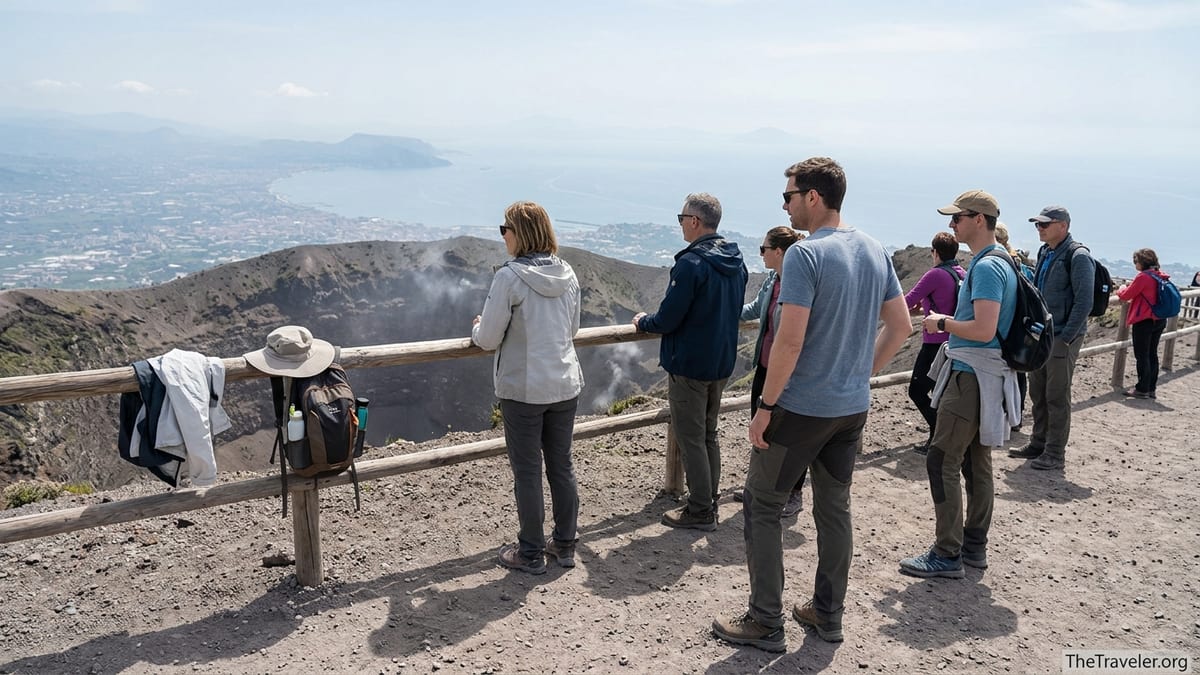
Understanding the Conditions on Mount Vesuvius
Before you decide what to pack, it helps to understand what the mountain is actually like. The standard visitor path to the crater, sometimes called the Gran Cono trail, is short but relatively steep, covered in loose volcanic gravel. Most people take around 30 to 45 minutes to walk up and 20 to 30 minutes down, but the footing can be slippery, especially on the descent. You will not be walking through a forest: the upper path is almost completely exposed, with no shade on clear days and very little shelter if clouds roll in.
Although Naples at sea level can feel very hot in summer, the crater rim sits at roughly 1,200 to 1,280 meters above sea level, and temperatures can be 5 to 10 degrees Celsius lower than in the city, with much stronger wind. Local guides and recent visitor reports emphasize that it can be surprisingly chilly and gusty even in late spring and early autumn, while in July and August the sun can feel intense despite slightly cooler air. Expect dust, fine ash and small stones on the trail in all seasons.
Access also affects how much you want to carry. Most visitors come by Circumvesuviana train from Naples to Ercolano Scavi or Pompeii, then transfer to an EAV bus or tourist shuttle that climbs close to the park entrance. A typical day trip door to door can take five to six hours including train, bus and hiking time. That means you will carry your essentials for most of the day, sometimes waiting at exposed bus stops or at the park gate if you arrive before your timed ticket slot. A compact but well thought out daypack is much more comfortable than juggling loose items or heavy shopping bags.
Finally, it is worth knowing that services at the top are limited. There are usually basic cafés or kiosks near the parking area or lower on the trail, selling bottled water, soft drinks, simple snacks and souvenirs, but payment systems are not always reliable and stock can run low on busy or very hot days. Public toilets are available but not at every viewpoint. You should plan to be self-sufficient for at least two to three hours on the mountain itself.
Footwear and Clothing: What to Wear on the Crater Trail
The single most important item to bring for Mount Vesuvius is proper footwear. The park authorities and most independent travel guides strongly recommend closed shoes with good grip, such as light hiking boots or sturdy trainers. On the gravelly surface, flat-soled sneakers with worn tread, flimsy fashion sandals or open-heeled shoes can slip easily. Some recent visitors have reported rangers advising people in flip-flops or dressy sandals that they may not be allowed to continue up to the crater, especially in poor weather, so it is wise to err on the side of caution.
You do not need heavy alpine boots. A typical traveler might wear trail-running shoes from brands like Salomon or Nike, or low-cut hiking shoes from Merrell or Decathlon, which are easy to pack in a carry-on and double as walking shoes for Naples and Pompeii. If you are already traveling with one good pair of athletic shoes, make those your Vesuvius footwear, and avoid bringing anything with smooth soles such as loafers or minimalist fashion trainers for this specific day.
Clothing should be built around layers. For a July visit, you might start in Naples in a light T-shirt and breathable hiking shorts, but pack a thin long-sleeved layer or windbreaker in your daypack. At the crater rim, a basic Uniqlo-style packable down jacket or a lightweight shell can make the difference between enjoying the view and shivering in the wind. In shoulder seasons like April or October, many travelers are comfortable in long hiking trousers, a T-shirt and a fleece or softshell jacket they can take on and off as the sun appears or disappears behind clouds.
Avoid fabrics that show dust and sweat too easily if you plan to continue straight to lunch or to another site afterward. Darker quick-drying hiking pants or leggings handle the volcanic dust better than crisp white jeans. Long trousers or long shorts also protect your legs from dust and small stones that can flick up while you walk. In cooler months, a thin hat or beanie and light gloves can be surprisingly useful during a windy spell on the rim, especially if you are waiting for a shuttle or lingering for photos.
Weather Protection and Sun Safety
Sun exposure on Vesuvius is often underestimated. There is almost no natural shade along the crater path, and the bright volcanic gravel reflects light back up at your face. Even on days that feel “mild” in Naples, ultraviolet radiation at altitude can be quite strong. Bringing a broad-spectrum sunscreen with at least SPF 30 and reapplying it before you start the climb is one of the simplest ways to avoid going back to Naples with painful sunburn.
A hat is essential in summer and very useful even in spring and early autumn. A basic baseball cap or foldable sun hat that fits in your daypack works well. Many travelers who forgot hats have ended up buying branded Mount Vesuvius caps from kiosks near the trailhead, often at higher prices than in Naples souvenir shops, so packing your own saves money and ensures you have a comfortable fit. Sunglasses with good UV protection also help against both glare and wind-blown dust.
Wind protection is the second key factor. Recent visitor guides recommend a light windproof jacket even in warmer months, especially for late afternoon climbs when temperatures can drop quickly as the sun sinks behind the crater rim. A compact shell jacket that weighs under 300 grams can be stuffed into a small daypack and pulled out only if the weather changes. This is particularly useful if you have combined a morning in Pompeii with an afternoon visit to Vesuvius, as you may feel warm and sticky at the ruins but chilled in the exposed air at the summit.
Rain is less common in summer but can appear suddenly in spring and autumn, and when it does, the trail can become muddy and more slippery. Rather than carrying a large umbrella, which is awkward in strong wind and on narrow paths, a small packable waterproof jacket or poncho is more practical. Some tour operators advise against umbrellas entirely for safety reasons. If heavy rain or dense fog is forecast, the park authorities sometimes close the upper section of the trail, so it is worth checking conditions the morning of your visit and adjusting your packing list accordingly.
Daypack Essentials: Water, Snacks and Documents
For most travelers, a small daypack of around 15 to 20 liters is ideal for a Vesuvius excursion. It should be large enough to hold water, an extra layer, sun protection and a few personal items, but not so big that it becomes a burden on the relatively short hike. Many visitors use a simple Decathlon or similar brand daypack that folds flat in their suitcase and then serves for all day trips around Naples and the Amalfi Coast.
Water is the non-negotiable item. Local guides and recent hiking advice generally suggest bringing at least one liter of water per person, more in high summer. While you can often buy bottled water from kiosks near the parking area or at the lower viewpoints, relying on these entirely can be risky if there are queues, if stock runs low on hot days, or if card terminals are out of order. A reusable one-liter bottle filled from your hotel or an apartment tap in Naples is simple and economical. In July and August, many travelers carry 1.5 liters or a second smaller bottle, especially if they are visiting Pompeii or Herculaneum on the same day.
Snacks are equally useful, as options on the mountain are basic. A typical stand might offer packaged crisps, chocolate bars or simple sandwiches at higher prices than in the city. Bringing a couple of energy bars, fruit bought in a Naples market, or a small packet of nuts can prevent an energy crash on the final stretch to the crater. For families with children over the allowed age for the hike, having familiar snacks can also make the outing smoother and reduce impulse buys at every kiosk.
Do not forget your documents. Entrance to the crater area is controlled through timed tickets that are increasingly sold online in advance, and staff at the gate may ask to check both the QR code and a matching ID, such as a passport or national identity card. Keep a digital copy of your ticket on your phone and, if possible, a screenshot in case the mobile signal at the entrance is weak. A slim travel wallet or inside pocket for your ID, some cash and a bank card is safer than keeping everything loose in your bag, especially if you will also be transiting busy stations like Napoli Centrale.
Money, Connectivity and Small Comforts
Although Italy is generally comfortable with card payments, relying solely on cards on Vesuvius can be risky. Travelers have reported small cafés and shuttle operators temporarily unable to process card transactions at the mountain due to weak signal or technical problems. It is wise to bring a modest amount of cash in euros, enough to cover your return shuttle bus, a drink or snack, and an emergency taxi contribution if needed. For many visitors, 30 to 40 euros in small notes and coins is a practical amount for a day trip that includes both Vesuvius and a quick meal near the train station.
Mobile connectivity on the mountain is variable. You may have full signal at the trailhead and then lose service on certain parts of the path. If you plan to use a digital audio guide, translation apps or map services, download or cache what you need before leaving Naples or while still in Ercolano or Pompeii. External battery packs are not strictly essential for the short hike itself, but if you left your accommodation early and are using your phone for navigation, photographs and tickets all day, a small power bank weighing under 200 grams can be reassuring.
A few small comfort items can make the experience more pleasant. A lightweight neck gaiter or scarf helps with both sun and wind and can be pulled over your mouth if the dust is blowing strongly. Travel tissues or a small packet of wet wipes are useful for dusty hands and basic toilets. In warmer months, a mini deodorant or face mist can be surprisingly refreshing when you arrive back at the bus after the descent. Some visitors also appreciate a simple elastic knee support or ankle brace if they know they are prone to joint discomfort on descents.
One detail many people forget is that volcanic dust can stain lighter shoes and clothing. Bringing a small plastic bag to wrap dusty shoes if you plan to change into cleaner footwear for the train or for a meal afterward can save the inside of your larger luggage. Similarly, a soft cloth or microfiber wipe helps keep your phone camera lens clear of dust so your crater photos stay sharp.
What Not to Bring and How to Pack Smart
Because the hike is relatively short, it is tempting to bring more than you need. In reality, every extra kilo becomes noticeable on the climb. Oversized backpacks loaded with multiple jackets, full guidebooks and spare shoes are a common regret. Instead, aim for a lean packing list: one set of clothes on your body appropriate for the forecast, one extra layer in your bag, and essentials only. If you are combining Vesuvius with Pompeii or Herculaneum and need to carry extra items, consider leaving non-essentials in station lockers or at your accommodation rather than hauling them up the volcano.
Some items are actively discouraged on the mountain. Strollers are impractical on the uneven gravel and are usually not allowed on the crater path. Umbrellas are awkward and potentially hazardous in strong wind and can turn inside out easily. Wheeled suitcases should be avoided altogether: there is nowhere convenient to roll or store them near the summit, and they are difficult to manage on shuttle buses and steep steps. If you are in transit between accommodations on the day you visit Vesuvius, it is usually better to store your luggage at Naples Centrale, at your hotel, or in a left-luggage facility in Pompeii or Ercolano.
You also do not need heavy winter gear in summer or high-end technical equipment. Trekking poles, for example, are not essential for most reasonably fit visitors on this short trail, and they can be awkward to carry on public transport. At the trailhead, vendors sometimes offer simple wooden walking sticks for a few euros, which are sufficient for extra balance if you are a bit uneasy on steep gravel. This is usually easier than packing your own poles from home.
Finally, think about security. While the crater area itself is generally calm and focused on sightseeing, the train stations and connecting buses can be crowded, particularly in peak season. Large handbags that do not close fully, wallets in back pockets and expensive jewelry are better left at your accommodation. A compact crossbody bag worn under your daypack chest strap or a money belt under your clothes keeps your cards and ID safer while your small backpack holds water, layers and camera gear.
Special Cases: Families, Older Travelers and Combined Day Trips
Families visiting Vesuvius need to plan around both park rules and children’s comfort. Very young children are generally not allowed on the upper trail for safety reasons, and the hike can be demanding for under-sixes even if permitted. For older kids who can handle the walk, proper footwear becomes even more important: supportive trainers with closed toes help prevent slips and stubbed toes. Packing child-sized sun hats, high-factor sunscreen and snacks they know and like is more important here than bringing toys, as there is little space for play along the trail itself.
Older travelers or those with knee or joint issues may wish to bring lightweight trekking poles or rent a simple walking stick at the trailhead, particularly for the descent where loose gravel is more noticeable. Elastic knee supports, compression socks and blister plasters can make a big difference on what is otherwise a relatively short outing. Choosing the right time slot matters too: a morning visit avoids the hottest sun in summer, while a late-morning or early-afternoon slot might be more comfortable in cooler months. Packing a proper layer system and a small cushion for sensitive backs on the bus seats can also improve the overall experience.
If you combine Vesuvius with Pompeii or Herculaneum in one day, your packing needs expand slightly. Pompeii’s vast archaeological site involves hours of walking on uneven stone streets under direct sun, so breathable clothing, a hat and strong sunscreen are just as important there as on Vesuvius. In practice, many travelers wear the same outfit for both: sports shoes, lightweight trousers or shorts, and a quick-drying top, then add a windproof layer only for the crater rim. A compact umbrella may be useful at Pompeii for sun and light rain, but you will likely keep it folded while on the mountain due to wind.
Food planning changes too. Rather than relying on snacks at both sites, stock up in Naples or at a local bakery near the Circumvesuviana station with sandwiches or slices of pizza you can eat on the train or between sites. This way, your daypack holds enough food and water to keep your energy up without needing to line up at busy cafés at every stop. Carrying an extra half-liter of water specifically for the hottest part of the day, usually early afternoon, is particularly helpful if you are still on the archaeological site or waiting for your return bus from Vesuvius.
The Takeaway
Visiting Mount Vesuvius is not a technical expedition, but the combination of altitude, wind, loose volcanic gravel and limited shade means that a little forethought about what to bring goes a long way. Sturdy closed shoes or light hiking boots, layered clothing, sun protection, at least one liter of water per person and a compact, comfortable daypack are the true essentials. Add a hat, sunglasses, a windproof layer and simple snacks, and most travelers will have everything they need for a safe and enjoyable climb.
Packing smart also means leaving unnecessary items behind. Heavy bags, impractical footwear, umbrellas and valuables you do not need on the mountain can turn a memorable hike into an uncomfortable struggle. Whether you are taking a half-day trip directly from Naples or combining Vesuvius with Pompeii or Herculaneum, focusing on a lean, well-chosen set of belongings will free you to enjoy the sweeping views over the Bay of Naples and the surreal experience of standing on the rim of one of the world’s most famous volcanoes.
FAQ
Q1. Do I really need hiking boots to visit Mount Vesuvius, or are sneakers enough?
Sneakers with good tread are usually sufficient for most visitors, as long as they are closed-toe and provide decent grip on loose gravel. Dedicated hiking boots can add ankle support and stability, but they are not strictly required for the standard crater trail. Avoid open sandals, flip-flops or smooth-soled fashion shoes, which can be slippery and may not be allowed by staff in poor conditions.
Q2. How much water should I bring for the hike?
Plan for at least one liter of water per person, more in the hot months of June to September. The climb itself is relatively short, but sun and wind can be dehydrating, and you may spend additional time waiting for buses and walking around viewpoints. You can often buy drinks near the trailhead, but bringing your own bottle ensures you are not dependent on kiosks or card machines.
Q3. Is it cold at the top of Vesuvius, even in summer?
It can be noticeably cooler and windier at the crater rim than in Naples, even on sunny days. In summer you may still be comfortable in a T-shirt while climbing, but a light windproof jacket or long-sleeved layer is very useful when you stop to admire the views or if clouds move in. In spring and autumn, a fleece or softshell over a base layer is often ideal.
Q4. What kind of bag should I bring for a day trip to Vesuvius?
A small daypack of around 15 to 20 liters works best. It should be big enough to hold water, snacks, a light jacket, sunscreen, a hat and your documents, but not so large that it becomes awkward on the bus or on the trail. Many travelers use simple foldable daypacks that fit in their main luggage and then serve for all excursions around Naples.
Q5. Can I bring a stroller or suitcase up to the crater?
No, a stroller or suitcase is not practical on the crater trail. The path is steep, narrow in places and covered in loose volcanic gravel, which makes it unsuitable for wheels. If you are traveling with young children, check age restrictions and consider alternative plans for those who cannot manage the walk. Large luggage is better left at your accommodation or in a left-luggage service at a train station.
Q6. Do I need to carry my passport, or is a photo on my phone enough?
It is safest to carry an original ID document, such as a passport or national ID card, because staff at the entrance may ask to verify your timed ticket against your identification. A photo on your phone is helpful as a backup but may not be accepted on its own. Keep your ID in a secure pocket or slim travel wallet inside your daypack.
Q7. Is cash necessary, or will my bank card be fine?
Bring a small amount of cash in euros, as well as a bank card. Kiosks and shuttle operators often accept cards, but signal or machines can occasionally fail on the mountain. Having enough cash for drinks, a snack and transport back to Naples gives you a margin of safety if electronic payments are not working.
Q8. What should families with children bring that solo travelers might overlook?
Families should pay particular attention to sun protection, snacks and comfort items scaled to children. Pack child-appropriate hats, high-SPF sunscreen, water in bottles they can easily handle and familiar snacks to avoid hunger-related complaints. Lightweight layers are important because children can feel the wind chill quickly at the crater rim. A small packet of wipes and a change of top for very young kids can also be handy after a dusty walk.
Q9. If I am combining Pompeii and Vesuvius in one day, what extra should I pack?
For a combined day, prioritize comfortable walking shoes, sun protection and enough water and snacks for many hours outside. Pack a light windproof layer specifically for Vesuvius, as Pompeii is usually hotter and more sheltered. A portable phone charger is more useful when you are using your device all day for tickets, navigation and photos across both sites.
Q10. Are walking sticks or trekking poles worth bringing?
Most visitors manage the Vesuvius trail without trekking poles, but they can be helpful if you have knee, hip or balance issues, especially on the descent. Rather than packing bulky poles from home, many people choose to rent or buy a simple wooden walking stick offered near the trailhead. This provides extra stability without adding much weight to your luggage.