


More news on this day
Travel across China faced fresh turmoil this week as a cluster of cancellations at Shenzhen Bao’an International Airport disrupted passengers on major Asian and Middle Eastern routes, while hundreds of additional delays rippled across the country’s already strained aviation network.
Get the latest news straight to your inbox!
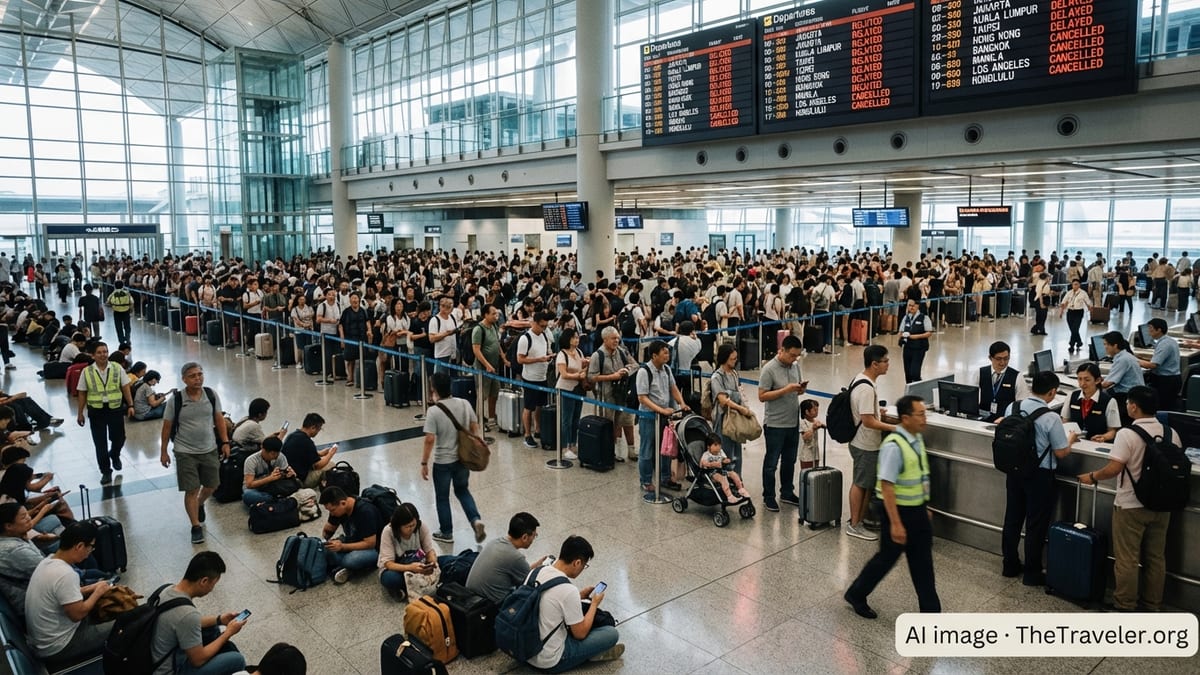
Six Key Flights Scrapped At Shenzhen Bao’an
Publicly available flight-tracking data and airline status pages indicate that at least six flights operated by China Southern Airlines, Shenzhen Airlines and Saudia were cancelled at Shenzhen Bao’an International Airport on 17 June 2026. The affected services included both domestic and international routes, underlining the strategic role of the southern Chinese hub in connecting mainland travellers with Southeast Asia and the Middle East.
Among the most notable disruptions was China Southern flight CZ3071 from Shenzhen to Sydney, which real-time status boards listed as cancelled on Wednesday. The widebody service had been using Airbus A330 aircraft and forms part of the carrier’s longer haul schedule from the Pearl River Delta region, making its removal particularly disruptive for passengers with onward connections to Australia.
Additional cancellations were recorded on Shenzhen Airlines services into and out of the city. One high-profile example was flight ZH9520 from Shanghai Pudong to Shenzhen, which status feeds showed as cancelled on 17 June. The loss of multiple trunk services between coastal economic hubs compounded difficulties for business travellers and domestic tourists attempting to reposition through Shenzhen.
Regional coverage also points to Saudi flag carrier Saudia adjusting parts of its China schedule during June, including services linked to southern Chinese gateways. While individual flight numbers into Shenzhen were fewer than those of local carriers, any Saudia cancellation immediately affected religious travellers, expatriate workers and leisure passengers connecting between China and Saudi Arabia’s main hubs.
Heavy Rain, Congested Skies And A Fragile Network
Reports from Chinese-language business media and travel outlets highlight persistent heavy rainfall across parts of southern China since mid June, including Guangdong province, where Shenzhen is located. Adverse weather has slowed ground handling operations and forced temporary runway restrictions at several airports, feeding into knock-on delays for aircraft and crews that rotate across the network.
Independent aviation monitoring compiled for mid June shows that China’s major hubs in Beijing, Shanghai, Chengdu, Chongqing and Guangzhou collectively registered thousands of delays and hundreds of cancellations in a single day. One analysis of 16 June data described more than 2,400 delays and over 260 cancellations nationwide, underscoring how thin operating margins can quickly unravel when storms coincide with peak schedules.
Guangzhou Baiyun Airport, another critical base for China Southern, has also been under strain, with earlier reporting in June documenting nearly 250 delayed flights and several dozen cancellations in just one day. With China Southern using both Guangzhou and Shenzhen as primary hubs, any disruption in one location can reduce flexibility in aircraft allocation for the other, making it harder to recover when conditions improve.
Against that backdrop, the six confirmed cancellations at Shenzhen Bao’an appear less like isolated incidents and more like symptoms of a wider system testing its limits. Each grounded flight can trigger a cascade of missed connections, crew duty-limit challenges and repositioning problems that stretch well beyond a single airport.
710 Delays Ripple Across China And Key International Routes
A broader examination of flight statistics for the same operating window points to roughly 710 delays affecting services across China, including flights touching major international gateways such as Singapore, Bangkok and Saudi Arabian hubs. While precise delay counts vary between tracking platforms, multiple datasets depict a clear spike in late departures and arrivals on routes linking southern China with the rest of Asia and the Middle East.
China Southern and Shenzhen Airlines operate dense schedules to Southeast Asian markets, including Thailand and Singapore, from Shenzhen and neighboring hubs. When weather or congestion slows departures at one end, tight turnarounds at intermediate airports become difficult to maintain, pushing subsequent legs behind schedule. Delays on morning or midday departures can therefore spill into evening operations across multiple countries.
Saudia’s network, centered on Jeddah, Riyadh and Dammam, has also been contending with operational pressures through 2026, according to open airline guidance and passenger reports. When China bound legs depart late from the Gulf or face holding patterns on arrival, recovery options are narrowed by long stage lengths and limited daily frequencies.
The combined effect of 710 recorded delays and targeted cancellations at Shenzhen Bao’an and other key hubs has been to fray confidence among travelers heading into the heart of the summer season. Passengers moving between China, Singapore, Thailand and Saudi Arabia face increased risk of missed connections, lost hotel nights and rebookings at short notice.
Impact On Travelers And Airlines’ Initial Responses
For passengers caught in this week’s disruption at Shenzhen Bao’an, the most immediate consequences have been missed departures and extended time in terminals while waiting for rebooking. Those due to fly on the six cancelled China Southern, Shenzhen Airlines and Saudia services were typically offered the option of later flights or refunds, according to carrier policy documents and public-facing customer guidance.
Travelers on China Southern’s Shenzhen to Sydney route, for example, faced particular complications due to the long-haul nature of the service. Some itineraries were booked on through-tickets that continued on partner airlines beyond Australia, increasing the complexity of finding viable alternatives on short notice and adding pressure to already busy long-haul corridors.
Domestic passengers on Shenzhen Airlines flights between Shanghai and Shenzhen encountered a different set of challenges. While alternative same day options exist on other carriers along the busy east coast corridor, seat availability can tighten quickly once large-scale delays hit, driving up last-minute fares and leaving some passengers with overnight stays or long rail journeys as the only realistic options.
Saudia customers connecting between Chinese cities and Saudi hubs often travel for time-sensitive reasons, including religious visits and work assignments. Flight cancellations or extended delays on these routes can force changes to mosque bookings, hotel arrangements and onward regional flights within the Gulf, multiplying the financial and logistical impact well beyond the original ticket.
What Passengers Should Watch In The Coming Days
With weather in southern China forecast to remain unsettled through much of June, aviation analysts say further disruption cannot be ruled out. Operational data for China Southern and Shenzhen Airlines show high aircraft utilization across wide networks, leaving limited slack in the system to absorb additional shocks should storms, airspace restrictions or technical issues arise.
Travel professionals recommend that passengers flying into or out of Shenzhen Bao’an, Guangzhou, Shanghai or Beijing in the coming days build extra buffer time into their journeys, particularly if they are connecting onward to international services operated by Saudia or carriers serving Singapore and Thailand. Monitoring airline apps and flight-tracking platforms closely in the 24 hours before departure remains critical.
Some travelers have also turned to flexible ticket options and travel insurance with disruption coverage as a hedge against cascading delays. Policies that reimburse for missed connections, additional accommodation and alternative transport can help soften the financial blow when large numbers of flights are affected at once across several countries.
For now, the cluster of six cancellations at Shenzhen Bao’an, combined with an estimated 710 delays across China, illustrates how quickly one of Asia’s largest aviation markets can seize up when meteorological and operational stresses align. With peak summer travel only just beginning, the resilience of China’s airline network is likely to remain under close scrutiny from passengers and industry observers alike.