


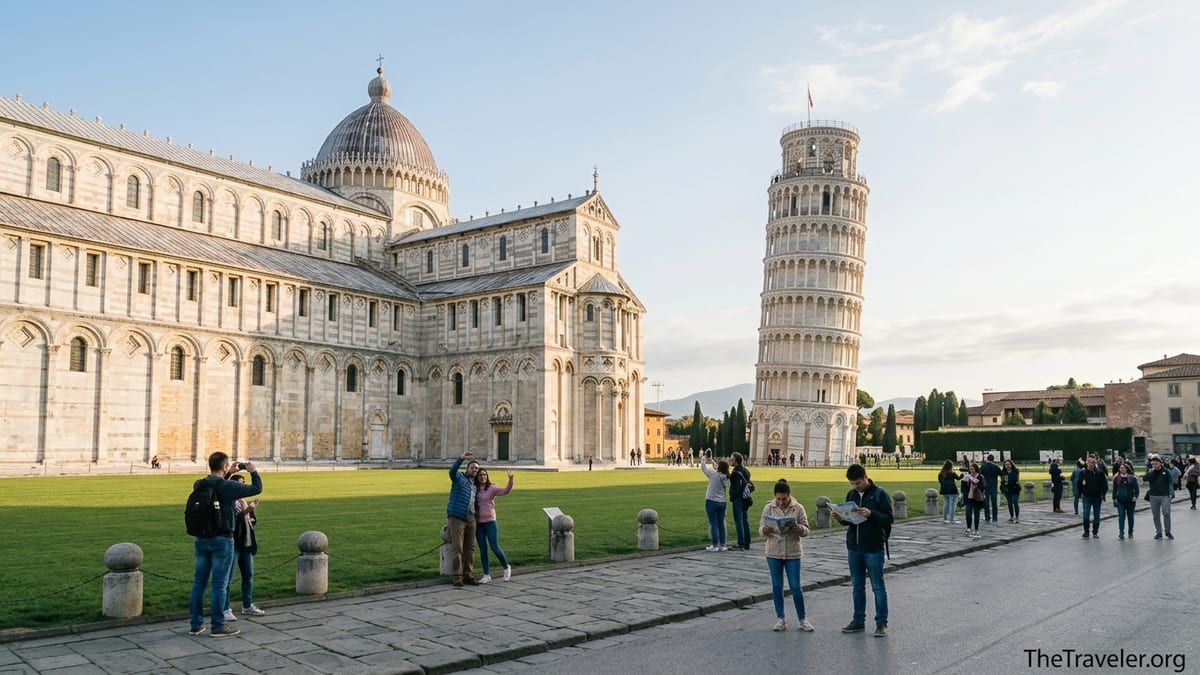
Pisa’s Piazza dei Miracoli looks wonderfully simple on paper: roll into town, grab a quick selfie with the Leaning Tower, maybe peek inside the cathedral, and move on. In reality, this compact UNESCO World Heritage site is where tight schedules, vague planning and fine print collide. From surprise driving fines to sold-out tower climbs and disappointing rushed visits, many travelers leave Pisa feeling that something went wrong. Here are the biggest mistakes people make when visiting Piazza dei Miracoli today, and how to avoid them with clear, practical steps.
Get the latest updates straight to your inbox!
Ignoring How Tickets Work and Missing the Tower Climb
Many visitors arrive in Pisa assuming they can just walk up and buy a ticket to climb the Leaning Tower whenever they feel like it. In peak months such as June through September, and on many weekends in spring and autumn, same-day tower slots in popular late-morning and afternoon windows often sell out hours ahead. A standard ticket to climb the tower with cathedral access costs around 20 euros per person, and children under 8 are not permitted to climb for safety reasons. Combo tickets that include other monuments in the square, such as the Baptistery or Camposanto, cost more but still require a specific time for the tower. Showing up at 2 pm on a Saturday and expecting to climb right away is one of the classic mistakes.
Another frequent misunderstanding involves the idea of “skip the line” tickets sold by third-party resellers. For the Leaning Tower, booking online in advance mostly lets you skip the ticket office queue, not the mandatory security check and timed entry. Travelers who pay a hefty premium for a “VIP skip the line” ticket from a reseller are often surprised to find themselves in the same security line as people who bought directly from the official system. To avoid disappointment, buy your ticket as early as possible on the official platform or from a reputable operator and understand that you are reserving a specific 30-minute climbing slot, not a magical fast track through every line.
Some visitors also waste money by buying more access than they realistically have time to use. For example, a group arriving from Florence on a half-day tour may purchase a full combo ticket that includes the tower, cathedral, Baptistery, Camposanto and museums. In practice, with a tight return train to catch, they may only manage the climb and a quick walk through the cathedral. A more realistic plan would be to book the tower plus one or two other monuments you know you can enjoy at a relaxed pace rather than racing between everything with one eye on the clock.
Finally, people often underestimate how awkward the climb itself can feel. The tower’s interior staircase is narrow, tilted and can be disorienting, especially for those with vertigo or knee issues. Climbers are admitted in small groups and must leave large bags in a locker. Building 15 to 20 minutes of buffer time on either side of your climbing slot, and reading the age and health restrictions in advance, prevents last‑minute panic or arguments at the entrance.
Underestimating Crowds, Timing and Light
Piazza dei Miracoli receives large tour-bus and cruise-ship crowds almost every day from late spring through early autumn. By about 10 am on a typical summer day, the green lawns in front of the tower are packed with people posing for forced-perspective photos, while the tower entrance area is encircled by multiple queues. Many travelers arrive precisely in this mid-morning peak and spend most of their short Pisa stop standing in line or trying to cut through crowds for a clear view. The result is a frustrating, shallow experience of a place that deserves more than a single hurried loop.
The light also matters more than many visitors expect. Around midday, harsh sun flattens the white marble of the cathedral and tower, and shadows on faces are deep. First-time visitors often comment that their photos look washed out or overly bright despite the spectacular location. Early morning and late afternoon, by contrast, bring softer light, longer shadows on the lawn and a pleasant golden tone on the stone. If you are day-tripping from Florence or Rome, consider taking an early train that arrives before 9 am or planning your stop in Pisa later in the afternoon, rather than dropping in at the busiest, brightest hours.
Time inside the square is another trap. Many group itineraries list “Pisa and Lucca in one day,” allocating only 60 to 90 minutes at Piazza dei Miracoli. By the time the group walks from the coach park, visits a restroom, collects any prebooked tickets and clears security, that window may shrink to barely enough time for a few photos and a rushed climb. Independent travelers sometimes repeat this mistake by planning a tight connection to the airport or a strict train departure. A more satisfying visit usually involves at least three to four hours in the area, especially if you want to climb the tower, step inside the cathedral and baptistery, and enjoy the Camposanto without rushing.
Travelers who arrive in the heat of a July afternoon without water or sun protection quickly discover another downside of poor timing: shade is limited, and temperatures on the exposed lawn and stone surfaces can feel intense. Buying drinks from kiosks just outside the walls can quickly add unexpected cost to an already expensive day. Bringing a refillable bottle and a hat, and pausing at a café on nearby Via Santa Maria before entering the square, makes the visit more comfortable and less frantic.
Driving Straight Into the ZTL and Parking Pitfalls
One of the most expensive mistakes in Pisa has nothing to do with tickets or gelato: it is driving unknowingly into the city’s ZTL, the restricted traffic zone that covers much of the historic center, including the area around Piazza dei Miracoli. Automatic cameras capture license plates, and fines for unauthorized entry can run to several dozen euros per infraction, often arriving by post weeks or months after the trip. Travelers collecting rental cars at Pisa Airport or elsewhere in Tuscany sometimes follow their navigation system directly toward the Leaning Tower, cross a camera-controlled gate without realizing it and collect multiple fines within minutes.
The smarter strategy is to park outside the ZTL and walk or take a short bus ride to Piazza dei Miracoli. The city-run parking area on Via Carlo Salomone Cammeo, often referred to simply as the Piazza dei Miracoli car park, sits about 50 meters from the square and offers several hundred spaces for cars. Hours and tariffs can change, but this lot is designed specifically for visitors and avoids the risk of entering restricted streets. For those arriving in motorhomes or touring coaches, larger park-and-ride areas such as the one on Via Pietrasantina, a short walk or shuttle ride from the square, provide designated spaces and day rates tailored to larger vehicles.
Street parking in blue-marked zones just outside the center may seem cheaper at first glance, but it often comes with strict time limits and confusing signage, all in Italian. In busy months, informal “helpers” in reflective vests sometimes appear near these spaces and try to solicit cash from drivers in exchange for “looking after” the car. While this practice is not unique to Pisa, it regularly catches foreign visitors off guard. A better approach is to ignore unofficial attendants, pay only at official meters or staffed booths and favor well-marked municipal or private garages even if they cost a few euros more per day.
Travelers on tight schedules often compound parking mistakes by not allowing time to walk from the lot to the square. From park-and-ride areas just north of the center, it can take 10 to 15 minutes on foot to reach the Piazza dei Miracoli. Those who book a 10 am tower climb and park at 9:45 am sometimes end up sprinting through the city walls or missing their timed slot entirely. Planning backward from your reserved climb time and padding at least 30 minutes for parking, ticket collection and bag-drop avoids this low-key but stressful error.
Treating Piazza dei Miracoli as a Quick Selfie Stop
Perhaps the most common mistake of all is to see Pisa as nothing more than a place to snap the classic “holding up the tower” photo and move on. This attitude turns Piazza dei Miracoli into a novelty backdrop rather than one of the most remarkable medieval architectural ensembles in Europe. Many visitors never step inside the cathedral or baptistery, both of which are included or available at low additional cost with most ticket combinations, nor do they pay attention to the Camposanto’s fresco fragments or the calm cloister interior just behind the busy lawn.
Real value emerges when you spread your time between the monuments. For example, pairing a mid-morning tower climb with a quiet visit to the Camposanto afterward creates a welcome contrast between the noisy exterior and the still, reflective interior space. Spending even 15 minutes looking at tomb sculptures and wall paintings offers a sense of Pisa’s medieval wealth and piety that no outside photo can match. Similarly, stepping inside the cathedral to see its striped marble columns, pulpit and mosaics turns a postcard scene into a lived historical experience.
Some travelers also miss the chance to explore the area immediately beyond the square. Streets such as Via Santa Maria and Via Roma are lined with cafés, gelaterie and bakeries where locals stop for a coffee or a slice of torta co’ bischeri. Grabbing a coffee in a bar filled with Pisans on their lunch break, rather than at a kiosk directly in front of the tower, subtly changes the tone of your visit and offers better value. Even a short walk along the medieval walls, where segments are sometimes open to visitors for a modest fee, can provide alternative perspectives on the monuments and the city.
Booking a local walking tour, even one lasting just an hour or two, helps combat the “drive-by” mentality. Many licensed guides start their routes at Piazza dei Miracoli and then lead guests through lesser-known corners of Pisa’s historic center. Visitors who invest in such a tour often report that the tower becomes just one highlight in a broader story about maritime trade, science and art, rather than a single visual gag on their social feeds.
Overlooking Rules, Dress Codes and Practical Comfort
A surprising number of frustrations in Piazza dei Miracoli stem from small practical details that visitors either miss or dismiss. One of these concerns dress and behavior inside religious spaces. The cathedral and baptistery are active religious sites, and while enforcement can vary, staff may refuse entry to visitors wearing very short shorts, bare shoulders or beachwear. Travelers coming straight from the coast or a hot train ride sometimes find themselves scrambling for a scarf or covering at the door. Packing a lightweight shawl or wearing knee-length shorts and a T-shirt solves the issue before it arises.
Bag policies for the Leaning Tower also catch people off guard. For safety and preservation reasons, larger backpacks and bags are not allowed on the climb. Instead, visitors must leave them in lockers near the entrance and keep only small items such as phones or compact cameras. Those who bring all their valuables in a large daypack may feel uncomfortable being separated from them, especially if they did not expect to use a locker. A better strategy is to carry only what you truly need into the square and leave passports, laptops and bulkier gear back at your accommodation or in a secure trunk if you are on a road trip.
Footwear is another underrated factor. The steps inside the tower are worn smooth by centuries of feet, and their tilt means you are constantly leaning slightly one way or the other as you climb. Thin-soled sandals or slippery shoes can feel precarious, and visitors with ankle or knee problems may find the ascent more tiring than they imagined. Closed, comfortable shoes with decent grip make a tangible difference, particularly if you plan to combine the climb with hours of walking elsewhere in Pisa.
Finally, many travelers forget that Piazza dei Miracoli has limited shade and few places to sit comfortably for free. Standing on the lawn for long periods, craning for photos and queuing for entry can become exhausting, especially for children and older visitors. Planning short breaks at nearby cafés, carrying a small foldable fan in summer, and respecting your own energy levels turns the experience from a test of endurance into a pleasant highlight of your Italian itinerary.
Falling for Tourist Traps and Missing Better Food & Souvenirs
The streets immediately outside the walls of Piazza dei Miracoli are lined with souvenir stalls, snack stands and restaurants tailored almost entirely to passing tourists. While some are perfectly serviceable for a quick drink, many charge noticeably higher prices for mediocre quality. Typical examples include plastic plates of reheated pizza slices, bottled water at double the supermarket price and “authentic” leaning-tower snow globes shipped in bulk from far away. Travelers in a hurry, especially those on package tours, often default to these options simply because they do not know what else is available.
A more rewarding approach is to treat the immediate perimeter of the square as a convenience zone rather than your only choice. Walk five to ten minutes along Via Santa Maria, Via Roma or into the streets leading toward the Arno River, and you will find cafés, bakeries and trattorias with more local clientele and better value. For instance, ordering an espresso at the counter in a neighborhood bar typically costs around one or two euros, compared to significantly more at a terrace directly beside the tower. Gelato from a small shop where flavors are labeled in Italian and the counter is full of locals on their afternoon break is more likely to be high quality than neon-colored mounds piled high beside plastic decorations.
Souvenir shopping benefits from the same logic. Rather than buying yet another identical leaning-tower keyring from the first stall you see, consider stepping into a small artisan shop that sells ceramics, prints or regional food products. Items such as locally produced olive oil, biscotti or linen towels may cost a bit more than mass-produced trinkets, but they are more likely to be used and remembered after the trip. Even if you only have an hour or two, building in a short detour beyond the souvenir corridor helps you connect with Pisa as a living city rather than a backdrop.
Another subtle trap involves price expectations. Visitors coming from very expensive Italian cities may assume that everything near the tower will be comparatively cheap, only to discover that a simple lunch with drinks ends up costing almost as much as in central Florence. Checking menu prices before sitting down, asking whether the coperto (cover charge) is included and being wary of unsolicited bread or appetizers added to the bill allows you to control costs without stress. Most issues are avoided by choosing places where staff are willing to explain prices and where menus are clear, even if they are only in Italian.
The Takeaway
Piazza dei Miracoli rewards travelers who slow down, prepare a little and respect both the site’s rules and its rhythms. The biggest mistakes visitors make in Pisa are rarely about choosing the “wrong” ticket or missing a secret viewpoint. Instead, they involve underestimating how timed entries work, ignoring traffic restrictions, compressing the visit into a narrow window, and treating this extraordinary square as nothing more than a quick photo opportunity.
If you book your Leaning Tower climb in advance, allow generous time on either side, park legally outside the ZTL, dress and pack with the monuments’ rules in mind, and venture just a few streets beyond the souvenir stalls, your experience of Pisa changes entirely. The Leaning Tower becomes not just a quirky backdrop but the centerpiece of a day that combines history, architecture, good food and genuine moments of stillness amid the crowds.
By approaching Piazza dei Miracoli as a complex site rather than a single checkbox, you turn common pitfalls into easy wins. With a bit of planning and a willingness to step beyond the most obvious path, your visit to Pisa can feel less like a rushed obligation and more like one of the most memorable chapters of your time in Italy.
FAQ
Q1. Do I really need to book Leaning Tower of Pisa tickets in advance?
Booking in advance is strongly recommended, especially from spring to autumn. Same-day slots often sell out and walk-up options may leave you with inconvenient times or no climb at all.
Q2. How early should I arrive before my scheduled tower climb?
Plan to arrive at least 30 minutes before your time slot to allow for finding the entrance, using lockers, passing security and dealing with crowds around the base of the tower.
Q3. Can children climb the Leaning Tower of Pisa?
Children under 8 are not allowed to climb the tower for safety reasons. Older children may climb but must be accompanied by an adult, and everyone needs a paid ticket.
Q4. Is there a dress code for the cathedral and baptistery?
Yes, modest dress is expected. Avoid very short shorts, bare shoulders and beachwear. Carrying a light scarf or wearing a T-shirt and knee-length shorts is usually sufficient.
Q5. How can I avoid driving into Pisa’s ZTL by mistake?
Set your GPS to a specific car park outside the ZTL, such as the parking areas near Piazza dei Miracoli or the larger park-and-ride lots, and always obey local road signs.
Q6. Are the lawns in Piazza dei Miracoli open for sitting and picnics?
Access to the grass areas is generally controlled, and staff may limit sitting or picnicking to protect the site. It is better to treat the lawns as viewing areas rather than a picnic ground.
Q7. How much time should I budget for a proper visit?
Allow at least three to four hours if you want to climb the tower, visit the cathedral and baptistery, see the Camposanto and still have time for photos and a relaxed break.
Q8. Is it worth visiting Pisa if I am only in Tuscany for a short time?
Yes, but it is most rewarding if you can dedicate half a day rather than just a rushed stop. Combining Pisa with nearby Lucca or the coast makes for a well-balanced day trip.
Q9. Are there good food options near Piazza dei Miracoli?
The closest streets are full of tourist-oriented places, but walking five to ten minutes along Via Santa Maria, Via Roma or toward the river reveals better-value cafés and trattorias.
Q10. Can I see the main sights without climbing the tower?
Absolutely. The cathedral, baptistery and Camposanto are all impressive and can be enjoyed even if you skip the climb. The tower is iconic, but it is only one part of the wider complex.