


More news on this day
An operational meltdown at Birmingham Shuttlesworth International Airport has triggered significant travel disruption, with Delta Air Lines and its regional partners grounding 10 flights and adding to a day of widespread gridlock across the United States aviation system.
Get the latest news straight to your inbox!
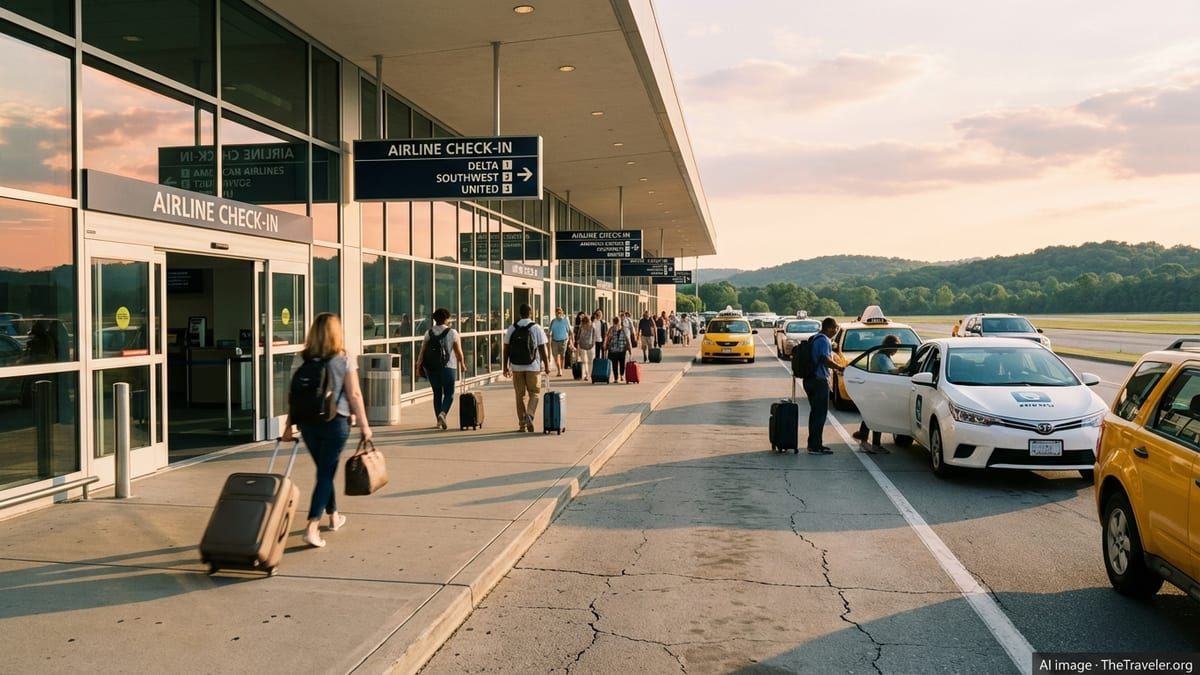
Grounded Flights Deepen Birmingham’s Operational Strain
According to live schedule boards and flight tracking data, Birmingham Shuttlesworth International Airport entered Monday with an unusually high volume of delayed and cancelled services involving Delta Air Lines and its regional affiliates on routes to and from Atlanta. Publicly available information indicates that 10 Delta and Delta Connection departures and arrivals were grounded or removed from schedules over several hours, effectively halting a large share of the carrier’s short-haul operation at the airport.
The disruption centered on the Birmingham to Atlanta shuttle, a key feeder link into Delta’s largest hub. Multiple regularly scheduled services were shown as cancelled or placed into extended delay windows, creating a bottleneck for travelers relying on Atlanta connections to reach destinations across the United States and overseas. Regional jets that typically rotate quickly through Birmingham remained parked at gates or on remote stands, contributing to congestion around the terminal.
Airport data reviewed by TheTraveler.org shows that these grounded flights came on top of rolling delays affecting other carriers, turning what is normally a manageable regional operation into a crowded, stop-start environment. Passengers arriving for morning and early afternoon departures encountered rapidly changing departure times, queues at service counters, and limited rebooking options.
While precise cause codes for each affected flight were not immediately available, the clustering of cancellations and extended delays pointed to a mix of operational and network challenges rather than isolated aircraft issues.
Knock-On Effects Across Delta’s Southern Hub Network
The disruption in Birmingham quickly rippled through Delta’s broader network, particularly at Hartsfield Jackson Atlanta International Airport, where Birmingham flights typically feed onward connections. Schedule data and tracking services showed misaligned inbound and outbound banks, with some Atlanta departures lacking expected Birmingham-originating passengers and aircraft.
Regional partners operating under the Delta Connection banner appeared to bear a significant portion of the impact. Smaller regional jets that serve Birmingham are often assigned to tight turnarounds in Atlanta, and grounded or delayed aircraft in Alabama triggered crew timing complications and repositioning challenges throughout the day. This, in turn, constrained the ability to recover the schedule quickly once conditions began to stabilize.
Published coverage and traveler accounts from other southeastern airports indicated that delays were not confined to Birmingham and Atlanta. Reports pointed to a patchwork of disruptions at several regional facilities, suggesting that Delta’s southern hub-and-spoke network was operating with limited slack. Under such conditions, issues at one station, even a mid-sized airport like Birmingham, can cascade through multiple states within hours.
The result for many passengers was a chain reaction of missed connections, unexpected overnights at hub cities, and significant shifts in routing as available seats on alternative flights became scarce.
Wider US Gridlock Complicates Recovery Efforts
The Birmingham airport meltdown unfolded against a broader backdrop of strain across the United States aviation system. National tracking services showed elevated levels of delays and cancellations on Monday, reflecting congested airspace, weather challenges in several regions, and lingering operational pressures as airlines move into the peak summer period.
In this wider context, Delta’s ability to reroute Birmingham passengers was constrained by limited spare capacity across its domestic network. Flights that might otherwise have absorbed displaced travelers were already near full, particularly on popular routes connecting through Atlanta and other large hubs. According to publicly available data, competing airlines were facing similar load factors, restricting cross-carrier rebooking opportunities.
Travelers attempting to adjust plans encountered long digital and in-person wait times as customer-service systems strained under heavy demand. With multiple carriers adjusting schedules in real time, the options for same-day recovery narrowed quickly, leaving many passengers facing delays of 24 hours or more to reach their final destinations.
The situation highlighted how tightly coupled the US aviation network has become. A localized disruption at a regional airport, once more easily contained, now interacts with high system-wide utilization and limited spare aircraft to produce widespread ripple effects.
Passenger Impact at Birmingham: Long Lines and Limited Options
At Birmingham Shuttlesworth International, the ground reality for passengers was defined by uncertainty and congestion. Social media posts and crowd-sourced flight reports described long queues at ticketing counters, busy gate areas, and frequent gate-change announcements as operations staff attempted to consolidate remaining flights and reassign aircraft.
Many affected travelers were connecting through Atlanta to major coastal gateways or international flights. For those itineraries, a cancelled Birmingham leg often meant missing carefully timed long-haul departures with limited daily frequency. Reaccommodation onto later services was hampered by the strong summer booking environment, leaving some travelers to weigh alternative routings through other hubs or even different airports within driving distance.
Baggage disruption compounded the challenges. Passengers reported uncertainty over whether checked bags would travel on newly assigned routes, remain in Birmingham, or be forwarded separately once operations normalized. In a number of cases, travelers prioritized securing scarce seats out of the city even if it meant delayed bag delivery at final destinations.
Airport staff and information displays urged passengers to monitor flight status closely and arrive early, but the pace of schedule changes made it difficult for many to anticipate whether their specific departure would operate as planned until close to boarding time.
What Travelers Can Expect in the Coming Days
Operational experts note that the immediate grounding of 10 flights at a single station, though disruptive on the day, is only one part of a broader challenge. Aircraft and crews displaced by Monday’s events will need to be repositioned to restore normal rotation patterns, a process that can take several days when networks are already operating near full capacity.
Published analyses of airline performance during recent periods of elevated disruption suggest that passengers using Birmingham and other southeastern airports should anticipate continued schedule volatility, including short-notice time changes, equipment swaps, and occasional same-day cancellations. Even as the most acute phase of the meltdown passes, recovery flights and irregular operations can leave timetables in flux.
Travelers with near-term bookings on Delta or its regional partners through Birmingham are advised by consumer advocacy organizations and travel specialists to verify itineraries repeatedly on the day of departure, allow generous connection times at hubs, and consider carry-on-only travel where possible to maintain flexibility when rebooking. Flexible ticket policies and same-day change options, where available, may also provide important levers for minimizing disruption.
For Birmingham, the episode underscores the growing importance of resilience planning at mid-sized airports that depend heavily on a small number of major airline partners. As demand continues to climb and operational buffers shrink, localized breakdowns such as the one seen on Monday are increasingly likely to reverberate far beyond the city’s runways.