


More news on this day
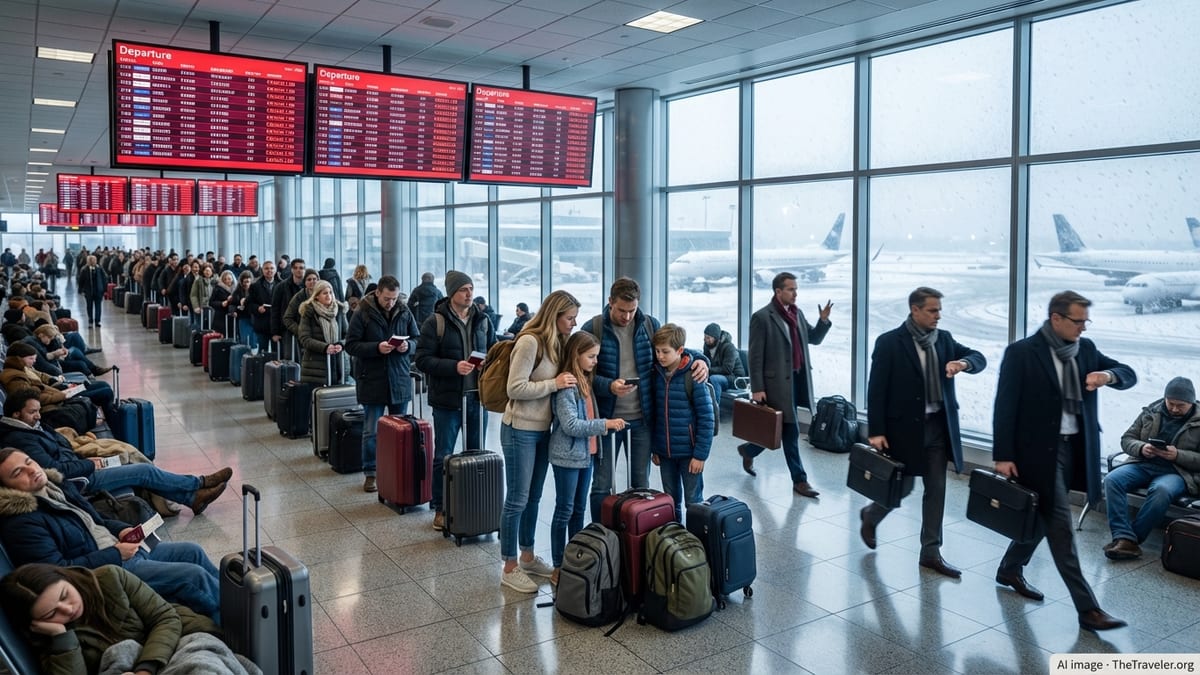
Vancouver International Airport faced another turbulent travel day as a cluster of 15 flight cancellations and at least 74 delays disrupted operations, intensifying scrutiny on Air Canada and WestJet at the start of the busy summer season.
Get the latest news straight to your inbox!
Ripple Effects Across a Crowded Summer Schedule
Operational data from flight-tracking dashboards and airport information services indicates that Vancouver International Airport entered the weekend with an already tight schedule, leaving little room for disruption. With hundreds of daily departures and arrivals funneling through a limited number of gates and runways, even minor schedule changes can quickly reverberate across the system.
The latest round of 15 cancellations and dozens of delays appears to have had an outsized effect on passengers because many of the affected flights were key domestic and transborder services used as connections to longer-haul routes. When those early links fail, rebooking options shrink rapidly, particularly on peak mid-June days when most flights are already near capacity.
Publicly accessible status boards show that both Air Canada and WestJet bore a significant share of the disruption, with multiple services listed as delayed by more than an hour and several removed from the schedule altogether. For travelers, this translated into missed connections, long queues at customer service desks, and scrambling for scarce hotel rooms around the airport.
Observers note that the situation at Vancouver reflects broader strains across Canadian aviation, where carriers have been fine-tuning schedules, trimming less profitable routes, and contending with a mix of weather, staffing challenges, and airspace constraints that leave little slack when problems arise.
Air Canada and WestJet Under Intensifying Scrutiny
The latest disruption adds to a growing body of public data and traveler accounts portraying Air Canada and WestJet as particularly exposed to irregular operations at Canada’s busiest airports. Historical on-time performance tallies and past coverage of Western Canada travel snarls point to both carriers as frequent players in large delay waves, especially at peak periods.
Air Canada has already been adjusting parts of its 2026 network, including selected intercontinental and domestic services, in response to demand patterns and cost pressures. While those schedule changes are planned months in advance, any unplanned cancellation or technical issue during a busy bank of flights can still cascade through the system, particularly at hubs tightly linked to Vancouver.
WestJet, for its part, continues to navigate a complex operating environment that includes previous schedule cuts on some transborder routes and heightened regulatory attention to how it handles passenger disruptions. Publicly available documents from Canada’s transportation regulator show that the airline has recently faced penalties related to earlier delay and cancellation cases, which have fueled passenger expectations for clearer communication and stronger support during new disruptions.
With both airlines central to domestic connectivity through Vancouver, the latest cluster of 15 cancellations and 74 delays has quickly become a flashpoint for broader frustration about reliability and resilience in Canada’s air travel network.
What Is Driving the Meltdown at Vancouver?
While each individual flight cancellation typically has a specific cause, patterns seen in schedule data and recent aviation analysis suggest that multiple factors are converging on Vancouver at once. Weather remains a constant variable along the Pacific coast and across Western Canada, where storms, smoke, and low visibility can disrupt arrivals and departures and force crews and aircraft out of position.
Operational constraints at major hubs also play a role. When a Toronto or Montreal departure is delayed or cancelled, the ripple effects can reach Vancouver within hours, as aircraft and crews that were meant to operate onward flights never arrive. Analysts have noted that airlines sometimes “pre-cancel” flights in anticipation of such knock-on effects to prevent passengers from becoming stranded mid-journey, a strategy that improves manageability for the carrier but still leaves travelers facing abrupt changes.
In addition, demand around key events and holiday periods can strain airport infrastructure. With Vancouver co-hosting large-scale events and handling intense leisure and business travel activity in 2026, the airport is managing a heavier-than-usual load. In such conditions, a modest operational hiccup affecting a handful of flights can quickly swell into dozens of delays as aircraft miss departure slots, ground handling falls behind schedule, and rebooking queues grow.
Industry watchers say the current turbulence illustrates how vulnerable tightly optimized schedules have become. When carriers operate with thin margins for error, a relatively small number of cancellations and delays can feel like a full-scale meltdown to passengers on the ground.
Passenger Rights and Limited Options for Relief
The latest chaos at Vancouver has once again pushed Canada’s Air Passenger Protection Regulations into the spotlight. Public guidance from both major carriers outlines when compensation may be available for delays and cancellations, but eligibility depends heavily on whether a disruption is deemed within the airline’s control.
If a cancellation or long delay stems from factors judged to be outside airline control, such as severe weather or air traffic restrictions, travelers may be entitled primarily to rerouting and basic care rather than direct financial compensation. In contrast, disruptions caused by controllable issues, such as certain operational or maintenance problems, may qualify for larger payments under the rules.
Travel advocates frequently point out that passengers often struggle to determine the true cause of their disruption and must navigate complex claims processes to seek compensation. Recent public cases involving both Air Canada and WestJet have underscored how contested these determinations can be, fueling calls for clearer, more standardized reporting of reasons for cancellations and delays.
In the meantime, practical options for those caught in the Vancouver disruption remain limited. With many flights running close to full, rebooking onto same-day services is difficult, and alternative routings may involve overnight stays or lengthy detours through other hubs, adding cost and uncertainty to already stressful journeys.
Broader Questions for Canada’s Air Travel System
The apparent meltdown at Vancouver, while centered on a specific set of 15 cancellations and 74 delays, is feeding into a wider national conversation about the resilience of Canada’s air transport network. Analysts and frequent travelers alike are questioning whether current staffing levels, infrastructure, and regulatory frameworks are keeping pace with surging post-pandemic demand and increasingly volatile operating conditions.
Some recent airline schedule adjustments suggest that carriers are attempting to balance financial realities with reliability by trimming or consolidating routes that are no longer economically viable. Yet these moves can also reduce redundancy in the system, making it harder to absorb disruptions when they occur at major hubs such as Vancouver.
Looking ahead to the remainder of 2026, the combination of busy summer traffic, large events, and evolving weather patterns means that Vancouver International Airport is likely to remain under pressure. Unless airlines, regulators, and airport operators find ways to build more flexibility and transparency into the system, episodes like this latest wave of delays and cancellations may continue to test the patience of travelers across Canada and beyond.