


More news on this day
Persistent delivery delays and production constraints at Boeing and Airbus are forcing major global airlines to rewrite fleet plans, curtail growth ambitions, and brace for tighter seat supply just as international travel demand continues to recover and, in some markets, surge past pre-pandemic levels.
Get the latest news straight to your inbox!
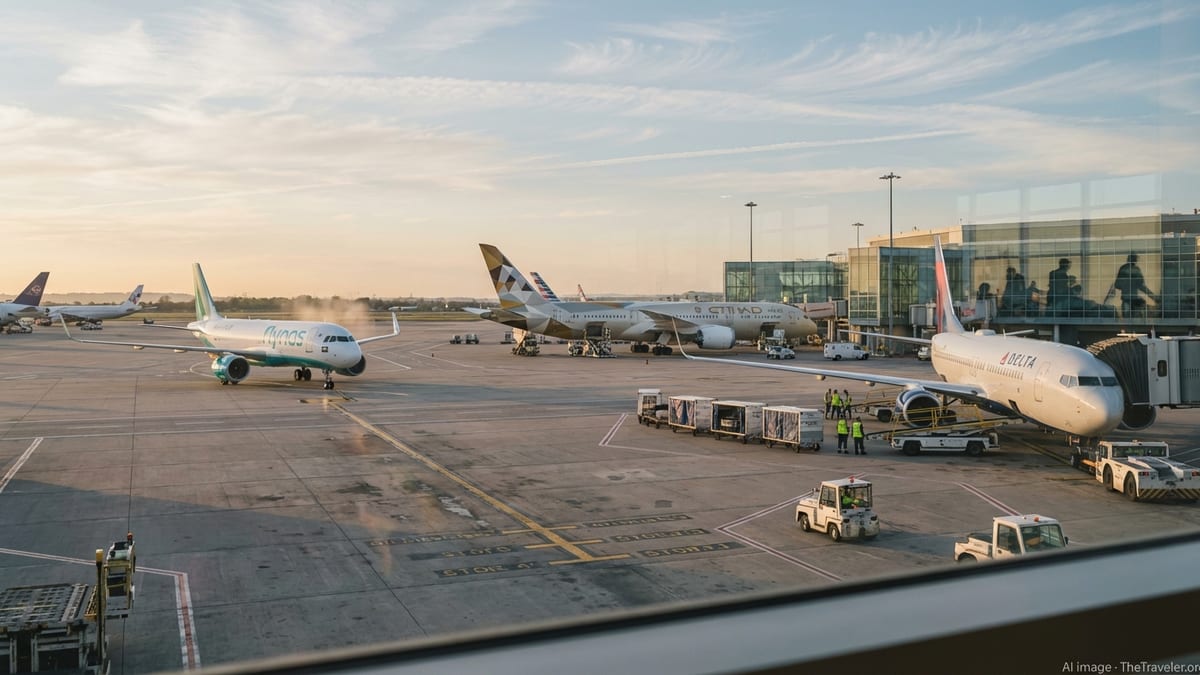
Airframe Bottlenecks Collide With Rebounding Demand
Publicly available data from manufacturers and industry bodies indicates that both Boeing and Airbus are struggling to deliver aircraft at the pace airlines expected when they placed record orders in recent years. Boeing’s output of 737 MAX jets has been constrained by regulatory scrutiny, quality rework, and a lengthy labor dispute in 2024, while Airbus has wrestled with supply chain and fuselage quality issues across its A320neo family and widebody lines.
Reports covering manufacturer guidance show that Airbus has repeatedly adjusted its single-aisle ramp-up plans, pushing back its target of producing 75 A320neo-family aircraft per month to 2027 while cutting near-term delivery goals as it addresses component defects. Boeing, meanwhile, delivered significantly fewer aircraft than its European rival in 2024 and has only recently secured approval from US regulators to gradually increase 737 MAX production beyond previously imposed caps.
The combined effect is a global capacity squeeze that is rippling through airline networks. With thousands of narrowbody and widebody jets on back order and delivery horizons stretching further into the future, airlines are deploying older aircraft longer, trimming schedules at the margin, and rethinking how aggressively they can grow long-haul and premium regional markets where demand remains strong.
Asia-Pacific Carriers Confront Slower Fleet Renewal
Cathay Pacific, Hong Kong Airlines, Singapore Airlines, and the Gulf “super-connectors” Emirates and Qatar Airways have all tied their post-pandemic recovery strategies to large pipelines of new-generation aircraft. Public fleet plans highlight heavy reliance on Airbus A320neo-family and A350 jets, along with Boeing 777X and 787 deliveries, for route expansion and fuel-efficiency gains over the next several years.
For Cathay Pacific and Hong Kong Airlines, the focus is on medium-haul connectivity across Asia and into mainland China, where high-density narrowbodies such as the A321neo play a critical role. Reports of A321neo delivery slippage imply that capacity growth on popular regional routes could lag underlying demand, particularly during peak holiday and business travel periods. Cathay has already used schedule adjustments in past seasons to manage resource constraints, a pattern that could recur if additional aircraft arrive late.
Singapore Airlines, which has accumulated a large order book of Airbus A350s and Boeing 777Xs to replace older widebodies and add new long-haul services, now faces a more uncertain timetable. Industry coverage of Boeing’s 777X program points to a stretched certification and delivery schedule, while Airbus continues to fine-tune its A350 production line. Any further drift could limit how quickly the carrier can open new ultra-long-haul links or upgauge high-demand markets.
Emirates and Qatar Airways, both heavily exposed to the timing of 777X deliveries and additional A350 capacity, are confronting similar questions. Public remarks from their leadership over recent years have underscored frustration with delivery slippages, and updated fleet guidance suggests that some aircraft retirements and route launches are being reshuffled to align with revised manufacturer schedules.
US Majors Juggle Delayed Single-Aisle Fleets
In North America, American Airlines, Delta Air Lines, and United Airlines are all navigating the consequences of Boeing’s constrained narrowbody output and, increasingly, Airbus bottlenecks. These carriers ordered hundreds of 737 MAX and A320neo-family jets to renew domestic and transatlantic fleets, only to see delivery profiles shift repeatedly over the past several years.
United has been among the most vocal about its exposure to delays in the higher-capacity 737 MAX 10. According to widely cited fleet updates, the airline has recalibrated its growth plans, turned to additional A321neo orders, and signaled that longer-term schedules will assume a slower arrival of new Boeing aircraft. That approach helps stabilize planning but curbs the speed at which United can add seats in constrained hubs and competitive transcontinental markets.
American Airlines, with outstanding orders for Boeing 737 MAX and 787 aircraft as well as Airbus A321neos, has already taken a cautious stance on long-haul growth, citing a limited pool of available widebodies and shifting delivery timelines. Delta, which has a diversified order book including Airbus A321neo and A350 aircraft, still depends on predictable output from both manufacturers to retire older narrowbodies and maintain its premium product on key routes.
Collectively, the big three US carriers are signaling flatter capacity growth curves than they once projected, particularly on select domestic and transatlantic sectors where upgauging relied on timely deliveries. While demand on many of these routes remains resilient, the gap between expected and actual fleet additions is narrowing the margin available for aggressive expansion.
Indian and Gulf Gateways Feel the Pinch
Air India’s sweeping multibillion-dollar aircraft commitments were designed to underpin its transformation into a stronger global competitor and to position Indian hubs as major alternatives to traditional Gulf and Southeast Asian connecting points. The airline has orders spanning Airbus A320neo-family jets, A350s, and Boeing 737 MAX and 787 models, representing one of the largest fleet renewal programs in aviation.
Industry analysis of manufacturer backlogs shows, however, that many of these aircraft are queued behind earlier orders from other airlines, and that broader production constraints limit how quickly the metal can arrive in India. Reports of Boeing and Airbus lowering or deferring annual delivery targets suggest that Air India’s fleet modernization will be more drawn out than initial timelines implied, potentially slowing its push into new long-haul markets and high-frequency regional corridors.
For the Gulf carriers that compete with Air India and other Asian airlines for connecting traffic between Europe, the Americas, and Australasia, the same supply pressures apply. Emirates and Qatar Airways continue to rely heavily on high-density widebodies and have long signaled that fleet retirement and refurbishment decisions are linked to the arrival of new-generation jets. With portions of those deliveries now sliding to later in the decade, both groups are expected to keep older aircraft active for longer and make targeted rather than sweeping capacity increases.
The net result is a more gradual evolution of the global connecting network than the order books alone would suggest. While airports in Dubai, Doha, Singapore, and Delhi are still expanding their roles as mega-hubs, the pace at which new city pairs and additional frequencies can be added is increasingly determined not by demand, but by how quickly manufacturers can turn backlogs into delivered aircraft.
What It Means for Travelers and Fares
The imbalance between robust travel demand and constrained aircraft deliveries is beginning to show up in pricing and availability. Economic research into the impact of delivery delays has indicated that prolonged output shortfalls can reduce effective capacity and exert upward pressure on fares across affected markets. Airline booking data in several regions already points to persistently high load factors on popular routes, even as carriers restore more of their pre-pandemic schedules.
For passengers flying with Cathay Pacific, Hong Kong Airlines, Singapore Airlines, Emirates, Qatar Airways, Air India, American, Delta, and United, the most immediate effects are likely to be limited seat availability on peak departures, fewer last-minute low fares, and in some cases, older aircraft operating routes that carriers had hoped to upgrade. Some airlines are also re-timing flights, consolidating frequencies, or deploying larger jets where possible to stretch their existing fleets.
From a strategic perspective, the current delivery disruption is accelerating shifts in competitive dynamics. Airlines with more diversified order books or greater access to leased aircraft may be better placed to fill gaps, while those heavily exposed to a single delayed program face tougher trade-offs between growth and reliability. The enduring popularity of travel, particularly on long-haul and premium routes, means demand is unlikely to evaporate, but capacity may remain structurally tighter than expected for several more years.
How quickly Boeing and Airbus can stabilize production and clear quality issues will determine whether this period becomes a temporary bottleneck or a longer structural constraint on global air travel. For now, the world’s largest airlines are preparing for a future in which aircraft arrive more slowly, fleets turn over more gradually, and the balance of power between capacity and demand shifts in favor of higher yields and more selective network expansion.