


More news on this day
Russia is preparing for a powerful wave of Chinese visitors in 2026, as a new visa-free regime, growing flight capacity and strong demand for Moscow city breaks push China ahead of Gulf rivals as the fastest-growing source of tourists to the country.
Get the latest news straight to your inbox!
Visa-Free Entry Reshapes Russia’s Inbound Market
Russia’s decision to grant temporary visa-free entry to holders of ordinary Chinese passports is widely viewed as the pivotal catalyst behind the current tourism surge. The regime, introduced at the end of 2025 and scheduled to run through mid-September 2026, permits Chinese visitors to enter Russia without a visa for stays of up to 30 days for tourism, business trips, family visits and major events. Publicly available information on the presidential decree describes the measure as a reciprocal step responding to China’s own relaxation of entry rules.
Unlike earlier visa-waiver arrangements limited to organized tour groups, the new framework significantly lowers barriers for individual travelers, who now account for a growing share of China’s outbound market globally. Analysts note that this brings Russia into line with popular Asian and Middle Eastern destinations that already court Chinese visitors with easy entry procedures, but it marks a particularly notable shift in Eurasia, where visa requirements have historically been stricter.
Russian tourism data for 2024 and 2025 already showed momentum from the Chinese market even before full visa-free travel took effect, with inbound visits from China rebounding sharply from pandemic lows and outpacing many traditional source markets. Industry observers say the extension of visa-free access through the 2026 peak travel season is expected to consolidate China’s position as the clear growth leader among non-CIS countries visiting Russia.
Direct Flights and Expanded Air Links Underpin Growth
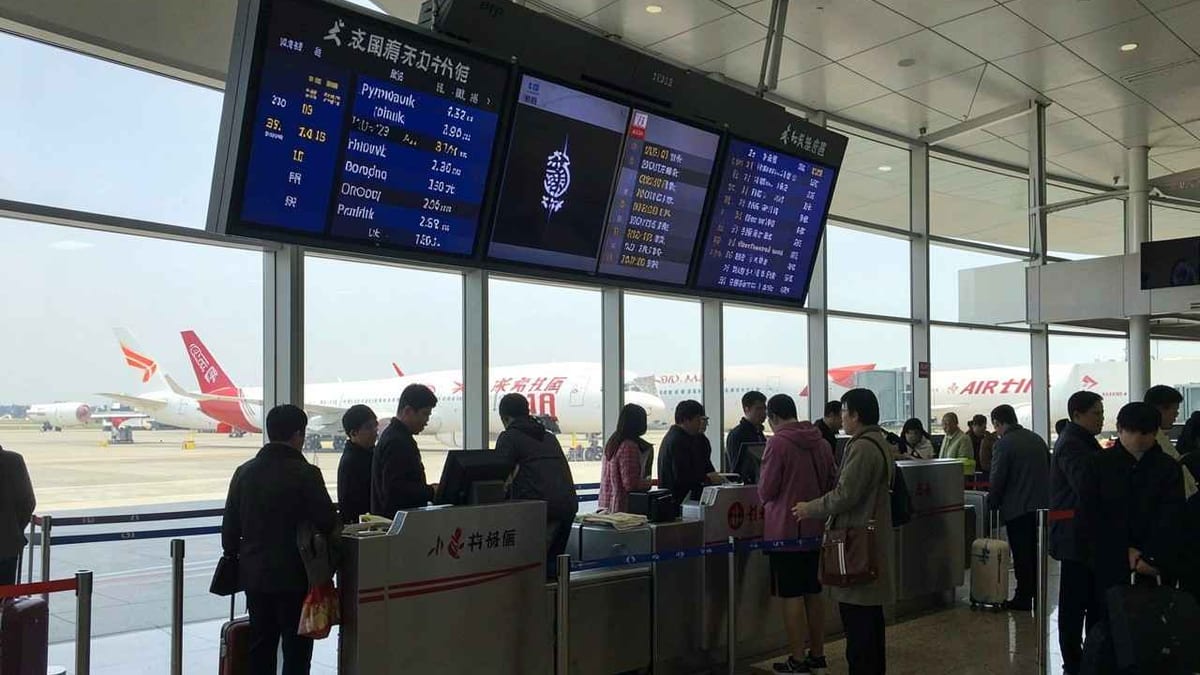
The aviation network between Chinese cities and Russia has rapidly deepened, providing the infrastructure needed to turn favorable visa policy into real passenger flows. According to Russian travel industry briefings, Russia maintained direct flights with several dozen countries in 2024, with routes to Chinese hubs among the standout growth corridors as carriers added frequencies and reintroduced services that had been suspended in previous years.
Ticketing and booking data cited in regional travel media indicate that by late 2024 and 2025, the cost of a return ticket between Moscow and major Chinese cities had in some cases become comparable to popular domestic routes within Russia. This price convergence, helped by competition on key city pairs and the use of wide-body aircraft on high-demand days, has made short-notice leisure trips and combined business-and-leisure itineraries more attainable for middle-class Chinese travelers.
Chinese online travel platforms have also highlighted Russia as an emerging value destination, especially for first-time visitors interested in European-style cityscapes without the higher airfares and complex visa processes associated with parts of Western Europe. Searches and pre-bookings for Russian itineraries reportedly spiked following announcements about the visa-free regime, reinforcing forecasts that capacity will continue to increase into the 2026 northern summer season.
Moscow Leads Record Demand as Flagship Destination
Moscow remains at the center of this tourism realignment, cementing its role as the primary gateway and showcase city for Chinese visitors. Official tourism statistics released in Russia reported that Moscow hosted a record 26 million tourists in 2024, surpassing pre-pandemic highs, with China named among the top contributors to the foreign visitor mix. Subsequent updates for 2025 and early 2026 suggest that international arrivals to the capital have continued to climb, with Chinese tourists leading growth from what Russian data classify as “far abroad” markets.
Reports from Moscow’s tourism bodies indicate that the city accounted for roughly one-third of all foreign visitors to Russia in 2024, underscoring its dominance in the country’s international tourism profile. Within that figure, China has moved to the forefront alongside long-standing markets such as Germany and the United Arab Emirates, while also attracting first-time visitors from second- and third-tier Chinese cities via connecting flights.
Travel industry commentary points to distinct seasonal patterns. Group tours featuring Red Square, the Kremlin, river cruises and the city’s metro architecture remain concentrated around China’s major holiday periods, particularly the Lunar New Year and Golden Week. At the same time, independent travelers in their 20s and 30s increasingly target Moscow for long weekend breaks, boutique shopping and food tourism, encouraged by social media coverage and short-stay itineraries tailored to the 30-day visa-free window.
China Pulls Ahead of Gulf States in Russia-Facing Tourism
While Saudi Arabia, the United Arab Emirates, Qatar, Oman, Bahrain and Kuwait have spent the past decade building global reputations as tourism powerhouses in their own right, their role as source markets for Russian-bound travel has been comparatively modest and slower to expand. Pre-2026 visitor statistics published by Russian and Gulf agencies describe Middle Eastern arrivals as a valuable but numerically smaller segment, often concentrated in premium business travel and luxury leisure rather than mass tourism.
In contrast, China combines sheer scale with rising middle-class purchasing power and a long-established culture of organized group travel, translating quickly into higher absolute numbers once structural barriers are lifted. Publicly available Russian border and tourism data show that Chinese citizens were already among the top three nationalities visiting Russia by 2024, alongside travelers from Germany and the UAE, with year-on-year growth rates that outstripped most Gulf Cooperation Council countries.
Analysts point out that Gulf states are simultaneously major destinations and growing investors in tourism, which shapes travel patterns: residents of Saudi Arabia or the UAE often vacation within the wider Middle East or in Europe and East Asia, while Russia remains more of a niche choice. By contrast, Russia has moved into the mainstream of Chinese outbound planning as a nearby, relatively affordable destination with strong cultural appeal and simplified entry, enabling China to overtake Gulf neighbors as the fastest-growing external tourism driver into the Russian Federation in 2026.
Economic Impact and Industry Outlook for 2026
The acceleration of Chinese arrivals carries significant economic implications for Russian cities and regions competing for international visitor spending. Tourism-related research from Moscow and federal agencies has linked the recovery in foreign arrivals since 2023 with rising revenues for hotels, restaurants, attraction operators and retail. With Chinese guests tending to travel in organized groups that pre-book accommodation, transport and excursions, local suppliers can plan capacity and pricing with greater certainty than for purely spontaneous markets.
Regional media have highlighted that tourism from China is also helping offset a decline in some traditional European source markets, where air links and payment channels remain more constrained than before 2020. For Russia’s hospitality industry, the diversification of inbound demand away from a narrow set of countries is viewed as a buffer against external shocks, particularly in a context of shifting geopolitical and economic relations.
Looking ahead to the remainder of 2026, Russian and Chinese travel platforms are promoting a wider geographic spread of itineraries beyond Moscow and Saint Petersburg, from Arctic aurora packages to rail-based journeys across Siberia and the Far East. The visa-free regime’s current expiry date in September 2026 is seen as a key inflection point: market observers note that a renewal or conversion into a longer-term agreement could lock in China’s lead over Gulf and other emerging markets as the primary growth engine for tourism into Russia for years to come.