


More news on this day
A United Express flight operating as UA6064 from Chicago to Sioux City diverted to Des Moines International Airport following a departure delay and onboard alert, culminating in an emergency landing that drew a full airport response but resulted in no immediate reports of serious injury.
Get the latest news straight to your inbox!
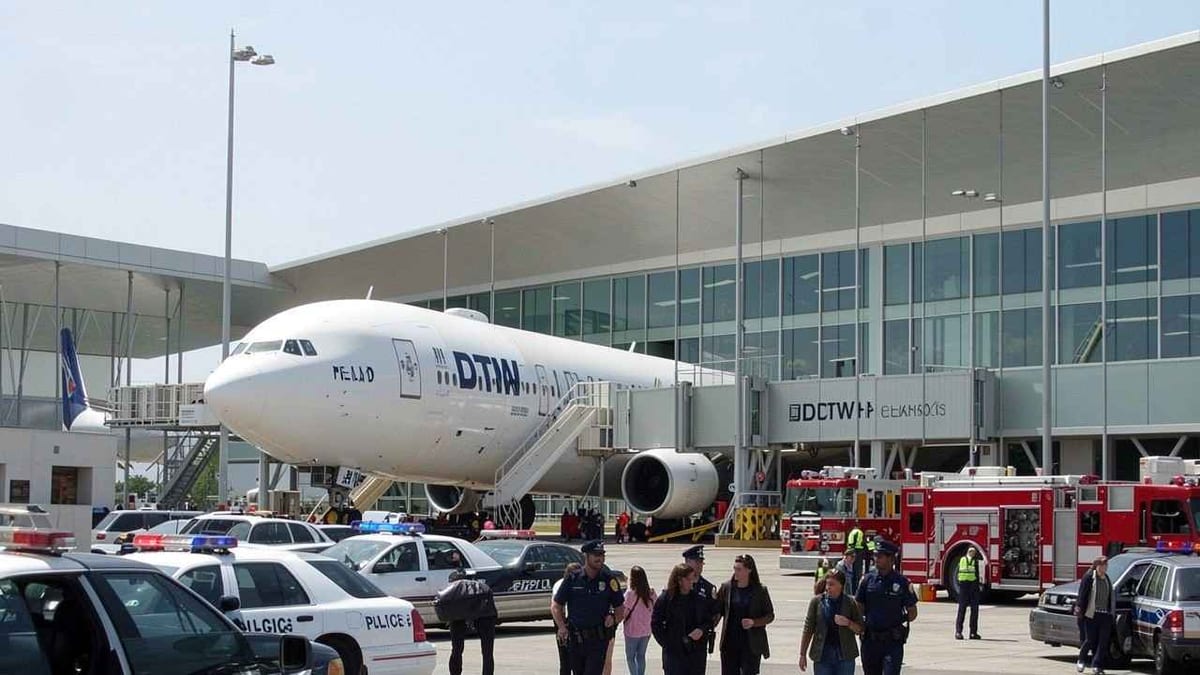
Regional Service From Chicago Experiences Midair Disruption
Publicly available flight-tracking data indicates that UA6064, a Canadair Regional Jet CRJ-200 operated by SkyWest Airlines for United Express, departed Chicago O’Hare later than scheduled on its route to Sioux City, Iowa. The aircraft involved is listed under registration N904EV, a 50-seat regional jet commonly used on Essential Air Service routes connecting smaller Midwestern communities to major hubs.
Tracking information shows the flight initially routing west toward Sioux City before changing course toward central Iowa. Data from multiple flight-monitoring platforms records a squawk code associated with an in-flight emergency and a descent toward Des Moines International Airport. Aviation enthusiasts posting on public forums described the diversion in real time as the jet turned southeast and began losing altitude in a controlled manner consistent with a precautionary approach.
Reports indicate that the crew declared an emergency following an onboard indication that required immediate attention. While the specific nature of the alert has not been detailed in publicly accessible records, regional coverage and aviation community posts characterize it as a mechanical or systems-related indication rather than an in-flight incident involving passengers or cabin crew.
The flight’s diversion added to an already disrupted travel day for those onboard, who had first experienced a ground delay in Chicago before encountering the in-flight alert that prompted the unscheduled landing in Des Moines.
Emergency Landing and Response at Des Moines International
According to publicly available information, Des Moines International Airport activated its emergency procedures as the United Express jet approached. Aircraft tracking logs show the CRJ-200 descending steadily into Des Moines, where it landed on a standard runway and taxied to a remote or designated stand under its own power.
Local news coverage referenced a full response by airport fire and rescue services, which is standard protocol for any flight declaring an emergency. Vehicles were positioned near the runway and taxiways ahead of the arrival, prepared for the possibility of an evacuation or fire, though there are no immediate indications that such measures were ultimately required.
Following the landing, passengers were expected to disembark in Des Moines and undergo safety checks. Available accounts suggest that individuals onboard were evaluated as needed, with no immediate reports of serious medical issues directly linked to the diversion.
The runway was inspected after the landing in line with typical procedures for emergency arrivals. Flight-tracking records show subsequent operations at Des Moines continuing, suggesting the event caused limited disruption to other traffic once the aircraft was secured.
Impact on Passengers Traveling to Sioux City
The diversion left travelers bound for Sioux City temporarily stranded at an airport roughly three hours away by road. Publicly accessible flight and schedule data for the Chicago–Sioux City route indicate that service on this corridor is relatively limited, meaning same-day rebooking options from Des Moines or Chicago can be constrained when irregular operations occur.
Under common practice in similar cases, passengers on diverted regional flights are often accommodated through a combination of rebooking on later departures, overnight hotel arrangements when necessary, and ground transportation to their original destination. Public commentary from recent diversions across the United network in the Midwest suggests that options can include bus transfers or reimbursement for certain surface travel expenses, depending on fare rules and the specific circumstances of the disruption.
For Sioux City, which relies on United Express service for connectivity to hubs such as Chicago and Denver, an unscheduled stop in Des Moines can significantly extend travel times. Travelers arriving late at night may encounter limited local transport and lodging availability, further complicating the end of their journey.
Social media and aviation forums often serve as early channels for passengers describing their experience after such events, although detailed accounts specific to this flight had not yet been widely circulated at the time information was compiled from public sources.
UA6064 and the Role of Regional Jets in Essential Air Service
Federal transportation records identify Sioux City as an Essential Air Service community served under a contract that runs through the end of 2026, with SkyWest operating as United Express on routes linking the city to Chicago O’Hare and Denver using 50-seat CRJ-200 aircraft. This arrangement underscores the importance of regional jets like N904EV in maintaining air access for smaller markets where passenger volumes do not support larger mainline aircraft.
In this context, the flight that diverted to Des Moines represents more than a single disruption. For many passengers, especially those connecting to or from long-haul services, a delayed or diverted regional segment can break an entire itinerary. The reliance on high-frequency but small-capacity jets also means that when one aircraft is taken out of rotation after an emergency event, the impact can ripple across multiple departures.
Recent schedule adjustments and travel waivers across the Midwest, including Chicago, Des Moines, and Sioux City, have highlighted how weather and air-traffic constraints intersect with the tight operating margins of regional fleets. In such an environment, any onboard alert leading to an emergency landing not only becomes a significant safety event but can also strain already thin buffer times in airline schedules.
Despite these pressures, the handling of UA6064’s diversion, as reflected in available data, illustrates established procedures in regional operations: priority on reaching the nearest suitable airport, activation of emergency response plans, and subsequent focus on safely reaccommodating travelers and inspecting the aircraft before any return to service.
Ongoing Review and Safety Context
Following an event of this nature, it is standard practice for the operating carrier and relevant aviation authorities to review the circumstances that led to the emergency declaration and diversion. Publicly accessible information does not yet detail the outcome of any such examination for this specific flight, but similar cases typically involve inspection of onboard systems, data downloads from flight recorders when warranted, and internal reporting aimed at identifying technical or procedural issues.
United Airlines and its United Express partners, including SkyWest, operate a large network of regional flights across the Midwest and other parts of the United States. Industry statistics and historical records indicate that diversions and emergency landings, while uncommon relative to total flight volume, are a recognized part of airline safety management and are treated as opportunities to reinforce training and refine maintenance practices.
For travelers, the incident serves as another reminder that modern commercial aviation is structured around conservative decision-making in the face of any onboard irregularity. The choice to divert UA6064 to Des Moines, even after an initial delay and inconvenience for passengers, aligns with the broader safety culture that prioritizes landing at the nearest suitable airport whenever an in-flight alert arises.
As more information emerges through public channels, the UA6064 diversion is likely to be cataloged among the many short-lived but closely scrutinized events that shape ongoing improvements in regional airline operations serving communities like Sioux City.