


More news on this day
Boeing’s jet deliveries accelerated in May, highlighting a gradual operational recovery at the U.S. planemaker, but European rival Airbus remained comfortably ahead in the global deliveries race.
Get the latest news straight to your inbox!
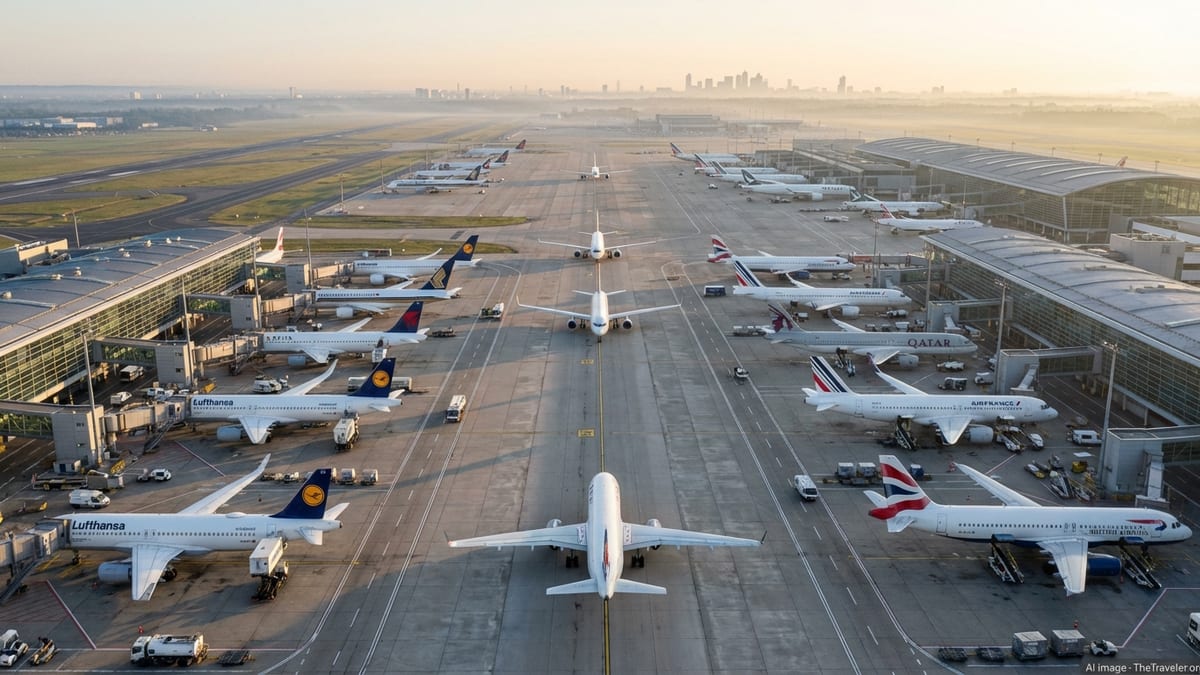
Stronger Month for Boeing After a Difficult Start to 2026
Publicly available figures compiled from industry reports indicate that Boeing handed over 60 commercial aircraft in May 2026, a jump of about one third compared with the same month a year earlier. According to coverage from financial news outlets, the improvement marks one of Boeing’s strongest monthly totals so far this year and suggests that efforts to stabilize production are beginning to filter through to customers.
The latest monthly tally follows an uneven start to 2026 for Boeing, as the company continued to face regulatory scrutiny and supply chain disruptions. Earlier in the year, deliveries had been constrained by inspections, quality reviews and coordination challenges with key suppliers. The move up to 60 jets in May therefore stands out as an indicator that more aircraft are once again flowing off Boeing’s final assembly lines.
Industry analysts tracking the manufacturer’s recovery note that deliveries are a critical gauge of cash generation, because airlines typically release most payments when aircraft are handed over. A firmer delivery pace in May is expected to support Boeing’s liquidity and help it work down a sizable order backlog accumulated during years of slower output and pandemic-era disruptions.
Even with the latest progress, Boeing still faces pressure to show that May’s performance can be sustained over several quarters. Market commentary suggests that investors remain focused on whether the company can avoid fresh production setbacks and maintain a predictable cadence across its 737, 787 and 777 programs.
Airbus Extends Lead With 81 May Deliveries
While Boeing’s May performance improved, Airbus once again outpaced its U.S. competitor in monthly handovers. Airbus data summarized by aviation trade publications show that the manufacturer delivered 81 aircraft in May, significantly more than Boeing’s 60 and up sharply from the 51 jets it handed over in May 2025.
The May result pushed Airbus’s deliveries for the first five months of 2026 to 262 aircraft, according to published figures based on the company’s monthly report. The European group has set a full-year target of about 870 deliveries, implying that it must average more than 80 handovers a month for the remainder of the year. Reaching 81 in May keeps Airbus on a trajectory broadly aligned with that objective.
Much of Airbus’s volume continues to come from its A320neo family of single-aisle jets, particularly the high-capacity A321neo, which industry summaries describe as the most-delivered model in May. The company also recorded a smaller number of widebody handovers, including A330neo and A350 aircraft, supporting airlines as they expand or refresh long-haul fleets.
Airbus’s ability to lift deliveries in May follows a period earlier in 2026 when output had lagged the previous year’s pace, in part because of specific regulatory and logistical issues affecting some customers. Reports indicate that the latest figures suggest a partial rebound from those earlier delays, even as supply chain challenges remain a constraint.
Year-to-Date Race Highlights Diverging Momentum
When viewed over the first five months of 2026, the latest data underline Airbus’s continued advantage in overall deliveries. Estimates compiled from corporate disclosures and specialist aviation outlets indicate that Airbus’s total of 262 aircraft handed over so far this year comfortably exceeds Boeing’s year-to-date output, even after Boeing’s stronger showing in May.
The gap reflects broader trends seen in recent years. Airbus finished 2025 with 793 commercial aircraft delivered, significantly ahead of Boeing’s tally for the year, and entered 2026 with a large order book stretching over many years of planned production. Boeing, for its part, regained leadership in net orders in 2025 but has been slower to translate that sales momentum into higher, sustained deliveries.
Market commentary suggests that Airbus’s relatively higher and more stable narrowbody output has allowed it to build and maintain a delivery lead, particularly in the crucial single-aisle segment where most airlines are growing their fleets. Boeing’s progress has been more volatile, reflecting the lingering impact of past safety crises, regulatory reviews and periodic factory disruptions.
Still, the May numbers indicate that the contest is not static. Boeing’s 33 percent year-on-year rise in deliveries shows that, when production flows more smoothly, the U.S. manufacturer can close part of the gap. Observers note that the coming summer months, typically a busy period for airline handovers, will be important in determining whether this improvement marks the start of a more durable trend.
Order Backlogs and Supply Chains Shape the Outlook
Behind the headline delivery figures, both manufacturers continue to wrestle with dense order backlogs and complex supply chains. Public information from corporate presentations and industry analyses indicates that Airbus and Boeing together hold orders for many thousands of aircraft, representing close to a decade or more of future production at current planned rates.
Suppliers remain under pressure to raise output of engines, avionics and cabin equipment, and reports from sector analysts note that even small disruptions can ripple through final assembly lines. In this context, the ability of Airbus to deliver 81 aircraft in May and of Boeing to return to 60 handovers is seen as a test of how effectively the broader industrial ecosystem is adapting to sustained high demand.
Order activity has also remained robust in 2026, with Airbus registering several triple-digit purchase commitments and Boeing continuing to convert tentative agreements into firm contracts. While orders do not translate immediately into revenue, they underpin long-term production plans and encourage both manufacturers to invest in capacity, digital tools and workforce expansion.
At the same time, geopolitical tensions, trade considerations and regulatory developments, particularly in major markets such as China, Europe and the United States, continue to influence delivery timing. Industry coverage has highlighted instances where approvals or export paperwork affected the scheduling of aircraft handovers, illustrating how factors beyond factory performance can sway monthly totals.
Implications for Airlines and Travelers
For airlines, the divergent yet improving delivery patterns at Boeing and Airbus have direct consequences for fleet planning and route growth. Carriers relying on narrowbody jets for domestic and regional networks are closely watching how many aircraft each manufacturer can deliver in 2026, since delays can ripple into capacity constraints and higher fares on popular routes.
Travel-focused analysts point out that Airbus’s higher and more predictable delivery pace offers some airlines greater confidence in receiving aircraft on or near original schedules, particularly for the A320neo family. Boeing’s recent improvement in May is welcome for carriers that have been waiting for 737 and 787 aircraft, but many fleet planners continue to build in buffers to account for potential schedule shifts.
For travelers, the delivery race is less about corporate rivalries and more about the availability of newer, more efficient aircraft on the routes they fly. As both manufacturers increase handovers, airlines can introduce jets with quieter cabins, lower fuel burn and improved reliability, supporting more frequencies and, over time, easing capacity bottlenecks on busy corridors.
Looking ahead to the rest of 2026, Boeing’s task will be to prove that May’s stronger figures are repeatable, while Airbus will aim to sustain its higher monthly delivery levels in pursuit of its ambitious annual target. How the two manufacturers navigate these parallel challenges will help shape global air travel capacity into the late 2020s.