


More news on this day
Unauthorized drone activity over Luxembourg Airport on the evening of 18 September 2026 triggered an abrupt shutdown of air traffic, diverting 19 flights and leaving hundreds of passengers stranded for hours at airports across Europe.
Get the latest news straight to your inbox!
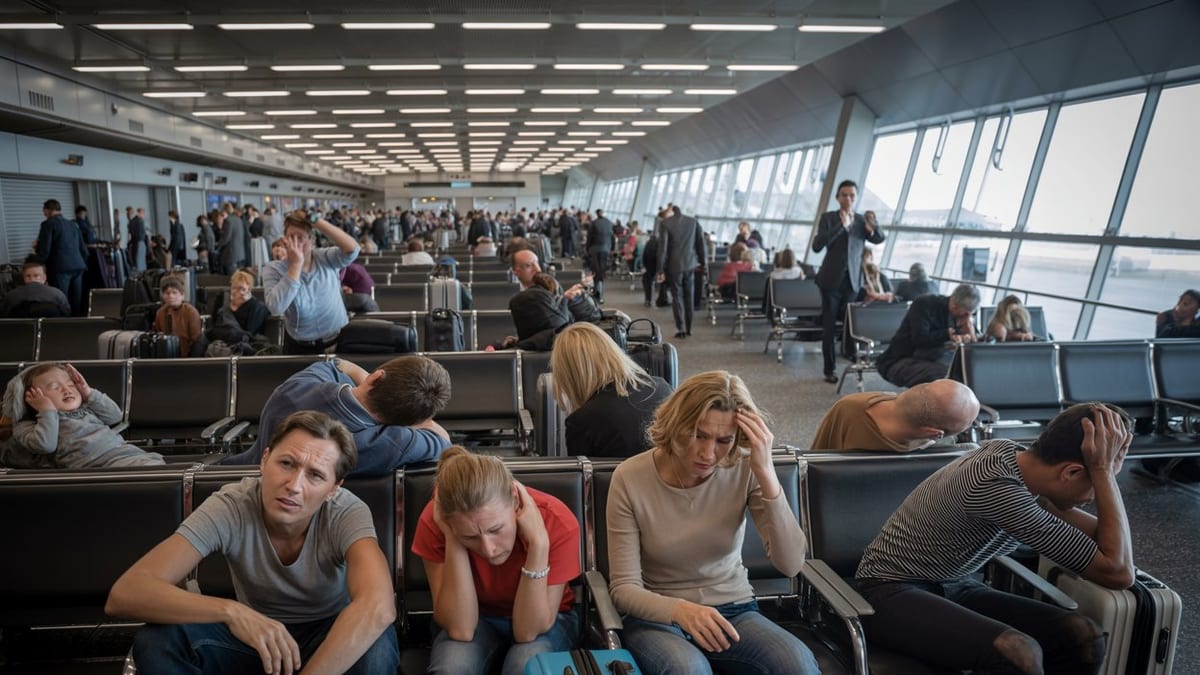
Night of disruption at Findel as airspace shuts down
Publicly available information from Luxembourg authorities shows that air traffic at Luxembourg Airport, also known as Findel, was suspended on the evening of 18 September after visual sightings of unidentified and unauthorized drones in the airport’s airspace. The government’s Interministerial Drone Assessment Unit reported that the airspace was closed as a precaution to protect passengers, crews, airport staff and aircraft.
According to official updates, flight operations resumed at approximately 1:20 a.m. on 19 September, several hours after the first detections. By that time, 19 inbound flights had already been diverted to other European airports. Luxembourg-based carrier Luxair accounted for the majority of the diversions, alongside services from airlines such as KLM and Air Dolomiti.
Coverage from national media indicates that more than 1,800 passengers were directly affected by the sudden airport closure. Many travelers found themselves grounded at unexpected hubs late at night, waiting for hotel arrangements, replacement flights or permission to return to Luxembourg once the airport reopened.
Stranded passengers face long waits and scattered diversions
Reports from Luxembourg and regional outlets describe passengers stuck for hours in airports including Brussels, Frankfurt and other nearby hubs, as aircraft approaching Luxembourg were instructed to divert or hold. With the closure coming during Luxair’s busy evening arrival wave, travelers on business trips, weekend breaks and connecting itineraries experienced particularly severe disruption.
Publicly accessible accounts from affected passengers on social platforms and local forums describe long lines at service desks, uncertainty over rebooking options and limited overnight accommodation near some diversion airports. In several cases, travelers reported arriving at their diversion point close to or after midnight, then waiting into the early morning for transport back to Luxembourg or for onward connections.
While some aircraft were eventually able to operate late-arriving services into Findel once the airspace reopened, others remained away from base overnight. This created a shortage of available aircraft and crews in Luxembourg the following day, contributing to further delays and schedule changes across the network.
Repeat drone sightings deepen frustration and raise safety questions
The 18 September shutdown was followed only days later by another interruption, when drone sightings near the airport on Monday 21 September again prompted a temporary halt to air traffic in the evening. Airport operator lux-Airport stated publicly that all traffic was suspended between 9:38 p.m. and 10:30 p.m., with operations gradually returning to normal before 11 p.m.
Local media reports indicate that this second incident, although shorter, added to passenger frustration by reviving memories of the earlier diversions and reinforcing concerns over the vulnerability of airport operations to small unmanned aircraft. Travelers described having to remain on board aircraft in holding patterns or waiting on the ground while air traffic control assessed the situation.
Government briefings state that the Interministerial Drone Assessment Unit met after the first incident to evaluate the circumstances and consider follow up measures. Officials have not publicly disclosed the origin of the drones or the identity of any operators, and government communications emphasize that the analyses are ongoing in cooperation with international partners.
Authorities tighten restrictions as investigations continue
In response to the recent events, authorities in Luxembourg have introduced additional restrictions on drone operations. A government notice published on 25 September announced a temporary ban on drone flights between 28 and 30 September 2026, with exceptions only for specific missions carried out in the public interest, such as military, police, customs, search and rescue, medical flights, evacuations and firefighting.
The same communication indicated that an existing special zone in Luxembourg’s controlled airspace would be expanded to a radius of 1 kilometer from 30 September, while retaining current access conditions. The measure is presented as part of broader prevention and vigilance efforts, with the aim of reducing the likelihood that unauthorized drones can approach critical infrastructure such as airports.
Publicly available information from Luxembourg’s crisis communication platform notes that the government is maintaining heightened monitoring and awareness activities among aviation and security stakeholders. For travelers, this translates into the possibility of short notice disruption if new sightings occur, even as efforts are made to keep flight operations running as close to normal as possible.
Broader European backdrop of rising drone incidents
The disruptions at Luxembourg Airport come against a wider European backdrop of growing concern about drones near airports and other sensitive sites. Aviation incident trackers and regional media describe a rising number of reported drone-related interruptions across the European Union during 2026, including several cases in which airspace closures or runway shutdowns were ordered while authorities investigated potential risks.
Industry observers point out that drones are increasingly used for commercial, industrial and recreational purposes, which has led to denser traffic in low altitude airspace. Regulators in numerous European countries are tightening rules, expanding no fly zones and promoting registration and identification systems for drone operators, in an effort to balance innovation with safety.
For passengers passing through Luxembourg in the weeks following the September disruptions, airlines and the airport are advising travelers to monitor flight information closely, allow extra time at departure and be prepared for possible knock on delays if operational conditions change at short notice. While the immediate drone sightings that caused the diversions have ceased, investigations and policy responses continue, leaving travelers attentive to how such incidents might affect their next journey through Findel.