


More news on this day
Hundreds of travelers at Montreal Pierre Elliott Trudeau International Airport faced long waits and unexpected overnight stays on June 9 as a wave of flight delays and cancellations involving Air Canada and several major partner carriers disrupted schedules across Canada’s largest air hubs.
Get the latest news straight to your inbox!
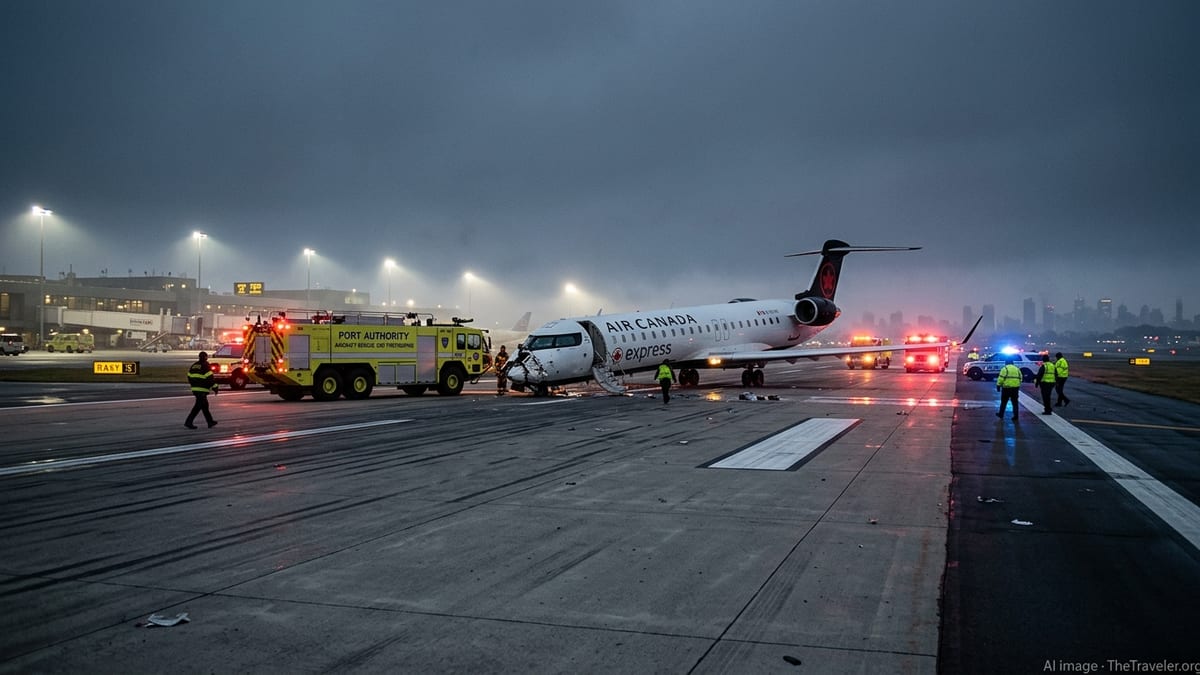
System Disruptions Ripple Across Major Canadian Hubs
Publicly available flight-tracking data for June 9 indicate that operations at Montreal Trudeau were significantly affected, with a cluster of delayed and cancelled departures touching Air Canada and partner services operated under the Delta, Lufthansa, Jazz and Air France brands. The disruption extended beyond Montreal to include Toronto Pearson, Vancouver, Ottawa and Quebec City, creating a patchwork of schedule changes that left passengers waiting for updates at gates and service counters.
Combined figures compiled from same-day departure boards and tracking platforms point to at least 34 delayed flights and 13 outright cancellations across the five Canadian airports. The majority involved domestic and transborder routes, but knock-on effects reached several transatlantic services, including flights connecting Montreal with major European hubs such as London, Paris and Amsterdam. The result was a day of uncertainty for passengers attempting to start summer trips, business travel and family visits.
The pattern of disruption mirrored previous episodes in which technical issues or air traffic management constraints have slowed Canadian airline operations, particularly at the country’s busiest airports. While each delay or cancellation has its own cause, the combined impact on June 9 underscored the vulnerability of tightly timed schedules during peak travel periods, especially where partner airlines and codeshare agreements intertwine multiple carriers on a single route.
Montreal Trudeau Becomes the Focal Point
Montreal Trudeau, a key hub for Air Canada and an important gateway to Europe and the United States, emerged as the focal point of the day’s irregular operations. Throughout the day, departures and arrivals screens showed a succession of revised departure times, rolling delays and flight-status changes affecting both mainline Air Canada and Air Canada Express services operated by Jazz.
Partner airlines that share traffic and codes with Air Canada also appeared in the disruption data. Delta and Lufthansa codes were visible on several impacted services, reflecting their role in joint itineraries and connection-building between Montreal and other North American and European cities. Air France’s transatlantic connectivity from Canadian gateways, particularly via Paris, also figures into the wider web of schedules that can be strained when aircraft and crews are out of position.
For passengers at Montreal Trudeau, the operational complexity translated into hours spent in departure halls and at customer service counters, as travelers attempted to rebook missed connections or secure accommodation. Social media posts throughout the day described long lines at check-in and customer service points, with some travelers reporting that they were offered rebooking on later flights through Toronto or other hubs as airlines worked through backlogs.
IT and Air Traffic Issues Add To Ongoing Strain
The latest wave of disruption came against a backdrop of wider operational strain across North American and European aviation networks this season. Recent days have seen reports of information technology problems and flight plan transmission issues affecting Jazz-operated services, as well as Delta-operated transatlantic flights, prompting precautionary delays and schedule adjustments at multiple hubs. These earlier incidents contributed to aircraft and crew being out of their usual rotations, making same-day recovery more difficult when new delays appeared.
In Canada, recent discussion among travelers and industry observers has focused on how quickly airlines can recover from such events, particularly when they coincide with high-demand travel days. When a long-haul aircraft arrives late or an inbound feeder flight is held at its origin, the resulting mismatch between available planes, rested crews and scheduled departure times can cascade through the timetable, affecting routes that were not directly involved in the original problem.
Published guidance on airline operations notes that carriers increasingly depend on sophisticated scheduling tools to manage their fleets and crew rosters. While these systems can help optimize complex networks, they can also amplify the impact of technical outages or data errors. When a disruption occurs, restoring normal operations may take several days, especially for carriers that span multiple continents and depend on partner airlines to feed traffic into their long-haul flights.
Travelers Face Missed Connections and Overnight Stays
For many travelers, the June 9 irregular operations translated into practical challenges such as missed onward connections, unexpected hotel stays and rebooked routings through alternative hubs. Long-haul passengers connecting in Montreal to or from domestic flights into cities such as Vancouver, Ottawa and Quebec City appeared particularly vulnerable, as even modest delays on feeder flights could push them beyond the boarding window of their international departures.
Published consumer guidance on flight disruptions highlights that passengers affected by long delays or cancellations may be offered meal vouchers, hotel accommodation or rebooking on the next available flight, depending on the cause and the specific carrier’s policies. On busy days, however, available seats on later services can be scarce, forcing travelers to wait until the next day or accept routings with additional stops and longer travel times.
In online forums, some passengers described weighing whether to remain in Montreal or reroute through Toronto or other Canadian hubs in hopes of securing earlier departures. Others reported that, once rebooked, they faced further uncertainty as additional schedule changes appeared on airline apps and departure boards. The situation illustrated the compounding nature of disruptions in a hub-and-spoke network, where each delayed departure can affect multiple connecting itineraries.
What Travelers Can Do When Disruptions Hit
Publicly available advice from aviation and consumer advocates suggests several practical steps for travelers caught in situations like those seen on June 9. Passengers are frequently encouraged to monitor flight status on both airline apps and independent trackers, since gate assignments and departure times can change multiple times within a short window. Checking the status of connecting flights, not just the first leg, can help travelers understand whether a revised itinerary remains viable.
Travel experts often recommend that passengers contact airlines through multiple channels when disruptions occur, including airport agents, call centers and in-app messaging where available. While airport lines may be long, remote agents can sometimes access different inventory or propose rerouting options that are not immediately visible at kiosks. For those with tight onward plans, such as cruises, tours or rail connections, having travel insurance that covers missed connections or additional accommodation can provide an extra layer of protection.
The events around Montreal Trudeau also serve as a reminder of the value of building extra buffer time into itineraries involving key hubs. When traveling through airports that handle large volumes of long-haul and connecting traffic, particularly during peak seasons, allowing several hours between flights can mitigate the risk of misconnection. For many of the travelers facing delays in Montreal, Toronto, Vancouver, Ottawa and Quebec City, such buffers may have made the difference between a stressful overnight stay and an inconvenient but manageable late arrival.