


For many travelers, the most stressful moment of a car rental is not pulling out of the lot, but facing a hard sell at the counter: expensive collision damage waivers, alphabet-soup liability add-ons, and the uneasy feeling that one wrong choice could turn a minor fender bender into a financial mess. Online providers such as Bonzah promise a cheaper, clearer alternative. Understanding how Bonzah compares with other travel car rental insurance providers can help you decide whether it belongs in your trip planning toolkit.
Get the latest updates straight to your inbox!
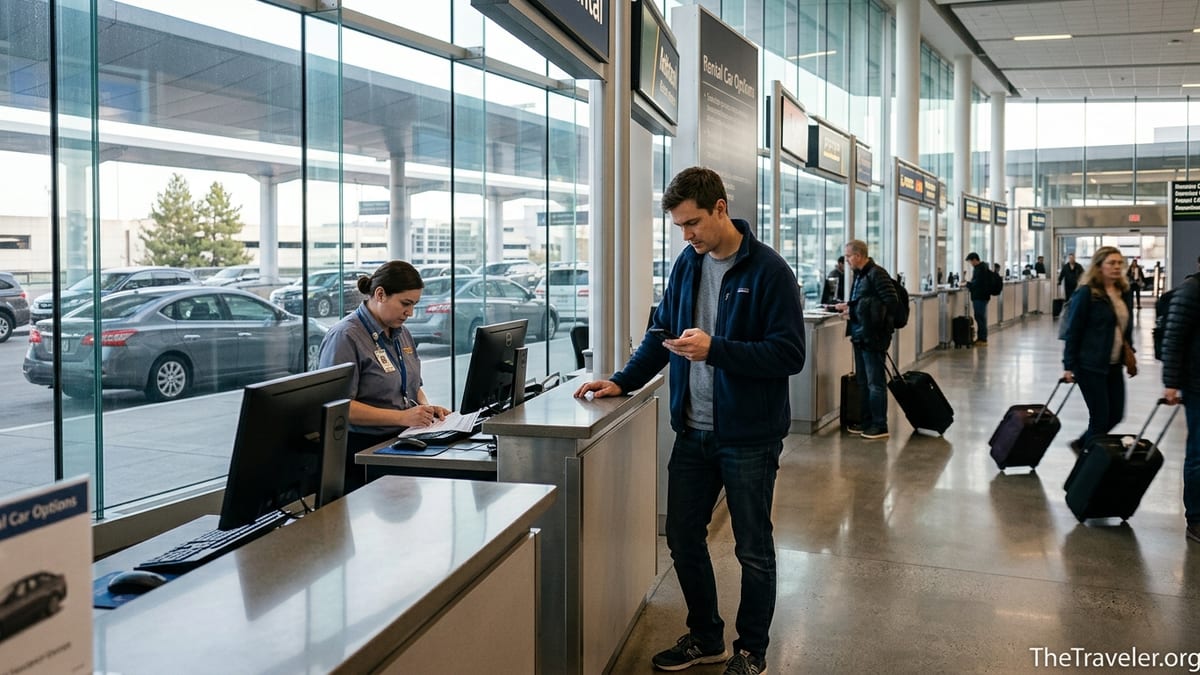
What Bonzah Actually Offers Travelers
Bonzah is a standalone rental car insurance provider that lets you buy coverage online before you ever see a rental counter. In practical terms, this means you can insure a car rented from a major brand at an airport in Denver or an independent agency in Orlando without buying the rental company’s own damage waiver. Bonzah focuses on two key pieces of protection most travelers worry about: damage to the rental car itself and liability to other people if you cause an accident.
On the damage side, Bonzah sells primary rental car damage coverage that typically insures up to about 35,000 dollars of repairs or replacement if your rental vehicle is damaged in a collision with another vehicle. Recent examples from Bonzah’s own materials describe this as primary coverage with a deductible in the hundreds of dollars range per incident, significantly below what many rental firms would charge you out of pocket. Coverage is designed to pay before your personal auto policy, helping you avoid a claim that might raise your long-term premiums.
Bonzah also offers liability products. Its Renter’s Contingent Liability Insurance, or RCLI, is designed to meet state minimum liability requirements in the United States when you do not have your own auto policy. On top of that, Bonzah can sell Supplemental Liability Insurance, or SLI, which boosts third-party liability limits, often up to a total in the hundreds of thousands of dollars or more, depending on state rules. Together, these policies can move you from “bare minimum legal coverage” into a range that feels more comfortable if you are driving busy freeways around Los Angeles or long rural stretches where emergency services can be costly.
For baggage and personal items, Bonzah advertises limited coverage for loss, damage, or theft of belongings such as luggage and travel documents during your rental period, typically capped at a few hundred dollars in total and a smaller limit per item. This is not a replacement for full travel insurance, but it can cushion the blow if, for example, a window is smashed in a hotel parking lot and your daypack disappears with your passport inside.
Price: Bonzah vs Rental Counter Insurance
To understand Bonzah’s appeal, it helps to look at how it compares with what rental companies charge. Large airport locations in the United States commonly quote collision damage waivers in the range of about 20 to 40 dollars per day, sometimes higher for SUVs or premium models. A one-week rental in Phoenix with a 35 dollars per day waiver can easily add nearly 250 dollars in protection fees, often with exclusions and deductibles that are hard to decode on the spot.
Independent analyses from consumer finance outlets in 2026 show that third-party providers like Bonzah and Allianz often undercut rental desk pricing by roughly 40 to 60 percent for similar levels of basic collision protection. One recent NerdWallet comparison cited a Bonzah damage policy that started around the mid-20 dollars per day for up to 35,000 dollars of primary damage coverage, while Allianz’s OneTrip Rental Car Protector was shown at about 13 dollars per day for up to 75,000 dollars of damage and loss. While exact prices vary by state, trip length, and vehicle, the pattern is consistent: the rental company is often the most expensive way to buy peace of mind.
Consider a practical example. A traveler rents a compact car in Miami for 10 days. At the counter, the agent offers a collision damage waiver for 30 dollars per day, or 300 dollars before taxes and fees. If that traveler instead bought a Bonzah policy pricing around the upper teens to mid-20 dollars per day based on recent public examples, the total would come in somewhere between roughly 180 and 250 dollars. If they chose Allianz at about 13 dollars per day, they would pay around 130 dollars. All three options can protect the car, but Bonzah typically sits between the very low-cost credit card coverage you may already have and the steep rate at the counter.
It is worth noting that some outlets have reported higher indicative daily figures for Bonzah in certain scenarios, and the company itself advertises that it aims to undercut the rental desk rather than always be the cheapest option in the market. The takeaway for travelers is that Bonzah is usually materially cheaper than buying the rental company’s waiver, but not always the least expensive third-party provider available on every trip.
Coverage Scope: Bonzah vs Allianz, RentalCover, and Sure
When comparing Bonzah with other standalone players, the details of coverage matter at least as much as price. Allianz’s OneTrip Rental Car Protector, widely cited in travel and personal finance coverage, is a primary policy that typically offers up to about 75,000 dollars in coverage for damage and loss to the rental vehicle, along with 24-hour emergency assistance. In contrast, Bonzah’s advertised limit around 35,000 dollars is likely sufficient for compact cars and many midsize sedans, but may not fully cover high-end SUVs or specialty vehicles. For a standard Toyota Corolla rented in Chicago, 35,000 dollars of coverage is usually more than enough. For a full-size SUV in Hawaii with a replacement value north of that figure, Allianz’s higher limit could be more reassuring.
Another competitor, RentalCover, positions itself as offering no-deductible primary policies that can be up to about half the price of the rental desk options. Its coverage menus vary by country but often include protection for damage, theft, and even administrative fees such as “loss of use” and towing that rental companies like to charge after an incident. Bonzah’s policies typically focus on collisions with another vehicle for their primary damage coverage, and travelers need to read carefully to see how single-vehicle incidents, vandalism, and non-collision damage are handled for their specific state or destination.
Sure, an insurtech platform that sells rental car coverage at the booking step through partners, advertises protection for up to about 100,000 dollars of damage to a rental car along with certain personal effects. Where Bonzah typically requires you to visit its own site before or shortly after booking, Sure is often embedded directly into an online booking flow, such as when you reserve a car through a travel app and see a “protect your rental” toggle. From the traveler’s point of view, Bonzah is an intentional stop, while Sure may appear as a convenient one-click add-on.
Liability is a particularly important differentiator. Allianz’s standard U.S. rental car product generally focuses on damage to the rental vehicle itself and does not replace your personal auto liability coverage. Bonzah, by contrast, specifically markets RCLI and SLI to help fill liability gaps, which can make it attractive for travelers who do not own a car at home but want to legally and safely drive a rental in the United States. If you are a city-dwelling New Yorker without an auto policy, for example, pairing Bonzah’s RCLI and SLI with its damage plan could be one of the few ways to assemble both car and third-party coverage without buying a traditional long-term auto insurance policy.
Bonzah vs Credit Card Rental Car Insurance
Many U.S. travelers already have some form of rental car coverage baked into their credit cards. Premium cards from issuers like Chase and American Express often include rental car damage protection when you pay for the rental in full with that card and decline the rental company’s own collision damage waiver. In many cases this protection is secondary, meaning it only pays out after your own auto insurance policy has responded, usually covering your deductible and some extra charges from the rental company.
Some credit cards, such as the Chase Sapphire Preferred and certain travel-focused Visa or World Elite Mastercard products, offer primary rental car damage coverage. This means they step in first for damage or theft of the rental car, letting you avoid a claim on your personal policy. Travelers on forums frequently describe relying on these cards for domestic trips, especially if they already hold the card for its rewards. In this case, there is no additional daily cost beyond the card’s annual fee, which makes any third-party policy, including Bonzah, look more expensive.
However, credit card rental coverage has limitations. Most card policies do not provide liability insurance. They may exclude certain countries, types of vehicles, or long rental periods, and they often will not cover administrative fees like “loss of use” unless specific proof is provided by the rental company. If you do not carry your own auto policy at home, a secondary card benefit may not function as expected, since there is no primary insurer to respond first. Travelers who rent infrequently might also hesitate to open a new card just to secure primary rental coverage.
In that context, Bonzah can serve as a straightforward, pay-as-you-go alternative. For a traveler with no personal auto policy and a basic credit card that only offers secondary coverage or none at all, a Bonzah plan that pairs primary damage insurance with RCLI and SLI can effectively mimic the combined protection a frequent traveler might assemble from a premium credit card plus a separate liability policy. For a family renting a minivan in Montana for a one-time road trip, buying Bonzah for that specific rental could be simpler than restructuring their wallet around a new credit card.
Regional Differences and Use Cases Where Bonzah Shines
Bonzah’s sweet spot often appears in use cases where rental counter coverage is expensive, credit cards are either weak or not accepted, and the traveler lacks a robust personal auto policy. One common example is a U.S.-based traveler flying into a major airport such as Los Angeles, Las Vegas, or Honolulu during a peak season. Rental companies at these locations commonly quote top-tier waivers near the upper end of the daily range. If you are renting a mid-size SUV for two weeks and face a 35 to 40 dollars per day waiver, even a Bonzah policy at the upper end of its reported daily range can save you over a hundred dollars during the trip.
Another scenario involves non-owner drivers. Think of a Brooklyn resident who relies on subways and does not carry a personal auto policy, but wants to rent a car for a week in Florida. Without an existing policy, many credit card benefits will not provide liability, and the rental counter is likely to push not only a collision waiver but also a liability package that can rival or exceed the cost of the car itself. In recent online discussions, some travelers in this situation report using Bonzah’s RCLI to meet state minimum liability, then adding SLI for higher limits, and pairing both with Bonzah’s damage coverage to create an all-in-one solution that keeps costs under tighter control than buying multiple line items at the counter.
International travel introduces another layer of complexity. Bonzah’s policies have historically covered rentals in a range of countries, but eligibility and limits vary, and some destinations with strict local insurance frameworks may not be included. In places like Costa Rica or parts of Europe, rental firms may be legally required to bundle certain liability coverage into the base price and may not accept external damage waivers at all. Travelers planning to use Bonzah abroad need to confirm both that the policy covers the destination and that the rental company recognizes the coverage; otherwise, they may still be forced to purchase local products on arrival.
Finally, long-term rentals can affect the equation. Credit card coverage often caps rental periods at around 31 or 42 days. Rental counter waivers usually track the length of the contract but can become very expensive once you pass a couple of weeks. Third-party insurers such as Bonzah or Allianz may also restrict coverage duration and require specific underwriting for extended rentals. A traveler planning a 60-day road trip across several U.S. states might find that no single solution is perfect, and may need to combine a conventional non-owner auto policy with short blocks of rental damage insurance rather than relying on Bonzah alone.
Limitations, Fine Print, and Practical Tips
Bonzah, like every rental car insurance provider, comes with restrictions. The company specifically notes that it will not cover all vehicle types, with certain models such as high-end sports cars and some luxury brands excluded. If you have your heart set on renting a premium BMW, Corvette, or similar vehicle, you may find that Bonzah is simply not available, pushing you back toward the rental company’s own waiver or a competitor with higher limits aimed at luxury rentals.
Coverage triggers are another point to watch. Bonzah’s primary damage policies are typically designed around collisions with another vehicle, and renters must pay attention to how the policy treats single-vehicle incidents like scraping a parking garage pillar, hitting debris on the highway, or suffering hail damage overnight. Other providers, such as RentalCover, explicitly market their willingness to cover a broad range of damage scenarios and related fees. Travelers who expect tricky driving conditions, such as snowstorms in the Rockies or narrow alleyways in old European city centers, may want to prioritize policies with fewer exclusions, even if they cost slightly more.
Deductibles also matter. While rental desk waivers often reduce your out-of-pocket cost to zero for covered incidents, Bonzah’s primary damage policies usually include a deductible that you will need to pay before coverage kicks in. In practice, this means that a minor door ding in a grocery store parking lot might be cheaper to pay out of pocket than to run through your policy. Conversely, for a more serious crash that totals a compact car with a replacement value of 22,000 dollars, paying a few hundred dollars in deductible to avoid the entire bill is a favorable outcome.
From a practical standpoint, the safest approach is to treat Bonzah as one option in a broader toolkit rather than a universal solution. Before each trip, travelers should check: whether their personal auto policy extends collision and liability to rentals; what their primary credit card offers, including whether coverage is primary or secondary; and what third-party providers like Bonzah, Allianz, RentalCover, or Sure would charge for the specific dates and vehicle type. Taking 15 minutes to compare these options for a one-week rental in Seattle or Atlanta can easily save 100 dollars or more and help you avoid paying for overlapping coverage.
The Takeaway
Bonzah sits in the growing middle ground between expensive, often confusing coverage sold at the rental counter and opaque credit card protections that many travelers do not fully understand. It offers primary damage coverage capped around the mid-five-figure range, plus liability options that can be particularly valuable for people who do not own a car or lack robust personal auto insurance. In many real-world examples, this leads to meaningful savings versus buying coverage directly from the rental company, especially at busy U.S. airports where waivers are priced aggressively.
Compared with other standalone providers, Bonzah is competitive but not always the cheapest or broadest option. Allianz’s flagship rental product typically offers higher damage limits at a lower daily price, while RentalCover and Sure emphasize either no-deductible coverage or seamless booking integration. Bonzah distinguishes itself most clearly in its pairing of damage and liability solutions, and in marketing to renters who want to assemble coverage independently of both their auto insurer and their credit card.
For travelers weighing their options, the most reliable strategy is to start by inventorying existing protections, then use Bonzah and its competitors as targeted tools to plug remaining gaps. If your credit card already provides solid primary damage coverage on a midsize sedan in Boston, Bonzah might be redundant. If you are a non-car-owning urbanite planning a two-week road trip out of Salt Lake City without any built-in coverage, Bonzah could move from “nice-to-have” to central part of your plan. As always, the fine print matters, but understanding where Bonzah fits in the larger ecosystem makes it easier to rent with genuine peace of mind.
FAQ
Q1. Is Bonzah cheaper than buying rental car insurance at the counter?
In many cases yes, Bonzah’s daily rates are typically lower than the 20 to 40 dollars per day often charged for collision waivers at large U.S. airport locations, but exact savings depend on your rental dates, vehicle type, and state.
Q2. How does Bonzah compare with Allianz for rental car coverage?
Allianz’s OneTrip Rental Car Protector generally offers a higher damage limit at a lower daily price, while Bonzah combines primary damage coverage with optional liability products like RCLI and SLI that can be useful if you do not have your own auto policy.
Q3. Can I use Bonzah instead of my credit card’s rental car insurance?
Yes, Bonzah can serve as primary coverage independent of your credit card, which is helpful if your card only offers secondary coverage, excludes your destination, or does not provide liability protection.
Q4. Does Bonzah cover liability to other drivers if I cause an accident?
Bonzah’s damage policy focuses on the rental car itself, but its separate RCLI and SLI products can provide liability coverage for injuries or property damage you cause to others, up to the limits listed in your specific policy.
Q5. Is Bonzah accepted by all rental car companies?
Bonzah states that its insurance is compatible with licensed rental car companies, but some locations or countries may still require you to buy certain local coverages, so it is wise to confirm acceptance with the rental company before arrival.
Q6. What types of vehicles are excluded from Bonzah coverage?
Bonzah does not cover every vehicle type and has specifically noted exclusions for certain high-end or specialty models, such as some BMWs and Corvettes, as well as other vehicles listed in its eligibility guidelines.
Q7. Does Bonzah cover rentals outside the United States?
Bonzah has historically covered rentals in multiple countries, but eligibility, limits, and required local coverages vary by destination, so travelers must verify destination-specific terms before relying on the policy abroad.
Q8. How does Bonzah’s deductible work on a damage claim?
Bonzah’s primary damage coverage usually includes a deductible that you must pay first; after that amount, the insurer can pay for covered repairs or replacement of the rental vehicle up to the policy limit.
Q9. Can I buy Bonzah after I pick up my rental car?
Bonzah is generally designed to be purchased before or at the start of your rental period, and buying after an incident or well into the rental is not allowed, so it is best to arrange coverage before you drive away.
Q10. Who is Bonzah best suited for compared with other providers?
Bonzah is often a strong fit for travelers who do not own a car, lack robust auto insurance, or face very high waiver prices at the counter and want a primary damage and liability solution they can purchase online in advance.